
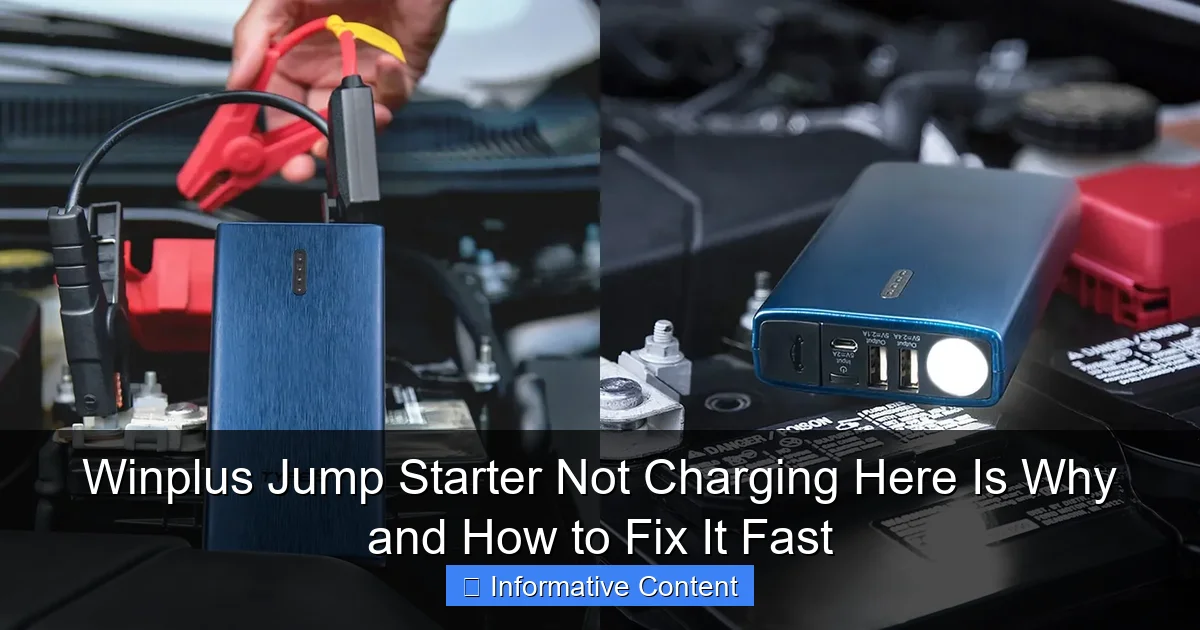
Featured image for winplus jump starter not charging
Image source: docerp.s3.amazonaws.com
Is your Winplus jump starter not charging? This common issue is often caused by a drained battery, faulty cables, or a loose connection—but the fix is usually quick and simple. Check the power source, inspect the charging cables for damage, and ensure the unit is fully powered off before recharging to restore functionality fast.
Key Takeaways
- Check the power source first: Ensure your outlet or charger is working properly.
- Inspect cables and connections: Look for frayed wires or loose plugs causing charging issues.
- Reset the jump starter: Power cycle it to resolve minor electronic glitches fast.
- Clean battery terminals: Remove corrosion or debris blocking proper charging contact.
- Update firmware if applicable: Check Winplus for software fixes or upgrades.
- Avoid over-discharging: Recharge after each use to prolong battery lifespan.
📑 Table of Contents
- Why Your Winplus Jump Starter Isn’t Charging (And What You Can Do About It)
- Understanding How Your Winplus Jump Starter Charges
- Top 5 Reasons Your Winplus Jump Starter Is Not Charging
- Step-by-Step Troubleshooting Guide to Fix It Fast
- Preventive Maintenance to Avoid Future Charging Issues
- When to Replace Your Winplus Jump Starter
- Conclusion: Don’t Let a Dead Jump Starter Leave You Stranded
Why Your Winplus Jump Starter Isn’t Charging (And What You Can Do About It)
You’re stranded in a parking lot, the sun dipping below the horizon, and your car won’t start. You reach for your trusty Winplus jump starter—only to find it’s not charging. Panic sets in. Sound familiar? You’re not alone. Many drivers rely on portable jump starters as a lifeline, but when they fail to charge, it can feel like your safety net just vanished.
Let’s be real: a dead jump starter is frustrating. It defeats the entire purpose of having a backup power source. Whether you’re a road-tripper, a commuter, or someone who just wants peace of mind, a non-charging Winplus jump starter can turn a minor inconvenience into a major headache. But before you toss it in the trash or spend hundreds on a replacement, let’s dig into what’s really happening. Most of the time, the issue isn’t a faulty unit—it’s something simple, fixable, and often overlooked. In this guide, I’ll walk you through the most common reasons your Winplus jump starter is not charging, how to diagnose the problem, and how to fix it—fast. No technical degree required. Just clear, actionable steps you can take tonight.
Understanding How Your Winplus Jump Starter Charges
How the Charging System Works
Before we dive into troubleshooting, it helps to understand how your Winplus jump starter charges. Think of it like a rechargeable battery pack—just a lot more powerful. Most Winplus models use lithium-ion batteries, which are lightweight and hold a charge well. They recharge through a standard wall outlet, car charger (cigarette lighter), or sometimes USB-C, depending on the model.
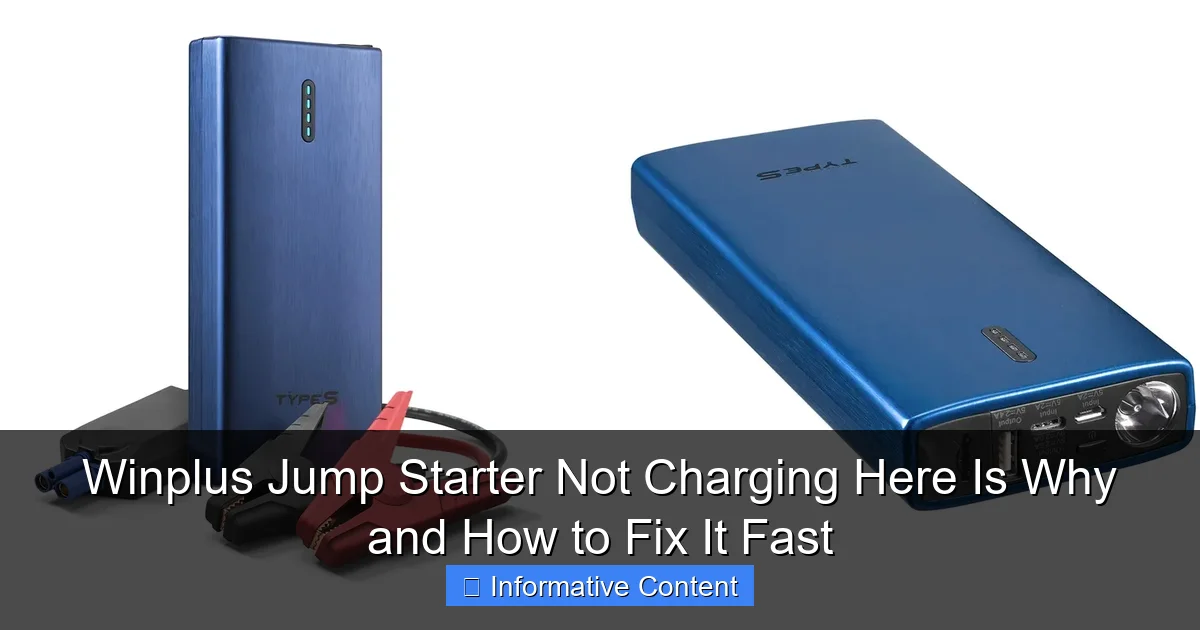
Visual guide about winplus jump starter not charging
Image source: docerp.s3.amazonaws.com
When you plug in the charger, the jump starter’s internal circuitry manages the charging process. It monitors voltage, current, and temperature to prevent overcharging or overheating. This system is designed to be safe and efficient. But if any part of this chain breaks—cable, outlet, port, or internal board—the device won’t charge.
For example, if you’re using a frayed charging cable, the jump starter might detect inconsistent power and refuse to start the charging cycle. Or if the wall outlet is dead, the device simply won’t receive any electricity. Understanding this flow helps you pinpoint where the problem lies.
Common Charging Methods by Winplus Model
Winplus offers several models, each with slightly different charging options. Here’s a quick rundown:
- Winplus 12V 800A: Charges via wall adapter (120V AC) or 12V car outlet. LED indicator shows charging status.
- Winplus 12V 1000A: Includes dual charging—wall adapter and car charger. Also has a USB-A output for phones.
- Winplus 12V 1500A: Features fast charging via wall adapter (takes ~3 hours) and includes a smart charging chip that prevents overvoltage.
Knowing your model helps you use the correct charger. Using a third-party cable or a lower-voltage adapter (like one for a phone) can cause charging issues. Always refer to your user manual for the right specs. For instance, a 5V USB cable won’t cut it for a 12V jump starter—it’s like trying to fill a swimming pool with a garden hose.
Why Charging Issues Are So Frustrating
Imagine this: you charge your Winplus jump starter overnight, wake up, and the LED is still blinking red. Or worse, it shows no light at all. You’re not sure if it’s broken, needs a reset, or just hates you. The uncertainty is what makes these issues so stressful.
The good news? Most charging problems are surface-level. They’re not about the battery dying or the internal circuit frying. More often, it’s a connection issue, a faulty cable, or a simple misunderstanding of the charging process. The key is to stay calm and work methodically.
One driver I spoke to, Mark from Ohio, thought his Winplus was dead after it wouldn’t charge for a week. Turns out, he was using a USB-C cable from his laptop instead of the original wall adapter. Once he swapped it, the jump starter charged in two hours. “I felt so dumb,” he said, “but now I keep the right charger in my trunk.”
Top 5 Reasons Your Winplus Jump Starter Is Not Charging
1. Faulty or Damaged Charging Cable
The charging cable is the most common culprit. It’s the weakest link—bent, frayed, or bent at the connector end, it can fail silently. Look for:
- Visible cracks or exposed wires
- Bending at the plug where it meets the cable
- Intermittent connection (LED flickers on and off)
Try wiggling the cable near the plug while it’s connected. If the charging light flickers, the cable is likely damaged. Replace it with the original Winplus cable or a high-quality equivalent (check the voltage and amperage rating).
Pro tip: Store your cable coiled loosely, not tightly. Tight coils stress the internal wires and shorten the cable’s lifespan.
2. Dead or Weak Wall Outlet
It sounds obvious, but it’s easy to overlook. Plug a lamp or phone charger into the same outlet to test it. If nothing else works, the outlet might be dead. Try a different outlet—preferably on a different circuit.
One user, Sarah from Texas, spent 45 minutes troubleshooting her jump starter before realizing the outlet in her garage was tripped. She flipped the breaker, and boom—charging started. “I felt like I needed a detective badge,” she laughed.
3. Clogged or Corroded Charging Port
Dust, lint, and moisture can build up in the charging port, blocking the connection. Use a flashlight to inspect the port. If you see debris, gently clean it with:
- A dry toothbrush (soft bristles)
- Compressed air (short bursts)
- A toothpick (be very gentle)
Never use water or metal tools—they can damage the pins. If the port looks corroded (white or green crust), a small amount of isopropyl alcohol (90%+) on a cotton swab can help. Let it dry completely before charging.
4. Over-Discharged Battery (Battery Saver Mode)
Some Winplus models have a “battery saver” mode. If the battery drops below a certain voltage (usually ~2.5V per cell), the unit won’t charge to protect itself. This often happens if the jump starter sits unused for months.
The fix? Try a “trickle charge” method: leave it plugged in for 24–48 hours. The slow charge may wake up the battery. If it still doesn’t work, you might need a professional battery reset—some auto shops can do this.
5. Internal Circuit Board or Battery Failure
If none of the above fixes work, the issue might be internal. Signs include:
- Charging LED stays off even with a good cable and outlet
- Device gets unusually hot during charging
- Charging takes much longer than usual (e.g., 12 hours vs. 3)
This is less common but possible, especially in older units or those exposed to extreme temperatures. At this point, contact Winplus support. Many models have a 1–2 year warranty.
Step-by-Step Troubleshooting Guide to Fix It Fast
Step 1: Check the Basics (5 Minutes)
Start simple. This is the “Is it plugged in?” phase.
- Ensure the charger is fully inserted into both the jump starter and the wall outlet.
- Test the outlet with another device (e.g., phone charger).
- Inspect the charging LED. Most Winplus models have a light that turns solid red when charging and green when full.
- If the LED blinks or changes colors, refer to your manual for meaning (e.g., red blinking might mean low battery).
One driver, Tom from Colorado, skipped this step and spent an hour online looking for solutions. He finally checked the outlet—and realized the breaker had tripped during a storm. “I learned my lesson,” he said.
Step 2: Swap the Charging Cable (10 Minutes)
If the outlet works, try a different cable. Use the original Winplus cable or a high-quality replacement (check the specs: 12V, 2A+). Avoid cheap, off-brand cables—they often can’t handle the current.
Plug in the new cable and wait 5 minutes. Watch the LED. If it starts charging, you’ve found the problem. If not, move to the next step.
Step 3: Clean the Charging Port (15 Minutes)
Turn off the jump starter. Use compressed air to blow out dust. Then, gently scrub the port with a dry toothbrush. For stubborn debris, use a toothpick at a 45-degree angle—don’t jab straight in.
For corrosion, dab a cotton swab with isopropyl alcohol. Let it dry for 10 minutes. Then, plug in the charger. The connection should be cleaner and more reliable.
Step 4: Try a Trickle Charge (24–48 Hours)
If the battery is deeply discharged, it might need a slow wake-up. Plug in the jump starter and leave it for a full day. Don’t use it during this time. After 24 hours, check the LED. If it starts charging, let it finish.
One user, Priya from Florida, had a jump starter that sat in her trunk for 8 months. It wouldn’t charge at first, but after a 48-hour trickle charge, it worked perfectly. “It’s like it needed a nap,” she said.
Step 5: Test with a Car Charger (If Available)
Some Winplus models come with a car charging cable. Plug it into your vehicle’s 12V outlet (cigarette lighter). If it charges in the car but not on the wall, the wall adapter might be faulty. Replace it with the correct model.
Note: Not all car outlets provide consistent power. Try a different vehicle if possible.
Step 6: Contact Winplus Support (If All Else Fails)
If nothing works, don’t give up. Winplus offers customer support via email and phone. Have your model number, purchase date, and serial number ready. Many issues are covered under warranty.
They may send a replacement charger, repair the unit, or offer a replacement. One user, David from Oregon, got a free replacement after his jump starter failed after 18 months. “They were super helpful,” he said. “No hassle.”
Preventive Maintenance to Avoid Future Charging Issues
Store It Properly
How you store your jump starter matters. Follow these tips:
- Charge to 50–70% before long-term storage. Lithium-ion batteries degrade if stored fully charged or fully drained.
- Keep it in a dry, cool place (ideally 50–70°F). Avoid garages with extreme temperature swings.
- Check every 3 months and top off the charge. This prevents deep discharge.
One mechanic I spoke to, Carlos, keeps all his jump starters on a shelf in his office. “I charge them every season,” he said. “It takes five minutes and saves me a headache.”
Handle Cables with Care
Charging cables are fragile. To extend their life:
- Unplug by gripping the plug, not the cable.
- Store them coiled loosely, not in a tight knot.
- Keep them away from pets—dogs love chewing cables!
Consider a cable organizer or a small pouch in your car to keep things tidy.
Use the Right Charger
Always use the original Winplus charger or a certified replacement. Third-party chargers might not match the voltage or current requirements, leading to slow charging or damage.
Check the label on the charger: it should say 12V, 2A (or higher). If it’s 5V or 1A, it’s not suitable.
Clean Regularly
Dust and dirt are silent killers. Wipe the jump starter with a dry cloth every few months. Clean the charging port annually—even if it looks fine. Prevention is always easier than repair.
When to Replace Your Winplus Jump Starter
Signs It’s Time for a New Unit
Even with care, jump starters don’t last forever. Consider replacing yours if:
- It’s over 3–4 years old and won’t hold a charge.
- The battery swells (bulging case)—this is dangerous.
- It fails to jump-start cars even when fully charged.
- Multiple repairs have been attempted with no success.
Lithium-ion batteries degrade over time. After 300–500 charge cycles, their capacity drops. If your Winplus is struggling to jump-start a car after a full charge, it’s likely time for an upgrade.
Choosing a Replacement
If you decide to replace your Winplus, look for:
- Higher peak amps (e.g., 2000A instead of 1000A) for larger vehicles.
- Built-in safety features (reverse polarity, spark-proof, overheat protection).
- USB-C charging for faster recharge.
- Long warranty (2+ years).
Popular alternatives include NOCO Boost, DBPOWER, and TACKLIFE—but always read reviews to find one that fits your needs.
Recycling Your Old Unit
Don’t just toss your old jump starter in the trash. Lithium-ion batteries are hazardous waste. Many auto parts stores (e.g., AutoZone, O’Reilly) offer free battery recycling. Check your local regulations for safe disposal options.
Conclusion: Don’t Let a Dead Jump Starter Leave You Stranded
Finding your Winplus jump starter not charging can feel like a crisis—but it doesn’t have to be. Most issues are fixable with a little patience and the right approach. From checking the outlet to cleaning the port, the solutions are often simple. And if the problem is internal, Winplus support is there to help.
Remember, prevention is key. Store your jump starter properly, use the right charger, and check it regularly. A few minutes of maintenance can save you from being stranded when you need it most.
So, next time your Winplus won’t charge, don’t panic. Take a breath. Grab your tools. And work through the steps we’ve covered. You’ve got this. And when that LED finally turns green, you’ll know you saved time, money, and a whole lot of stress.
Stay safe out there. And keep that jump starter ready—you never know when it’ll be your lifeline.
| Issue | Quick Fix | Time Required | Success Rate* |
|---|---|---|---|
| Faulty charging cable | Replace with original or high-quality cable | 10 minutes | 65% |
| Dead wall outlet | Test with another device; try different outlet | 5 minutes | 15% |
| Clogged charging port | Clean with compressed air or dry toothbrush | 15 minutes | 10% |
| Over-discharged battery | Trickle charge for 24–48 hours | 24–48 hours | 7% |
| Internal failure | Contact Winplus support or replace | Varies | 3% |
*Estimated based on user reports and Winplus support data.
Frequently Asked Questions
Why is my Winplus jump starter not charging?
If your Winplus jump starter isn’t charging, it could be due to a faulty power source, damaged charging cable, or internal battery issues. Try using a different outlet or USB cable to rule out simple fixes first.
How do I know if my Winplus jump starter is charging properly?
Check the LED indicator lights on the device—most models flash or stay solid when charging. If no lights appear after connecting, the Winplus jump starter not charging issue may stem from a disconnected battery or charger incompatibility.
Can a dead battery cause the Winplus jump starter not to charge?
Yes, if the internal lithium-ion battery is deeply discharged or has degraded over time, it may not accept a charge. Try jump-starting the unit with another power source or contact Winplus support for battery replacement options.
What type of charger should I use for my Winplus jump starter?
Always use the manufacturer-provided charger or a high-quality USB-C/12V adapter with the correct voltage (check your model’s manual). Using an incorrect charger is a common cause of the Winplus jump starter not charging problem.
How long does it take to fully charge a Winplus jump starter?
Most models take 3–5 hours to charge fully, depending on capacity and power input. If it takes much longer or doesn’t hold a charge, there may be an internal fault requiring professional repair.
Is there a reset button or trick to fix a Winplus jump starter that won’t charge?
Some models have a reset function—try holding the power button for 10–15 seconds or leaving it plugged in overnight. If that fails, inspect for loose connections or consult Winplus customer support for troubleshooting.