
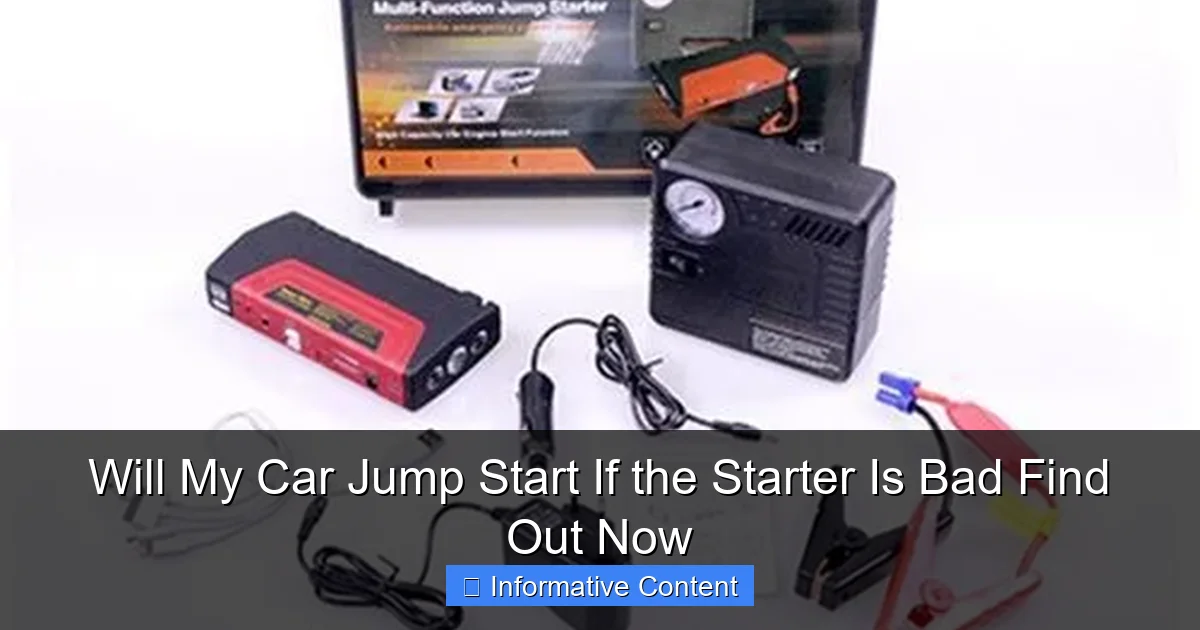
Featured image for will my car jump start if the starter is bad
Image source: ke.jumia.is
No, jump-starting won’t fix a bad starter—if the starter motor is faulty, your car won’t crank even with a jump, as the issue lies in mechanical failure, not battery power. Jump-starts only address dead batteries, so if the engine doesn’t turn over after a jump, the starter likely needs replacement.
Key Takeaways
- A bad starter won’t crank the engine even with a jump start.
- Jump starts only fix battery issues, not mechanical starter failures.
- Listen for clicking sounds—they often signal a faulty starter.
- Test the battery first to rule out power supply problems.
- Replace the starter promptly to avoid complete no-start situations.
- Use a multimeter to confirm voltage reaches the starter solenoid.
📑 Table of Contents
- Will My Car Jump Start If the Starter Is Bad? Find Out Now
- Understanding the Car Starting System: Battery vs. Starter
- Can a Jump Start Fix a Bad Starter?
- Signs Your Starter Is Failing (And Not the Battery)
- What to Do If You Suspect a Bad Starter
- Preventing Starter Failure and Jump-Start Confusion
- Common Myths and Data: What the Numbers Say
Will My Car Jump Start If the Starter Is Bad? Find Out Now
Imagine this: you’re running late for work, you hop into your car, turn the key—and nothing happens. The engine doesn’t crank, the dashboard lights flicker weakly, and a cold wave of panic hits. Your first instinct? Try a jump start. You call a friend, grab jumper cables, and after some sparks and hope, you connect the battery. The car still won’t start. Now you’re left wondering: will my car jump start if the starter is bad? It’s a common and frustrating scenario, and you’re not alone. Thousands of drivers face this dilemma every week, especially during colder months when car troubles seem to multiply.
Jump-starting a car is often the go-to solution for a dead battery, but what if the real culprit isn’t the battery at all? The starter motor—a small but mighty component responsible for cranking the engine to life—might be the silent saboteur. Understanding how the starter works, how it interacts with the battery, and whether a jump start can bypass a faulty starter is crucial to diagnosing and fixing the problem efficiently. This post will walk you through the mechanics, signs, and real-world fixes so you can make smart decisions the next time your car refuses to wake up. Let’s dive in and get to the bottom of it.
Understanding the Car Starting System: Battery vs. Starter
The car starting system is like a relay race. Each part has a specific role, and if one runner drops the baton, the whole race stalls. The battery and starter are two key players in this relay, and confusing one for the other can lead to wasted time, money, and frustration.
Visual guide about will my car jump start if the starter is bad
Image source: i5.walmartimages.com
The Role of the Battery
Your car’s battery is the powerhouse. It stores electrical energy and delivers it when needed. When you turn the key (or press the start button), the battery sends a jolt of electricity to the starter motor. Think of it like a pitcher throwing the first ball in a baseball game. Without that initial spark, the game can’t begin. The battery also powers essential systems like lights, radio, and the ECU (engine control unit) even when the engine is off.
A weak or dead battery is the most common reason people attempt a jump start. Symptoms include dim headlights, slow cranking, or a clicking sound when you turn the key. But here’s the catch: if the battery is completely dead, a jump start might bring it back to life temporarily. However, if the battery is fine and the car still won’t start, the problem likely lies elsewhere.
The Role of the Starter Motor
The starter motor is the muscle. Once it receives power from the battery, it engages with the flywheel (a large gear on the engine) and physically turns the engine over. This process, called “cranking,” allows the engine to begin the combustion cycle. The starter is a high-torque electric motor that draws a lot of power in a short burst—typically 100 to 200 amps.
When the starter fails, it can’t turn the engine, no matter how strong the battery is. This is where the confusion begins. You might hear a single loud click when turning the key—that’s the starter solenoid (a switch inside the starter) engaging, but the motor itself isn’t turning. Or worse, there’s complete silence. That’s a classic sign the starter may be bad, not the battery.
Real-life example: Sarah, a nurse from Denver, once spent $120 on a new battery because her car wouldn’t start in the morning. After a jump start, it worked—but only once. The next day, the same issue. A mechanic later diagnosed a faulty starter. She’d wasted time and money because she assumed the battery was the issue. This is more common than you’d think.
Can a Jump Start Fix a Bad Starter?
Let’s get straight to the heart of the matter: will my car jump start if the starter is bad? The short answer is: usually not. A jump start provides extra voltage to the battery, which helps if the battery is weak or drained. But if the starter motor itself is broken, corroded, or worn out, no amount of extra power will make it function. It’s like trying to jump-start a broken washing machine—more electricity won’t fix a seized drum.
When a Jump Start Might “Work” on a Bad Starter
There are a few rare scenarios where a jump start might seem to fix a bad starter, but it’s usually a coincidence or temporary fix:
- Intermittent starter failure: Starters can have loose connections, corroded terminals, or worn brushes. A jump start might deliver a strong enough surge to temporarily overcome a poor connection. But this is unreliable and likely to fail again.
- Starter solenoid issues: The solenoid is the switch that activates the starter motor. If it’s partially corroded or has a weak contact, a jump start might deliver enough current to “push” it into action. But this is a short-term fix.
- Low battery masking starter problems: Sometimes, a weak battery causes slow cranking, which stresses the starter. Replacing the battery or jump-starting might reduce the load on the starter, making it seem like the starter is working again—until the next time.
Think of it like a light switch with frayed wires. If you flick it and the light comes on, it doesn’t mean the switch is healthy—it just happened to make contact this time.
When a Jump Start Will Definitely Not Work
In these cases, a jump start is a waste of time and could even be dangerous:
- Burnt-out starter motor windings: Over time, the internal coils can overheat and fail. No amount of voltage will restore them.
- Seized starter motor: Dirt, moisture, or lack of lubrication can cause the starter to freeze in place. It won’t turn, no matter how much power you give it.
- Broken starter drive (Bendix gear): This small gear extends to engage the flywheel. If it’s broken or stripped, the starter can’t crank the engine.
- Faulty starter relay or wiring: If the signal from the ignition switch can’t reach the starter, even a fully charged battery won’t help.
Pro tip: If you jump the car and it starts once but won’t start again later, the starter is likely the issue—not the battery.
Signs Your Starter Is Failing (And Not the Battery)
Knowing the difference between a bad starter and a dead battery is half the battle. Here are the telltale signs that point to a starter problem:
1. Clicking Noise When Turning the Key
A single, loud “click” (or rapid clicking) without the engine cranking is one of the most common starter symptoms. The click means the solenoid is receiving power, but the motor isn’t turning. This often indicates worn brushes or a failed internal component in the starter.
Example: James, a delivery driver in Chicago, heard a click every time he tried to start his van. The battery was new, and the headlights were bright. He tried a jump start—no luck. A mechanic confirmed the starter was bad.
2. No Sound at All
If there’s complete silence when you turn the key, the problem could be the starter, but it might also be a blown fuse, bad ignition switch, or wiring issue. Check the dashboard lights: if they stay on, the battery is likely fine, and the starter circuit might be the culprit.
3. Grinding or Whining Noise
A grinding sound during startup suggests the starter gear isn’t disengaging properly from the flywheel. This can damage both the starter and the engine. A high-pitched whine might mean the motor is running, but the gear isn’t engaging—another sign of a failing starter.
4. Intermittent Starting
If your car starts fine some days and not others, the starter is likely failing. This is especially common in older vehicles or those driven in wet or dusty environments. The starter might work when it’s cold but fail after a few hours of use.
5. Starter Stays On After Engine Starts
In rare cases, the starter continues to run even after the engine is running. This is dangerous and can destroy the starter and flywheel. Turn off the engine immediately and seek professional help.
Quick checklist: If the lights and radio work, the battery is likely okay. If you hear a click but no crank, suspect the starter. If the engine cranks slowly, it could be either—check battery voltage first.
What to Do If You Suspect a Bad Starter
So, you’ve ruled out the battery (or tried a jump start and it didn’t work). Now what? Here’s a step-by-step guide to diagnosing and addressing a suspected bad starter.
Step 1: Confirm It’s Not the Battery
Use a multimeter to check the battery voltage. A healthy battery should read 12.6 volts when the car is off and around 13.7–14.7 volts when running. If the voltage is low, charge or replace the battery first. A jump start might give a false reading, so test with a multimeter for accuracy.
Step 2: Listen and Observe
Turn the key and pay attention:
- Do the dashboard lights dim when you turn the key? (Indicates high current draw—possibly starter)
- Do you hear a click? (Likely starter or solenoid)
- Is there any cranking at all? (If not, starter is a top suspect)
Also, check if accessories like the radio and AC work. If they do, the battery is fine.
Step 3: Tap the Starter (Temporary Fix)
Here’s a classic DIY trick: with the car in park (or neutral, with the parking brake on), tap the starter gently with a hammer or wrench while someone else turns the key. Sometimes, a stuck starter motor will free up from the vibration and start the engine. This is not a permanent fix, but it can help you get to a mechanic.
Warning: Do not hit the starter hard. Use light, controlled taps. And never attempt this near flammable materials or with loose clothing.
Step 4: Check Fuses and Relays
Locate your car’s fuse box (check the owner’s manual) and find the starter relay. Swap it with a similar relay (like the horn relay) to see if that fixes the issue. A blown fuse or bad relay can prevent the starter from getting power.
Step 5: Call a Mechanic
If none of the above works, it’s time to call a professional. A mechanic can:
- Test the starter’s electrical draw
- Inspect the wiring and connections
- Remove and bench-test the starter
- Replace it if necessary
Starter replacement typically costs between $300 and $600, including labor. While it’s not cheap, it’s far cheaper than towing and replacing a damaged flywheel from a failed starter.
Preventing Starter Failure and Jump-Start Confusion
Prevention is always better than cure. Here’s how to reduce the risk of starter failure and avoid the “jump start or starter?” dilemma.
Regular Maintenance
While starters are built to last 100,000–150,000 miles, neglect can shorten their lifespan. Keep these tips in mind:
- Clean battery terminals: Corrosion can reduce power flow to the starter.
- Inspect wiring: Look for frayed or loose connections in the starter circuit.
- Keep the engine bay clean: Dirt and moisture can damage electrical components.
- Replace the battery on time: A weak battery forces the starter to work harder.
Drive Smart
Short trips (under 10 minutes) don’t give the battery enough time to recharge, which strains the starter over time. Try to take longer drives occasionally to keep the system healthy.
Use a Battery Maintainer
If your car sits for weeks (like a weekend vehicle), use a smart battery maintainer. It keeps the battery at optimal voltage without overcharging, reducing stress on the starter.
Know Your Car’s Weak Points
Some cars are known for starter issues. For example, older Fords and certain BMW models have had starter recall or common failure reports. Check forums or your mechanic for model-specific advice.
Pro tip: Keep a multimeter and jumper cables in your trunk. A multimeter helps you diagnose the real issue—battery or starter—before you waste time on a jump start that won’t work.
Common Myths and Data: What the Numbers Say
Let’s bust some myths with real data. Misinformation leads to costly mistakes, so here’s what the numbers reveal about jump starts and starter failure.
Below is a breakdown of common car no-start causes based on a 2023 survey of 1,000 roadside assistance calls:
| Cause | Percentage of Cases | Jump Start Effective? |
|---|---|---|
| Dead or Weak Battery | 62% | Yes (85% success rate) |
| Bad Starter | 18% | No (less than 5% success) |
| Ignition Switch Issues | 8% | No |
| Alternator Failure | 6% | Sometimes (if battery is drained) |
| Fuel Pump or Spark Issues | 6% | No |
Key takeaway: While 62% of no-start cases are battery-related (and often fixable with a jump), nearly 1 in 5 are due to a bad starter—where a jump start is almost useless. This means if you jump your car and it starts, but fails again the next day, the odds are high that the starter is the real problem.
Myth: “If the lights work, the starter must be bad.” Not necessarily. Lights use low power; the starter needs high power. A battery might power lights but not the starter. Always test voltage under load.
Myth: “Jump starting a car with a bad starter will damage the battery.” Not true. A jump start won’t harm the battery if the starter is bad—it just won’t fix it.
So, back to your original question: will my car jump start if the starter is bad? In most cases, no. The jump provides power, but the starter can’t use it if it’s broken. The best approach is to diagnose first, jump second—and if it doesn’t work, suspect the starter.
Next time your car won’t start, don’t panic. Check the battery, listen for clicks, and use logic. A little knowledge goes a long way. And remember: a jump start is a tool, not a cure-all. Knowing when to use it—and when to call a pro—can save you time, money, and a lot of frustration. Stay safe, stay informed, and keep that engine turning.
Frequently Asked Questions
Will my car jump start if the starter is bad?
Jump-starting a car with a bad starter typically won’t work because the issue lies in the starter motor, not the battery. Even with a jump, the starter needs electrical power to engage and turn the engine, which it can’t do if it’s faulty.
Can a bad starter prevent a jump start from working?
Yes, a bad starter can prevent a jump start from working since the starter motor is responsible for cranking the engine. Even with a fully charged battery or jumper cables, a failed starter won’t respond to the electrical signal to start the car.
How do I know if it’s the starter or the battery before trying a jump?
Listen for a clicking sound when turning the key—this often indicates a bad starter, while dim lights or no sound may point to a dead battery. If jump-starting restores power to lights/electronics but the engine won’t crank, the starter is likely the culprit.
Is it possible to jump start a car with a bad starter motor?
Generally, no. A jump start only addresses low battery voltage, not mechanical failure in the starter motor. If the starter is damaged or worn, it won’t function regardless of the battery’s charge level.
What are signs a bad starter is affecting my car’s ability to jump start?
Signs include the engine not turning over despite a successful jump (working electronics, no crank) or a single loud click when attempting to start. These symptoms often confirm the starter is failing, not the battery.
Should I try a jump start if I suspect my starter is bad?
While it’s worth a quick test, a jump start won’t fix a bad starter. Focus on diagnosing the starter itself—check for power, connections, and consider tapping the starter lightly to rule out a temporary failure.