
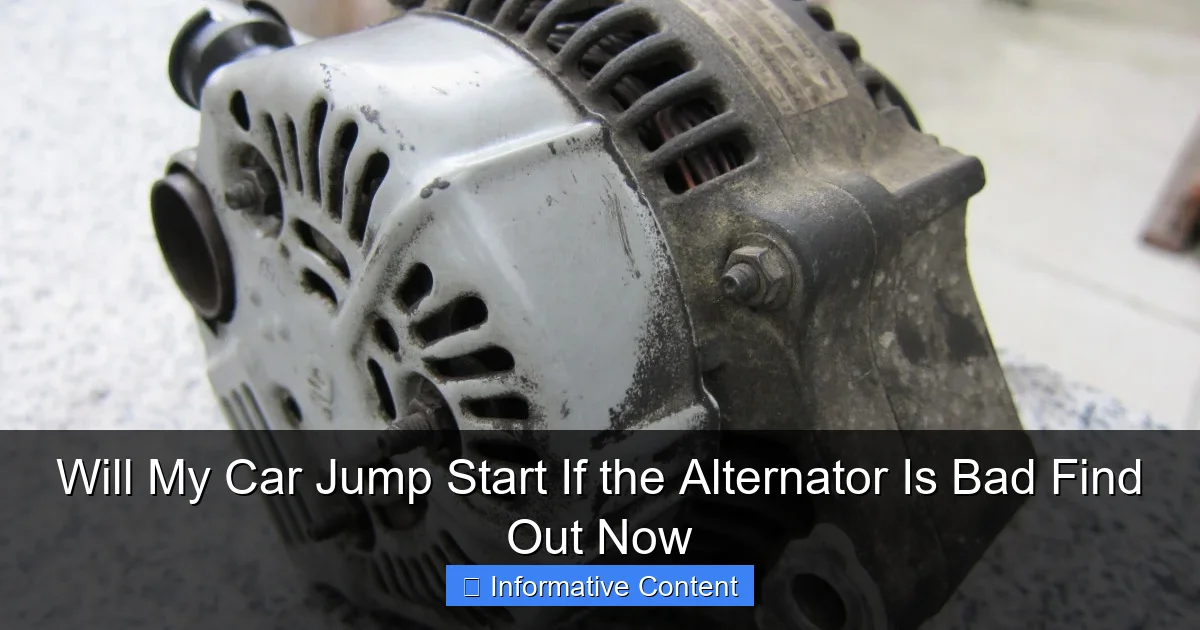
Featured image for will my car jump start if the alternator is bad
Image source: images.saymedia-content.com
Yes, your car can jump start with a bad alternator, but it won’t stay running for long. The jump provides temporary power, but a failing alternator can’t recharge the battery, leaving you stranded once the initial charge depletes. Address the alternator immediately—relying on jump starts is a short-term fix with long-term risks.
Key Takeaways
- A bad alternator won’t prevent jump starts but the car may stall again soon after.
- Jump-starting works temporarily if the battery is drained, but the alternator must recharge it.
- Test the alternator after a jump using a voltmeter; 13.5–14.5 volts is normal.
- Dim lights or stalling while driving are key signs of a failing alternator.
- Drive immediately to a mechanic after a jump to avoid being stranded.
- Replace a faulty alternator quickly to prevent battery damage and costly repairs.
📑 Table of Contents
- Will My Car Jump Start If the Alternator Is Bad? Find Out Now
- What Does the Alternator Do? (And Why It Matters)
- Can You Jump Start a Car with a Bad Alternator? The Truth
- Step-by-Step: How to Jump Start (Safely) When the Alternator Might Be Bad
- How Far Can You Drive After a Jump Start with a Bad Alternator?
- Alternatives to Jump Starting (When the Alternator Is Dead)
- Prevention: How to Avoid Alternator Failure
Will My Car Jump Start If the Alternator Is Bad? Find Out Now
Imagine this: You’re running late for work, you hop into your car, turn the key, and… nothing. The engine doesn’t crank. Your heart sinks. You try again, maybe jiggling the key, and suddenly—click, click, click. It starts, but the lights are dim, and the radio flickers. You’ve probably heard the dreaded words: “It might be the alternator.” Now, the big question pops up: Can I still jump start my car if the alternator is bad?
Let’s be real—most of us aren’t mechanics. We rely on Google, a friend who “knows cars,” or the guy at the auto parts store. But when it comes to alternators and jump starting, misinformation spreads faster than a dead battery in winter. I’ve been there—stuck in a grocery store parking lot, jumper cables in hand, wondering if I’m making things worse. In this post, I’ll walk you through what happens when your alternator fails, whether a jump start can save you, and how to avoid being stranded. We’ll cover the science, real-world scenarios, and practical tips—all in plain, no-nonsense language. By the end, you’ll know exactly what to do (and what not to do).
What Does the Alternator Do? (And Why It Matters)
Charging the Battery While You Drive
Think of your car’s alternator as a mini power plant. When the engine runs, the alternator generates electricity to power everything—lights, radio, AC, even your phone charger. But its most critical job? Recharging the battery after the starter motor drains it during ignition. Without the alternator, your battery would die in minutes.
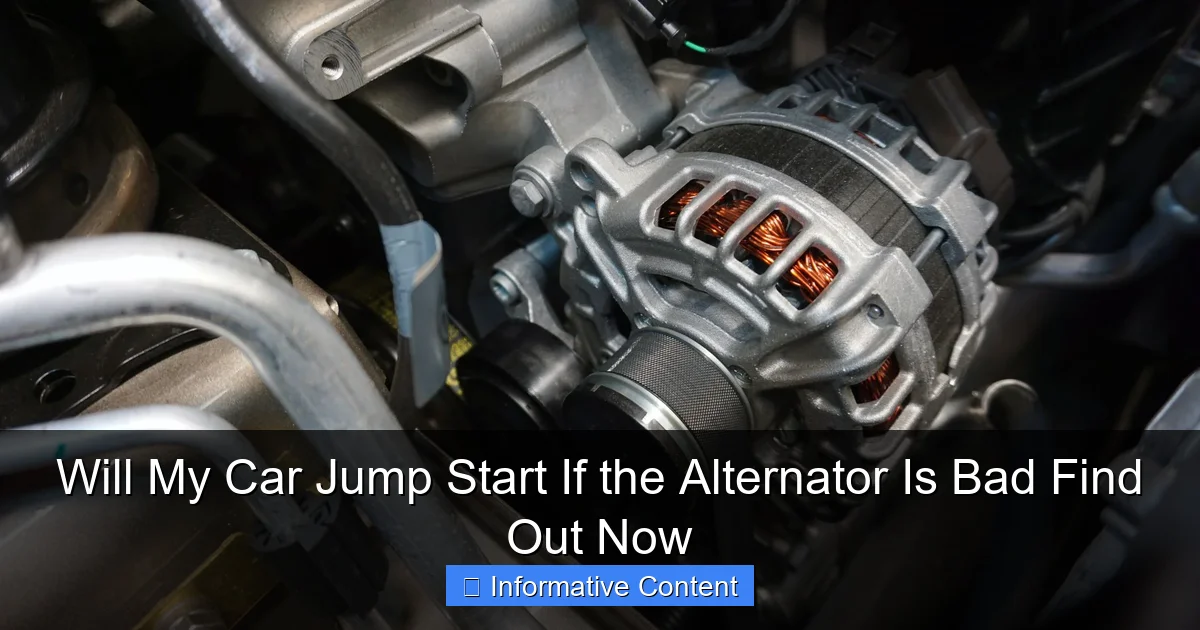
Visual guide about will my car jump start if the alternator is bad
Image source: rerev.com
How It Works (Simple Version)
- Belt-driven: A serpentine belt connects the alternator to the engine. As the engine spins, the alternator spins too.
- Generates AC power: The alternator produces alternating current (AC), which is converted to direct current (DC) to match your car’s electrical system.
- Regulates voltage: A built-in regulator ensures the battery isn’t overcharged (which can cause explosions) or undercharged.
Example: On a 30-minute drive, your alternator might recharge the battery by 30-50%. But if it’s failing, the battery slowly drains—even while driving.
Signs of a Failing Alternator
- Dim or flickering lights: Headlights, dashboard, or interior lights.
- Warning lights: The battery light (looks like a battery icon) or “ALT” light on your dash.
- Strange noises: Grinding or whining from the engine bay.
- Electrical issues: Radio cuts out, power windows move slowly, or USB ports stop working.
- Frequent jump starts: If you need a jump every few days, the alternator might not be recharging the battery.
Tip: Use a multimeter (~$10 at auto stores) to check your battery voltage. With the engine off, it should read 12.6V. With the engine running, it should be 13.8-14.7V. If it’s below 13V, the alternator isn’t charging.
Can You Jump Start a Car with a Bad Alternator? The Truth
Yes, But It’s a Temporary Fix
You can jump start a car with a bad alternator—but only if the battery is the immediate problem. Think of it like this: The jump start gives the battery a “second wind” to turn the starter motor. But if the alternator can’t recharge the battery afterward, you’ll lose power again. It’s like giving a dying phone a quick charge—it’ll turn on, but it’ll die once you unplug it.
Real-World Scenario
My friend Sarah once jump started her car with a failing alternator. The engine roared to life, and she drove 10 miles to a repair shop. But halfway there, the dashboard lights flickered, the radio died, and the car sputtered to a stop. Why? The alternator wasn’t charging the battery, so it drained within 15 minutes. Moral of the story: A jump start buys time—not a cure.
When a Jump Start WON’T Work
- Completely dead battery: If the battery has 0V (e.g., left lights on for days), even a jump might not work. The battery may be sulfated (a chemical reaction that permanently reduces capacity).
- Severe alternator failure: If the alternator is seized or the internal regulator is fried, the battery can’t hold a charge at all.
- Wiring/connection issues: Corroded terminals or broken wires prevent current flow.
Tip: If your car starts with a jump but dies immediately, the alternator is likely the culprit—not the battery.
Step-by-Step: How to Jump Start (Safely) When the Alternator Might Be Bad
1. Diagnose First
Before jumping, check for obvious signs of alternator failure:
- Is the battery light on?
- Do lights/electronics behave oddly?
- Is the battery voltage below 13V with the engine running?
If yes, proceed with caution—this is a short-term fix.
2. Gather Tools
- Jumper cables: Heavy-duty, at least 4-gauge thickness.
- Another vehicle (or portable jump starter): Ensure it’s charged.
- Protective gear: Gloves and safety glasses.
- Multimeter (optional): To check voltage post-jump.
3. Jump Start Process
- Position the cars: Park close (but not touching) with hoods facing each other. Turn off both engines.
- Connect cables in order:
- Red (+) to dead battery’s positive terminal.
- Red (+) to good battery’s positive terminal.
- Black (-) to good battery’s negative terminal.
- Black (-) to an unpainted metal part on the dead car’s engine block (not the battery negative!). This grounds the circuit and reduces sparks.
- Start the good car: Let it run for 3-5 minutes to transfer charge.
- Start the dead car: Turn the key. If it doesn’t start, wait 2 more minutes and retry.
- Disconnect cables in reverse order: Remove black (-) from the engine block first, then black from the good car, red from the good car, and finally red from the dead car.
4. Test the Alternator (Critical!)
- With the engine running, use a multimeter to check the battery voltage. It should read 13.8-14.7V.
- If it’s below 13V, the alternator isn’t charging. Drive immediately to a mechanic—don’t stop the engine.
- If it’s 13.8V+, the alternator is working. But monitor the battery light for 24 hours.
Warning: Never disconnect the battery while the engine is running. It can cause voltage spikes that fry electronics.
How Far Can You Drive After a Jump Start with a Bad Alternator?
The “Battery-Only” Power Window
Once jump started, your car runs on battery power only. The average car battery holds 45-65 amp-hours (Ah). Here’s how long it lasts without the alternator:
| Car Type | Estimated Driving Time (After Jump) | Key Factors |
|---|---|---|
| Compact car (e.g., Honda Civic) | 10-20 minutes | Lower electrical load (fewer accessories) |
| SUV/Truck (e.g., Ford F-150) | 5-15 minutes | Higher electrical load (AC, heated seats, etc.) |
| Hybrid/Electric (e.g., Toyota Prius) | 5-10 minutes | Complex electrical systems drain faster |
Example: A 2018 Honda Civic with a fully charged battery might drive 15 minutes to a shop. But if you turn on the AC, headlights, and radio, it could die in 8 minutes.
Tips to Maximize Your Window
- Drive straight to a mechanic: Avoid stops, detours, or idling.
- Turn off non-essentials: AC, radio, heated seats, and phone chargers.
- Use daytime running lights only: Save the headlights for dark roads.
- Rev the engine slightly: If you must wait (e.g., at a stoplight), rev to 1,500 RPM to keep voltage stable.
Real-life hack: I once drove 12 miles to a repair shop with a bad alternator by turning off everything except the engine and headlights. The dashboard was dark, but I made it!
Alternatives to Jump Starting (When the Alternator Is Dead)
1. Portable Jump Starter (Power Bank)
These compact lithium-ion units are a game-changer. Just connect the clamps to your battery, press a button, and start the car. Pros: No need for another vehicle. Cons: Limited capacity—may not work on large trucks or if the battery is deeply discharged.
Tip: Buy one with at least 1,000 peak amps and keep it charged.
2. Push Start (For Manual Transmission Cars)
If you drive a stick shift, you can “bump start” the car:
- Turn the ignition to “on.”
- Put the car in second gear.
- Release the clutch quickly while rolling (or have someone push).
- The engine turns, and the car starts.
Warning: This won’t help if the alternator is bad—you’ll still lose power after starting.
3. Tow to a Mechanic
If the alternator is completely dead, towing is the safest option. Driving risks:
- Sudden stalling in traffic.
- Damage to the ECU (engine control unit) from voltage drops.
- Fire hazard from overheated wiring.
Cost comparison: A tow truck (~$100) is cheaper than replacing a fried ECU (~$1,000).
4. Battery Replacement (Temporary Fix)
If the battery is old (3+ years), replace it and fix the alternator. But a new battery won’t solve an alternator problem—it’ll just die faster. Always test the alternator first!
Prevention: How to Avoid Alternator Failure
Regular Maintenance
- Inspect the belt: Look for cracks, fraying, or looseness. A slipping belt won’t spin the alternator.
- Check connections: Clean battery terminals and alternator wiring with a wire brush.
- Listen for noise: Squealing or grinding sounds often mean alternator bearings are failing.
Early Warning Signs
Alternators usually fail gradually. Watch for:
- Dimming headlights when idling.
- Slow power windows.
- Frequent need to jump start.
- Battery light flickering (not steady).
Tip: If you notice any of these, get the alternator tested at an auto parts store—many offer free diagnostics.
When to Replace
Alternators last 80,000-150,000 miles. Replace it if:
- Voltage tests show <13V with the engine running.
- You hear grinding noises.
- The battery keeps dying despite being new.
Cost: Expect $300-$800 for parts and labor. Aftermarket units are cheaper but less reliable than OEM (original equipment).
So, will your car jump start if the alternator is bad? Yes—but it’s a temporary lifeline, not a solution. A jump gives you minutes to get to safety, not hours to finish errands. The real fix is replacing the alternator. Think of it like a heart transplant: The jump is CPR, but surgery is the cure. Don’t gamble with your safety—test the alternator, drive directly to a mechanic, or call a tow truck. And remember: A $10 multimeter could save you hundreds in emergency repairs. Stay proactive, stay safe, and keep your battery (and alternator) in check. Your car—and your wallet—will thank you.
Frequently Asked Questions
Will my car jump start if the alternator is bad?
If your alternator is failing, your car might jump start temporarily, but it won’t run for long. The battery will eventually drain since the alternator isn’t recharging it.
How does a bad alternator affect jump starting?
A bad alternator can prevent the battery from charging, so even if you jump start the car, it may stall once the jumper cables are removed. This is a clear sign the alternator needs replacement.
Can I drive my car with a bad alternator after a jump start?
Driving with a bad alternator after a jump start is risky and not recommended. The car may lose power mid-drive, leaving you stranded—safely get the alternator checked instead.
What are the signs my alternator is bad after jump starting?
If your car starts but dies shortly after, or if you notice dim lights and electrical issues, the alternator likely isn’t working. These symptoms confirm it’s not recharging the battery.
Is a jump start a permanent fix for a bad alternator?
No, a jump start is never a permanent solution for a bad alternator. You’ll need to replace the alternator to restore proper charging and avoid repeated battery failures.
Why won’t my car stay running after a jump start if the alternator is bad?
A bad alternator can’t supply power to the engine or recharge the battery. Once the jump start’s initial charge fades, the car stalls without the alternator’s support.