
Featured image for will my car battery recharge itself after jump start
Image source: thepowerfacts.com
Yes, your car battery can recharge itself after a jump start—but only if the alternator is working properly and you drive long enough to restore the charge. Short trips may not fully replenish the battery, risking repeated failure; for a reliable fix, drive continuously for at least 30 minutes or consider a battery charger or replacement if it’s old or damaged.
Key Takeaways
- Jump-starting isn’t fixing: It only restores power, doesn’t repair the battery.
- Driving helps recharge: Run the engine 20+ minutes to replenish battery charge.
- Test after jump: Use a multimeter to check battery health post-start.
- Age matters: Batteries over 3 years old likely need replacement, not recharging.
- Prevent future issues: Regularly inspect terminals and charge levels to avoid failures.
- Parasitic drain check: Ensure no electronics are drawing power when car is off.
- Professional assessment: Visit a mechanic if battery fails to hold a charge.
📑 Table of Contents
- Will My Car Battery Recharge Itself After Jump Start? Find Out Now
- How a Car Battery Works (And Why It Dies)
- Can a Jump-Started Battery Recharge Itself?
- When a Jump Start Isn’t Enough: Signs Your Battery Needs Replacement
- How to Help Your Battery Recharge After a Jump Start
- Data: How Long Does It Take to Recharge a Battery After a Jump?
- Final Thoughts: Is Your Battery a Lost Cause?
Will My Car Battery Recharge Itself After Jump Start? Find Out Now
Imagine this: You’re running late for work, you hop into your car, turn the key, and—nothing. No crank, no lights, just silence. You’ve been here before. It’s that dreaded moment when your car battery decides to call it quits. After a frantic call to a friend or roadside assistance, you get the car jump-started, and the engine roars back to life. But now, a new question pops into your head: Will my car battery recharge itself after a jump start?
It’s a common question—and a valid one. Most of us don’t have a degree in automotive engineering, so when our car suddenly dies, we’re left wondering whether a jump start is just a temporary fix or if the battery can actually heal itself. The short answer? Sometimes. But it depends on a few key factors. In this guide, we’ll dive deep into how car batteries work, why they die, and whether they can recharge after a jump. We’ll also share real-life scenarios, practical tips, and what you can do to avoid being stranded again. Whether you’re a new driver or a seasoned road warrior, this post will give you the clarity you need—no mechanic degree required.
How a Car Battery Works (And Why It Dies)
The Basics of Battery Function
A car battery isn’t just a power bank you plug in. It’s a complex electrochemical device that stores and delivers energy to start your engine, power your lights, and run your electronics when the engine is off. Most modern cars use a lead-acid battery, which contains lead plates submerged in a sulfuric acid solution. When you turn the key, a chemical reaction between the lead and acid produces electricity—enough to crank the engine and get things moving.
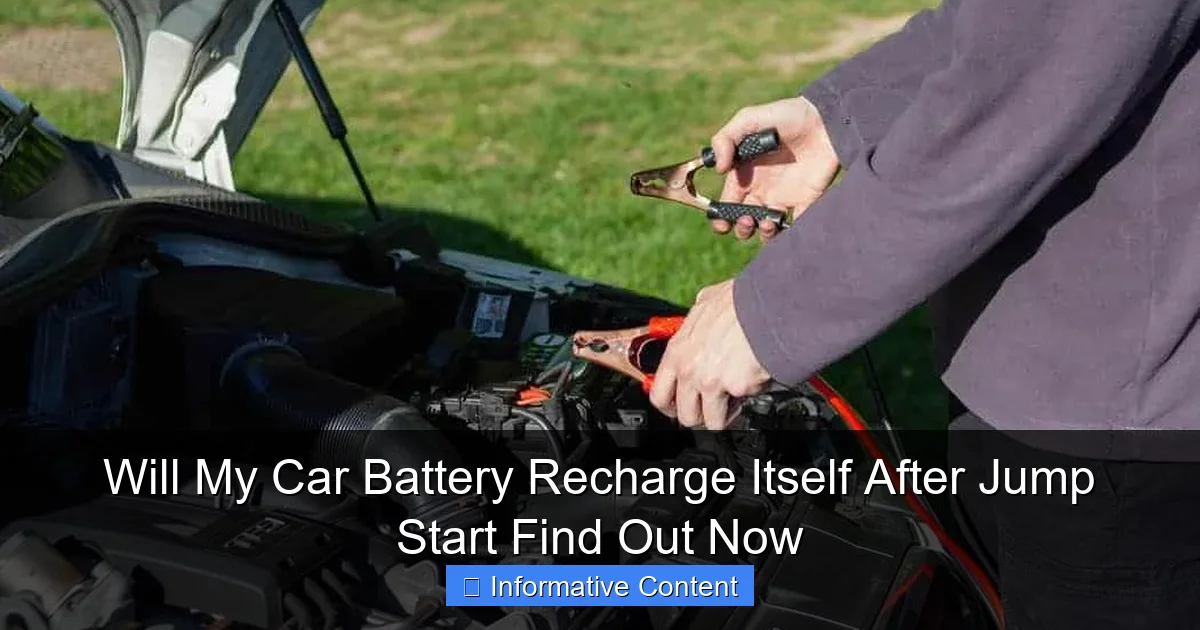
Visual guide about will my car battery recharge itself after jump start
Image source: batterytools.net
Once the engine starts, the alternator takes over. Think of it as your car’s built-in charger. It generates electricity to power the car’s systems and, crucially, to recharge the battery. So, in normal operation, the battery gets a constant top-up while you’re driving. It’s a beautifully balanced system—when everything works.
Why Batteries Die (Even After a Jump Start)
Batteries don’t die overnight. They usually give signs: dim headlights, slow cranking, or a dashboard warning light. But sometimes, it’s sudden—like leaving your lights on overnight or a faulty alternator. Here are the most common reasons your battery might need a jump:
- Deep Discharge: Using the car’s electronics (radio, lights, AC) for long periods with the engine off drains the battery. A jump start might get you going, but if the battery is deeply discharged, it may not hold a charge.
- Age and Wear: Car batteries typically last 3–5 years. Over time, the lead plates degrade, reducing capacity. A jump might work once, but an old battery won’t recharge fully.
- Corrosion or Sulfation: White crust on the terminals (corrosion) or a buildup of lead sulfate crystals (sulfation) can block charging. Even if the alternator is working, the battery can’t absorb the charge.
- Faulty Alternator: If the alternator isn’t charging properly, the battery will drain—even while driving. A jump start is just a band-aid here. The root cause needs fixing.
- Parasitic Drain: Some electrical systems (alarms, clocks) draw power when the car is off. If there’s an excessive drain (e.g., a stuck relay), the battery can die overnight.
Real-life example: My neighbor, Sarah, jumped her 4-year-old car last winter after leaving the headlights on. She drove to work the next day, but the battery died again by lunchtime. Why? Her alternator was failing, and the battery was already weak. The jump was a temporary fix—but the real problem was deeper.
Can a Jump-Started Battery Recharge Itself?
The Role of the Alternator
Here’s the million-dollar question: Will my car battery recharge itself after a jump start? The answer hinges on the alternator. If your alternator is working well, it can recharge the battery—but with caveats.
After a jump start, the alternator sends electrical current back to the battery. However, it doesn’t charge it instantly. Think of it like filling a leaky bucket. The alternator is the hose, but if the bucket (battery) has cracks or holes (damage), the water (charge) won’t stay.
For a healthy battery, driving for 20–30 minutes at highway speeds (where the alternator works harder) can restore 70–80% of the charge. But if the battery is old, damaged, or deeply discharged, the alternator might only partially recharge it—or not at all.
Factors That Affect Recharge Ability
Not all batteries respond the same way to a jump. Here’s what determines whether your battery can recharge itself:
- Battery Health: A 1-year-old battery with no damage will recharge better than a 5-year-old one with sulfation.
- Depth of Discharge: A battery drained to 50% will recover faster than one at 10% (or lower). Deep discharges cause internal damage.
- Driving Conditions: Short trips (<10 minutes) don’t give the alternator enough time to recharge. Highway driving is better because the alternator spins faster.
- Electrical Load: Running AC, lights, and radio while driving reduces the alternator’s charging capacity. The more you use, the less power goes to the battery.
- Temperature: Cold weather slows chemical reactions in the battery, reducing its ability to accept a charge. A jump-started battery in winter may struggle to recharge fully.
Tip: After a jump, drive for at least 30 minutes—preferably on the highway. Turn off non-essential electronics (AC, radio) to maximize charging. If you notice dim lights or slow cranking after driving, the battery likely isn’t recharging properly.
When a Jump Start Isn’t Enough: Signs Your Battery Needs Replacement
Red Flags to Watch For
A jump start is a great temporary fix, but it’s not a cure-all. If your battery is failing, it’ll show clear signs. Don’t ignore these red flags—they mean your battery might not recharge itself, even with a good alternator:
- Slow Cranking After a Jump: If the engine turns over slowly (even after driving), the battery isn’t holding a charge.
- Frequent Jumps Needed: If you need to jump the car more than once in a week, the battery is likely dead or dying.
- Swollen or Bulging Battery Case: Heat or overcharging can cause the battery to swell. This means internal damage.
- Low Voltage: A healthy battery reads 12.6+ volts when the car is off. Below 12.4V, it’s undercharged. Below 12V, it’s deeply discharged.
- Age: Batteries over 3 years old are on borrowed time. Even if they work now, they’re prone to sudden failure.
Example: My friend Mark jumped his car after leaving the dome light on. He drove 20 minutes, but the next morning, the battery was dead again. A voltage test showed it was only holding 10.8V—way below normal. He replaced it, and the problem vanished.
Testing Your Battery (Without a Mechanic)
You don’t need a mechanic to check your battery. Here’s how to do it yourself:
- Voltage Test: Use a multimeter. With the car off, touch the red probe to the positive terminal (+) and black to negative (–). A reading below 12.4V means the battery is weak.
- Load Test: Turn on the headlights for 15 seconds. If they dim significantly, the battery can’t hold a charge. (Or, borrow a battery load tester from an auto parts store—they often do free tests.)
- Check Terminals: Look for white/green crust (corrosion). Clean with baking soda and water if needed.
- Listen for Clicking: If you hear a rapid clicking when turning the key, the battery doesn’t have enough power to engage the starter.
Pro tip: Auto parts stores like AutoZone or O’Reilly offer free battery and alternator testing. It takes 10 minutes and can save you from a surprise breakdown.
How to Help Your Battery Recharge After a Jump Start
Smart Driving Habits for Faster Recharge
If your battery is still healthy, you can help it recharge faster after a jump. Here’s how:
- Drive Long and Steady: Aim for 30+ minutes of continuous driving. Avoid stop-and-go traffic. Highway speeds let the alternator work at peak efficiency.
- Turn Off Electronics: Disable AC, radio, heated seats, and phone chargers. Every watt saved goes to the battery.
- Rev the Engine: At red lights, gently rev to 1,500–2,000 RPM. This boosts alternator output.
- Avoid Short Trips: If you must drive short distances, combine errands. Multiple short trips drain more than one long drive.
- Check the Alternator Belt: A loose or worn belt reduces alternator power. Listen for squealing or check for cracks.
Example: After jumping my car, I drove to the next town (45 minutes) with the radio off. When I arrived, the voltage was 12.8V—fully charged. The next day, it started instantly.
Using a Battery Charger (The Right Way)
If you’re not driving long distances, a trickle charger can help. It’s a slow, steady charger that won’t overheat the battery. Here’s how to use it:
- Disconnect the battery (negative first, then positive).
- Connect the charger’s red clamp to the positive terminal and black to negative.
- Set the charger to “trickle” or “maintenance” mode (2–4 amps).
- Charge for 12–24 hours. Don’t leave it unattended overnight.
Warning: Never use a fast charger on a deeply discharged battery. It can cause overheating or even explosions.
Preventing Future Jump Starts
The best way to avoid a jump is to prevent the problem:
- Replace Old Batteries: If your battery is 3+ years old, consider replacing it before it fails.
- Use a Battery Maintainer: If you park for long periods, a maintainer keeps the battery topped up.
- Check for Parasitic Drains: If the battery dies overnight, have an electrician check for excessive drains.
- Inspect the Alternator: If your battery keeps dying, the alternator might be the culprit. Get it tested.
Data: How Long Does It Take to Recharge a Battery After a Jump?
Here’s a quick reference table showing how long it takes to recharge a typical 12V car battery under different conditions:
| Battery Condition | Driving Time (Highway) | Charge Restored | Notes |
|---|---|---|---|
| Healthy, 50% discharged | 20–30 minutes | 70–80% | Best-case scenario |
| Healthy, 80% discharged | 45–60 minutes | 60–70% | May need a full charge later |
| Aged (4+ years), 50% discharged | 30–45 minutes | 40–50% | Recharge is slower; battery may not hold charge |
| Deeply discharged (10% or less) | 60+ minutes | 30–50% | High risk of sulfation; use a charger |
| Faulty alternator | N/A | 0–10% | Battery drains while driving |
Note: These estimates assume a functioning alternator and no extreme temperatures. Cold weather slows charging.
Final Thoughts: Is Your Battery a Lost Cause?
So, will your car battery recharge itself after a jump start? The answer is: It depends. If the battery is healthy, the alternator is working, and you drive long enough, yes—it can recharge. But if the battery is old, damaged, or the alternator is failing, a jump start is just a temporary solution. You’ll likely need a new battery—or a repair.
Here’s the bottom line: Don’t assume a jump means everything’s fine. Test your battery, check your alternator, and drive smart. If you’re in doubt, get a professional test. A $20 battery check could save you from being stranded in the middle of nowhere.
Remember, your car’s battery is like a heart. It doesn’t last forever. Treat it well—replace it when needed, avoid deep discharges, and give it time to recharge. With a little attention, you can avoid those heart-stopping moments when your car won’t start. And next time someone asks, “Will my car battery recharge itself after a jump start?”—you’ll have the answer.
Frequently Asked Questions
Will my car battery recharge itself after a jump start?
Yes, your car battery can recharge itself after a jump start, but it depends on the battery’s health and whether the alternator is functioning properly. The alternator supplies power to recharge the battery while the engine runs.
How long does it take for a car battery to recharge after a jump start?
It typically takes 30 minutes to a few hours of driving for the alternator to partially recharge a jump-started battery. For a full recharge, longer driving or using a dedicated battery charger is recommended.
Can a completely dead battery recharge itself after jump starting?
A severely discharged battery may not hold a charge effectively even after a jump start if it’s old or damaged. While the alternator can restore some charge, a faulty battery often needs replacement.
Does the alternator fully recharge a jump-started battery?
The alternator can recharge a jump-started battery under normal conditions, but it may not fully restore capacity if the battery is worn out. Regular short trips may also prevent complete recharging.
Will my car battery recharge itself if I just idle after a jump start?
Idling provides minimal recharging because the alternator produces less power at low RPMs. Driving at highway speeds is far more effective for restoring battery charge after a jump start.
What are signs my battery won’t recharge itself after a jump start?
If your battery repeatedly dies after jump starts, or the engine struggles to turn over, it likely won’t recharge itself and needs replacement. Corroded terminals or a faulty alternator could also be culprits.