
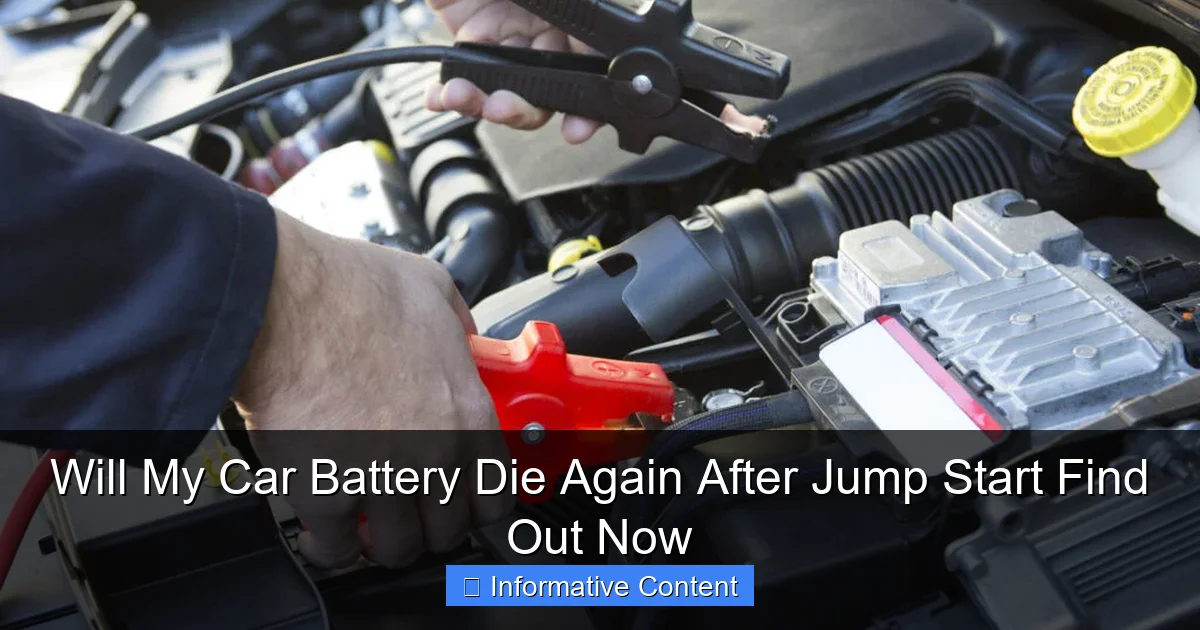
Featured image for will my car battery die again after jump start
Image source: mycarmakesnoise.com
A jump start can get your car running, but it won’t fix an old or damaged battery—meaning your car battery could die again soon if the underlying issue isn’t addressed. Factors like battery age, alternator health, and frequent short trips determine whether the battery will hold a charge or fail repeatedly. Get your battery and charging system tested immediately after a jump to avoid being stranded again.
Key Takeaways
- Jump starts don’t fix dead batteries: They only provide temporary power if the battery is faulty.
- Test your battery immediately: Use a multimeter or visit a mechanic to check its health post-jump.
- Recharge or replace: A jump-started battery needs a full recharge or replacement to avoid repeated failures.
- Inspect alternator function: Ensure the alternator is charging the battery properly to prevent future issues.
- Avoid short trips after jump: Drive for 20+ minutes to allow the battery to recharge fully.
- Preventative maintenance matters: Clean terminals, check connections, and monitor battery age to reduce risks.
📑 Table of Contents
- Why Jump-Starting Your Car Might Not Be the Final Fix
- How Jump-Starting Works (And Why It’s Temporary)
- Common Reasons Your Battery Dies After a Jump Start
- How to Diagnose the Real Problem (Without a Mechanic)
- Preventing Future Battery Deaths: Proactive Steps
- When to Replace Your Battery vs. Repair the System
- Final Thoughts: Will My Car Battery Die Again After Jump Start?
Why Jump-Starting Your Car Might Not Be the Final Fix
Picture this: You’re running late for work, you hop in the car, turn the key, and—nothing. The engine doesn’t crank, the dashboard lights flicker, and you realize your car battery has given up on you. Again. You call a friend, grab some jumper cables, and after a few tense minutes, the engine roars back to life. Relief washes over you. But then the nagging question hits: Will my car battery die again after jump start? It’s a common worry, and you’re not alone. Thousands of drivers face this exact scenario every winter, and even in milder seasons.
Jump-starting your car feels like a miracle fix, but it’s more of a temporary bandage. Think of it like putting a splint on a broken leg—it helps you walk, but the real healing comes later. The real issue isn’t just whether the battery will die again, but why it died in the first place. Was it age? A faulty charging system? Or maybe something as simple as leaving the headlights on? Understanding the root cause is key to avoiding another frustrating morning with a dead battery. In this post, we’ll explore the real reasons behind battery failure after a jump start, what you can do to prevent it, and how to know when it’s time to stop relying on jump-starts and take real action.
How Jump-Starting Works (And Why It’s Temporary)
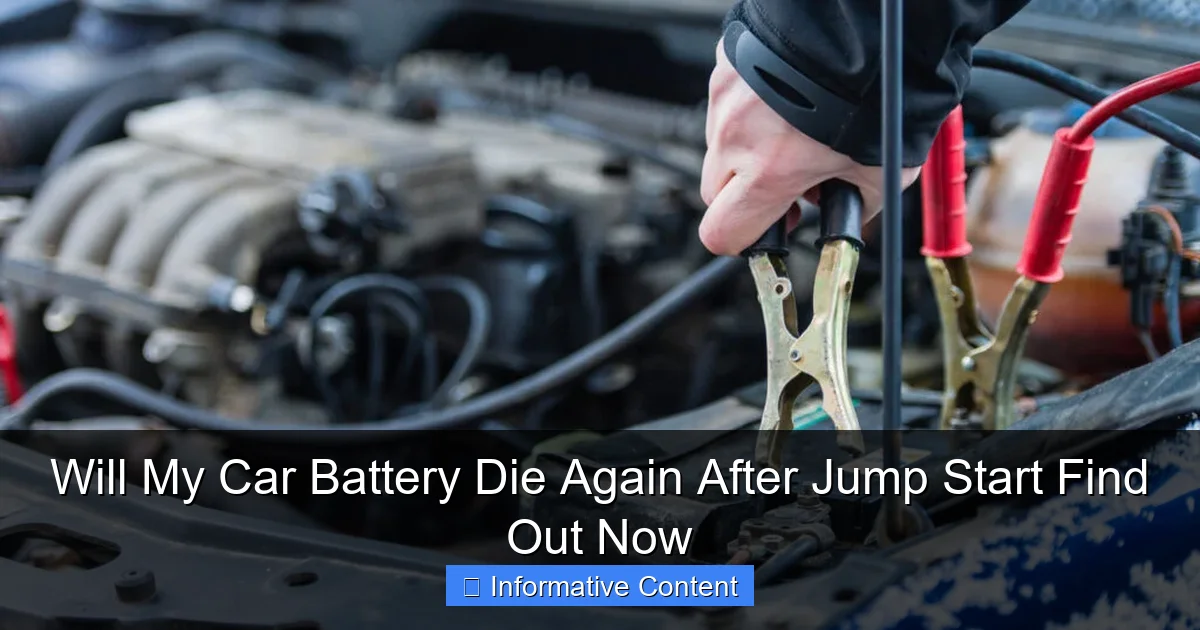
Jump-starting a car is a bit like giving your battery a caffeine jolt—it wakes it up long enough to get the engine going, but it doesn’t fix the underlying problem. When you connect jumper cables to a working battery, you’re transferring electrical power to your dead one. This surge of energy allows the starter motor to turn over, and once the engine runs, the alternator takes over, supplying power to the car and recharging the battery—assuming everything is working properly.
Visual guide about will my car battery die again after jump start
Image source: mycarmakesnoise.com
The Role of the Alternator
Think of the alternator as the battery’s personal chef. While the engine runs, it’s constantly cooking up electricity to keep the battery charged and the car’s systems running. But here’s the catch: if the alternator is weak, damaged, or not functioning, it won’t do its job. So even if you jump-start the car successfully, the battery will slowly drain again as soon as the engine stops. I once had a car where the alternator was failing. I’d jump it, drive 20 minutes, and it would start fine. But if I turned the engine off and tried to restart it an hour later? Dead again. The alternator wasn’t charging the battery—it was just keeping it barely alive.
Can a Dead Battery Be Fully Revived?
Not all dead batteries are created equal. Some are just temporarily drained—maybe you left a light on or didn’t drive the car for a week. These batteries can often be recharged fully after a jump start, especially if you drive the car for at least 30 minutes. But if the battery is old (typically 3–5 years), has a damaged cell, or has been deeply discharged multiple times, it may never hold a full charge again. A jump start might get you going, but the battery is already on its last legs.
- Tip: After a jump start, drive for at least 30 minutes at highway speeds (not stop-and-go traffic) to give the alternator time to recharge the battery.
- Example: My cousin once jump-started his 2012 sedan, drove 10 minutes to a store, and it died again in the parking lot. The battery was 6 years old—past its prime. He replaced it, and the problem stopped.
Common Reasons Your Battery Dies After a Jump Start
If you’ve jumped your car and it dies again shortly after, the problem likely goes beyond the battery itself. Let’s break down the most common culprits.
1. A Failing or Failed Alternator
As mentioned earlier, the alternator is critical. If it’s not producing enough voltage (typically 13.5–14.5 volts when the engine is running), the battery won’t recharge. A multimeter can help you test this. With the engine running, check the battery voltage. If it’s below 13 volts or fluctuates wildly, the alternator is likely the culprit. I once ignored this symptom—my car kept dying after jump-starts until I finally had the alternator replaced. The mechanic said it was only putting out 11.8 volts. No wonder the battery wouldn’t hold a charge!
2. A Bad Battery That’s Beyond Saving
Batteries have a lifespan. Most last 3–5 years, but extreme temperatures, frequent short trips, and deep discharges can shorten that. If your battery is over 4 years old and has been jump-started more than once, it’s probably time to replace it. Signs of a failing battery include:
- Slow cranking (engine turns over slowly)
- Dim headlights when the engine is off
- Swollen or leaking battery case
- Frequent jump-starts
Don’t wait for a complete failure—replace it before you’re stranded.
3. Parasitic Drain
Ever wonder why your battery dies after sitting for a few days? It could be a parasitic drain—something in your car is using power even when the engine is off. Common causes include:
- Faulty interior lights (e.g., glove box, trunk)
- Aftermarket accessories (alarms, dashcams, phone chargers)
- Faulty relays or switches
- Software issues in modern cars (infotainment systems, ECUs)
To test for parasitic drain, you can use a multimeter to measure current draw with the car off. Normal draw is 20–50 milliamps. Anything over 100 mA is excessive and needs investigation.
4. Loose or Corroded Battery Connections
Even a healthy battery can’t deliver power if the connections are bad. Corrosion (that white, powdery substance on the terminals) or loose cables can prevent proper charging and starting. Clean the terminals with a baking soda and water solution, tighten the cables, and consider using anti-corrosion spray. I learned this the hard way—after a jump start, my car died again because the positive terminal was loose. A simple $5 fix solved it.
How to Diagnose the Real Problem (Without a Mechanic)
You don’t need to be a mechanic to figure out why your battery keeps dying after a jump start. With a few tools and some basic know-how, you can diagnose the issue yourself.
Step 1: Check the Battery Age and Condition
Look at the battery’s date code (usually stamped on the case). Most batteries have a 3-year warranty. If yours is older, replacement is the safest bet. Also, inspect for physical damage—swelling, cracks, or leaks mean it’s time to replace.
Step 2: Test the Battery Voltage
Use a multimeter to check:
- With the engine off: A healthy battery should read 12.6 volts or higher. Below 12.4 volts means it’s partially discharged; below 12.0 volts is deeply discharged.
- With the engine running: Voltage should be 13.5–14.5 volts. If it’s lower, the alternator isn’t charging properly.
Pro tip: Test the voltage before and after a jump start. If it drops significantly when you turn the engine off, the battery isn’t holding a charge.
Step 3: Test for Parasitic Drain
Here’s how:
- Turn off the car and remove the keys.
- Set your multimeter to measure current (amps).
- Disconnect the negative battery cable.
- Connect the multimeter between the negative terminal and the cable.
- Wait 10–15 minutes for the car’s systems to “sleep.”
- Check the reading. More than 50–100 mA? You’ve got a drain.
To find the source, pull fuses one by one. When the current drops, you’ve found the circuit with the issue.
Step 4: Inspect the Alternator and Charging System
Listen for unusual noises (grinding, whining) from the engine bay—these can indicate alternator issues. Also, watch for warning lights (e.g., battery light on the dashboard) or flickering lights. If the alternator is the problem, it needs to be replaced—no amount of jump-starting will fix it.
Preventing Future Battery Deaths: Proactive Steps
Jump-starting is a short-term fix. To avoid repeat incidents, take these steps to keep your battery and charging system healthy.
1. Drive Regularly and for Long Enough
Batteries need regular charging. Short trips (under 15 minutes) don’t give the alternator enough time to recharge the battery fully. If you mostly do short drives, consider:
- Taking a longer drive once a week
- Using a battery maintainer (trickle charger) when the car is parked for days
Example: A friend who works from home and drives only to the grocery store every few weeks uses a $30 battery tender. Her battery is 4 years old and still strong.
2. Keep the Battery and Terminals Clean
Clean terminals ensure good electrical contact. Every few months:
- Disconnect the battery (negative first)
- Scrub terminals with a wire brush and baking soda/water mix
- Rinse and dry
- Reconnect (positive first)
- Apply anti-corrosion gel
3. Turn Off Lights and Accessories When Not in Use
It sounds obvious, but it’s easy to forget. Always:
- Check headlights, interior lights, and trunk lights
- Unplug phone chargers and dashcams when parked
- Use the car’s “auto” lights if available
4. Consider a Battery Upgrade
If you live in a cold climate or drive infrequently, consider a higher-quality battery. Options include:
- AGM (Absorbent Glass Mat): More durable, better for cold weather, but more expensive
- Deep-cycle batteries: Designed to handle frequent discharges (great for cars with lots of electronics)
Not all cars need these—check your owner’s manual or consult a mechanic.
When to Replace Your Battery vs. Repair the System
Knowing whether to replace the battery or fix the charging system can save you time and money. Here’s a quick guide.
Battery Replacement: Do It If…
- The battery is over 4 years old
- It’s been jump-started more than twice in the past year
- Voltage tests show it’s not holding a charge
- There’s visible damage (swelling, leaks)
Tip: Most auto parts stores will test your battery for free. Take advantage of this before buying a new one.
Alternator or Charging System Repair: Do It If…
- The battery voltage is low when the engine is running
- The battery light is on
- You hear grinding or whining noises from the engine
- The battery dies repeatedly, even after replacement
Example: A reader once replaced their battery twice in six months. The second mechanic tested the alternator and found it was only putting out 11 volts. A $200 alternator fix solved the problem for good.
Data Table: Battery vs. Alternator Issues – Key Differences
| Issue | Battery Problem | Alternator Problem |
|---|---|---|
| Voltage (Engine Off) | Below 12.4V | Normal (12.6V+), but drops quickly |
| Voltage (Engine On) | 13.5–14.5V (if alternator is good) | Below 13.5V or fluctuating |
| Battery Light | May not come on | Often on or flickering |
| Jump-Start Success | Engine starts, but dies if battery is bad | Engine starts, but battery won’t charge |
| Solution | Replace battery | Replace alternator or wiring |
Final Thoughts: Will My Car Battery Die Again After Jump Start?
So, will my car battery die again after jump start? The answer isn’t a simple yes or no—it depends on the root cause. If the battery is old or damaged, yes, it will likely die again. If the alternator is failing, yes, the battery won’t charge properly. But if the issue is a simple drain (like a light left on) and the battery is healthy, a jump start might be all you need.
The key takeaway? Don’t treat jump-starting as a permanent solution. It’s a diagnostic tool. Use it to get to a safe place or a mechanic, then investigate why the battery died. Test the voltage, check for parasitic drain, inspect the alternator, and clean the terminals. If you’re unsure, get a professional opinion—many auto shops offer free battery and charging system tests.
Remember: A healthy car battery should last 3–5 years. If you’re jumping it more than once a year, something’s wrong. Whether it’s the battery, the alternator, or a hidden drain, fixing the real problem will save you time, stress, and money in the long run. And next time you’re stuck with a dead battery, you’ll know exactly what to do—not just how to jump it, but how to stop it from happening again.
Frequently Asked Questions
Will my car battery die again after jump start if the alternator is faulty?
If your alternator isn’t charging the battery properly, the car battery will likely die again after a jump start because the root cause isn’t addressed. The alternator must supply power to recharge the battery and run the vehicle’s systems while driving.
How long should I drive after a jump start to prevent the battery from dying again?
Drive for at least 30 minutes to allow the alternator to recharge the battery fully. Short trips may not provide enough charge, increasing the risk of the battery dying again after a jump start.
Can a jump start fix a completely dead or old battery?
A jump start might get an old or deeply discharged battery running temporarily, but it won’t restore its long-term health. Batteries over 3-5 years old often need replacement to avoid repeated failures.
Why does my car battery keep dying after jump starts?
Frequent battery failures after jump starts could indicate a parasitic drain, a failing alternator, or a battery that’s no longer holding a charge. Diagnosing the underlying issue is key to preventing recurrence.
Is it safe to jump start a car multiple times in a row?
While occasional jump starts are safe, repeated attempts can strain the battery, alternator, or electrical system. If your car battery dies again after jump start, have it inspected to avoid further damage.
What should I do after a jump start to avoid another dead battery?
After a jump start, test the battery and alternator at an auto shop to identify issues. If the battery is weak or the alternator is faulty, repair or replace them to prevent future problems.