
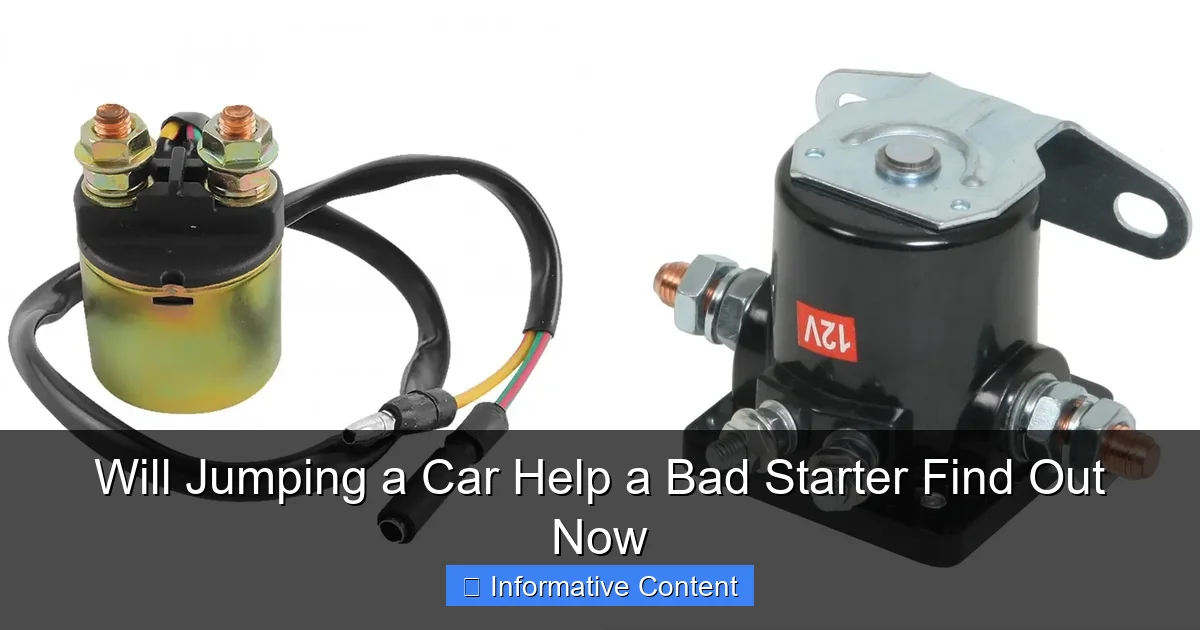
Featured image for will jumping a car help a bad starter
Image source: everstartjumpstarter.com
Jumping a car will not fix a bad starter—it only provides temporary power to crank the engine, masking the real issue. If the starter is faulty, you’ll still face failure after the jump, so diagnose and replace the defective component instead of relying on quick fixes.
Key Takeaways
- Jumping a car won’t fix a completely failed starter motor.
- Test the battery first to rule out low voltage as the issue.
- Listen for clicking sounds—they often signal starter problems.
- Jump-starting may work if the starter is weak but not dead.
- Check electrical connections before assuming the starter is faulty.
- Repeated jump-starts indicate a deeper issue needing professional repair.
📑 Table of Contents
- What Happens When Your Car Won’t Start?
- Understanding the Starter Motor and How It Works
- Battery vs. Starter: How to Tell the Difference
- Can Jumping a Car Ever Help a Bad Starter?
- What to Do Instead: Step-by-Step Solutions
- Data: Common Causes of Starting Problems
- Final Thoughts: Will Jumping a Car Help a Bad Starter?
What Happens When Your Car Won’t Start?
We’ve all been there. You’re running late, keys in hand, ready to head to work or an appointment, and your car just… won’t start. The engine cranks weakly, makes a clicking sound, or worse—nothing happens at all. Your first instinct? Grab jumper cables and call a friend. But before you start connecting cables and hoping for a miracle, you might be wondering: will jumping a car help a bad starter?
It’s a common misconception that a jump start can fix every starting issue. While jump starting is a great tool for a dead battery, it’s not a cure-all. In fact, using jumper cables on a car with a failing starter can lead to frustration, wasted time, and even damage if done incorrectly. I remember one cold winter morning when I tried to jump my own car, convinced the battery was the culprit. After 20 minutes of failed attempts and a very confused neighbor, I learned the hard way that the problem was the starter—not the battery. That experience taught me the importance of diagnosing the root cause before grabbing the cables.
In this guide, we’ll dive deep into whether jumping a car can help a bad starter, how to tell the difference between a dead battery and a faulty starter, and what you can do to fix the problem—safely and effectively. Whether you’re a seasoned DIYer or someone who just wants to avoid another roadside panic, this article will give you the clarity and confidence you need.
Understanding the Starter Motor and How It Works
What Is the Starter Motor?
The starter motor is a small but powerful electric motor located near the engine. Its job is simple: to turn the engine over (or “crank”) so the combustion process can begin. When you turn the key or press the start button, the starter receives electrical current from the battery. This current activates a solenoid, which pushes a small gear (the starter drive) into the engine’s flywheel. Once engaged, the starter spins the engine, allowing fuel and air to ignite and start the car.
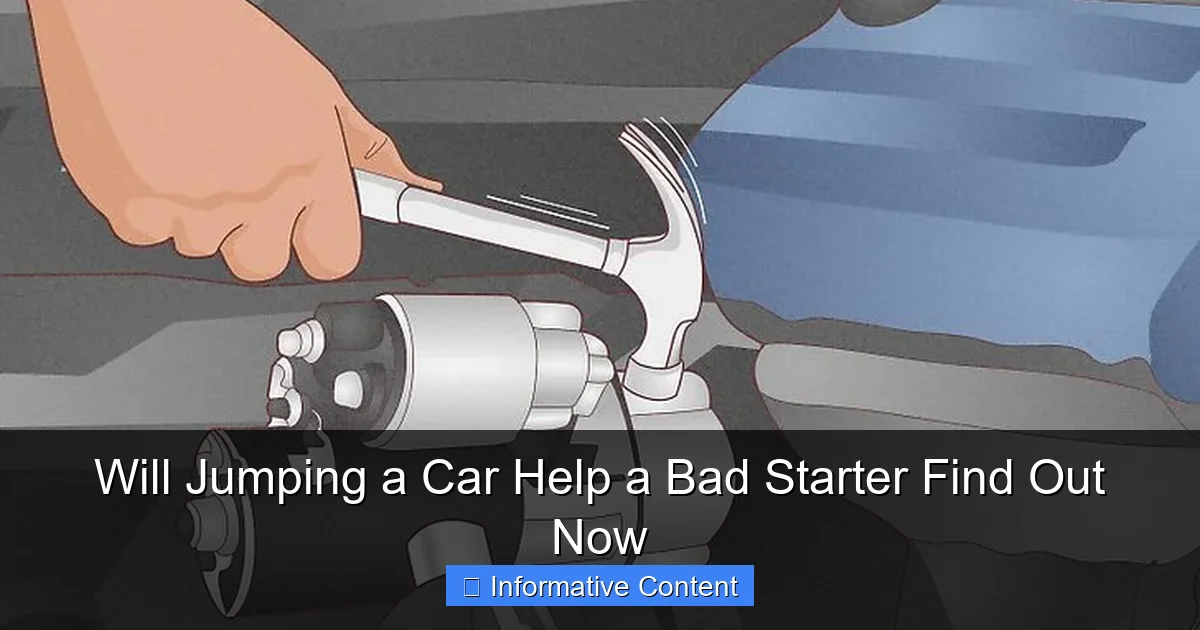
Visual guide about will jumping a car help a bad starter
Image source: wikihow.com
Think of the starter as the “first push” your car needs to get going. Without it, the engine can’t start, no matter how much fuel or spark you have. The starter is designed to handle high current loads for short bursts—usually just a few seconds per start. Over time, wear and tear can cause it to fail, especially in older vehicles or those exposed to extreme weather.
Signs of a Failing Starter Motor
How do you know if your starter is going bad? Here are some telltale signs:
- Clicking sound when turning the key: A single or repeated click (but no engine cranking) often points to a bad starter solenoid or motor.
- No sound at all: If you turn the key and hear nothing, the starter may not be getting power—or it’s completely dead.
- Intermittent starting: The car starts fine one day, but not the next. This is a classic symptom of a starter on its way out.
- Grinding noise: If the starter gear isn’t disengaging properly, it can grind against the flywheel. This is serious and needs immediate attention.
- Starter stays engaged: The starter keeps running even after the engine starts. This can cause major damage and is a safety hazard.
I once had a car that would only start if I tapped the starter with a wrench—a trick some mechanics use to temporarily free up a stuck component. It worked for a few weeks, but eventually, the starter failed completely. That experience showed me how temporary fixes can delay the inevitable, but they’re not long-term solutions.
Why a Bad Starter Won’t Respond to a Jump Start
Now, here’s the key point: jumping a car will not help a bad starter—if the starter itself is faulty. A jump start delivers extra electrical current to the battery, which helps start the car when the battery is weak or discharged. But if the starter motor or solenoid is damaged, worn out, or disconnected, that extra current won’t fix the problem.
Imagine trying to start a car with a broken fan belt. No matter how strong the engine is, the fan won’t turn. Similarly, even with a fully charged battery, a broken starter can’t deliver the mechanical energy needed to crank the engine.
That said, a weak battery can mimic a bad starter. A battery that’s low on charge may not provide enough power to fully engage the starter solenoid, resulting in a click but no crank. In those cases, a jump start can help—but only if the starter is still functional.
Battery vs. Starter: How to Tell the Difference
Check the Lights and Electrical System
One of the easiest ways to distinguish between a bad battery and a bad starter is to observe the car’s electrical behavior when you turn the key. Here’s what to look for:
- Dim or flickering lights: If your dashboard lights dim significantly when you turn the key, the battery may not have enough power to support the starter.
- Bright lights, no crank: If the lights stay bright but the engine doesn’t crank, the battery is likely fine—but the starter isn’t getting power or is broken.
- Radio and accessories work: If the radio, AC, and interior lights work normally, the battery is probably not the issue.
When I first suspected my starter was failing, I turned on the headlights. They stayed bright when I turned the key—no dimming. That told me the battery wasn’t the problem. A quick voltage test confirmed it was fully charged. The culprit? A failing starter solenoid.
Listen to the Sounds
Your ears can be a powerful diagnostic tool. Pay close attention to what you hear when you try to start the car:
- Rapid clicking: Usually means the battery doesn’t have enough power to engage the starter, but the solenoid is trying. This could be a weak battery or loose/corroded connections.
- Single loud click: Often indicates the solenoid is working, but the starter motor isn’t turning. This is a strong sign of a bad starter.
- Whirring or grinding: The starter gear is spinning but not engaging the flywheel, or it’s not disengaging after starting. This requires immediate repair.
- Silence: No sound at all suggests a wiring issue, blown fuse, or completely dead starter.
Use a Multimeter to Test Voltage
A multimeter is an affordable tool (under $20 at most hardware stores) that can help you confirm whether your battery or starter is at fault. Here’s how to use it:
- Set the multimeter to DC voltage (20V range).
- Connect the red probe to the positive battery terminal and the black probe to the negative terminal.
- A healthy battery should read 12.4–12.7 volts when the car is off.
- When you turn the key to “start,” the voltage should drop slightly (to around 10V) but not below 9.6V. If it drops below 9V, the battery is weak.
- Next, check voltage at the starter solenoid’s main terminal (usually a thick red wire). If you see battery voltage there but the starter doesn’t turn, the starter is likely bad.
I used this method during my own starter troubleshooting. The battery read 12.6V, and there was full voltage at the starter terminal—yet no crank. That told me the starter was the issue, not the battery.
Can Jumping a Car Ever Help a Bad Starter?
When a Jump Start Might Help (Spoiler: Rarely)
Let’s be clear: jumping a car will not fix a bad starter motor. However, there are rare edge cases where a jump start might help—temporarily.
For example:
- Weak battery masking a weak starter: If the battery is low and the starter is already weak, a jump might give it just enough extra current to crank the engine once or twice. But this is not a fix—it’s a temporary workaround.
- Stuck starter gear: In rare cases, a starter gear can get stuck due to corrosion or misalignment. A jump might deliver a stronger initial jolt, helping to “unstick” it. But this is unreliable and not a long-term solution.
- Corroded or loose connections: If the starter’s power or ground connections are dirty or loose, a jump might help by forcing more current through—but only if the connections are still intact.
Think of it like trying to start a car with a nearly dead phone. A quick charge might let it boot up, but if the phone’s power button is broken, it won’t matter how much charge it has.
When a Jump Start Is a Waste of Time (and Potentially Dangerous)
In most cases, attempting to jump a car with a bad starter is not just ineffective—it can be risky. Here’s why:
- No benefit to the starter: The starter needs mechanical integrity and proper internal connections. A jump doesn’t fix worn brushes, a burnt solenoid, or a broken armature.
- Risk of electrical damage: Improper jump-starting (e.g., reversed polarity) can fry the starter, alternator, or ECU. A bad starter already has electrical issues—adding more power without diagnosis can make things worse.
- Wasted time and effort: You’ll spend time setting up cables, waiting for a donor car, and possibly damaging both vehicles—only to end up with the same problem.
- False sense of hope: If the car starts after a jump, you might assume the battery was the issue. But if the starter is failing, it could leave you stranded again—possibly in a worse location.
I learned this the hard way when I jumped a friend’s car, only to have the starter fail completely the next day. We thought we’d fixed it, but we’d just delayed the inevitable. A proper diagnosis would have saved us both time and stress.
What to Do Instead: Step-by-Step Solutions
Step 1: Confirm the Problem
Before doing anything, rule out the battery and connections:
- Test the battery voltage with a multimeter.
- Check for loose or corroded battery terminals.
- Inspect the starter wiring and ground connections.
- Listen for sounds (click, whir, silence).
If the battery is weak, charge or replace it first. If the battery is good and the starter still won’t engage, proceed to the next steps.
Step 2: Tap the Starter (Temporary Fix)
As a quick test, gently tap the starter with a rubber mallet or the handle of a wrench while someone tries to start the car. This can sometimes free up a stuck solenoid or worn internal components.
Don’t use a hammer—too much force can damage the starter. And don’t rely on this long-term. It’s just a diagnostic tool.
Step 3: Check the Starter Solenoid and Wiring
Locate the starter (usually near the bottom of the engine). Look for:
- Corrosion or rust on terminals.
- Frayed or broken wires.
- Blown fuses in the starter circuit (check your owner’s manual for fuse box location).
Clean any corrosion with a wire brush and tighten connections. If wires are damaged, repair or replace them.
Step 4: Test the Starter Relay
The starter relay is a small switch in the fuse box that sends power to the starter. If it’s faulty, the starter won’t get power—even with a good battery.
To test:
- Swap the starter relay with an identical one (e.g., horn or headlight relay).
- Try starting the car. If it works, replace the relay.
Step 5: Replace the Starter
If all else fails, the starter likely needs replacement. You have two options:
- DIY replacement: If you’re comfortable with basic auto repairs, you can remove and replace the starter yourself. It usually takes 1–3 hours, depending on your car. Use jack stands and follow safety procedures.
- Professional repair: If you’re not confident, take it to a trusted mechanic. Labor costs vary, but expect to pay $150–$300 for the job, plus the cost of a new starter ($100–$300).
When I replaced my own starter, I saved about $200 in labor. But I also spent hours researching the right part and double-checking connections. It’s doable, but not for everyone.
Step 6: Prevent Future Issues
Once your starter is working, take steps to avoid future problems:
- Keep battery terminals clean and tight.
- Replace the battery every 3–5 years.
- Park in a garage or use a car cover in extreme weather.
- Listen for early warning signs (clicking, grinding).
Data: Common Causes of Starting Problems
| Cause | Likely to Be Fixed by Jump? | Typical Symptoms | Recommended Action |
|---|---|---|---|
| Dead or weak battery | Yes | Dim lights, slow crank, clicking | Jump start, charge, or replace battery |
| Bad starter motor | No | Click, no crank, grinding | Replace starter |
| Faulty starter solenoid | No | Click, no crank | Replace solenoid or entire starter |
| Corroded terminals | Yes (temporarily) | Intermittent starting, dim lights | Clean terminals, check connections |
| Bad starter relay | No | No sound, no crank | Replace relay |
| Ignition switch failure | No | No power to accessories | Replace ignition switch |
Final Thoughts: Will Jumping a Car Help a Bad Starter?
After years of troubleshooting car issues—both on my own vehicles and helping friends—I can confidently say this: jumping a car will not help a bad starter. The starter is a mechanical and electrical component that needs to be in working order to crank the engine. A jump start only addresses battery-related issues, not internal starter failure.
That doesn’t mean jump starting is useless. It’s a vital skill for dead batteries, and it can help in rare cases where a weak battery is masking a weak starter. But if your starter is truly bad, no amount of extra current will fix it. You need a proper diagnosis and, most likely, a replacement.
The key takeaway? Don’t assume the battery is always the problem. Take a moment to observe, listen, and test. Use a multimeter. Tap the starter. Check the relay. These small steps can save you time, money, and stress.
And remember: a car that won’t start is frustrating, but it’s not the end of the world. With the right knowledge, you can figure out what’s wrong—and fix it. Whether you DIY or call a mechanic, understanding the difference between a dead battery and a bad starter puts you in control.
So the next time you’re standing in your driveway with jumper cables in hand, pause. Ask yourself: Is this really a battery issue? If the answer is no, don’t waste your time. Focus on the real problem—and get back on the road with confidence.
Frequently Asked Questions
Will jumping a car help a bad starter?
Jumping a car can temporarily bypass a weak battery, but it won’t fix a failing starter. If the starter motor is damaged or worn out, you’ll still need professional repairs or replacement.
Can a jump start fix a starter problem?
A jump start may get your car running if the issue is a low battery, but it won’t repair a bad starter. Persistent starting issues after a jump likely mean the starter itself needs attention.
How do I know if my starter is bad or just needs a jump?
If your car starts after a jump but dies again, or you hear clicking noises, the starter is likely the culprit. A battery test at an auto shop can confirm whether it’s the battery or starter.
Is it safe to jump a car with a bad starter?
Yes, jumping is safe, but it’s a short-term solution. Continuing to jump a car with a bad starter can strain other electrical components and leave you stranded.
What are the signs a bad starter needs replacement, not a jump?
Frequent no-starts, grinding noises, or a burning smell point to a failing starter. Jumping won’t help these symptoms—only a mechanic can diagnose and replace the faulty part.
Does jumping a car damage the starter or alternator?
Properly jumping a car won’t damage the starter or alternator. However, repeated jumping with a bad starter can overload the system, leading to further electrical issues.