
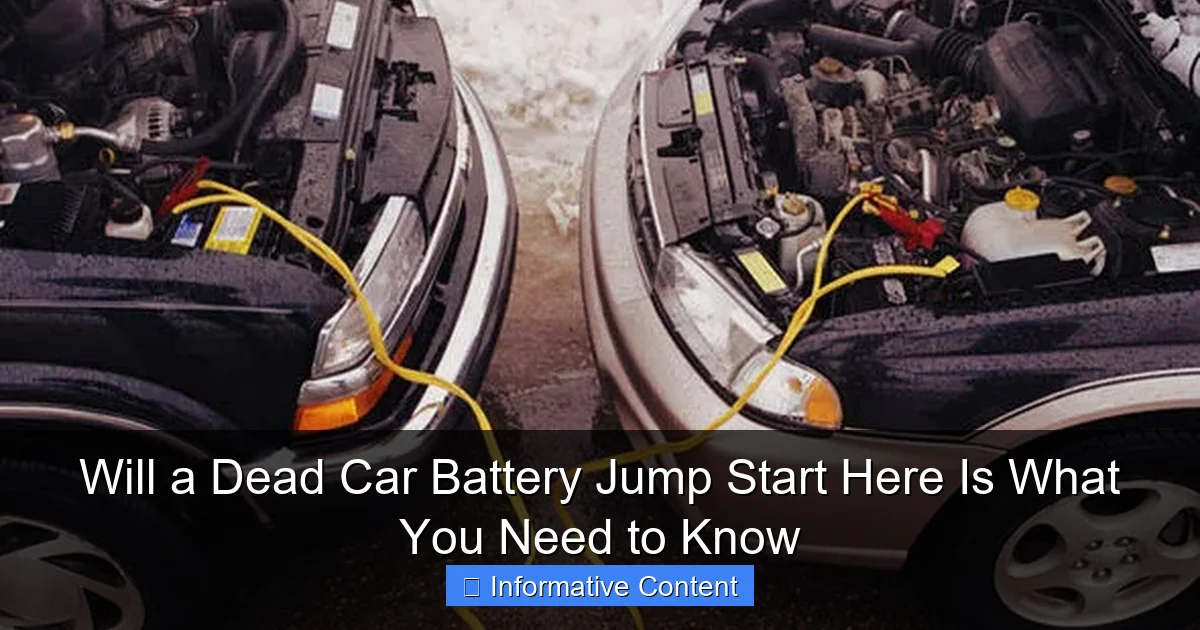
Featured image for will a dead car battery jump start
Image source: cdn.images.express.co.uk
Yes, a dead car battery can often be jump-started if the issue is a simple power drain and not internal battery failure. Using jumper cables and a functioning vehicle or portable jump starter delivers the necessary voltage to restart your engine—just ensure proper connections and follow safety precautions to avoid damage or injury.
Key Takeaways
- Jump-starting works if the battery is drained, not fully dead.
- Use proper cables to avoid damage or dangerous sparks.
- Check connections—clean terminals ensure a successful jump.
- Run the engine 15–30 minutes to recharge the battery.
- Repeated jumps signal a failing battery needing replacement.
- Prevent drain by turning off lights and electronics when parked.
📑 Table of Contents
- Will a Dead Car Battery Jump Start? Here’s What You Need to Know
- Understanding Why Car Batteries Die (And What It Means for Jump Starts)
- The Science Behind Jump Starting: How It Works
- Tools You Need: Jumper Cables vs. Portable Jump Starters
- Step-by-Step Guide to Jump Starting Your Car (Safely)
- When a Jump Start Won’t Work (And What to Do Instead)
- Final Thoughts: Be Prepared, Stay Safe
Will a Dead Car Battery Jump Start? Here’s What You Need to Know
Imagine this: you’re running late for work, you hop into your car, turn the key, and… nothing. The engine doesn’t crank, the lights are dim, and your heart sinks. A dead car battery is one of those frustrating, all-too-common automotive problems that can strike at the worst possible moment. But before you panic and call a tow truck, there’s a good chance you can fix this with a simple jump start. The big question is: will a dead car battery jump start? The short answer is: yes, in most cases. But there’s a lot more to it than just connecting two batteries and hoping for the best.
In this guide, I’ll walk you through everything you need to know about jump-starting a dead car battery. We’ll cover the science behind it, the tools you’ll need, common mistakes to avoid, and what to do if a jump start doesn’t work. Whether you’re a seasoned driver or someone who’s never even held a set of jumper cables, this post will give you the confidence and know-how to handle a dead battery like a pro. Think of it as a friendly chat with someone who’s been there, done that, and learned a few hard lessons along the way.
Understanding Why Car Batteries Die (And What It Means for Jump Starts)
Before we dive into jump-starting, it’s important to understand why car batteries die in the first place. This knowledge will help you determine whether a jump start is likely to work — or if the problem is something more serious.
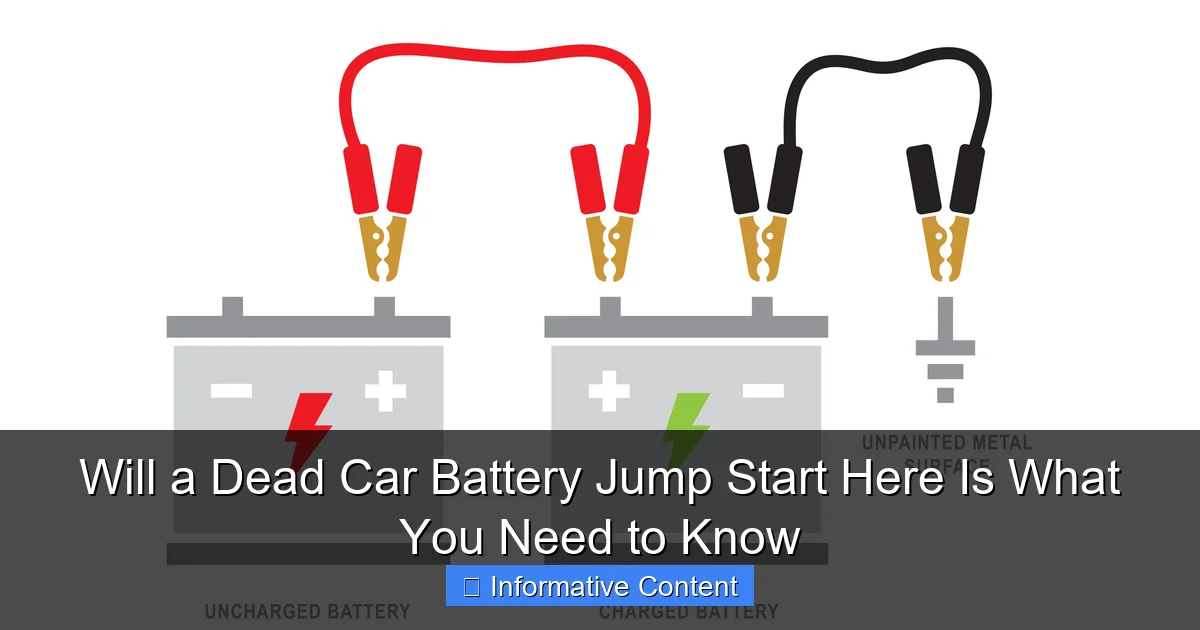
Visual guide about will a dead car battery jump start
Image source: tontio.com
Common Causes of a Dead Car Battery
Car batteries typically last 3 to 5 years, but several factors can shorten their lifespan. Here are the most common reasons your battery might be dead:
- Leaving lights or accessories on: It happens to the best of us. A dome light, glove box light, or phone charger left plugged in overnight can drain a battery completely.
- Extreme temperatures: Cold weather slows down chemical reactions inside the battery, reducing its power. Heat, on the other hand, accelerates corrosion and evaporation of battery fluid.
- Old age: Batteries degrade over time. Even if you’ve taken good care of yours, internal components wear out and lose their ability to hold a charge.
- Faulty charging system: If your alternator isn’t working properly, the battery won’t recharge while driving. This leads to gradual discharge.
- Parasitic drain: Some electronics (like the clock, alarm, or infotainment system) draw small amounts of power even when the car is off. If there’s a short circuit or malfunction, this can drain the battery over time.
How Battery Health Affects Jump-Start Success
Here’s the key insight: not all dead batteries are created equal. If your battery is simply discharged (meaning it has power but not enough to start the engine), a jump start is very likely to work. This is common after leaving lights on or during cold winter mornings.
However, if the battery is physically damaged, sulfated (a buildup of lead sulfate crystals that reduces capacity), or completely worn out, a jump start might only provide temporary relief — or fail altogether. In these cases, the battery can’t hold a charge, even after being jumped.
Real-life example: Last winter, my neighbor tried to jump his car after leaving the headlights on overnight. The engine started right away. But when he tried to restart it an hour later, the battery was dead again. That’s a classic sign of a healthy battery that just needed a boost. Contrast that with my uncle’s SUV — same symptoms, but after a jump, the car wouldn’t stay running. A mechanic later confirmed the battery was 6 years old and beyond repair.
The Science Behind Jump Starting: How It Works
Jump starting might seem like magic, but it’s actually a simple application of basic electricity. Let’s break down what happens when you connect two batteries.
Basic Electrical Principles at Play
A car battery stores energy in the form of direct current (DC). When you turn the key, the battery sends a high burst of current to the starter motor, which turns the engine. If the battery voltage drops too low (typically below 10–12 volts), the starter can’t generate enough torque to crank the engine.
Jump starting works by connecting your dead battery in parallel with a working battery (from another car or a portable jump starter). This increases the total voltage and current available to the starter. Think of it like teamwork: two batteries together can do what one tired battery can’t.
The cables are thick and insulated to handle the high current (often 400–600 amps) needed to start the engine. The positive (red) cable connects to the positive terminals of both batteries, and the negative (black) cable connects the negative terminal of the good battery to a grounded metal part on the dead car (usually the engine block). This grounding prevents sparks near the battery, which could ignite hydrogen gas.
Why the Order of Connections Matters
You’ve probably heard the “correct order” for connecting jumper cables. It’s not just tradition — it’s safety. Here’s the proper sequence:
- Connect the red clamp to the positive (+) terminal of the dead battery.
- Connect the other red clamp to the positive (+) terminal of the good battery.
- Connect the black clamp to the negative (-) terminal of the good battery.
- Connect the other black clamp to an unpainted metal surface on the dead car (not the dead battery’s negative terminal).
Why step 4? If you connect the final clamp to the dead battery’s negative terminal, any spark could ignite hydrogen gas leaking from the battery — a rare but dangerous risk. Grounding it on the engine block keeps sparks away from the battery.
Pro tip: After connecting the cables, wait 1–2 minutes before trying to start the dead car. This lets some charge transfer to the dead battery, making the jump more effective. Then, start the working car and let it idle for a minute or two to stabilize the system.
Tools You Need: Jumper Cables vs. Portable Jump Starters
Now that you know how jump starting works, let’s talk tools. You’ve got two main options: traditional jumper cables or a portable jump starter (also called a jump box). Each has its pros and cons.
Jumper Cables: The Classic Approach
Jumper cables are affordable and reliable — if you have access to another car. Here’s what to look for:
- Length: 10–20 feet is ideal. Longer cables reduce voltage drop but are bulkier.
- Thickness (gauge): Lower gauge numbers mean thicker cables. 4-gauge or 2-gauge cables are best for high-current applications. Avoid thin 10-gauge cables — they can overheat.
- Clamps: Look for copper or copper-plated clamps with strong spring tension. They should grip terminals securely.
- Insulation: Thick rubber coating prevents shorts and protects against weather.
My experience: I once used cheap 10-gauge cables from a discount store. The clamps slipped off, and the cables got warm during the jump. Not dangerous, but inefficient. I now keep a set of 4-gauge cables in my trunk — they’ve never failed.
Portable Jump Starters: The Modern Alternative
Jump starters are compact lithium-ion battery packs with built-in cables. They’re perfect for solo drivers or emergency kits. Benefits include:
- No second car needed: Ideal if you’re alone or in a remote area.
- Multi-functionality: Many include USB ports, flashlights, and tire inflators.
- Portability: Easy to store in a glove box or trunk.
But there are downsides:
- Cost: Quality jump starters range from $50–$150.
- Battery life: They lose charge over time. You must recharge them every 3–6 months.
- Power limits: Smaller units may struggle with large engines (V8s, diesel trucks).
Tip: If you buy a jump starter, get one rated for your engine size. A 1200-amp unit works for most cars, but trucks and SUVs may need 2000+ amps.
Which Should You Choose?
Here’s a quick comparison:
| Feature | Jumper Cables | Portable Jump Starter |
|---|---|---|
| Cost | $20–$50 | $50–$150 |
| Requires second car | Yes | No |
| Portability | Bulky | Compact |
| Maintenance | None | Recharge every 3–6 months |
| Best for | Frequent jump-starters, roadside assistance | Urban drivers, emergency kits |
For most people, I recommend having both. Keep jumper cables for when a friend or Good Samaritan can help, and a jump starter for solo emergencies.
Step-by-Step Guide to Jump Starting Your Car (Safely)
Now, let’s walk through the jump-start process. I’ll include tips to avoid common mistakes.
Preparation: Safety First
Before touching any cables:
- Turn off both vehicles. No keys in the ignition.
- Park close (but not touching). Bumper-to-bumper, with engines off.
- Set parking brakes and put cars in park (automatic) or neutral (manual).
- Wear safety glasses. Batteries can leak acid or explode.
- Check for damage. If the dead battery is cracked, leaking, or bulging, do not jump it. Replace it instead.
The Jump-Start Sequence (With Pro Tips)
Follow these steps carefully:
- Connect red to dead battery (+). Make sure the clamp is secure.
- Connect red to good battery (+). Double-check polarity.
- Connect black to good battery (-). Firm connection.
- Connect black to dead car’s ground. Find a clean, unpainted bolt or bracket on the engine block. Avoid the battery’s negative terminal.
- Start the working car. Let it idle for 1–2 minutes. This stabilizes voltage.
- Try starting the dead car. If it doesn’t start, wait 2–3 minutes and try again. Do not crank for more than 10 seconds at a time.
- Once running, let both cars idle for 5–10 minutes. This lets the alternator recharge the dead battery.
- Disconnect cables in reverse order. Remove black from ground first, then black from good battery, red from good battery, and finally red from dead battery. Never let clamps touch each other during removal.
Common mistake: People often rush and try to start the dead car immediately after connecting cables. That’s a recipe for failure. Patience pays off.
After the Jump: What to Do Next
Once your car starts:
- Drive for at least 20–30 minutes. This gives the alternator time to recharge the battery.
- Turn off all accessories (AC, radio, lights). Reduce electrical load.
- Get the battery tested. Visit an auto parts store (most offer free testing). This tells you if the battery is still good or needs replacement.
My story: After a successful jump, I drove 10 minutes to work and turned off the car. When I came back, the battery was dead again. The test revealed a weak alternator — the battery was fine, but it wasn’t charging. A jump start only masks underlying issues.
When a Jump Start Won’t Work (And What to Do Instead)
Not every dead battery can be jump-started. Here are the red flags and next steps.
Signs the Battery Can’t Be Revived
If you’ve followed the steps and the car still won’t start, check for:
- Clicking sound when turning the key. This means the starter is getting power but the battery can’t deliver enough current.
- No sound at all. Could indicate a bad starter, ignition switch, or wiring issue.
- Swollen or cracked battery case. Physical damage means the battery is unsafe to use.
- Strong rotten egg smell. Indicates a leaking or overcharged battery. Do not jump.
Other Potential Problems
A jump start assumes the battery is the only issue. But sometimes, the problem is elsewhere:
- Bad alternator: Even with a jump, the car dies when the working car is turned off.
- Starter motor failure: The engine won’t crank even with a good battery.
- Fuel or ignition issues: A jump won’t help if there’s no fuel or spark.
Next Steps: Diagnose and Repair
If a jump fails:
- Test the battery and alternator. Most auto shops do this for free.
- Check fuses and connections. Loose cables or blown fuses can mimic battery failure.
- Call for roadside assistance. Towing may be necessary.
- Consider battery replacement. If the battery is over 4 years old, it’s probably time.
Final tip: Keep a battery tester in your car. A $20 multimeter can save you from unnecessary jumps and help diagnose issues early.
Final Thoughts: Be Prepared, Stay Safe
So, will a dead car battery jump start? In the majority of cases, yes — but only if the battery is simply discharged, not damaged or worn out. Jump starting is a valuable skill that can save you time, money, and stress. But it’s not a cure-all. Understanding the difference between a dead battery and a failing one is crucial.
Remember: safety comes first. Always wear protective gear, follow the correct sequence, and never rush the process. Keep quality jumper cables or a portable jump starter in your vehicle, and recharge or maintain them regularly. And don’t ignore the warning signs — a jump start is a temporary fix, not a permanent solution.
At the end of the day, a little knowledge goes a long way. The next time your car won’t start, you’ll know exactly what to do — and when to call for help. Stay prepared, stay safe, and keep driving with confidence.
Frequently Asked Questions
Can a completely dead car battery be jump started?
Yes, a dead car battery can often be jump started if the issue is solely due to a lack of charge. However, if the battery is damaged or has a short circuit, jump starting may not work and could pose safety risks.
How long should I let the jumper cables run before attempting to start?
Allow the working vehicle to run and charge the dead battery for 3-5 minutes before attempting to start. For severely drained batteries, up to 10-15 minutes may be needed to ensure enough charge transfers.
Will a dead car battery recharge itself after a jump start?
A jump-started battery can recharge while driving, but it may take 30+ minutes of driving to restore a significant charge. Using electronics (AC, radio) during this time can slow the recharging process.
What are the signs a dead battery won’t jump start?
If the car clicks but doesn’t turn over, or if lights dim when attempting to start, the battery may be beyond jump-starting due to internal failure or sulfation. In these cases, replacement is likely needed.
Is jump-starting a dead car battery dangerous?
Jump-starting is generally safe if done correctly, but sparks, reversed cables, or a damaged battery can cause fires or explosions. Always follow proper procedures and wear safety gloves and glasses.
Can I jump-start a dead battery in cold weather?
Cold weather reduces battery capacity, making jump-starting harder. However, it’s still possible—just allow more time for charging (5-10 minutes) and avoid repeated attempts to prevent further draining.