
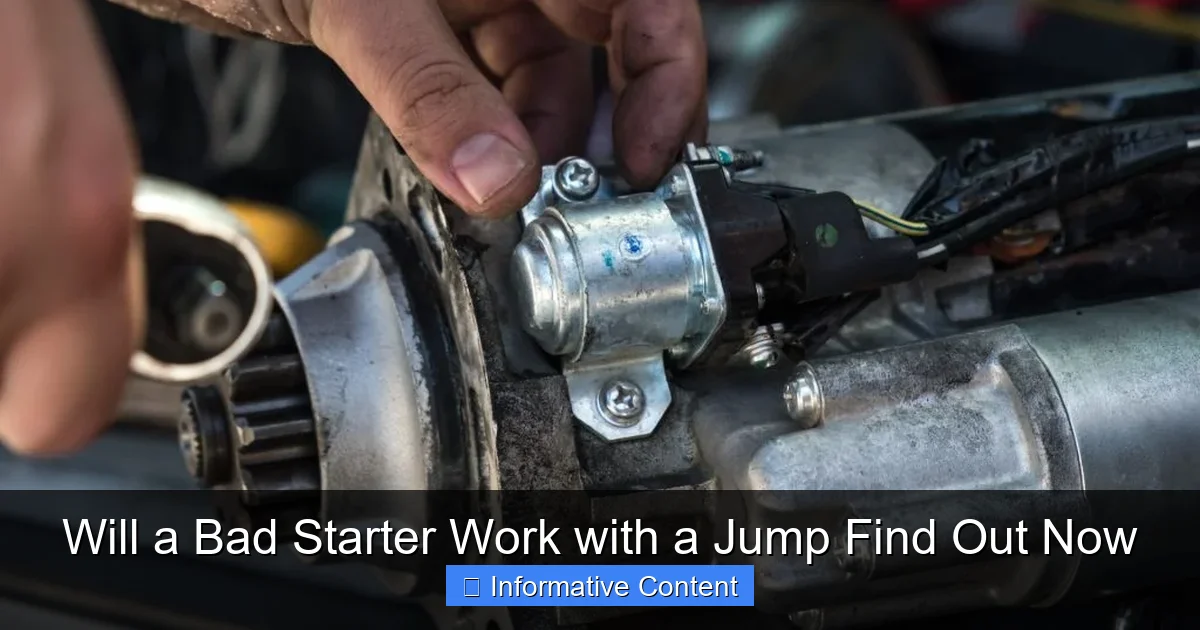
Featured image for will a bad starter work with a jump
Image source: rerev.com
A bad starter may still work with a jump, but it’s not a long-term fix. Jump-starting can bypass a weak starter by delivering a surge of power to the engine, but persistent issues like slow cranking or grinding noises signal deeper problems. Don’t ignore the signs—address the starter early to avoid being stranded.
Key Takeaways
- Jump-starting may fail if the starter motor is completely dead.
- Listen for clicking sounds—they signal a faulty starter, not just dead battery.
- Repeated jump attempts can damage electrical systems—proceed with caution.
- Test the battery first to rule out simple power issues.
- Professional diagnosis is key—don’t delay repairs if jumps don’t work.
📑 Table of Contents
- Can a Bad Starter Still Work with a Jump? Here’s What You Need to Know
- How Starters Work: The Heart of Your Engine’s Ignition
- Signs Your Starter Is Failing (And Not Just the Battery)
- Can a Jump-Start Bypass a Bad Starter? The Science Explained
- What Happens When You Jump-Start a Car with a Bad Starter?
- When to Call a Mechanic (And When to Try a Jump)
- Preventing Starter Problems: Tips to Keep Your Car Starting Smoothly
- Final Verdict: Will a Bad Starter Work with a Jump?
Can a Bad Starter Still Work with a Jump? Here’s What You Need to Know
Imagine this: It’s a cold Monday morning, and you’re already running late for work. You rush to your car, turn the key, and… nothing. The engine doesn’t crank, the lights dim, and you’re stuck. Your mind races—could it be the battery? The alternator? Or is it the starter motor finally giving up after years of faithful service? In moments like these, the first instinct is often to grab jumper cables and hope for a quick fix. But here’s the real question: Will a bad starter work with a jump?
You’re not alone in wondering. This scenario plays out daily for drivers everywhere, and the answer isn’t always straightforward. A jump-start can revive a weak battery, but if the starter motor is failing, you might just be pouring effort (and electricity) into a problem that won’t go away. In this post, we’ll dive deep into how starters work, why they fail, and whether a jump can truly save the day—or if you’re better off calling a mechanic. Whether you’re a DIY enthusiast or just trying to avoid being stranded, this guide will arm you with the knowledge to make smart decisions when your car won’t start.
How Starters Work: The Heart of Your Engine’s Ignition
What Exactly Is a Starter Motor?
The starter motor is a small but mighty electric device responsible for turning your engine’s crankshaft to initiate combustion. Think of it as the “first push” your car needs to get going. When you turn the key or press the start button, the starter draws power from the battery to spin the engine until it runs on its own. Without a functional starter, even a fully charged battery and a healthy engine are useless.
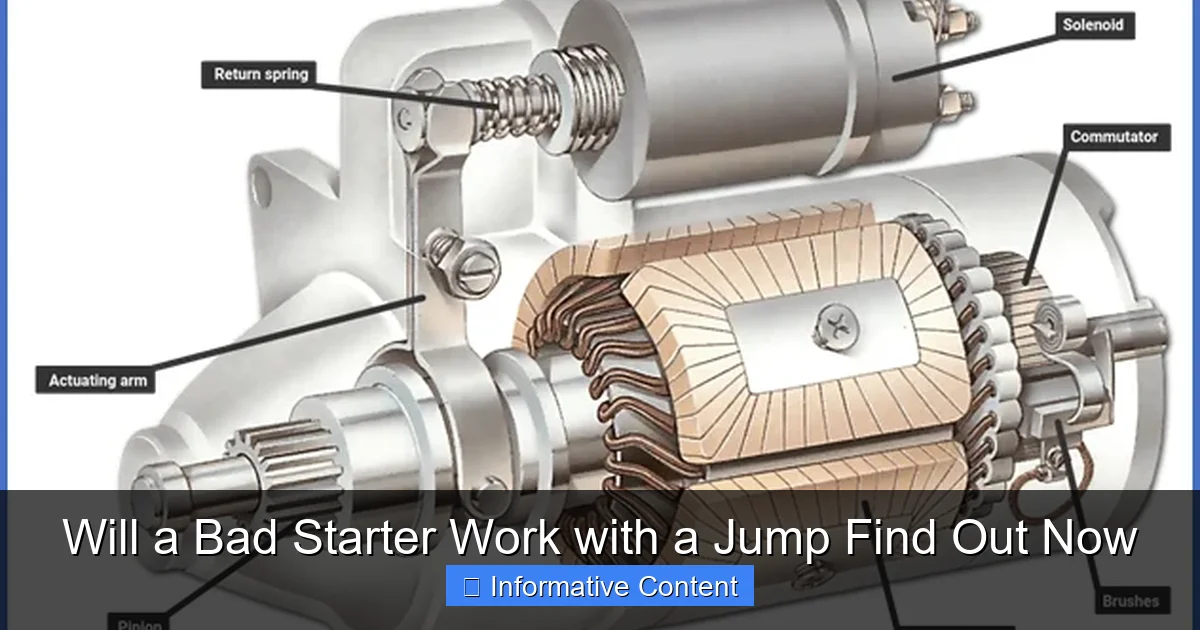
Visual guide about will a bad starter work with a jump
Image source: bernardiparts.com
The Starter’s Key Components
- Solenoid: Acts like a relay, sending high-current electricity from the battery to the starter motor.
- Starter Drive (Pinion Gear): Engages with the flywheel ring gear to turn the engine.
- Brushes and Armature: Transfer electricity within the motor to create rotational force.
- Commutator: Reverses current direction to keep the motor spinning.
When any of these parts fail, the starter can’t do its job—no matter how much power it receives. For example, worn brushes might prevent electricity from reaching the armature, or a seized pinion gear could block engagement with the flywheel.
Why the Battery-Starter Relationship Matters
A jump-start works by supplementing your battery’s power, but it doesn’t fix mechanical or electrical faults in the starter itself. If the starter is damaged, even 12 volts from a fully charged battery won’t make a difference. This is why understanding the difference between battery failure and starter failure is critical.
Signs Your Starter Is Failing (And Not Just the Battery)
Common Symptoms of a Bad Starter
Before jumping to conclusions (and jumper cables), look for these red flags that point to starter issues:
- Clicking noise when turning the key: A single or rapid click often means the solenoid is receiving power but the motor isn’t spinning—a classic sign of internal starter failure.
- No noise at all: If nothing happens when you turn the key, the starter might not be getting power (check fuses and connections first).
- Grinding or whining sounds: Worn starter drive gears or a misaligned pinion gear can cause metallic noises during startup.
- Intermittent starting: The car starts sometimes but not others—this could indicate failing brushes or electrical contacts inside the starter.
- Engine cranks slowly: If the starter turns the engine sluggishly, it might be struggling due to internal wear or a weak battery (or both).
Real-World Example: The “It Worked Yesterday” Dilemma
Let’s say your car starts fine on a warm day but fails to crank on a chilly morning. You jump it, and it starts. Success! But wait—this isn’t necessarily a battery problem. Cold weather thickens engine oil, making the starter work harder. If the starter is already weak, the added strain can push it over the edge. In this case, the jump might help temporarily, but the underlying starter issue will likely return.
Battery vs. Starter: A Quick Diagnostic Test
Here’s a simple way to narrow down the culprit:
- Test the battery voltage: A healthy battery reads 12.6 volts when off and ~14 volts when running. Below 12.4 volts? Your battery might be weak.
- Try jump-starting: If the car starts immediately with a jump but won’t start on its own later, the battery is likely the issue.
- Listen for the starter’s response: If you hear clicking but no cranking, the starter is probably faulty.
- Check for corrosion or loose connections: Clean the battery terminals and starter connections—a bad connection can mimic starter failure.
Can a Jump-Start Bypass a Bad Starter? The Science Explained
How Jump-Starting Works (And Its Limitations)
Jump-starting delivers a surge of power from another vehicle’s battery to your car’s electrical system. This extra voltage can help if:
- The battery is low but not dead.
- The starter is weak but still functional (e.g., worn brushes).
- There’s a temporary voltage drop due to cold weather.
However, a jump cannot fix:
- A seized starter motor.
- Broken solenoid or starter drive.
- Severely worn internal components (e.g., armature, brushes).
- Electrical faults in the starter circuit (e.g., blown fuse, faulty ignition switch).
The “Jump-Start Myth” Debunked
Many people assume a jump-start will always work if the battery is the problem. But here’s the catch: If the starter motor itself is damaged, even 24 volts from a jump won’t make it spin. Think of it like a broken lightbulb—no matter how much electricity you send, if the filament is burned out, the bulb won’t light.
For example, if your starter’s armature is seized due to rust or worn bearings, no amount of external power will free it. Similarly, a broken solenoid can’t engage the starter drive, rendering the jump useless.
Practical Tip: The Tap Test
Before calling for help, try the “tap test” (use caution!):
- Have someone turn the key to the “start” position.
- While they hold the key, gently tap the starter motor with a rubber mallet or heavy tool (not a metal hammer).
- If the car starts, the starter’s brushes might be stuck or worn—a temporary fix that signals it’s time for a replacement.
Note: This only works for specific starter issues (e.g., stuck brushes) and won’t help with mechanical failures.
What Happens When You Jump-Start a Car with a Bad Starter?
Scenario 1: Partial Starter Failure (It Might Work… Briefly)
If your starter is failing but not completely dead, a jump-start might give it enough power to crank the engine once or twice. For example:
- A starter with worn brushes might struggle to draw current, but a jump provides extra voltage to overcome the resistance.
- A weak solenoid might engage with the added power from the jump, allowing the starter to spin.
However, this is a temporary solution. The next time you try to start the car, the starter will likely fail again—possibly leaving you stranded.
Scenario 2: Complete Starter Failure (Jump = No Effect)
If the starter is fully broken (e.g., seized motor, broken gear, or electrical fault), jumping will do nothing. You’ll hear the same clicking or silence as before. In this case, the jump is wasted effort, and you’ll need to tow the car to a mechanic.
Scenario 3: The “False Hope” Trap
Here’s a frustrating situation: You jump the car, it starts, and you drive to work. Later, when you try to leave, the car won’t start—even with the jump. Why? The alternator recharged the battery during your drive, but the bad starter still can’t function. This creates a false sense of security and can leave you in a worse position (e.g., stuck at work).
Data Table: Jump-Start Success Rates by Starter Condition
| Starter Condition | Jump-Start Success? | Likely Outcome |
|---|---|---|
| Weak battery only | Yes (90-100%) | Car starts reliably after jump. |
| Starter with worn brushes | Sometimes (30-50%) | May start once, then fail again. |
| Seized starter motor | No (0%) | Jump has no effect. |
| Broken solenoid | No (0%) | Clicking noise persists. |
| Faulty ignition switch | No (0%) | No power to starter. |
When to Call a Mechanic (And When to Try a Jump)
Jump-Start: The Right Tool for the Right Job
A jump-start is effective only when:
- The battery is weak or low (confirmed by voltage testing).
- The starter is functional but struggling (e.g., slow cranking).
- You need a temporary fix to get to a repair shop.
Tip: Always use quality jumper cables and follow safety steps (e.g., connect red to positive, black to ground, avoid sparks).
When a Jump Won’t Help (Call a Pro)
If you notice any of these signs, skip the jump and call for help:
- The starter makes no noise when you turn the key.
- You hear grinding or metallic noises.
- The car starts with a jump but dies immediately.
- The starter smells burnt or shows visible damage.
- Multiple jump attempts fail.
Ignoring these signs can lead to bigger problems. For example, a failing starter can damage the flywheel or drain your new battery.
DIY Fix vs. Professional Repair: Cost Comparison
Replacing a starter yourself can save money, but it’s not for everyone. Here’s what to consider:
- DIY: Starter cost ($100-$500) + 2-4 hours labor (if you’re handy).
- Mechanic: Starter cost + labor ($200-$800, depending on car model).
Note: Some modern cars require specialized tools or software to reset the starter system after replacement. Check your owner’s manual first.
Preventing Starter Problems: Tips to Keep Your Car Starting Smoothly
1. Maintain Your Battery
A healthy battery is the starter’s best friend. Follow these tips:
- Test battery voltage every 6 months (use a multimeter or auto shop).
- Clean terminals with a baking soda-water mix to prevent corrosion.
- Replace batteries every 3-5 years (or sooner if weak).
2. Avoid “Short Trips”
Frequent short drives (e.g., <5 minutes) don’t give the alternator enough time to recharge the battery. This strains the starter over time. Combine errands when possible, or take a longer drive weekly.
3. Inspect Starter Connections
Every few months, check the starter’s wiring and connections for:
- Corrosion (white or green crust).
- Looseness (wiggle the cables—they shouldn’t move).
- Damage (frayed wires or melted insulation).
4. Listen for Early Warning Signs
Pay attention to subtle clues:
- Does the starter sound “labored” when cranking?
- Do you notice a delay between turning the key and the engine starting?
- Is the starter louder than usual?
Catching issues early can save you from being stranded.
5. Park in a Garage (When Possible)
Extreme heat or cold can shorten a starter’s lifespan. Parking in a garage protects it from temperature swings and moisture.
Final Verdict: Will a Bad Starter Work with a Jump?
So, back to the big question: Will a bad starter work with a jump? The answer is: It depends on how bad the starter is.
If the starter is weak but still functional (e.g., worn brushes, low power draw), a jump might give it enough “oomph” to start the engine—once. But if the starter is mechanically broken (e.g., seized motor, broken gear) or has a critical electrical fault (e.g., dead solenoid), no amount of jumping will help. You’ll just waste time and possibly damage your battery or alternator.
The takeaway? Use a jump-start as a diagnostic tool. If the car starts immediately with a jump but won’t start on its own later, the battery is likely the issue. But if the jump doesn’t work at all, or the starter makes strange noises, it’s time to call a mechanic. And remember: Prevention is key. Regular battery checks, clean connections, and early attention to warning signs can keep your starter running smoothly for years.
Next time your car won’t start, don’t panic. Grab your jumper cables, test the battery, and listen closely. With the knowledge from this guide, you’ll know exactly when a jump will save the day—and when it’s time to let the pros take over.
Frequently Asked Questions
Can a bad starter motor still work with a jump start?
Yes, a bad starter motor might turn over with a jump start if the issue is related to low battery voltage. However, if the starter is severely damaged (e.g., worn brushes or solenoid failure), even a jump won’t help. The jump provides power, but the starter must still function mechanically.
Why won’t my car start even after a jump if the starter is bad?
A jump start delivers electrical power, but a faulty starter may lack the internal components (like a working solenoid) to engage. If the starter is completely dead, the extra voltage from the jump won’t fix physical damage or electrical faults inside the unit.
Will a jump start bypass a failing starter?
No, a jump start won’t bypass a bad starter. The starter relies on both battery power and internal mechanisms to crank the engine. If those mechanisms are broken, the jump only addresses the battery—not the root cause of the starter’s failure.
How do I know if my starter is bad or just needs a jump?
Try a jump start first: if the engine cranks normally, the battery was likely the issue. If the starter clicks, grinds, or doesn’t turn over at all after a jump, the starter is probably failing and needs inspection or replacement.
Can a weak battery mimic a bad starter when jumping?
Yes, a weak battery can cause symptoms like slow cranking or clicking—similar to a bad starter. A jump start often clarifies the issue: if the car starts smoothly, the battery was the culprit, not the starter.
Is it safe to jump-start a car with a bad starter repeatedly?
Repeatedly jumping a car with a bad starter can strain the battery, alternator, and other electrical components. It’s a temporary fix—diagnose and replace the faulty starter to avoid further damage or being stranded.