
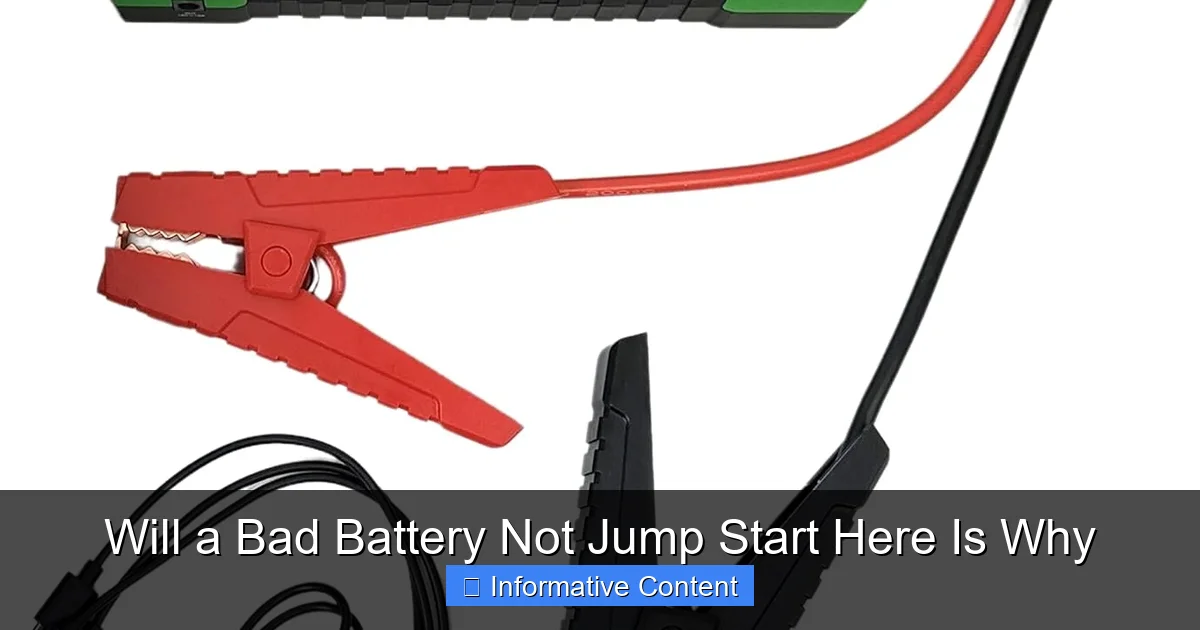
Featured image for will a bad battery not jump start
Image source: m.media-amazon.com
A severely damaged or dead battery often won’t jump start because internal cell failure prevents it from holding a charge, even with external power. Jump-starting relies on the battery’s ability to accept and store energy—if sulfation, shorted cells, or physical damage are present, the battery can’t respond, leaving you stranded despite jumper cables or a donor vehicle.
Key Takeaways
- A dead battery may not jump start if cells are fully sulfated or damaged.
- Check for visible damage like cracks, leaks, or bulging before attempting a jump.
- Voltage below 10V often means the battery can’t accept a charge—replace it.
- Jump-start failure signals deeper issues; test alternator and charging system next.
- Repeated jump attempts can harm vehicle electronics—diagnose the battery first.
- Old batteries (3+ years) are unlikely to revive—prioritize replacement over jumping.
📑 Table of Contents
- Will a Bad Battery Not Jump Start Here Is Why
- Understanding How a Car Battery Works
- Signs Your Battery Is Beyond Jump Starting
- Why a Bad Battery Won’t Accept a Jump
- When a Jump Start *Might* Work (And When It Won’t)
- How to Test and Confirm a Bad Battery
- What to Do When a Jump Start Fails
- Final Thoughts: Don’t Rely on a Jump to Save a Bad Battery
Will a Bad Battery Not Jump Start Here Is Why
Imagine this: you’re running late for work, you jump into your car, turn the key, and… nothing. The engine doesn’t crank, the lights are dim, and that dreaded silence fills the cabin. You grab your jumper cables, flag down a friendly neighbor, and attempt a jump start—only to find the car still won’t start. Frustrating, right? You might assume the issue is with the other car or the cables, but more often than not, the real culprit is a bad battery. And here’s the kicker: sometimes, a bad battery won’t jump start at all. That’s right—jumping a car isn’t always a magic fix, especially if the battery is beyond repair.
If you’ve ever found yourself in this situation, you’re not alone. Thousands of drivers face this dilemma every year. The truth is, jump-starting a car only works if the battery is still capable of holding a charge. But when the battery is truly dead—meaning it’s lost its ability to store energy or has internal damage—no amount of jumper cables or boosters will bring it back to life. In this guide, we’ll walk through the science behind why a bad battery won’t jump start, what signs to look for, and how to avoid getting stranded. Whether you’re a new driver or a seasoned mechanic, understanding this process could save you time, money, and a whole lot of stress.
Understanding How a Car Battery Works
What’s Inside a Car Battery?
Before we dive into why a bad battery won’t jump start, it helps to understand what’s going on inside that heavy, black box under your hood. A standard car battery is a lead-acid battery, made up of six cells connected in series. Each cell produces about 2.1 volts, adding up to the typical 12.6 volts your car needs. Inside, you’ll find lead plates submerged in a sulfuric acid and water solution (the electrolyte). When the battery discharges (like when you start your car), a chemical reaction occurs: lead and lead oxide react with sulfuric acid to produce lead sulfate, water, and electrons. These electrons create the electrical current that powers your starter motor, lights, and ignition system.
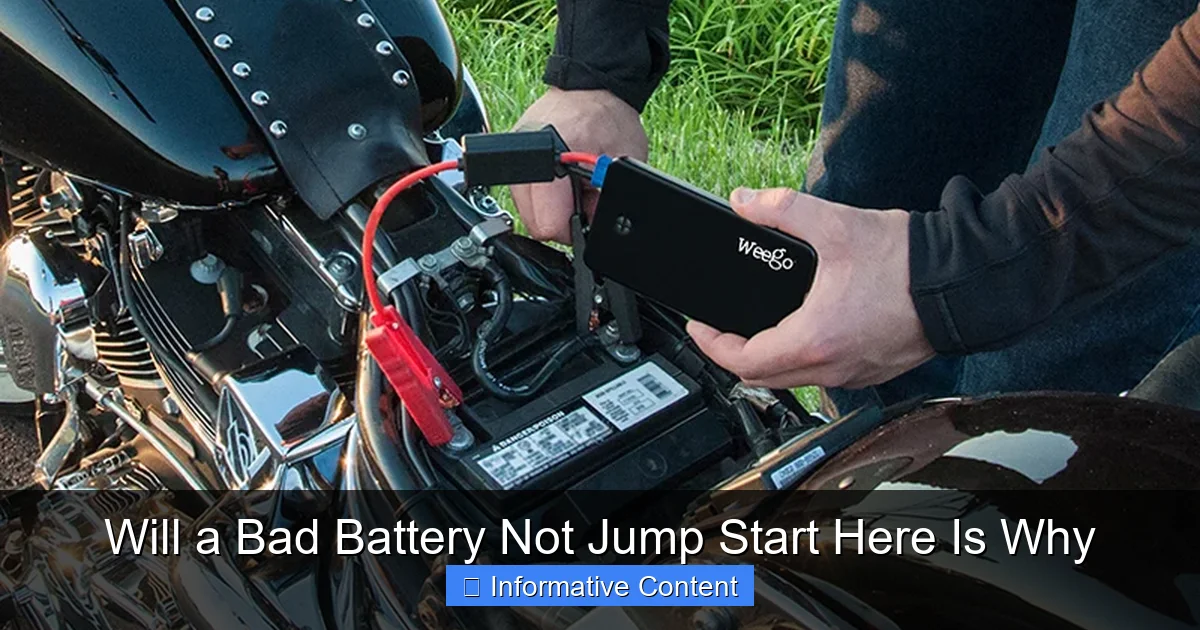
Visual guide about will a bad battery not jump start
Image source: womenridersnow.com
When you recharge the battery—either via the alternator while driving or through a jump start—the process reverses. The lead sulfate breaks down, and the lead and lead oxide plates are restored. But here’s the catch: this process only works efficiently if the battery is still healthy. If the internal components are damaged, corroded, or worn out, the chemical reaction can’t happen properly.
How a Jump Start Works (And When It Fails)
A jump start essentially provides a temporary power boost from another vehicle’s battery (or a portable jump starter) to get your engine running. Once the engine is on, the alternator takes over, recharging the battery and powering the electrical system. But for this to work, your battery must be able to accept that initial charge. Think of it like trying to fill a cracked water bottle—no matter how much water you pour in, it just leaks out.
For example, I once tried to jump start my old sedan after leaving the lights on overnight. The engine turned over after a few minutes, but the moment the jumper cables were disconnected, the car died instantly. Why? The battery was so degraded that it couldn’t hold the charge long enough for the alternator to take over. That’s a classic sign of a bad battery that won’t jump start—it’s not a lack of power; it’s a failure to retain it.
Signs Your Battery Is Beyond Jump Starting
Physical and Visual Clues
Sometimes, the signs of a bad battery are right in front of you—if you know what to look for. Here are some common physical indicators:
- Swollen or bloated battery case: Caused by overcharging or extreme heat, this means the battery is damaged internally.
- Corrosion on terminals: A white, green, or blue crust around the positive and negative posts can block current flow, even if the battery still has some life.
- Leaking fluid: If you see a clear or brownish liquid seeping from the battery, it’s likely cracked or overcharged—replace it immediately.
- Foul odor (rotten eggs): This smell indicates a sulfur leak, often due to a cracked case or internal short.
I remember a friend who ignored the corrosion on his battery terminals, thinking a jump start would fix everything. After three failed attempts, he finally cleaned the terminals—and the jump worked! But the next day, the car wouldn’t start again. The battery was already on its last legs. So, while cleaning terminals can help, it’s not a permanent fix if the battery itself is bad.
Electrical and Performance Signs
Beyond physical signs, your car’s behavior can tell you a lot about battery health. Watch for these red flags:
- Slow cranking: The engine turns over sluggishly, even after a jump. This means the battery can’t deliver enough current.
- Dim lights and electronics: Headlights, dashboard lights, or radio are noticeably dimmer than usual.
- Frequent jump starts: If you’re jumping your car more than once every few weeks, the battery is likely failing.
- Check engine or battery warning light: Modern cars often trigger these lights when the charging system detects low voltage.
One winter, my neighbor’s SUV wouldn’t start despite two jump attempts. The engine cranked, but it was so slow that it barely turned over. We tested the battery voltage with a multimeter and found it was only 8.9 volts—well below the 12.6 needed. That’s when we knew: the battery was toast, and no jump would save it.
Why a Bad Battery Won’t Accept a Jump
Internal Short Circuits and Plate Sulfation
Two of the most common reasons a battery won’t jump start are internal short circuits and plate sulfation. Let’s break them down:
Internal short circuits happen when the lead plates inside the battery warp or touch each other, creating a direct path for electricity to flow without doing useful work. This drains the battery rapidly and prevents it from holding a charge. Think of it like a broken pipe—water (electricity) flows through, but it doesn’t go where it’s supposed to.
Plate sulfation occurs when a battery is left discharged for too long. The lead sulfate crystals harden on the plates and become nearly impossible to convert back to active material. This reduces the battery’s capacity and ability to accept a charge. Sulfation is especially common in batteries that are repeatedly drained (e.g., leaving lights on) or rarely used.
Low Electrolyte Levels and Dry Cells
Over time, water in the electrolyte evaporates, especially in hot climates. If the fluid level drops below the plates, the exposed lead sulfate hardens, and the battery can’t function. Even if you refill it with distilled water, the damage is often irreversible. I once tried to “revive” a battery by adding water, but it still wouldn’t hold a charge. The plates were already too sulfated.
Another issue is dry cells in sealed batteries (like AGM or gel types). These can’t be refilled, so once the electrolyte dries out, the battery is done. Unlike traditional batteries, there’s no way to check or top up the fluid.
Age and Wear: The Silent Killer
Even if your battery looks fine, time is its biggest enemy. Most car batteries last 3–5 years. After that, their capacity drops significantly. A battery that’s 5 years old might only hold 50% of its original charge—not enough to start your car, even with a jump. I learned this the hard way when my 6-year-old battery died on a road trip. The jump starter gave it a boost, but it died again 10 minutes later. The alternator couldn’t compensate for the battery’s weak state.
When a Jump Start *Might* Work (And When It Won’t)
The “Temporary Fix” Scenario
Sometimes, a jump start does work—but it’s only a temporary solution. This usually happens when the battery is weak but not completely dead. For example:
- The battery has been discharged by leaving lights or accessories on.
- The alternator is failing, so the battery isn’t being properly recharged while driving.
- The battery is cold (below freezing), which reduces its capacity.
In these cases, a jump start can get you going, but you’ll need to drive the car for at least 20–30 minutes to recharge the battery. If you turn the engine off too soon, the battery won’t have enough charge to start again. I once jumped my car in winter and drove straight to work—only to find it wouldn’t start again after a 10-minute break. The battery hadn’t had enough time to recharge.
The “No Hope” Scenario
Other times, a jump start is futile. These are the situations where the battery is truly beyond saving:
- Deep discharge: The battery has been dead for days or weeks, leading to severe sulfation.
- Internal damage: Cracks, shorts, or plate warping prevent any meaningful charge.
- Age: A battery over 5 years old with frequent jump needs.
- Repeated jump failures: If you’ve tried jumping multiple times with no success.
A buddy of mine once tried to jump his 8-year-old truck three times in one weekend. Each time, the truck started, but died when the cables were removed. We replaced the battery, and it started right up. The old one was just too far gone.
How to Test and Confirm a Bad Battery
DIY Testing with a Multimeter
You don’t need to be a mechanic to test your battery. A simple multimeter (available for under $20) can tell you a lot. Here’s how:
- Turn off the engine and let the battery rest for at least an hour.
- Set the multimeter to 20V DC.
- Connect the red probe to the positive terminal and the black to the negative.
- Check the reading:
- 12.6V+: Fully charged.
- 12.4V: 75% charged.
- 12.2V: 50% charged.
- Below 12V: Discharged or failing.
- Now, have someone start the engine. Watch the voltage drop. If it falls below 9.6V, the battery is weak.
I use this method all the time. Last month, I tested a battery that read 11.8V at rest—clearly bad. No wonder it wouldn’t jump start!
Professional Load Testing
For a more accurate diagnosis, take your battery to an auto parts store or mechanic for a load test. This simulates the high current draw of starting the engine. A healthy battery should maintain at least 9.6V under load for 15 seconds. If it drops below that, it’s time for a replacement. Most places do this for free.
Data Table: Battery Voltage vs. Health
| Voltage (Resting) | Battery State | Jump Start Likely? |
|---|---|---|
| 12.6V – 12.7V | Fully charged | Yes |
| 12.4V | 75% charged | Yes (with alternator support) |
| 12.2V | 50% charged | Maybe (if not sulfated) |
| Below 12V | Discharged or bad | Unlikely |
| Below 10V | Severely damaged | No |
What to Do When a Jump Start Fails
Step-by-Step Troubleshooting
If your jump start fails, don’t panic. Follow these steps:
- Check connections: Clean the terminals and ensure cables are tight.
- Test the battery voltage: Use a multimeter to confirm it’s below 12V.
- Try a portable jump starter: Sometimes, a weak donor battery can’t provide enough current.
- Listen for clicks: Rapid clicking usually means a weak battery; no sound could mean a bad starter or alternator.
- Call for help: If all else fails, a tow truck or mechanic can diagnose the issue.
Pro tip: Always keep a portable jump starter in your car. They’re compact, easy to use, and can save you from waiting for a stranger’s help.
Replacing the Battery: What to Look For
When it’s time for a new battery, don’t just grab the cheapest one. Consider:
- Size and fit: Check your owner’s manual for the correct group size.
- Reserve capacity (RC): Higher RC means longer power if the alternator fails.
- Cold-cranking amps (CCA): Higher CCA is better for cold climates.
- Warranty: Look for at least a 3-year free replacement warranty.
I always recommend AGM batteries for modern cars with lots of electronics—they’re more durable and handle deep discharges better.
Final Thoughts: Don’t Rely on a Jump to Save a Bad Battery
At the end of the day, jump-starting a car is a band-aid, not a cure. If your battery is truly bad—whether due to age, sulfation, internal damage, or deep discharge—no amount of jumper cables will fix it. The key is to diagnose the problem early and replace the battery before you’re stranded. Regular testing, keeping terminals clean, and avoiding deep discharges can extend your battery’s life.
Remember: a jump start only works if the battery can hold a charge. If it can’t, you’re just wasting time and risking damage to your car’s electrical system. So next time your car won’t start, don’t assume a jump will save the day. Test the battery, check the signs, and make an informed decision. Your car—and your peace of mind—will thank you.
Frequently Asked Questions
Why won’t my car jump start even with a bad battery?
A severely degraded or internally shorted battery may not hold a charge from a jump start, preventing the engine from turning over. Even if the battery is “bad,” jump-starting can fail if the damage is beyond recharging, like a broken cell or sulfation.
Can a completely dead battery be jump started?
Sometimes, but if the battery is too far gone (e.g., zero voltage or internal failure), jumper cables won’t deliver enough power to start the car. This is why a “bad battery not jump start” issue often requires replacement instead.
What are signs that a bad battery won’t jump start?
Dim lights, clicking noises, or no response after connecting jumper cables suggest the battery is beyond recovery. If the alternator and connections are fine, the battery likely needs replacing.
Does jump-starting damage a bad battery?
Attempting to jump-start a severely damaged battery won’t harm it further, but it may not work. However, repeated attempts can stress the donor car’s electrical system or cause sparks near leaking gases.
How long should I try to jump a bad battery before giving up?
Allow 5–10 minutes of charging after connecting jumper cables. If the car doesn’t start by then, the “bad battery not jump start” issue likely means it’s time for a new battery or professional help.
Can a bad battery prevent the alternator from working?
A failing battery won’t damage the alternator, but it can overload the system, causing voltage irregularities. If jump-starting fails, test both the battery and alternator to diagnose the root cause.