
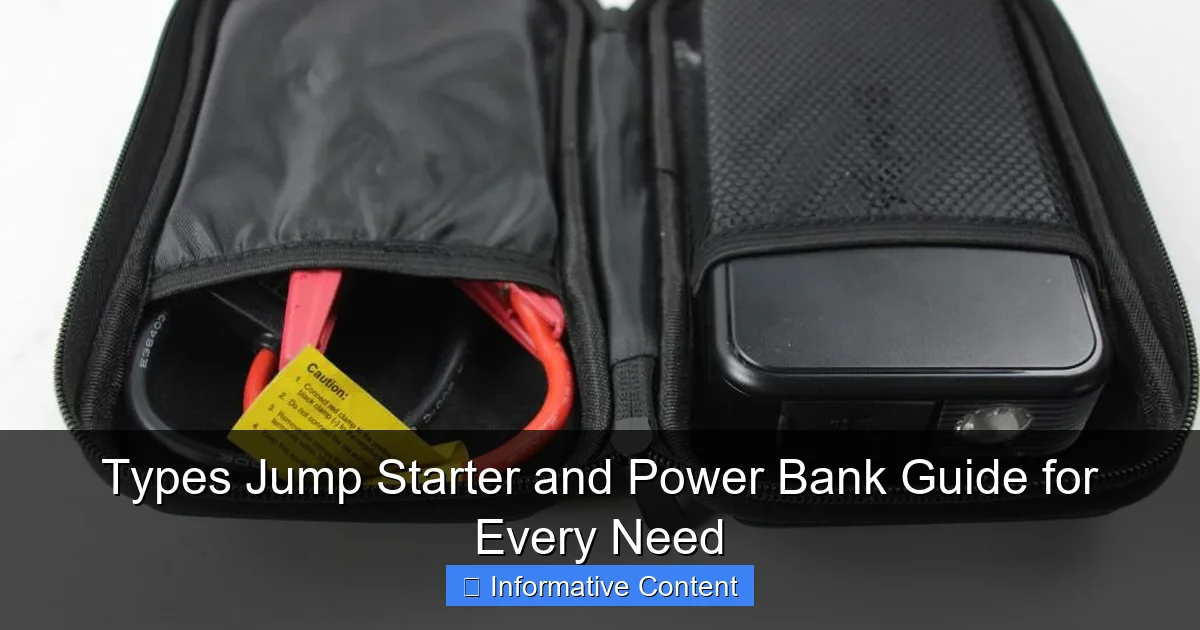
Featured image for types jump starter and power bank
Image source: content.propertyroom.com
Choosing the right jump starter and power bank combo ensures you’re never stranded with a dead battery. From compact lithium-ion models perfect for daily drivers to heavy-duty units with high peak amps for trucks and SUVs, there’s a solution for every vehicle and lifestyle. Whether you need fast phone charging or emergency engine starts, matching the right type to your needs boosts safety and convenience on the road.
Key Takeaways
- Choose lithium-ion jump starters for lightweight, portable power with fast charging.
- Opt for lead-acid models when needing high cranking power for large engines.
- Multi-function power banks combine jump-starting, USB charging, and emergency lights.
- Prioritize safety features like reverse polarity protection and spark-proof clamps.
- Check peak amps rating to ensure compatibility with your vehicle’s engine size.
- Compact designs suit travel while heavy-duty units work best in garages.
📑 Table of Contents
- Understanding Jump Starters and Power Banks
- Jump Starters: The Lifesavers for Your Vehicle
- Power Banks: Charging Your Tech on the Go
- Hybrid Devices: Jump Starters with Power Bank Functionality
- Choosing the Right Device for Your Needs
- Care and Maintenance Tips
- Comparison Table: Top Picks by Category
- Final Thoughts: Be Prepared, Stay Powered
Understanding Jump Starters and Power Banks
Imagine you’re late for work, rushing out the door with your coffee in one hand and car keys in the other. You hop into your car, turn the key, and… nothing. The engine doesn’t crank, the lights are dim, and your heart sinks. You’ve just joined the millions of drivers who’ve faced a dead battery. This is where a jump starter and power bank becomes your best friend. These handy devices not only rescue you from a stalled car but also keep your gadgets charged when you’re on the move.
Jump starters and power banks are often confused, but they serve different yet complementary roles. A jump starter is designed to deliver a high burst of current to restart a vehicle with a dead battery, while a power bank is built to charge smartphones, tablets, and other small electronics over time. Many modern devices combine both functions, offering a versatile tool for emergencies and daily use. Whether you’re a road warrior, a tech enthusiast, or someone who just wants to be prepared, understanding the types of jump starters and power banks can save you time, money, and stress.
Jump Starters: The Lifesavers for Your Vehicle
Traditional Battery-Powered Jump Starters
These are the original portable jump starters—clunky but reliable. They use a built-in lead-acid battery (similar to a car battery) to deliver a strong current to jump-start a vehicle. Think of them as mini car batteries you can carry in your trunk.
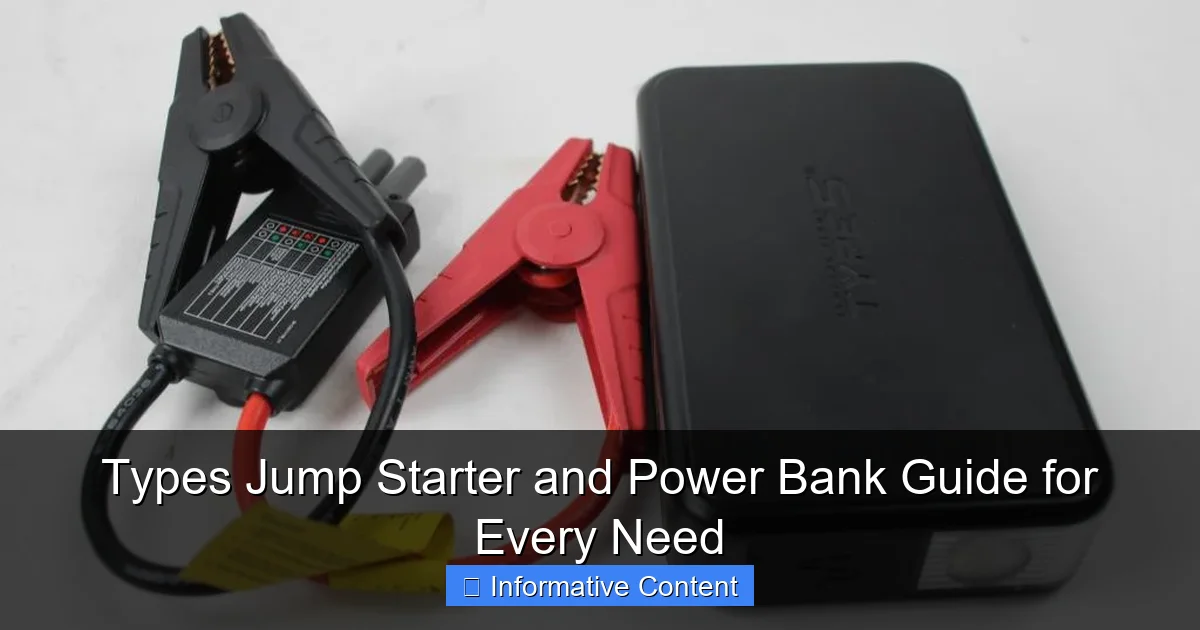
Visual guide about types jump starter and power bank
Image source: content.propertyroom.com
- Pros: High power output (often 12V/24V), durable, and capable of jump-starting large engines like trucks and SUVs.
- Cons: Heavy (can weigh 15–30 pounds), require regular charging, and are slower to recharge.
- Best for: Drivers of older vehicles, off-roaders, or those who need to jump-start multiple vehicles frequently.
For example, the NOCO Boost Plus GB40 is a popular lead-acid model. It’s not the lightest, but it’s built like a tank and can handle cold weather better than most lithium-ion options.
Lithium-Ion Jump Starters
The game-changer in jump-starting technology. These compact, lightweight units use lithium-ion batteries (like those in your phone) to deliver a powerful burst of energy. They’ve become the go-to choice for most drivers due to their portability and speed.
- Pros: Lightweight (1–5 pounds), fast recharge (1–3 hours), and often include USB ports to charge phones.
- Cons: Slightly less power than lead-acid for very large engines, and performance can drop in extreme cold.
- Best for: Everyday drivers, commuters, and anyone who values portability and convenience.
Take the DBPOWER 600A Portable Jump Starter—it’s about the size of a thick book, weighs 2.5 pounds, and can jump-start a car 20 times on a single charge. Plus, it doubles as a power bank for your phone. A friend of mine used it to jump-start her minivan during a snowstorm while waiting for AAA. She said it was “like magic in a brick.”
Ultra-Compact Jump Starters (Micro Models)
These are the pocket-sized wonders. Designed for minimalists and city dwellers, they’re small enough to fit in your glove compartment or even a large coat pocket.
- Pros: Extremely portable, affordable, and great for emergencies.
- Cons: Lower power output (good for small engines only), shorter battery life.
- Best for: Motorcycle riders, scooter users, or as a backup for small cars.
The GOOLOO GP400 is a favorite among bikers. It’s not going to start a diesel truck, but it’s perfect for a Honda Civic or a Vespa. Just don’t expect it to work in sub-zero temperatures—lithium-ion batteries don’t like the cold.
Smart Jump Starters with Safety Features
Not all jump starters are created equal. Modern “smart” models include built-in protections to prevent sparks, reverse polarity, and overcharging. These are a must if you’re not a car expert.
- Key features: Reverse polarity alarm, spark-proof clamps, LED flashlights, and digital voltage displays.
- Why it matters: A friend once connected his jump starter backward (positive to negative), causing sparks and a minor scare. A smart model would have shut off automatically.
Brands like NOCO and Schumacher lead in this category. Their models often include a “boost” mode for deeply discharged batteries and even jump-start diesel engines up to 6.0L.
Power Banks: Charging Your Tech on the Go
Standard USB Power Banks
These are the workhorses of the power bank world. They’re simple: plug in your phone via USB, and it charges. Most have 1–3 USB-A ports and a micro-USB or USB-C input for recharging.
- Capacity: Ranges from 5,000mAh (1–2 phone charges) to 20,000mAh (5–7 charges).
- Best for: Daily use, travel, and keeping your phone alive during long days out.
- Tip: Look for “pass-through charging” if you want to charge the power bank while it powers your phone.
I keep a Anker PowerCore 10000 in my work bag. It’s slim, charges my iPhone twice, and fits in a jacket pocket. No frills, but it works.
High-Capacity Power Banks
For those who need serious power—think photographers, remote workers, or campers. These beasts can charge laptops, tablets, and even small appliances.
- Capacity: 20,000mAh to 50,000mAh (yes, really).
- Ports: USB-A, USB-C, and sometimes DC outputs.
- Best for: Road trips, camping, or working off-grid.
The Zendure SuperTank Pro (26,800mAh) is a favorite among digital nomads. It has USB-C PD (Power Delivery) to charge a MacBook Pro at full speed. Just be warned: it’s heavy (1.5 pounds) and takes 4–6 hours to recharge.
Wireless Power Banks
No cables, no problem. These let you charge Qi-compatible phones (like iPhones and Samsungs) by simply placing them on top.
- Pros: Convenient, reduces cable clutter, and great for bedside tables.
- Cons: Slower charging (5–10W vs. 18–20W wired), and you can’t use your phone while charging.
- Best for: Home use or quick top-ups.
I have a Anker PowerCore Wireless 10000 on my nightstand. It’s not the fastest, but it’s perfect for charging overnight without fumbling with cables.
Solar Power Banks
For the eco-conscious or adventurers. These have built-in solar panels to recharge using sunlight.
- Pros: Renewable energy, great for emergencies, and works in remote areas.
- Cons: Very slow solar charging (often 20+ hours in full sun), and panels can be fragile.
- Best for: Camping, hiking, or as a backup during power outages.
The BigBlue 28W Solar Charger is a solid choice. It’s not a power bank itself (it charges other banks), but it’s a must-have for off-grid trips. Just don’t rely on it during a cloudy week in Seattle.
Hybrid Devices: Jump Starters with Power Bank Functionality
Why carry two devices when one can do both? Hybrid jump starters combine the high-current output needed to start a car with the steady charging power of a power bank. They’re the Swiss Army knives of automotive tech.
Dual-Function Lithium-Ion Jump Starters
Most modern jump starters fall into this category. They use a high-capacity lithium-ion battery to jump-start vehicles and include USB ports for charging phones, tablets, and even laptops.
- Example: The NOCO Boost HD GB70 (2000A) can jump-start a 10.0L gas engine and charge a phone 6+ times. It even has a 12V DC outlet for car accessories.
- Pro tip: Check the “peak amps” rating. 1000A is good for small cars; 2000A+ is better for trucks and SUVs.
I used a hybrid model to jump-start my brother’s truck last winter. Afterward, I charged my dead phone while waiting for the engine to warm up. Two birds, one stone.
Jump Starters with Wireless Charging
The latest trend. Some hybrids now include a wireless charging pad on top, so you can jump-start your car and charge your phone—all without cables.
- Best for: Drivers who hate clutter and want a sleek, all-in-one solution.
- Drawback: Wireless charging uses more power, so the jump starter’s battery depletes faster.
The DBPOWER 800A has this feature. It’s not the most powerful, but it’s perfect for a sedan and a daily driver phone.
Multi-Port Hybrids for Families
Traveling with kids? These models have 2–3 USB ports, a USB-C PD port, and sometimes even a 12V car outlet.
- Example: The Schumacher ProSeries PSJ-2212 (2200A) has two USB-A ports, one USB-C, and a 12V outlet. It can jump-start a truck, charge three phones, and power a portable cooler.
- Why it’s great: One device for the whole family during road trips.
Choosing the Right Device for Your Needs
Assessing Your Power Requirements
Not all cars and gadgets are the same. Match your device to your needs:
- For small cars/motorcycles: A 600–1000A lithium-ion jump starter (e.g., DBPOWER 600A) is sufficient.
- For trucks/SUVs: Go for 1500A+ (e.g., NOCO GB70). Diesel engines may need 2000A+.
- For laptops/cameras: Choose a power bank with USB-C PD (at least 18W).
- For emergencies: Prioritize safety features (spark-proof, reverse polarity protection).
Portability vs. Power: The Trade-Off
There’s no perfect balance, but here’s a rule of thumb:
- Daily carry: 5,000–10,000mAh power bank or a 600–800A jump starter. Fits in a backpack.
- Road trips: 20,000mAh+ power bank or 1500A+ jump starter. Keep it in the trunk.
- Off-grid: Solar power bank + high-capacity hybrid jump starter.
My cousin, a delivery driver, carries a 10,000mAh power bank and a 1000A jump starter. He says it’s “enough for my van and my phone, without weighing me down.”
Budget Considerations
You don’t need to spend a fortune, but avoid the cheapest options. Here’s a price guide:
- Under $50: Basic power banks (5,000–10,000mAh) or micro jump starters (400–600A).
- $50–$100: Mid-range hybrids (800–1200A, 10,000–15,000mAh).
- $100+: High-capacity hybrids (1500A+, 20,000mAh+), smart features, or solar options.
Invest in quality. A $30 jump starter might work once—then fail when you need it most.
Care and Maintenance Tips
Charging and Storage
Most lithium-ion devices lose charge over time. To keep them ready:
- Recharge every 3–6 months, even if unused.
- Store at 50% charge in a cool, dry place (not in your hot garage).
- Avoid full discharges—they shorten battery life.
I learned this the hard way. My jump starter sat in my trunk for a year without use. When I needed it, the battery was dead. Now I set a phone reminder to recharge it every 4 months.
Cleaning and Safety
- Wipe jump starter clamps with a dry cloth to prevent corrosion.
- Never expose devices to water (unless rated IP67).
- Check clamps for wear—frayed wires are a fire hazard.
When to Replace Your Device
Even the best devices wear out. Replace yours if:
- It takes longer than usual to jump-start a car.
- The battery won’t hold a charge for more than a few days.
- You notice swelling (a sign of battery failure).
Most lithium-ion jump starters last 3–5 years with proper care. Lead-acid models may last longer but are heavier and less convenient.
Comparison Table: Top Picks by Category
| Type | Model Example | Capacity/Power | Key Features | Best For |
|---|---|---|---|---|
| Lithium Jump Starter | DBPOWER 600A | 600A (peak) | USB ports, LED flashlight, spark-proof | Everyday drivers |
| Hybrid (Jump + Power) | NOCO GB70 | 2000A, 18,000mAh | USB-C PD, 12V outlet, smart protection | Trucks, SUVs, families |
| High-Capacity Power Bank | Zendure SuperTank Pro | 26,800mAh | USB-C PD, dual USB-A | Laptops, travel |
| Wireless Power Bank | Anker PowerCore Wireless 10000 | 10,000mAh | Qi wireless, slim design | Home use |
| Solar Power Bank | BigBlue 28W Solar Charger | 28W solar input | 3 USB ports, foldable | Camping, emergencies |
Final Thoughts: Be Prepared, Stay Powered
Whether you’re facing a dead car battery, a drained phone, or a weekend in the woods, the right jump starter and power bank combo can make all the difference. From compact lithium jump starters that fit in your pocket to solar power banks that harness the sun, there’s a solution for every need and budget. Remember: the best device is the one you have when you need it. Don’t wait for an emergency to realize your old power bank is dead or your jump starter is too weak for your truck.
Think of these tools as insurance—small investments that prevent big headaches. Test your device monthly, recharge it regularly, and keep it accessible (not buried under gym clothes in your trunk). And if you’re still unsure, start with a mid-range hybrid like the NOCO GB40 or DBPOWER 800A. They’re reliable, versatile, and won’t break the bank. After all, peace of mind is priceless—especially when you’re stuck on a dark road with a dead battery and no signal.
Frequently Asked Questions
What are the different types of jump starters and power banks available?
Jump starters and power banks come in various types, including lithium-ion, lead-acid, and portable multi-function models. Lithium-ion units are lightweight and compact, ideal for cars, while lead-acid models offer higher cranking power for heavy-duty vehicles. Some also combine a power bank for charging phones and tablets.
Can a jump starter power bank charge my devices and start my car?
Yes, many modern jump starters double as power banks with USB ports to charge smartphones, tablets, and other electronics. These multi-function models are perfect for emergencies, offering both vehicle jump-starting and device charging in one compact unit.
Which type of jump starter is best for cold weather?
Lithium-ion jump starters with low-temperature operation (often labeled “extreme cold” models) perform best in freezing conditions. Look for units with high cranking amps (CA) or peak current, as they maintain efficiency even in sub-zero temperatures.
Are there solar-powered jump starters and power banks?
Yes, solar-powered jump starters and power banks are available, ideal for outdoor enthusiasts or off-grid use. They combine solar charging with traditional power bank features, though they require ample sunlight to recharge efficiently.
What’s the difference between a traditional jump starter and a smart jump starter?
Smart jump starters include safety features like reverse polarity alarms, LED displays, and auto-shutoff to prevent damage. Traditional models are simpler but may lack these advanced protections, making smart types safer for beginners.
How do I choose the right size jump starter and power bank for my car?
Check your vehicle’s engine size and required cranking amps (CA)—a 4-cylinder typically needs 150-300 CA, while larger engines need 500+ CA. Also, ensure the power bank has sufficient capacity (mAh) to charge your devices multiple times.