
Featured image for trickle charger vs jump start
Image source: autoguysland.com
Choosing between a trickle charger and a jump start depends on your car’s immediate needs and long-term battery health. A jump starter delivers a quick power boost to get a dead battery running in emergencies, while a trickle charger slowly replenishes and maintains battery charge over time, ideal for seasonal vehicles or infrequent use. For lasting performance and battery longevity, a trickle charger is the smarter investment.
Key Takeaways
- Choose a trickle charger for long-term battery maintenance and slow, safe charging.
- Use jump starters for immediate power to start a dead battery quickly.
- Trickle chargers prevent damage by avoiding overcharging with built-in safety features.
- Jump starters are portable and ideal for emergencies but require careful handling.
- Match your tool to the need: maintenance vs. urgent revival.
- Invest in both if you face frequent battery issues or own multiple vehicles.
📑 Table of Contents
- What’s the Best Way to Revive a Dead Car Battery?
- Understanding the Basics: What Are Trickle Chargers and Jump Starts?
- When to Use a Trickle Charger (And Why It’s a Lifesaver)
- When a Jump Start Is the Better Choice
- Comparing Safety, Cost, and Long-Term Impact
- Real-World Scenarios: Which Tool Wins?
- Final Verdict: Which One Is Right for You?
What’s the Best Way to Revive a Dead Car Battery?
We’ve all been there—rushing to leave for work, only to turn the key and hear that dreaded click… click… click. Your car’s battery is dead, and panic starts to set in. Do you grab the jumper cables and flag down a neighbor? Or do you reach for that little black box you bought months ago—the trickle charger—hoping it’s still charged? It’s a common dilemma, and the answer isn’t always clear-cut.
Choosing between a trickle charger and a jump start depends on your situation, your car, and even your lifestyle. Are you dealing with an occasional dead battery or a vehicle that sits idle for weeks? Do you need a quick fix or a long-term solution? In this guide, we’ll break down the pros, cons, and best-use cases for both options. By the end, you’ll know exactly which tool belongs in your trunk (and when to use it). Think of this as your friendly, no-nonsense chat about two of the most misunderstood car tools out there.
Understanding the Basics: What Are Trickle Chargers and Jump Starts?
What Is a Trickle Charger?
A trickle charger is a low-amperage battery charger designed to maintain or slowly recharge a car battery over hours or even days. Unlike fast chargers, it delivers a steady, gentle current—usually between 0.5 to 2 amps—to avoid overheating or damaging the battery. Think of it like a slow, steady drip of energy that keeps your battery healthy.
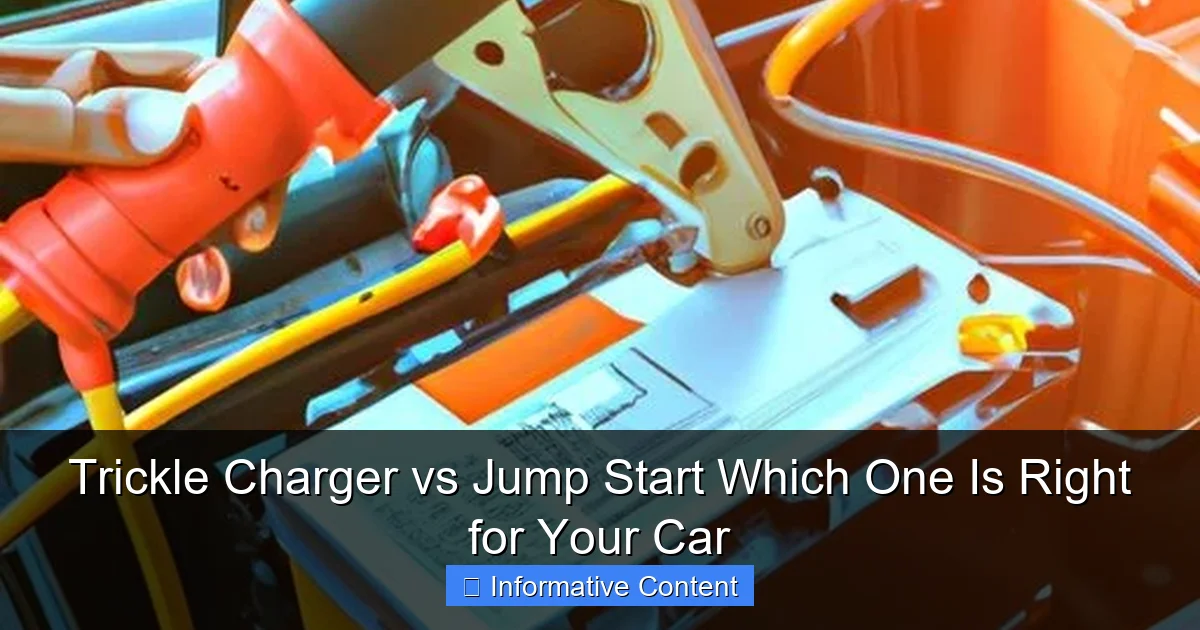
Visual guide about trickle charger vs jump start
Image source: tffn.net
Trickle chargers are especially useful for vehicles that aren’t driven regularly, like classic cars, motorcycles, RVs, or winter vehicles. For example, if you park your vintage Mustang in the garage every November and don’t touch it until spring, a trickle charger can keep the battery alive and ready to go when you need it. Many modern trickle chargers are “smart” and automatically switch to maintenance mode once the battery reaches full charge, preventing overcharging.
What Is a Jump Start?
A jump start (or jumpstart) is the quick, high-current method of getting a dead battery working again using another power source—usually another vehicle’s battery or a portable jump starter. It delivers a burst of energy (often 100–400 amps) to crank the engine and get it running.
Jump starting is the go-to solution when you’re stranded, late for work, or just need to get moving fast. For instance, if you accidentally left your headlights on overnight and your battery is completely drained, a jump from a friend’s car or a portable jump box can get you back on the road in minutes. However, it’s important to note: a jump start doesn’t fix the underlying issue. It’s a temporary fix, not a cure.
Key Differences at a Glance
- Speed: Jump starts work in minutes; trickle chargers take hours or days.
- Power source: Jump starts need another battery or a jump pack; trickle chargers plug into a wall outlet.
- Purpose: Jump starts revive; trickle chargers maintain or slowly recharge.
- Risk: Improper jump starting can damage electronics; trickle chargers are much safer when used correctly.
Both tools have their place. The trick is knowing which one to reach for when your battery gives up the ghost.
When to Use a Trickle Charger (And Why It’s a Lifesaver)
For Long-Term Vehicle Storage
If you own a second car, a boat, or a motorcycle that only sees the road on weekends, a trickle charger is your best friend. Batteries naturally lose charge over time due to what’s called “parasitic drain”—small electrical loads from the car’s computer, alarm system, or clock. Even when parked, these systems draw a tiny amount of power.
For example, a typical car battery might lose 5–10% of its charge per month when sitting idle. After three months, it could be too weak to start the engine. A trickle charger counteracts this by topping off the battery slowly. I once left my dad’s old pickup in the driveway for four months during a busy work season. When I finally went to start it, the engine fired up instantly—thanks to a $40 smart trickle charger I’d plugged in weeks earlier.
Preventing Sulfation
One of the biggest enemies of lead-acid batteries (the kind in most cars) is sulfation. This happens when a battery sits in a discharged state for too long. Lead sulfate crystals form on the plates, reducing the battery’s ability to hold a charge. Once severe sulfation sets in, the battery is often ruined.
A trickle charger helps prevent this by keeping the battery in a “float” state, where it’s fully charged but not overcharged. Some advanced models even include a “desulfation mode” that sends high-frequency pulses to break up early-stage crystals. It’s not a miracle worker, but it can extend your battery’s life by months or even years.
Ideal for Older or Classic Cars
Classic cars often have outdated electrical systems with higher parasitic drain. Plus, they’re usually driven less frequently. A trickle charger ensures the battery stays healthy between drives. Many classic car owners install a quick-disconnect plug under the hood so they can connect the charger without opening the car—super convenient.
Pro tip: Look for a charger with temperature compensation. Batteries charge differently in hot or cold environments, and a smart charger adjusts the voltage accordingly to avoid damage.
Great for Cold Weather Protection
Winter is tough on batteries. Cold temperatures slow chemical reactions inside the battery, reducing its power output. A weak battery that starts fine in summer might struggle in sub-zero temps. Using a trickle charger during winter storage helps keep the battery strong and ready.
I once had a friend whose SUV wouldn’t start after a week of -10°F weather. The battery was only two years old but had been sitting unused. A jump got it running, but the battery failed again the next morning. A trickle charger installed the week before would’ve saved the day.
When a Jump Start Is the Better Choice
You Need Immediate Mobility
Let’s face it—sometimes you don’t have 8 hours to wait for a battery to charge. If you’re late for a meeting, rushing to pick up the kids, or stranded on the side of the road, a jump start is your only realistic option. Portable jump starters (also called jump boxes) have made this easier than ever.
These compact devices pack a lithium-ion battery that can deliver hundreds of amps to crank your engine. I keep a 1200-amp jump starter in my trunk. Last winter, it got me out of a jam when my wife’s car wouldn’t start at the grocery store. No waiting for a tow truck. No flagging down strangers. Just plug, press, and go.
You’re in an Emergency Situation
Emergencies don’t wait for ideal conditions. A dead battery during a storm, a medical emergency, or a breakdown on a busy highway demands a quick solution. Jump starting is fast, reliable, and doesn’t require access to an electrical outlet.
Just remember: safety first. Always follow proper jump-starting procedures:
- Turn off both vehicles and set parking brakes.
- Connect red (positive) to red, then black (negative) to black on the donor battery.
- Attach the final black clamp to a metal part on the dead car’s engine block—not the battery terminal—to avoid sparks near flammable gases.
- Start the donor car, wait 1–2 minutes, then try the dead car.
One mistake I made early on? Connecting the final black clamp to the negative terminal. A spark near the battery can ignite hydrogen gas—definitely not something you want to experience.
You’re Testing a Battery’s Health
Jump starting can also be a diagnostic tool. If your car starts fine after a jump but dies again within a few hours, the battery is likely failing. If it runs normally afterward, the issue might be a charging system problem (like a bad alternator) or something else.
For example, a reader once told me her car kept dying after short drives. We jumped it, and it ran fine. After a few days of testing, we realized the alternator wasn’t recharging the battery. A jump start helped us isolate the real problem without spending hundreds on unnecessary parts.
You’re Helping Someone Else
Let’s not forget the social aspect. Jump starting another driver is a small act of kindness that can make someone’s day. I’ve helped strangers at parking lots, gas stations, and even on the highway. It’s a quick way to build community—and it might come back around when you’re the one with the dead battery.
Comparing Safety, Cost, and Long-Term Impact
Safety Considerations
Trickle Chargers: Generally safe when used properly. Look for models with overcharge protection, reverse polarity alarms, and spark-proof connections. Never leave a non-smart charger connected for days without monitoring.
Jump Starts: Higher risk if done wrong. Sparks near batteries can cause explosions. Always wear eye protection, avoid smoking, and keep flammable materials away. Portable jump starters are safer than jumper cables because they have built-in safeguards (like short-circuit and reverse polarity protection).
Cost Comparison
| Tool | Entry-Level Price | Mid-Range Price | High-End/Pro Price | Lifespan |
|---|---|---|---|---|
| Trickle Charger | $20–$30 | $40–$70 | $100+ (smart models) | 5–10 years |
| Portable Jump Starter | $50–$80 | $90–$150 | $200+ (high-capacity) | 3–5 years (battery degrades) |
| Jumper Cables | $25–$40 | $50–$80 (heavy-duty) | $100+ (industrial) | 10+ years (if stored dry) |
While trickle chargers are cheaper long-term, portable jump starters offer more versatility. Many modern jump boxes also include USB ports, LED flashlights, and even air compressors. Think of it as a multi-tool for your car.
Long-Term Battery Health
Jump starting doesn’t harm your battery if done correctly. But if you’re jump-starting frequently, it’s a red flag. A healthy battery should last 3–5 years. Constantly relying on jumps suggests:
- The battery is old and needs replacement.
- The charging system (alternator, belt, etc.) is failing.
- You’re leaving lights or electronics on.
Trickle chargers, on the other hand, promote battery health. Regular maintenance charging can extend a battery’s life by up to 30%. Just don’t use them as a substitute for driving your car—batteries also need regular cycling (charging and discharging) to stay strong.
Real-World Scenarios: Which Tool Wins?
Scenario 1: Weekend Warrior
Situation: You drive your sports car only on sunny weekends. It sits in the garage for 5 days at a time.
Best Choice: Trickle charger. Plug it in every Friday after your drive. It keeps the battery fresh and prevents sulfation. Bonus: No need to jump it every Monday.
Scenario 2: Daily Commuter
Situation: Your sedan gets driven daily, but you accidentally left the dome light on overnight.
Best Choice: Jump start. You need to get to work in 20 minutes. A portable jump starter gets you moving fast. Afterward, drive for 30+ minutes to recharge the battery fully.
Scenario 3: Winter Storage
Situation: Your snowmobile sits in the shed from April to December.
Best Choice: Trickle charger. Connect it before storing. It maintains the battery through summer and fall, so it’s ready when snow falls.
Scenario 4: Road Trip Emergency
Situation: You’re 200 miles from home, and your rental car won’t start at a rest stop.
Best Choice: Jump start. Call roadside assistance or use a portable jump starter. You can’t wait 8 hours for a trickle charge in the middle of nowhere.
Pro Tips for Both Tools
- For trickle chargers: Use a timer or smart outlet to avoid leaving it connected too long, even with a smart charger.
- For jump starts: Keep your portable starter charged (check monthly). Lithium batteries lose charge when stored empty.
- Always clean battery terminals before connecting any device. Corrosion reduces conductivity and can prevent a successful jump.
- Store jumper cables in a dry, accessible spot—not under a pile of junk in the trunk.
Final Verdict: Which One Is Right for You?
There’s no one-size-fits-all answer. The best approach? Own both and use them for what they’re designed for. A trickle charger is your long-term battery health partner—great for storage, prevention, and peace of mind. A jump start (especially a portable one) is your emergency lifeline when time matters.
Think of it like this: A trickle charger is like taking vitamins to stay healthy. A jump start is like calling 911 when you’re sick. One prevents problems; the other fixes them fast.
If you only have room for one, ask yourself: How often do my vehicles sit unused? If the answer is “a lot,” go with the trickle charger. If you’re more likely to face sudden dead batteries, invest in a quality portable jump starter. And if you’re like most people? Get both. They’re both essential tools in a smart car owner’s toolkit.
At the end of the day, the goal isn’t just to start your car—it’s to keep it running smoothly, safely, and reliably. Whether you’re reviving a battery with a quick jump or nurturing it with a slow charge, you’re taking control of your vehicle’s health. And that’s something every driver can feel good about.
Frequently Asked Questions
What is the difference between a trickle charger and a jump start?
A trickle charger slowly replenishes a car battery over time, ideal for long-term maintenance, while a jump start provides an immediate power boost to start a dead battery using another vehicle or portable device. Trickle charging is preventive, whereas jump starting is reactive.
Can a trickle charger replace the need for a jump start?
Not immediately—a trickle charger takes hours to restore a battery, so it won’t help in an emergency. However, regular use can prevent battery drain and reduce the need for jump starts over time.
Is a jump start safe for your car’s electrical system?
When done correctly, jump starting is generally safe, but improper connections can damage electronics or cause sparks. Always follow the manufacturer’s instructions and use quality jumper cables or a jump starter.
How long does it take a trickle charger to charge a car battery?
A trickle charger typically takes 12 to 24 hours to fully charge a depleted battery, depending on the battery’s condition and the charger’s output. It’s best used overnight or during extended storage.
When should I use a trickle charger instead of a jump start?
Use a trickle charger when storing your car for weeks or maintaining a weak battery to avoid future failures. It’s not suitable for immediate starts but helps extend battery life with consistent, low-power charging.
Do I need both a trickle charger and a jump starter for my car?
Having both is ideal: a trickle charger for maintenance and a jump starter for emergencies. This combination ensures your battery stays healthy and you’re prepared for unexpected dead batteries.