
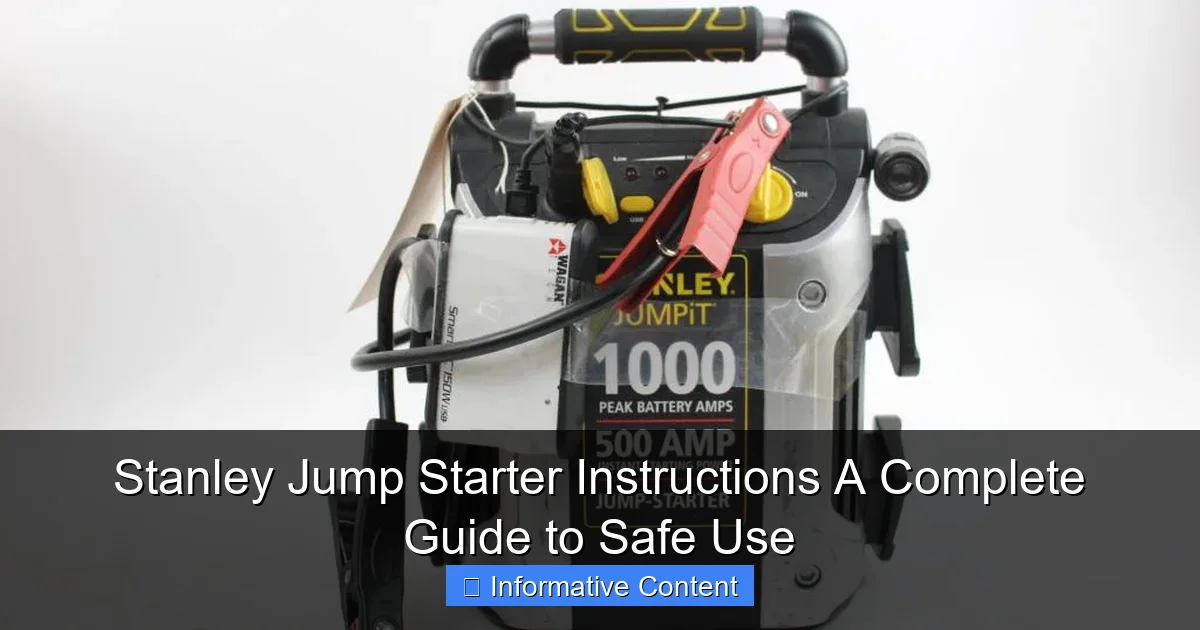
Featured image for stanley jump starter instructions
Image source: content.propertyroom.com
Always connect the Stanley jump starter to the battery before turning it on to prevent sparks and ensure safe operation. This guide walks you through step-by-step instructions, safety precautions, and troubleshooting tips to help you jump-start your vehicle confidently and avoid common mistakes. Never risk damaging your vehicle—follow the right procedure every time.
Key Takeaways
- Always inspect cables for damage before connecting to avoid hazards.
- Charge fully before first use to ensure optimal jump-starting power.
- Connect red clamp first to positive terminal, then black to ground.
- Never reverse clamps—this can damage the jump starter and vehicle.
- Wait 3–5 minutes after connecting before attempting to start the engine.
- Use safety features like reverse polarity alarms to prevent user error.
- Store in a cool, dry place to extend battery life and performance.
📑 Table of Contents
- Why Every Driver Should Know How to Use a Stanley Jump Starter
- Understanding Your Stanley Jump Starter: Models and Features
- Step-by-Step Stanley Jump Starter Instructions for Safe Use
- Common Mistakes to Avoid (And How to Fix Them)
- Advanced Tips: Using Your Stanley Jump Starter Like a Pro
- Stanley Jump Starter vs. Traditional Jumper Cables: When to Use Each
- Final Thoughts: Safety, Confidence, and Peace of Mind
Why Every Driver Should Know How to Use a Stanley Jump Starter
Picture this: You’re late for an important meeting, you hop into your car, turn the key, and… silence. The engine doesn’t crank. Your battery is dead. Now what? If you’ve ever been stranded in a parking lot, at the airport, or worse—in a remote area—with a car that won’t start, you know how stressful it can be. That’s where a Stanley jump starter comes in. These portable, battery-powered devices are a game-changer for anyone who drives, offering peace of mind and a quick fix without needing another vehicle or jumper cables.
But here’s the catch: owning a jump starter isn’t enough. Knowing how to use it correctly is what separates a successful jump from a potential disaster. I learned this the hard way a few years ago when I tried to jump my car with a Stanley unit I’d owned for months but never read the manual for. I connected the clamps in the wrong order, sparked the terminals, and nearly fried the unit. After that, I made it my mission to master the Stanley jump starter instructions—not just for my safety, but for my car’s. Whether you’re a seasoned driver or a new car owner, this guide will walk you through everything you need to know to use your Stanley jump starter safely, effectively, and with confidence.
Understanding Your Stanley Jump Starter: Models and Features
Before diving into the Stanley jump starter instructions, it helps to understand the different models and features available. Stanley offers a range of jump starters, from compact 800-amp units to heavy-duty 2000-amp versions with built-in air compressors, USB ports, and LED lights. Each model is designed for different needs, so knowing your specific unit is key to using it properly.
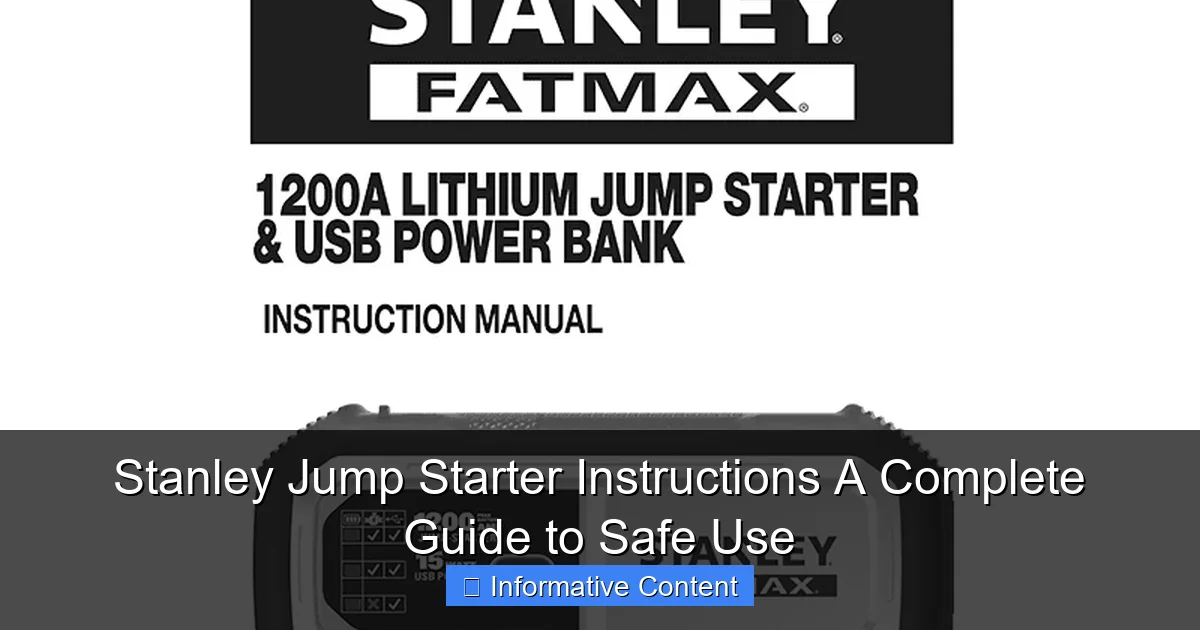
Visual guide about stanley jump starter instructions
Image source: teklib.com
Popular Stanley Jump Starter Models
- Stanley J7C09D: 1200 peak amps, 300 cranking amps, USB charging, built-in light. Great for sedans and small SUVs.
- Stanley J5C09: 1000 peak amps, 225 cranking amps, 12V outlet, USB ports. Compact and reliable.
- Stanley J5C09D: Similar to J5C09 but with a digital display for battery status.
- Stanley J7C09: 1200 peak amps, 300 cranking amps, air compressor, dual USB ports. Ideal for larger vehicles and roadside emergencies.
- Stanley J8C09: 2000 peak amps, 500 cranking amps, heavy-duty clamps, air compressor. Best for trucks, RVs, and frequent travelers.
Most models share similar core features: reverse polarity protection, spark-proof technology, and built-in safety indicators. But the exact steps and warnings may vary slightly depending on your model. Always check the manual that came with your unit—yes, even if you think you know how it works. I once borrowed my brother’s Stanley J5C09 and assumed it worked the same as mine. It didn’t. The clamps had a different locking mechanism, and I nearly over-tightened them. Lesson learned: read the instructions, even if you’re “experienced.”
Key Features That Enhance Safety
- Reverse Polarity Protection: If you accidentally connect the clamps backward, the unit won’t power on. A red LED usually flashes to warn you.
- Spark-Proof Technology: Prevents sparks when connecting clamps, reducing fire risk.
- Low Voltage Mode: Some models have a “low voltage” or “battery saver” mode for deeply discharged batteries.
- LED Indicators: Show battery charge level, connection status, and error alerts.
- USB and 12V Ports: Let you charge phones, tablets, or power small devices—great for emergencies.
One thing I love about Stanley units is their user-friendly design. The clamps are color-coded (red = positive, black = negative), and many models have clear on-screen prompts. But don’t let that lull you into skipping the manual. For example, the J7C09D has a “boost” mode that’s only activated after holding a button for 3 seconds—something I didn’t know until my third use.
Step-by-Step Stanley Jump Starter Instructions for Safe Use
Now that you know your unit, let’s walk through the Stanley jump starter instructions step by step. These are based on the most common models, but always cross-reference with your manual. Safety first—this isn’t something to rush.
Step 1: Check the Jump Starter’s Battery Level
Before you even open the hood, make sure your Stanley jump starter has enough charge. Most units have a button to check the battery level. A green light means it’s ready. Yellow or red? Charge it first. I keep mine plugged in overnight once a month, even when I don’t use it. Lithium-ion batteries degrade faster when left fully discharged.
Pro Tip: If you’re using it in cold weather (below 32°F/0°C), charge it indoors first. Cold temps reduce battery efficiency, and you’ll need every amp you can get.
Step 2: Position the Vehicles (If Using with Another Car)
If your car is in a tight spot, move it (or the jump starter) so you can access the battery easily. If you’re using another vehicle, park it close—but not touching—your car. Turn off both engines, put the parking brakes on, and remove the keys. I once saw a friend try to jump a car while the key was in the “on” position. Sparks flew, and the jump starter shut down. Not worth the risk.
Step 3: Connect the Clamps in the Correct Order
This is the most critical step. Connect in this order:
- 1. Red clamp to the positive (+) terminal of the dead battery.
- 2. Black clamp to the negative (-) terminal of the good battery (if using another car) or to an unpainted metal surface (if using the Stanley unit alone—more on this below).
- 3. Double-check connections. Wiggle the clamps to ensure they’re tight and clean.
Wait—why connect the black clamp to a metal surface, not the dead battery’s negative terminal? It’s a safety measure. Connecting directly to the negative terminal of a dead battery can cause sparks near flammable gases. Instead, ground the clamp to a clean, unpainted part of the engine block or frame (like a bolt). I use the alternator bracket—it’s always accessible and grounded.
Example: On my 2018 Honda Civic, I connect the black clamp to the engine block near the oil dipstick. No sparks, no fuss.
Step 4: Power On the Jump Starter
Turn on the Stanley unit. If it has a “boost” mode, activate it (usually by holding the power button for 3 seconds). Most units will beep or flash a green light when ready. Do not start the car yet. Wait 1–2 minutes to let the jump starter transfer charge to the battery. This “pre-charge” step is especially important for deeply discharged batteries.
Red Flag: If the unit flashes red or beeps continuously, disconnect immediately. It likely detected reverse polarity or a short circuit. Re-check your connections.
Step 5: Start the Car
Now, try starting the engine. Turn the key (or push the start button) and hold it for 3–5 seconds. If it doesn’t start, wait 30 seconds and try again. Never crank the engine for more than 10 seconds straight—it can overheat the starter motor.
If the car starts, great! But don’t disconnect the jump starter yet. Let the engine run for 1–2 minutes to stabilize.
Step 6: Disconnect in Reverse Order
Once the car is running, disconnect the clamps in this order:
- 1. Black clamp from the grounding point.
- 2. Red clamp from the positive terminal.
- 3. Turn off the jump starter and store it safely.
Why reverse order? It minimizes the risk of sparks near the battery. I learned this after accidentally touching the black clamp to the car frame while the red was still connected—sparks, a loud pop, and a heart attack. Not fun.
Common Mistakes to Avoid (And How to Fix Them)
Even with clear Stanley jump starter instructions, mistakes happen. Here are the most common—and how to avoid or fix them.
Mistake 1: Connecting Clamps in the Wrong Order
This is the #1 error. Connecting black to positive and red to negative (reverse polarity) can damage your car’s electrical system. Most Stanley units have protection, but it’s not foolproof.
Fix: If you connect backward, the unit will usually flash red and refuse to power on. Disconnect immediately, swap the clamps, and try again. If the unit powers on after a reverse connection, stop. Test the car’s battery voltage with a multimeter. If it’s below 10V or above 14V, don’t start the engine. Seek professional help.
Mistake 2: Using on a Frozen or Swollen Battery
Never jump a frozen battery. The ice can expand and crack the case, leaking acid. A swollen battery is also dangerous—it may be overcharging or internally damaged.
Fix: If the battery looks cracked, bulging, or smells like rotten eggs (sulfur), do not jump. Replace the battery first. I once ignored a swollen battery to get my wife to work. The jump worked, but the battery exploded a week later—cost me $300 in repairs.
Mistake 3: Cranking Too Long or Too Hard
Cranking the engine for more than 10 seconds or pressing the start button repeatedly can overheat the starter motor and drain the jump starter.
Fix: If the car doesn’t start after two 5-second attempts, stop. Wait 30 seconds between tries. If it still won’t start, the issue may be more than just a dead battery (e.g., bad starter, fuel pump). Use the jump starter’s USB ports to call for help.
Mistake 4: Storing the Jump Starter Discharged
Lithium-ion batteries degrade faster when left at 0%. A fully discharged jump starter can lose 5–10% of its capacity per month.
Fix: Recharge your unit to 50–80% every 3–6 months, even if unused. I keep mine in the trunk with a reminder on my phone to check it quarterly.
Advanced Tips: Using Your Stanley Jump Starter Like a Pro
Once you’ve mastered the basics, here are pro-level tips to get the most out of your Stanley jump starter.
Tip 1: Use the Air Compressor (If Equipped)
Models like the J7C09 and J8C09 have built-in air compressors. Use them to inflate tires, sports gear, or even air mattresses. I keep a tire pressure gauge in my trunk and check tires monthly. Underinflated tires reduce fuel efficiency and increase wear.
How to Use: Attach the hose to the tire valve, set the desired PSI (if digital), and turn it on. Most compressors auto-shut off at the set pressure. For analog models, check the gauge every 30 seconds.
Tip 2: Power Your Devices in Emergencies
Dead phone? No problem. Use the USB ports to charge your phone, GPS, or emergency radio. I once used my Stanley to charge my phone while waiting for AAA—saved me from being stranded in a dead zone.
Pro Tip: Prioritize charging over jumping. A dead jump starter is useless. If you’re at 20% charge, use it to jump the car, then recharge it before using USB ports.
Tip 3: Jump Start in Cold Weather
Cold temps reduce battery output. A 1200-amp unit may only deliver 600 amps at 0°F.
How to Fix:
- Charge the jump starter indoors first.
- Use the “boost” mode (if available).
- Pre-warm the car battery with a portable heater or blanket for 10–15 minutes.
- Crank the engine in short bursts (3–5 seconds) with 30-second waits.
Tip 4: Maintain the Clamps and Cables
Corrosion or loose clamps reduce conductivity. Clean the clamps with a wire brush every 6 months. I use baking soda and water to neutralize acid buildup.
Storage Tip: Keep the unit in a dry, cool place. Avoid direct sunlight or extreme heat (e.g., a hot car trunk in summer).
Stanley Jump Starter vs. Traditional Jumper Cables: When to Use Each
You might wonder: Why use a jump starter when jumper cables work fine? Here’s the breakdown.
Jump Starter Pros and Cons
| Feature | Stanley Jump Starter | Traditional Jumper Cables |
|---|---|---|
| Portability | Compact, self-contained. Fits in trunk or glovebox. | Bulky. Requires storage space and another car. |
| Ease of Use | No second car needed. Safer for solo drivers. | Requires coordination with another driver. |
| Speed | Instant use. No waiting for help. | Depends on someone else’s availability. |
| Cost | Higher upfront ($80–$200). | Lower ($20–$50). |
| Versatility | USB ports, air compressor, LED light. | None. |
| Reliability | Depends on battery charge. May fail if unused. | Always works (if cables are undamaged). |
When to Use a Jump Starter:
- You’re alone or in a remote area.
- You need to power devices (phone, GPS).
- You have a large vehicle (truck, RV) and need extra amps.
When to Use Jumper Cables:
- You’re in a parking lot with other drivers nearby.
- Your jump starter is low on charge.
- You’re on a tight budget.
I keep both. Jumper cables for quick help from a friend, and my Stanley for emergencies. It’s like having a spare tire and a AAA membership—you hope you don’t need either, but you’re glad you have them.
Final Thoughts: Safety, Confidence, and Peace of Mind
Mastering the Stanley jump starter instructions isn’t just about learning steps—it’s about gaining confidence. When your car won’t start, you don’t want to panic. You want to act calmly, safely, and effectively. That’s what this guide is for.
Remember: Read your manual. Every model has quirks. Test your unit every few months. Keep it charged. And most importantly, prioritize safety over speed. A few extra minutes to double-check connections can save you hours (and hundreds of dollars) in repairs.
I’ve used my Stanley jump starter in blizzards, on road trips, and even to help a stranger at a gas station. Each time, I followed the same steps—and each time, it worked flawlessly. That’s the power of knowing how to use your tools. So take 15 minutes today to review your unit’s instructions. Charge it. Practice the steps. And drive with the peace of mind that comes from being prepared.
Because when the engine clicks and the dashboard lights flicker, you won’t be stranded. You’ll be the person who knows exactly what to do.
Frequently Asked Questions
How do I use the Stanley Jump Starter for the first time?
Begin by fully charging your Stanley jump starter using the included AC adapter. Follow the Stanley jump starter instructions to connect the clamps correctly: red to the positive (+) terminal and black to the negative (-) ground on the vehicle battery.
Can I leave my Stanley Jump Starter plugged in overnight?
Yes, most Stanley models have overcharge protection, making it safe to leave the unit plugged in overnight. However, always refer to your specific model’s manual to confirm this feature is included.
What should I do if my Stanley Jump Starter won’t turn on?
Check that the battery is charged and the power switch is fully engaged. If issues persist, consult the troubleshooting section of your Stanley jump starter instructions for reset steps or error code explanations.
How long does it take to fully charge a Stanley Jump Starter?
Charging time varies by model but typically takes 24–72 hours using the AC adapter. Portable solar chargers (sold separately) may take longer depending on sunlight conditions.
Can I use my Stanley Jump Starter in the rain?
No, the unit is not waterproof—exposure to moisture can damage internal components or cause electrical hazards. Always operate the jump starter in dry, well-ventilated areas.
What’s the correct way to store my Stanley Jump Starter when not in use?
Store the unit at 50% charge in a cool, dry place away from direct sunlight. Recharge every 3–6 months to maintain battery health, as noted in the official Stanley jump starter instructions.