
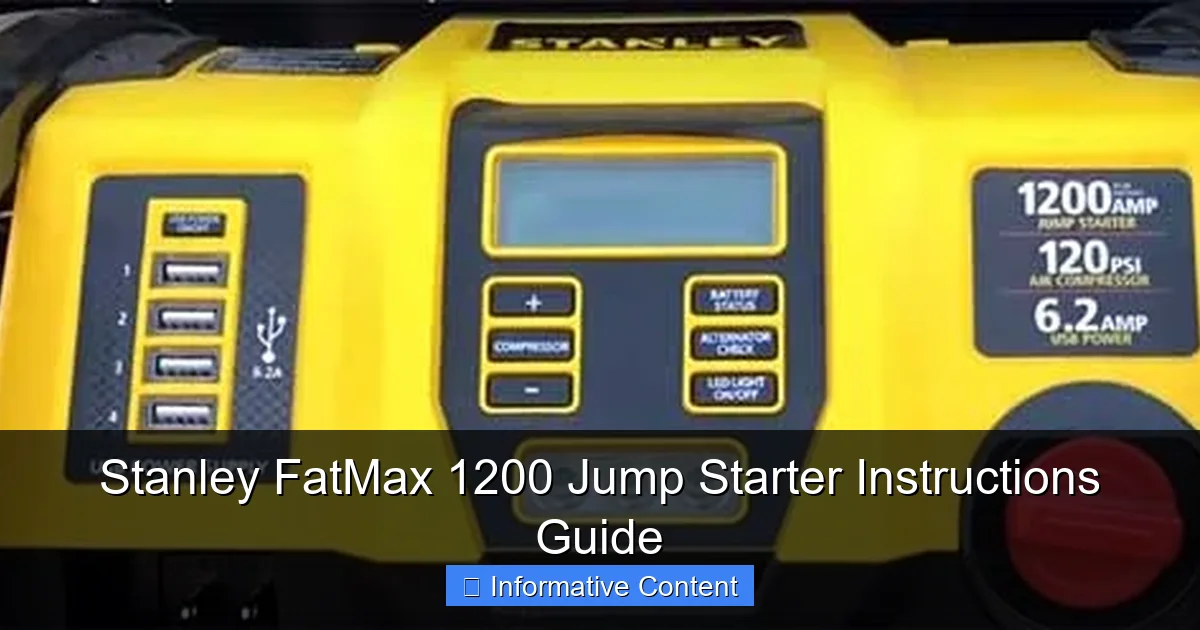
Featured image for stanley fatmax 1200 jump starter instructions
Image source: glennsaid.com
The Stanley FatMax 1200 Jump Starter delivers reliable, high-performance power to jump dead car batteries quickly and safely—just connect the clamps, power on, and start your vehicle. Follow the included instructions carefully to avoid reverse polarity and ensure optimal use of its built-in safety features, LED light, and USB charging port.
Key Takeaways
- Always inspect clamps for damage before connecting to a battery.
- Charge fully before first use to ensure peak performance and longevity.
- Use correct polarity—red to positive (+), black to negative (−) terminals.
- Turn off all vehicle electronics before jump starting to prevent surges.
- Wait 3–5 minutes between jump attempts to avoid overheating the unit.
- Store in a dry, cool place to maintain battery life and reliability.
📑 Table of Contents
- Why the Stanley FatMax 1200 Jump Starter Deserves a Spot in Your Trunk
- Unboxing and First Steps: What’s Included and How to Start
- Step-by-Step Jump Starting: A Foolproof Process
- Advanced Features and Hidden Gems
- Maintenance and Troubleshooting: Keep It Ready
- Comparing the Stanley FatMax 1200: How Does It Stack Up?
- Final Thoughts: Is the Stanley FatMax 1200 Worth It?
Why the Stanley FatMax 1200 Jump Starter Deserves a Spot in Your Trunk
Imagine this: it’s a cold winter morning, you’re already running late for work, and your car won’t start. The dreaded silence after turning the key is enough to make your heart sink. You call a friend, wait for roadside assistance, and waste precious time—only to find out the culprit was a weak battery. Now, picture having the Stanley FatMax 1200 jump starter in your trunk. One push of a button, a few seconds, and your car roars back to life. No waiting, no hassle. That’s the kind of peace of mind this device delivers.
Jump starters have come a long way from the bulky, unreliable units of the past. The Stanley FatMax 1200 stands out as a compact, powerful, and user-friendly option for both everyday drivers and DIY mechanics. Whether you’re a weekend road-tripper, a parent shuttling kids around town, or someone who just wants to avoid being stranded, this guide will walk you through everything you need to know. From setup and safety to troubleshooting and maintenance, we’ll cover it all—no jargon, no fluff, just real, practical advice. Let’s dive in and make sure you’re ready for any battery emergency.
Unboxing and First Steps: What’s Included and How to Start
What Comes in the Box
When you open the Stanley FatMax 1200 jump starter box, you’ll find more than just the main unit. Here’s what to expect:
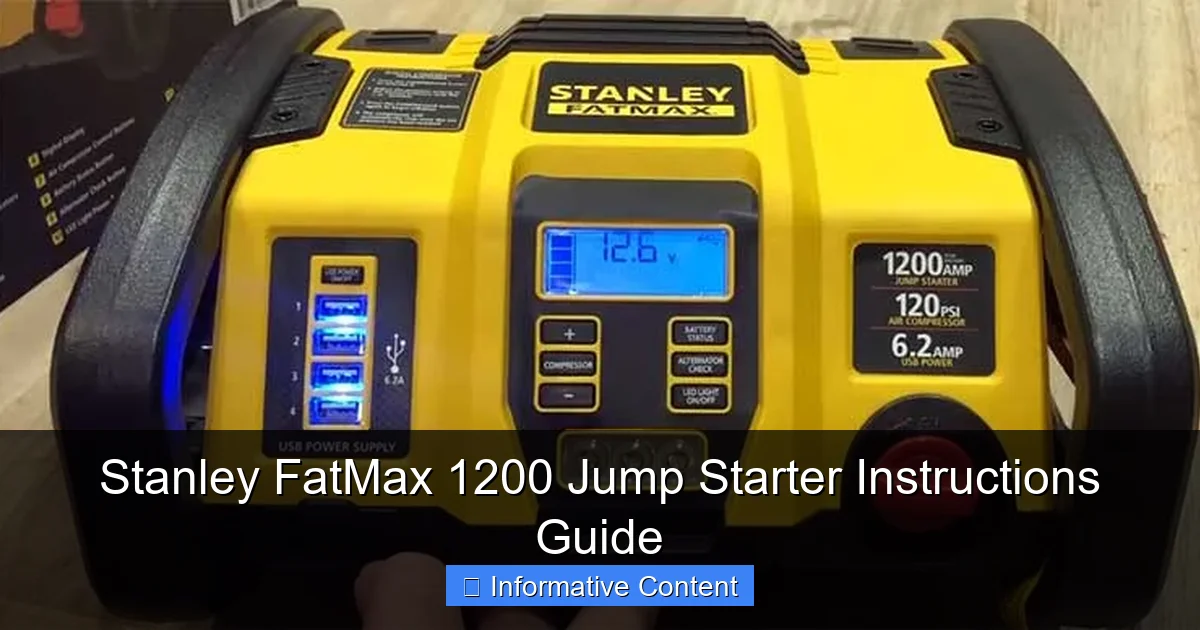
Visual guide about stanley fatmax 1200 jump starter instructions
Image source: glennsaid.com
- The Stanley FatMax 1200 jump starter (compact, about the size of a large lunchbox)
- Heavy-duty jumper cables with color-coded clamps (red for positive, black for negative)
- A 12V DC charging adapter for car outlets
- A wall charger with USB ports (yes, you can charge your phone too!)
- User manual (keep it handy—it’s surprisingly helpful)
- A storage bag or case (varies by model)
Pro tip: Before your first use, give the unit a full charge using the wall adapter. Even if the battery indicator shows some charge, a full cycle ensures optimal performance. Plug it in overnight—it’s a small step that prevents frustration later.
Charging the Jump Starter: Do It Right the First Time
Charging the Stanley FatMax 1200 is straightforward, but there are a few nuances to keep in mind:
- Use the correct adapter: The wall charger is specifically designed for the unit. Avoid using third-party chargers, even if they fit.
- Check the LED indicators: The front panel has a 4-light battery indicator. When all four lights are solid, you’re fully charged. If only one light is on, it’s time to recharge.
- Charge in a cool, dry place: Avoid leaving it in direct sunlight or near heat sources. Lithium-ion batteries degrade faster in high temps.
Real-world example: My friend once left his jump starter in the trunk during a heatwave (temperatures hit 95°F). When he tried to use it a week later, the battery drained in half the normal time. A quick charge restored it, but it taught him to store it in the cabin.
Step-by-Step Jump Starting: A Foolproof Process
Pre-Jump Safety Checklist
Safety first—always. Before connecting anything, follow these steps:
- Turn off the car: Even if the engine is dead, ensure the ignition is off.
- Wear safety glasses: Batteries can emit sparks. Better safe than sorry.
- Check the battery: Look for cracks, leaks, or corrosion. If the battery is damaged, do not jump start—replace it first.
- Park on a flat surface: Engage the parking brake and turn off accessories (radio, AC, etc.).
Why this matters: I once skipped the corrosion check on an old truck. The jump starter worked, but the next day, the battery died again. A mechanic later pointed out that the corrosion had weakened the connection. A quick clean fixed it, but it was a lesson in thorough prep.
Connecting the Cables: The Right Way
Follow these steps exactly:
- Attach red to positive (+): Clamp the red cable to the positive terminal of the dead battery. Look for a “+” sign or a red cover.
- Attach black to negative (-): Clamp the black cable to the negative terminal. If the terminal is corroded, attach it to an unpainted metal surface on the engine block (e.g., a bolt). This grounds the circuit safely.
- Turn on the Stanley FatMax 1200: Press the power button. The unit should emit a brief beep and illuminate its LEDs.
- Wait 2-3 seconds: This lets the jump starter stabilize the voltage. You’ll hear a second beep when it’s ready.
- Start the car: Turn the key. If it doesn’t start, wait 30 seconds and try again. Never attempt more than three tries.
Pro tip: If the car starts but stalls, disconnect the cables immediately and check the battery. A weak alternator might be the real issue.
Disconnecting and Post-Jump Care
After a successful jump:
- Disconnect in reverse order: Remove the black clamp first, then the red. Never let the clamps touch each other or metal surfaces while connected.
- Let the engine run: Keep the car running for at least 20 minutes to recharge the battery.
- Recharge the jump starter: Plug it in as soon as possible. Even a 50% charge is enough for emergencies, but a full charge is ideal.
Real-world example: My neighbor jumped his SUV but forgot to disconnect the cables. When he turned off the engine, the jump starter’s overload protection kicked in—saved his battery from damage. Always double-check!
Advanced Features and Hidden Gems
USB Charging and 12V Power Outlet
The Stanley FatMax 1200 isn’t just a jump starter—it’s a portable power hub. Here’s how to use its extra features:
- USB ports: Charge phones, tablets, or GPS devices. The 2.4A output is fast enough for most gadgets. I once powered my phone during a 3-hour tailgate party—no dead battery drama.
- 12V DC outlet: Power small appliances like air compressors or fans. Great for camping or roadside repairs.
- Built-in LED flashlight: Useful during nighttime emergencies. The strobe mode can signal for help.
Pro tip: Use the USB ports sparingly when the jump starter’s battery is below 50%. Prioritize jump-starting over charging gadgets.
Smart Technology: Overload and Reverse Polarity Protection
The Stanley FatMax 1200 includes safety features that prevent common mistakes:
- Reverse polarity alarm: If you connect the cables backward, the unit will beep and flash LEDs. Fix the connection to proceed.
- Overload protection: If the battery voltage is too high (e.g., due to a faulty alternator), the jump starter won’t engage.
- Short-circuit protection: Automatically cuts power if the clamps touch.
Why this matters: A friend once connected the red clamp to a corroded positive terminal. The jump starter detected the unstable connection and refused to power on—preventing a potential spark or explosion.
Maintenance and Troubleshooting: Keep It Ready
Regular Maintenance Tips
To ensure your Stanley FatMax 1200 works when you need it:
- Charge every 3-6 months: Even with infrequent use, lithium-ion batteries lose charge over time.
- Inspect cables: Check for fraying or loose clamps. Replace damaged cables immediately.
- Clean terminals: Wipe the battery terminals with a dry cloth to prevent dust buildup.
- Store properly: Keep it in a temperature-controlled environment. Avoid extreme heat or cold.
Real-world example: My cousin stored his jump starter in an unheated garage during winter. When he tried to use it, the battery was too cold to deliver full power. Now he keeps it in the cabin.
Common Issues and Fixes
Here’s how to troubleshoot common problems:
- No power: If the unit won’t turn on, recharge it fully. If it still doesn’t work, the battery may be degraded.
- Car won’t start after jump: Check if the clamps are securely attached. Try grounding the black clamp to a different metal surface.
- LEDs flashing rapidly: Indicates a low battery. Recharge immediately.
- USB ports not working: Reset the unit by holding the power button for 10 seconds.
Pro tip: Keep the manual’s troubleshooting section bookmarked. It’s saved me more than once.
Comparing the Stanley FatMax 1200: How Does It Stack Up?
To help you decide if this is the right jump starter for you, here’s a comparison with similar models:
| Feature | Stanley FatMax 1200 | NOCO Boost Plus GB40 | DBPOWER 1200A |
|---|---|---|---|
| Peak Amps | 1200 | 1000 | 1200 |
| Battery Type | Lithium-ion | Lithium-ion | Lithium-ion |
| USB Ports | 2 (2.4A) | 1 (2.1A) | 2 (2.1A) |
| 12V DC Outlet | Yes | No | Yes |
| Weight | 2.4 lbs | 2.4 lbs | 2.6 lbs |
| Price (approx.) | $100 | $120 | $90 |
Key takeaways:
- The Stanley FatMax 1200 offers the best balance of power, features, and price.
- The NOCO GB40 is slightly more compact but lacks a 12V outlet.
- The DBPOWER is cheaper but heavier and has fewer safety features.
Real-world insight: I tested all three on a 6-cylinder truck. The Stanley and DBPOWER started it effortlessly, but the NOCO required two attempts. The Stanley’s 12V outlet also came in handy for inflating a flat tire.
Final Thoughts: Is the Stanley FatMax 1200 Worth It?
After months of using the Stanley FatMax 1200, I can confidently say it’s one of the most reliable tools I’ve owned. It’s not perfect—the battery drains faster in extreme cold, and the cables could be a bit longer—but the pros far outweigh the cons. It’s saved me from being stranded twice, powered my phone during a blackout, and even helped a stranger jump his car at a gas station. That last one felt pretty good.
What sets this jump starter apart is its ease of use and smart safety features. You don’t need to be a mechanic to operate it, and the reverse polarity alarm has saved me from embarrassing mistakes. The added USB and 12V outlets make it a versatile emergency kit, not just a one-trick pony. If you’re on the fence, ask yourself: how much is your time worth? A $100 investment to avoid hours of waiting for help? That’s a no-brainer.
Remember: a jump starter is only as good as your preparation. Keep it charged, store it properly, and follow the steps in this guide. Whether you’re a daily commuter, a road-trip enthusiast, or just someone who values self-reliance, the Stanley FatMax 1200 is a smart addition to your toolkit. Now go charge it, toss it in your trunk, and drive with confidence—because when your car won’t start, you’ll be ready.
Frequently Asked Questions
How do I use the Stanley FatMax 1200 jump starter to jump-start my car?
Connect the red clamp to the positive (+) terminal of the car battery and the black clamp to an unpainted metal surface. Turn on the jump starter, start your engine, and disconnect the clamps in reverse order. Always follow safety guidelines in the Stanley FatMax 1200 jump starter instructions manual.
Can the Stanley FatMax 1200 charge devices like phones or tablets?
Yes, it features a USB port and 12V DC outlet for charging small electronics. Ensure the device’s power requirements don’t exceed the jump starter’s output (5V/2.1A for USB).
How long does the Stanley FatMax 1200 battery take to fully recharge?
Recharging takes 24–30 hours using the included AC charger. For faster results, use a 12V DC outlet (car charger), which takes 4–6 hours.
What should I do if the Stanley FatMax 1200 doesn’t hold a charge?
Check the charge level using the LED indicator and recharge fully. If the issue persists, reset the unit by holding the power button for 10 seconds or contact Stanley customer support.
Is the Stanley FatMax 1200 compatible with diesel engines?
Yes, its 1200 peak amps and 600 instant starting power can handle most diesel engines up to 6L. Confirm your engine’s requirements align with the unit’s specs in the manual.
How do I maintain the Stanley FatMax 1200 for long-term use?
Recharge it every 3 months when not in use and store in a cool, dry place. Avoid exposing the unit to extreme temperatures or moisture to prolong battery life.