
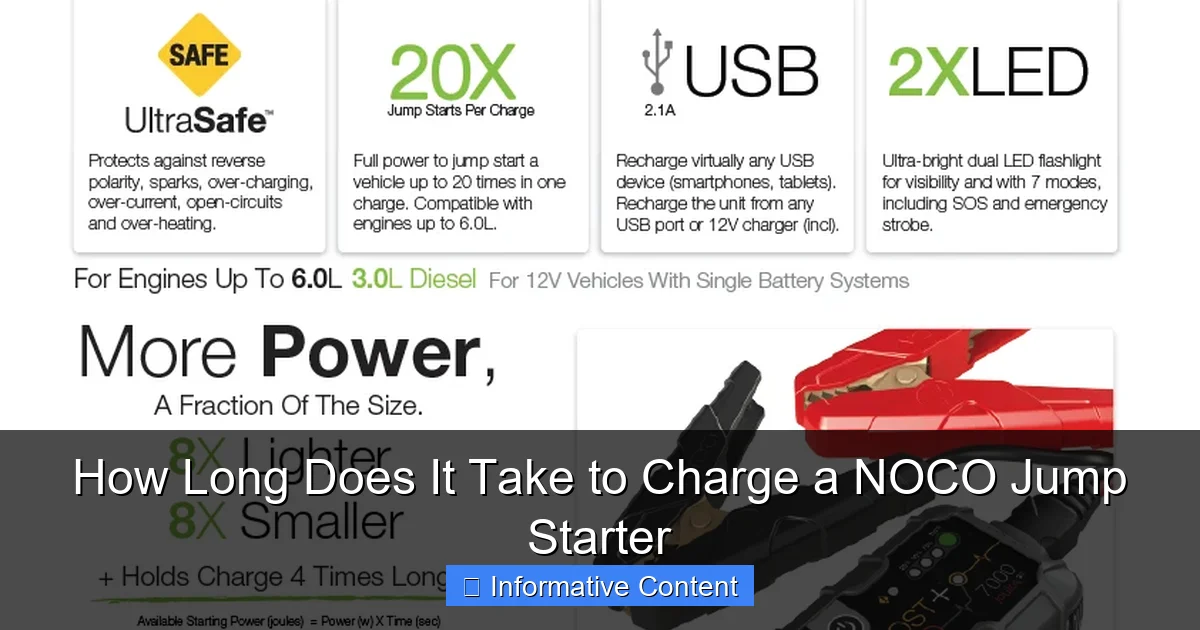
Featured image for noco jump starter charge time
Image source: batteriesdirect.com.au
NOCO jump starter charge time typically ranges from 3 to 6 hours, depending on the model and battery capacity. Fast-charging technology in newer models can reduce this to under 3 hours, ensuring quick readiness for emergencies—always check your device’s specs for optimal results.
Key Takeaways
- Charge time varies by model—check specs for your NOCO jump starter.
- Use the right charger to avoid slow or incomplete charging.
- Full charges take 3–5 hours for most NOCO models with proper setup.
- Partial charges work in emergencies but reduce jump-start reliability.
- Monitor LED indicators to confirm charging progress and completion.
- Store fully charged for optimal performance when needed.
📑 Table of Contents
- How Long Does It Take to Charge a NOCO Jump Starter?
- Understanding NOCO Jump Starters and Their Charging Needs
- Average NOCO Jump Starter Charge Time: What to Expect
- How to Charge Your NOCO Jump Starter: Step-by-Step Guide
- Charging Your NOCO Jump Starter on the Go: Alternatives and Tips
- Maximizing Battery Life and Performance
- Common Myths and Misconceptions About NOCO Jump Starter Charging
- NOCO Jump Starter Charge Time Comparison Table
- Final Thoughts: Stay Prepared, Stay Charged
How Long Does It Take to Charge a NOCO Jump Starter?
Picture this: It’s a cold winter morning, you’re running late for work, and you hop into your car—only to find it won’t start. The engine cranks weakly, or worse, nothing happens at all. Your heart sinks. You remember you left the headlights on overnight. Now you’re stuck, frustrated, and wishing you had a portable jump starter. That’s where a NOCO jump starter comes in—compact, reliable, and designed to get you back on the road fast.
But here’s the catch: even the best jump starter is useless if it’s not charged. That’s why understanding NOCO jump starter charge time is so important. Whether you’re a weekend adventurer, a daily commuter, or someone who just wants peace of mind, knowing how long it takes to recharge your device can make all the difference. In this guide, we’ll break down everything you need to know about charging your NOCO jump starter—from average charge times to tips for faster recharging and what affects performance. No technical jargon, no fluff—just real, practical info to help you stay prepared.
Understanding NOCO Jump Starters and Their Charging Needs
Before diving into charge times, let’s get familiar with what a NOCO jump starter actually is. NOCO is a leading brand in portable power solutions, known for their compact, high-performance jump starters that can revive dead car batteries in minutes. These devices aren’t just for cars—they can also power up trucks, motorcycles, boats, and even charge your phone or laptop in a pinch.
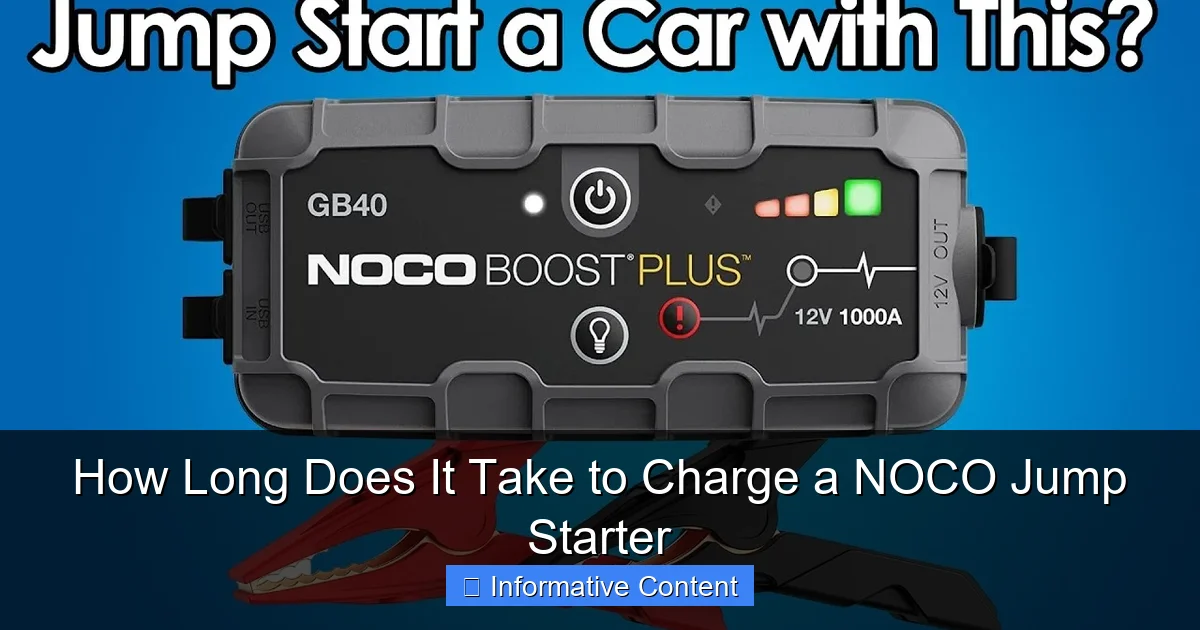
Visual guide about noco jump starter charge time
Image source: i.ytimg.com
Most NOCO jump starters use lithium-ion or lithium-polymer batteries, which are lightweight, rechargeable, and hold a charge well over time. But like any battery-powered device, they need regular charging to stay ready. The good news? They’re designed to be low-maintenance. Many models hold a charge for months, but it’s still smart to top them off every few months—especially if you live in extreme temperatures or use the device frequently.
Why Charge Time Matters
Imagine you’re on a road trip, your car battery dies, and you pull out your NOCO jump starter—only to find it’s dead too. That’s a scenario no one wants. Knowing how long it takes to charge your device helps you plan ahead. Whether you’re storing it in your glove compartment or garage, understanding charge time ensures you’re never caught off guard.
Charge time also affects how quickly you can use the device again after a jump. If you’ve just revived your car, you might want to recharge the jump starter right away so it’s ready for the next emergency. The faster it charges, the sooner it’s back to full power.
Types of NOCO Jump Starters and Their Battery Capacities
NOCO offers a range of jump starters, each with different battery capacities measured in milliampere-hours (mAh) or peak amps. Here’s a quick breakdown:
- NOCO Boost Plus GB40: 1000 peak amps, 12V, ideal for cars and small trucks
- NOCO Boost HD GB70: 2000 peak amps, handles larger vehicles like SUVs and trucks
- NOCO Boost XL GB150: 3000 peak amps, built for heavy-duty use
- NOCO Boost Pro GB200: 4000 peak amps, professional-grade power
The higher the capacity, the longer it may take to charge—but also the more power it can deliver. So, charge time isn’t just about speed; it’s about matching your device’s capabilities to your needs.
Average NOCO Jump Starter Charge Time: What to Expect
So, how long does it actually take to charge a NOCO jump starter? The answer depends on the model, the charger used, and the current battery level. But on average, most NOCO jump starters take between 3 to 6 hours to fully charge from empty.
For example, the popular NOCO GB40 typically charges in about 3 hours when using the included 6-amp charger. The larger GB70 might take closer to 4–5 hours, while the heavy-duty GB200 could require up to 6 hours. These times assume you’re starting from a completely drained battery and using the recommended charger.
Factors That Influence Charge Time
Not all charging sessions are equal. Several factors can speed up or slow down the process:
- Charger Output: Using a higher-amp charger (like a 10-amp or 15-amp model) can reduce charge time significantly. NOCO offers fast chargers designed specifically for their jump starters.
- Battery Level: If your jump starter is only partially drained, it will charge much faster. A device at 50% might only need 1–2 hours to top off.
- Temperature: Extreme cold or heat can slow down charging. For best results, charge your NOCO jump starter in a climate-controlled environment (ideally between 50°F and 86°F).
- Cable Quality: Using a damaged or low-quality USB-C or DC cable can reduce charging efficiency. Always use the cable that came with your device or a certified replacement.
Real-World Charging Examples
Let’s say you’re driving home late at night and your car battery dies. You use your NOCO GB40 to jump-start it, which drains about 30% of the battery. You get home, plug it in, and go to bed. By morning, it’s fully charged—ready for the next day’s commute.
Or imagine you’re camping and use your jump starter to power a small fridge overnight. The next day, you plug it into a portable solar panel. Depending on the panel’s output, it might take 6–8 hours to recharge—but that’s still manageable with a little planning.
These scenarios show that while charge time matters, it’s rarely a dealbreaker. With a little foresight, you can keep your NOCO jump starter ready when you need it most.
How to Charge Your NOCO Jump Starter: Step-by-Step Guide
Charging your NOCO jump starter is simple, but doing it right ensures safety and longevity. Here’s how to do it step by step:
Step 1: Check the Battery Level
Before plugging in, check the battery indicator on your device. Most NOCO jump starters have LED lights that show the charge level—green means full, red means low. If it’s already above 50%, you might not need a full charge.
Step 2: Use the Right Charger
Always use the charger that came with your NOCO jump starter. These are specifically designed to deliver the correct voltage and current. If you’ve lost it, make sure to buy a compatible replacement from NOCO or an authorized retailer.
For faster charging, consider upgrading to a NOCO 10-amp or 15-amp fast charger. These can cut charge time by up to 50% compared to standard chargers.
Step 3: Connect the Charger
Plug the charger into a standard wall outlet, then connect the other end to your jump starter. Most models use a USB-C or DC input. Make sure the connection is secure—loose cables can cause slow or interrupted charging.
Step 4: Monitor the Charging Process
Once connected, the LED indicator will show the charging status. Some models have a blinking light during charging, which turns solid when complete. Avoid unplugging too early—interrupting the charge cycle can reduce battery life over time.
Step 5: Store Properly After Charging
Once fully charged, unplug the device and store it in a cool, dry place. Avoid leaving it plugged in for extended periods, as this can stress the battery. NOCO recommends recharging every 3–6 months if the device hasn’t been used.
Pro Tips for Faster Charging
- Charge in a warm room: Cold temperatures slow down chemical reactions in the battery. A warm garage or indoor space helps speed things up.
- Avoid charging in direct sunlight: Heat can damage the battery and reduce lifespan.
- Keep the device clean: Dust or debris on the charging port can interfere with connections.
- Use a surge protector: This protects your jump starter from power spikes during charging.
Charging Your NOCO Jump Starter on the Go: Alternatives and Tips
What if you’re away from home and your jump starter runs low? No problem—there are several ways to recharge it on the go.
Using a Car Charger
Most NOCO jump starters can be charged via a 12V car outlet (cigarette lighter). Simply plug in the included car charger and let it run while you drive. This is perfect for road trips or long commutes. Just keep in mind that car charging is slower than wall charging—expect to add 1–2 hours to your total charge time.
Solar Charging Options
For outdoor enthusiasts, solar charging is a game-changer. NOCO jump starters can be charged using compatible solar panels, though this method is the slowest. A 20-watt solar panel might take 8–12 hours to fully recharge a GB40, depending on sunlight conditions. Still, it’s a reliable backup when you’re off the grid.
Power Banks and Portable Chargers
Some high-capacity power banks can charge NOCO jump starters via USB-C, but this is not recommended for regular use. Power banks aren’t designed to deliver the consistent current needed for fast charging, and they may overheat or fail. Stick to dedicated chargers whenever possible.
Emergency Charging Tips
- If you’re in a pinch, even a partial charge can help. A 30-minute charge might give you enough power for one jump-start.
- Keep a spare charger in your glove box or emergency kit.
- Consider carrying a second jump starter for extended trips—rotate usage to keep both charged.
Maximizing Battery Life and Performance
Charging your NOCO jump starter correctly isn’t just about speed—it’s also about preserving battery health. Lithium-ion batteries degrade over time, but proper care can extend their lifespan significantly.
Avoid Overcharging
Modern NOCO jump starters have built-in protection circuits that prevent overcharging. Once the battery reaches 100%, the device automatically stops drawing power. Still, it’s best to unplug once charging is complete to avoid unnecessary wear.
Store at Partial Charge
If you’re storing your jump starter for months, don’t leave it fully charged or completely drained. NOCO recommends storing it at around 50–60% charge. This reduces stress on the battery and helps it retain capacity over time.
Keep It Cool
Heat is the enemy of battery life. Avoid leaving your jump starter in a hot car or direct sunlight. High temperatures accelerate chemical degradation, leading to shorter battery life and reduced performance.
Regular Maintenance
Even if you don’t use your jump starter often, check it every few months. Turn it on, check the battery level, and recharge if needed. This keeps the battery active and prevents it from entering a deep discharge state, which can be hard to recover from.
Common Myths and Misconceptions About NOCO Jump Starter Charging
There’s a lot of misinformation out there about charging portable jump starters. Let’s clear up some common myths:
Myth 1: “You Need to Fully Drain the Battery Before Charging”
False. Unlike older nickel-based batteries, lithium-ion batteries (like those in NOCO devices) don’t suffer from “memory effect.” You can charge them at any level—whether it’s 10% or 90%. In fact, frequent partial charges are better for battery health.
Myth 2: “Leaving It Plugged In Damages the Battery”
Not necessarily. NOCO jump starters are designed with smart charging technology that stops the flow of electricity once the battery is full. However, leaving it plugged in for weeks at a time isn’t ideal—it’s better to charge when needed and unplug afterward.
Myth 3: “All USB Chargers Work the Same”
Big mistake. Using a low-quality or incompatible charger can damage your device or cause slow charging. Always use the charger designed for your specific NOCO model.
Myth 4: “Jump Starters Lose Charge Overnight”
While all batteries lose some charge over time, NOCO jump starters are designed to hold a charge for months. The GB40, for example, can retain up to 80% of its charge after 6 months of storage. That’s why they’re so reliable in emergencies.
NOCO Jump Starter Charge Time Comparison Table
| Model | Battery Capacity | Peak Amps | Standard Charge Time (6A Charger) | Fast Charge Time (10A+ Charger) | Recommended Use |
|---|---|---|---|---|---|
| NOCO GB40 | 12,000 mAh | 1000A | 3 hours | 1.5–2 hours | Cars, motorcycles, small trucks |
| NOCO GB70 | 18,000 mAh | 2000A | 4–5 hours | 2.5–3 hours | SUVs, trucks, RVs |
| NOCO GB150 | 24,000 mAh | 3000A | 5–6 hours | 3–4 hours | Heavy-duty vehicles, boats |
| NOCO GB200 | 36,000 mAh | 4000A | 6+ hours | 4–5 hours | Commercial use, large fleets |
Note: Charge times are approximate and based on charging from 0% to 100% using compatible chargers. Actual times may vary based on temperature, cable quality, and battery condition.
Final Thoughts: Stay Prepared, Stay Charged
Understanding NOCO jump starter charge time isn’t just about convenience—it’s about reliability. When you’re stranded with a dead battery, the last thing you want is a jump starter that’s also out of juice. By knowing how long it takes to charge your device, using the right charger, and following best practices, you can ensure your NOCO jump starter is always ready when you need it.
Whether you’re charging at home, in your car, or under the sun, a little planning goes a long way. Keep your device maintained, store it properly, and don’t wait until the last minute to recharge. With a fully charged NOCO jump starter in your trunk, you’re not just prepared for emergencies—you’re empowered.
So next time you’re wondering, “How long does it take to charge a NOCO jump starter?” remember: it’s usually just a few hours. And those few hours could save you from a lot of stress, delays, and expensive towing fees. Stay safe, stay charged, and keep rolling.
Frequently Asked Questions
How long does it take to charge a NOCO jump starter?
The charge time for a NOCO jump starter typically ranges from 2 to 6 hours, depending on the model and battery capacity. Smaller models like the GB40 charge faster, while larger units like the GB70 may take longer due to their higher power output.
Can I use a NOCO jump starter while it’s charging?
No, it’s not recommended to use a NOCO jump starter while it’s charging. Doing so may damage the unit or reduce its battery lifespan. Always ensure it’s fully charged before use.
What factors affect NOCO jump starter charge time?
Factors like battery size, charger type, and remaining charge level impact how long it takes to charge. For example, using a 12V DC car charger may take longer than a 120V AC wall outlet.
Does the NOCO jump starter have a fast-charge feature?
Yes, some NOCO jump starters feature fast-charge technology, allowing partial charging in as little as 30 minutes. However, a full charge still requires several hours for optimal performance.
How can I tell when my NOCO jump starter is fully charged?
Most NOCO jump starters have LED indicators that show the charging status. A solid green light typically means the unit is fully charged, while blinking lights indicate ongoing charging.
Is it safe to leave a NOCO jump starter plugged in overnight?
Yes, NOCO jump starters have built-in overcharge protection, making it safe to leave them plugged in overnight. Once fully charged, the device automatically stops charging to preserve battery health.