
Featured image for my car will not jump start
Image source: static.pakwheels.com
If your car will not jump start, the issue likely lies beyond a dead battery—check the connections, alternator, and starter for faults. Corroded terminals, loose cables, or a failing electrical component can prevent a successful jump, making proper diagnosis essential. Always test the battery voltage and inspect the vehicle’s charging system before assuming a simple jump will fix the problem.
Key Takeaways
- Check battery terminals: Clean corrosion and ensure tight connections before retrying.
- Test the battery: Use a multimeter to confirm voltage is above 12V.
- Inspect alternator: A faulty alternator may prevent jump-start success.
- Verify jump leads: Use thick, undamaged cables for proper current flow.
- Try push-starting: Manual method for manual transmission cars if battery is dead.
- Call for help: If all fails, contact a mechanic to avoid further damage.
📑 Table of Contents
- My Car Will Not Jump Start? Here’s What You Need to Do
- 1. Confirm It’s Not a Simple Jump Start Issue
- 2. Test the Battery and Charging System
- 3. Investigate the Starter Motor and Solenoid
- 4. Rule Out Electrical and Grounding Issues
- 5. Consider Fuel, Ignition, and Mechanical Problems
- 6. When to Call a Professional (and What to Tell Them)
My Car Will Not Jump Start? Here’s What You Need to Do
Picture this: It’s early morning, you’re running late for work, and you hop into your car, turn the key—or push the start button—and… nothing. The engine doesn’t crank. The lights are dim. You try again, and maybe a faint click echoes from under the hood. Your heart sinks. You’re stuck. You grab your jumper cables, call a friend, and attempt a jump start. But the car still won’t start. Now what?
If you’ve ever faced the frustrating moment where my car will not jump start, you’re not alone. Thousands of drivers experience this each year. It’s not always the battery—sometimes, the issue is deeper, more complex, or even unrelated to the electrical system. The good news? There are logical steps you can take to diagnose and resolve the problem. In this guide, I’ll walk you through the most common causes, practical solutions, and real-life tips—just like I’ve done countless times with my own vehicles and those of friends and family. Whether you’re a seasoned DIYer or a complete beginner, this guide will help you troubleshoot like a pro—without needing a mechanic on speed dial.
1. Confirm It’s Not a Simple Jump Start Issue
Before diving into complex diagnostics, let’s make sure the jump start itself was done correctly. A failed jump attempt doesn’t always mean the battery is dead or the alternator is shot. Often, the issue lies in the jump process.
Visual guide about my car will not jump start
Image source: mcgrathautoblog.com
Check the Basics of Jump Starting
Jump starting isn’t just about connecting red to red and black to black. Here’s what to double-check:
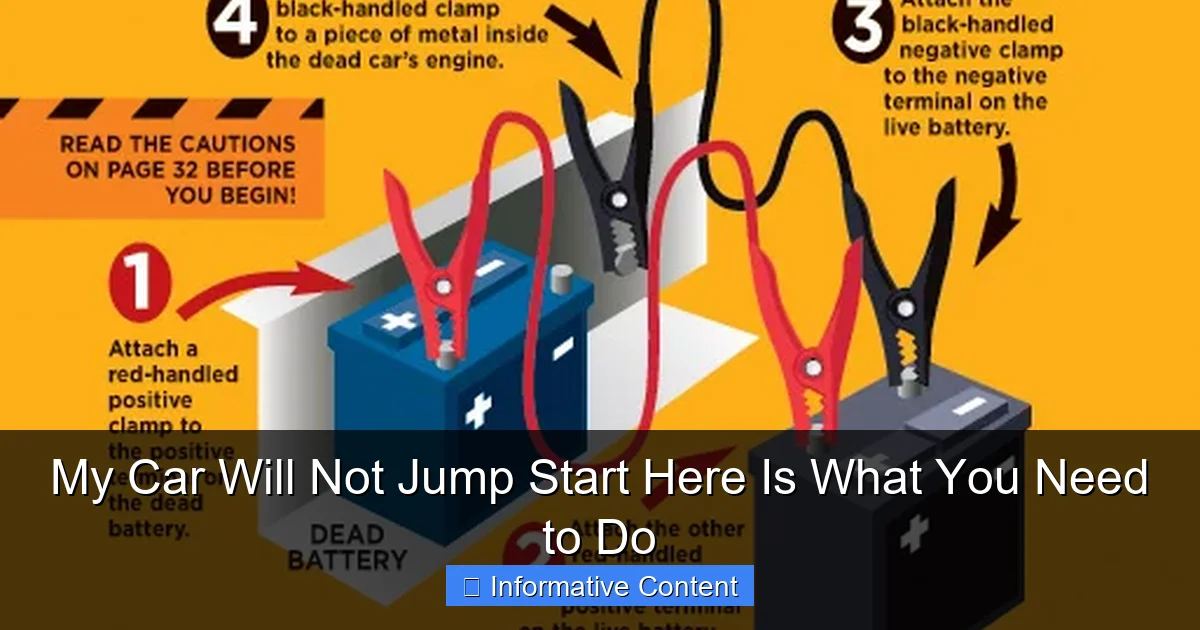
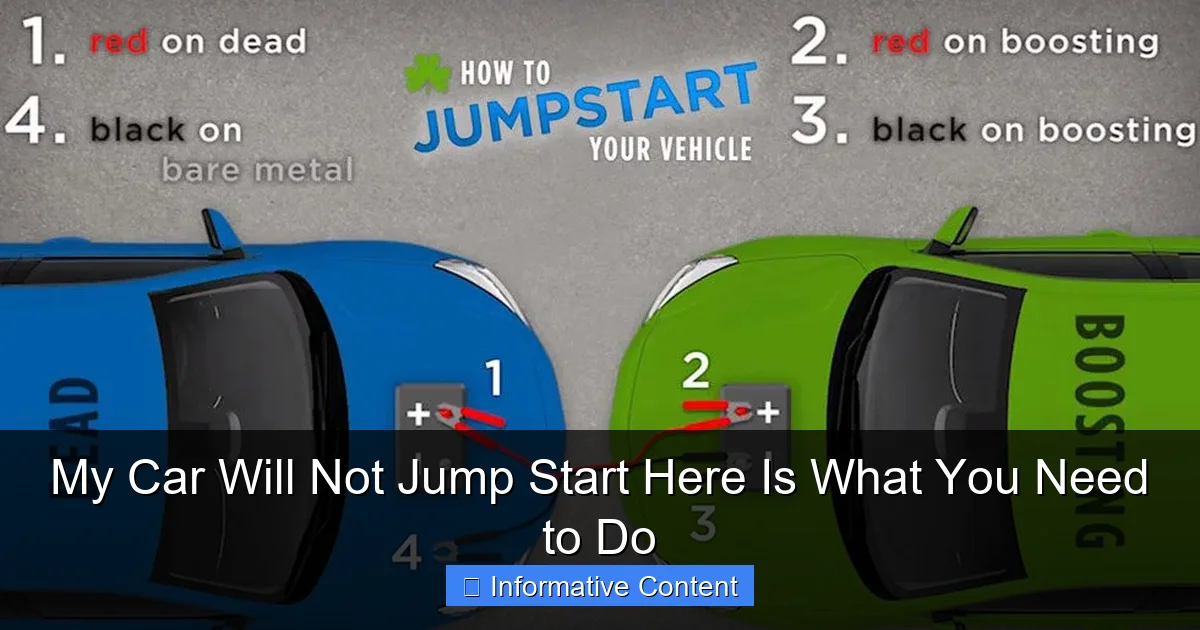
- Proper cable connections: Red (positive) to the dead battery’s positive terminal, black (negative) to a grounded metal part on the dead car—not the negative terminal if it’s corroded or damaged. On the working car, black goes to its negative terminal.
- Engine running on the donor car: The working car should be running for at least 2–3 minutes before attempting to start the dead one. This allows the dead battery to absorb some charge.
- Wait after connecting: Let the cables sit for 3–5 minutes. Don’t rush to crank the engine immediately.
- Attempt to start: Try starting the dead car. If it starts, keep it running for at least 15–20 minutes to recharge. If it doesn’t, wait another 2–3 minutes and try again.
I once spent 20 minutes troubleshooting a car that wouldn’t jump start, only to realize the donor car’s engine wasn’t running during the process. Rookie mistake—but easy to overlook when you’re stressed.
Common Jump Start Mistakes
- Connecting the negative cable directly to the dead battery’s negative terminal when it’s corroded or loose (can cause sparks or poor connection).
- Using damaged or undersized jumper cables (thin cables can’t carry enough current).
- Attempting to jump a deeply discharged battery too quickly (some batteries need up to 10 minutes of charging before they can accept a start).
- Ignoring safety: Always wear gloves and eye protection. Batteries can leak or explode if mishandled.
Tip: If the car makes a clicking noise but won’t turn over, it could mean the battery has just enough charge to engage the starter solenoid but not enough to crank the engine. This often points to a weak battery or poor connection—not necessarily a dead one.
2. Test the Battery and Charging System
If the jump start fails, the battery and charging system are the first suspects. But how do you know if it’s the battery, the alternator, or something else?
Use a Multimeter to Check Battery Voltage
Grab a digital multimeter (available for under $20 at auto parts stores). Here’s how to test:
- Set the multimeter to DC voltage (usually 20V range).
- Turn off the car and all accessories.
- Touch the red probe to the positive terminal and the black probe to the negative terminal.
- Read the voltage:
- 12.6V or higher = battery is fully charged.
- 12.4V = about 75% charged.
- 12.0V or below = battery is weak or discharged.
After jump starting, if the voltage drops below 10V when cranking, the battery is likely too weak to start the car—even with a jump. But if the voltage stays above 10V and the car still won’t start, the issue may not be the battery.
Check Alternator Output
The alternator charges the battery while the engine runs. A failing alternator may not provide enough power, leading to a drained battery—even after a jump.
- Start the car (if possible) or use the jump-started engine.
- With the engine running, measure battery voltage again.
- Normal alternator output: 13.8V to 14.4V. Anything below 13V or above 15V indicates a problem.
Real-life example: My sister’s car wouldn’t start after a jump. The battery read 12.2V when off, but only 12.5V with the engine running—way below normal. We replaced the alternator, and the problem vanished.
Inspect Battery Health and Age
Car batteries typically last 3–5 years. If yours is older, it may have reached the end of its life—even if it holds a partial charge.
- Look for a date code on the battery (usually a letter and number, e.g., “D23” = April 2023).
- Check for swelling, leaks, or corrosion. Corrosion (white/green crust) on terminals can block current flow.
- Clean terminals with a wire brush and baking soda/water solution if needed.
Pro tip: Many auto parts stores offer free battery and alternator testing—no purchase required. Use it!
3. Investigate the Starter Motor and Solenoid
If the battery and alternator check out, but the car still won’t start—even with a jump—the starter motor is likely the culprit. The starter is what physically turns the engine over. When it fails, you’ll hear a click (or no sound at all), and the engine won’t crank.
Listen for Clues
Pay attention to what you hear when you turn the key:
- Click, click, click: Often means the starter solenoid is engaging, but the motor isn’t turning. Could be a bad starter, poor connection, or low voltage.
- Single loud click: Solenoid is working, but starter motor may be seized or jammed.
- No sound: Could be a dead key fob (if push-button start), ignition switch, or starter circuit issue.
- Grinding noise: The starter gear isn’t disengaging properly—could damage the flywheel.
I once heard a loud, rapid clicking from my old sedan. A mechanic later told me the starter was drawing too much current due to internal wear. The battery was fine, but the starter was toast.
Test the Starter Circuit
You don’t need to remove the starter to test it. Here’s how to narrow it down:
- Tap the starter gently with a hammer or wrench while someone tries to start the car. Sometimes, a stuck starter will free up with a tap. (Don’t hit it too hard!)
- Check the starter relay (usually in the fuse box). Swap it with a similar relay (like the horn or AC relay) to see if the car starts.
- Inspect the starter wiring. Look for loose, corroded, or damaged connections between the battery, starter, and ground.
Note: If the car starts after tapping the starter, replace it soon. It’s a temporary fix.
When to Replace the Starter
- Starter is over 100,000 miles old.
- Repeated no-crank issues, even with good battery and connections.
- Grinding or whirring noises that don’t lead to a start.
Starter replacement can cost $150–$400 in parts, but it’s often worth it if the car is otherwise in good shape.
4. Rule Out Electrical and Grounding Issues
Even with a good battery, alternator, and starter, poor grounding or faulty wiring can prevent a car from starting. Electricity needs a complete circuit—and bad grounds are sneaky culprits.
Inspect Ground Connections
Every car has multiple ground points—metal connections from the battery to the chassis and engine. If one is loose or corroded, current won’t flow properly.
- Locate the main ground cable (from battery negative to engine block or frame).
- Check for tightness, corrosion, or frayed wires.
- Clean and tighten all ground connections. A wire brush works great.
- Look for secondary grounds—like between the engine and frame, or the transmission and chassis.
Personal story: A friend’s SUV wouldn’t start after a jump. We replaced the battery and alternator—still nothing. Finally, we found a rusted ground strap under the engine. Replaced it, and the car fired right up.
Check Fuses, Relays, and Ignition Switch
Modern cars have dozens of fuses and relays. A blown fuse in the starter circuit or ignition system can prevent starting.
- Check the fuse box (usually under the hood or dashboard). Look for fuses labeled “Starter,” “Ignition,” or “ECU.”
- Use the fuse diagram on the fuse box cover to identify the right ones.
- Swap a suspect fuse with a known-good one (same amperage).
- Test the ignition switch: If dashboard lights come on but the engine won’t crank, the switch might be faulty.
Tip: If your key fob battery is low, some push-button start systems won’t recognize it. Try holding the fob close to the start button or use the physical key.
Watch for Parasitic Drain
Parasitic drain happens when something in the car keeps using power even when it’s off—like a glove box light, aftermarket stereo, or faulty module.
- Use a multimeter to check for drain: Disconnect the negative battery terminal and place the multimeter in series (between terminal and cable).
- Normal drain: Less than 50 milliamps. More than 100 mA is excessive.
- Pull fuses one by one to find the circuit causing the drain.
I once found a 200 mA drain in a car that wouldn’t hold a charge. It was a stuck trunk light. Simple fix, big relief.
5. Consider Fuel, Ignition, and Mechanical Problems
Here’s a reality check: my car will not jump start might not be an electrical issue at all. If the engine cranks but doesn’t start, the problem could be fuel, spark, or mechanical.
Cranking vs. No Cranking
- No crank: Points to electrical (battery, starter, ignition).
- Cranks but won’t start: Could be fuel, spark, or engine issues.
If the engine turns over (you hear it spinning), but the car doesn’t fire, look here:
Fuel System Issues
No fuel = no start. Common causes:
- Fuel pump failure: Listen for a humming sound from the rear of the car when you turn the key to “ON.” No sound? Possible pump issue.
- Clogged fuel filter: Restricts fuel flow. Replace every 30,000–60,000 miles.
- Empty fuel tank: Yes, it happens! Always check the gauge.
- Fuel pressure: Use a fuel pressure gauge (borrow from a parts store) to check if pressure meets specs.
Tip: If the car starts briefly and dies, the fuel pump may be weak.
Ignition System Failures
Even with fuel, the engine needs a spark to ignite the mixture.
- Bad spark plugs or wires: Worn plugs can’t create a strong spark. Replace every 30,000–100,000 miles (check your manual).
- Faulty ignition coil: If one coil fails, the engine may not start at all (in coil-on-plug systems).
- Crankshaft position sensor: Tells the ECU when to fire the spark. If it fails, no spark—even if the engine cranks.
I had a car that cranked but wouldn’t start. A diagnostic scan revealed a failed crank sensor. $80 part, 30-minute fix.
Mechanical Problems
Rare but serious:
- Timing belt/chain broken: If the timing belt snaps, the engine won’t fire. Listen for unusual noises or no compression.
- Engine seized: Can happen from lack of oil or overheating. Try turning the crankshaft pulley by hand (with the belt off). If it won’t turn, the engine is seized.
These issues usually require a mechanic, but knowing the signs helps you avoid unnecessary repairs.
6. When to Call a Professional (and What to Tell Them)
There’s no shame in calling a pro. Some problems are beyond DIY, and that’s okay. But knowing what you’ve already checked can save time and money.
Signs You Need a Mechanic
- You’ve tested the battery, alternator, starter, and grounds—all seem fine.
- The engine cranks but won’t start, and you’ve ruled out fuel and spark basics.
- You hear strange noises (grinding, knocking, no sound at all) during cranking.
- The car starts sometimes but not others (intermittent issues are hard to diagnose).
What to Tell the Mechanic
Be specific. The more info you give, the faster they can diagnose:
- “Car won’t jump start. Battery tested at 12.1V, alternator output 12.5V with engine running.”
- “Heard a single click when turning the key. Tapped starter, no change.”
- “Engine cranks but won’t start. Fuel pump hums, but no spark detected.”
- “Parasitic drain found at 150 mA—fuse pulled in the interior light circuit.”
Tip: Take notes during troubleshooting. It helps the mechanic—and you—avoid repeating steps.
Cost-Saving Tips
- Get a second opinion if the quote seems high.
- Ask for a written diagnosis and estimate.
- Consider mobile mechanics (often cheaper than shops).
- Use a code reader to check for diagnostic trouble codes (DTCs) before visiting the shop.
| Symptom | Likely Cause | DIY Fix Possible? | Estimated Cost (Parts) |
|---|---|---|---|
| No crank, no sound | Dead battery, loose connection, bad ignition switch | Yes | $100–$200 (battery) |
| Clicking noise, no crank | Weak battery, bad starter, poor ground | Yes (if battery/ground) | $150–$400 (starter) |
| Cranks but won’t start | Fuel pump, spark plugs, crank sensor | Sometimes | $80–$300 (sensor/pump) |
| Starts after tapping starter | Failing starter motor | No (needs replacement) | $150–$400 |
| High parasitic drain | Stuck relay, faulty module, aftermarket device | Yes | $0–$50 (fuse/relay) |
Remember: my car will not jump start doesn’t mean it’s the end of the road. With patience and the right steps, most issues are fixable. Start with the basics, work through the systems logically, and don’t skip safety. Whether it’s a $10 fuse or a $300 starter, you’ll save time, money, and stress by understanding what’s really going on under the hood.
And the next time you’re stranded in the parking lot, you’ll know exactly what to do—no panic, no guesswork. Just clear thinking and a plan. That’s the power of being informed.
Frequently Asked Questions
Why won’t my car jump start even with cables connected?
If your car will not jump start despite using jumper cables, the issue could be corroded battery terminals, a faulty connection, or a completely dead battery. Ensure both vehicles are off, clean the terminals, and recheck all connections before attempting again.
Can a bad alternator prevent my car from jump starting?
Yes, a failing alternator may cause your car to not hold a charge, making jump starts ineffective. If the battery repeatedly dies after a jump, have the alternator tested by a mechanic to confirm its condition.
Is it safe to jump start a car with a damaged battery?
Jump starting a car with a cracked, leaking, or frozen battery is dangerous and could lead to explosions or acid leaks. Replace the damaged battery immediately instead of attempting a jump start.
My car will not jump start—could the battery be too old?
Batteries typically last 3–5 years. If your car will not jump start and the battery is old, it may no longer hold a charge and will need replacement, even if jump attempts seem successful.
What if my car turns over but won’t start after a jump?
If the engine cranks but the car won’t start, the problem may be fuel-related (e.g., empty tank, clogged filter) or ignition-related (e.g., faulty spark plugs). Check these systems after ruling out battery issues.
Are there alternatives to jump starting when my car won’t start?
For a car that will not jump start, consider using a portable jump starter (battery pack) or calling roadside assistance. A mechanic can diagnose deeper issues like starter motor failure or electrical faults.