
Featured image for my car battery will not jump start
Image source: cdn.hswstatic.com
If your car battery will not jump start, the issue may extend beyond a simple dead battery—corroded terminals, a faulty alternator, or a deeply discharged battery could be the real culprits. Even with proper jumper cables and a good donor battery, poor connections or internal battery damage can prevent a successful jump. Always inspect terminals, test the alternator, and consider replacing an old or damaged battery before assuming a jump will fix the problem.
Key Takeaways
- Check battery age: Replace if over 3-5 years old.
- Inspect terminals: Clean corrosion for better connections.
- Test alternator: Ensure it’s charging the battery properly.
- Verify jump leads: Use thick, undamaged cables for reliability.
- Look for deep discharge: Recharge or replace if voltage is critically low.
- Rule out parasitic drain: Fix hidden power draws overnight.
📑 Table of Contents
- My Car Battery Will Not Jump Start Here Is Why
- 1. The Battery Itself Might Be Too Far Gone
- 2. Jump-Starting Mistakes You Might Be Making
- 3. The Alternator Is Failing (Even If It Seems Fine)
- 4. Electrical or Starter Motor Issues
- 5. Environmental and Usage Factors
- 6. When to Call a Professional: Knowing Your Limits
My Car Battery Will Not Jump Start Here Is Why
Have you ever been there? You’re rushing to get to work, or maybe you’re late for a meeting, and you hop into your car, turn the key, and… nothing. The engine doesn’t crank. The lights are dim. You try again. Still nothing. You call a friend, a neighbor, or maybe even roadside assistance, and they bring jumper cables. You connect everything, wait a few minutes, and try again. And again… silence. You’re now stuck wondering: my car battery will not jump start—what’s going on?
If this sounds familiar, you’re not alone. Thousands of drivers face this frustrating situation every day. Jump-starting a car is often the go-to solution for a dead battery, but sometimes, even that doesn’t work. It’s not always as simple as a flat battery. There are several underlying reasons why your car might refuse to start, even after a jump. In this article, we’re going to dive deep into the most common—and some not-so-obvious—causes behind a car that won’t jump start. We’ll walk you through the symptoms, the science, and the solutions, all from the perspective of someone who’s been there, tried that, and learned the hard way. Whether you’re a seasoned driver or a new car owner, this guide will help you understand what’s really happening under the hood and what you can do about it.
1. The Battery Itself Might Be Too Far Gone
Understanding Battery Sulfation
One of the most common reasons your car battery won’t jump start is battery sulfation. This happens when lead sulfate crystals build up on the battery’s lead plates over time. These crystals form when a battery is left in a discharged state for too long—like if you’ve left your headlights on overnight or your car hasn’t been driven in weeks.
Visual guide about my car battery will not jump start
Image source: unitedautoinsurance.com
Think of it like rust on metal. Once the sulfation is severe, it blocks the chemical reaction that produces electricity. Even if you connect jumper cables from a strong battery, the sulfated battery can’t accept or hold a charge. It’s like trying to fill a clogged sponge with water—no matter how much you pour, it doesn’t absorb.
I remember one winter, I left my car parked for three weeks while visiting family. When I returned, the battery was completely dead. I jumped it, and it started—but died again within minutes. Tried again. Same result. Took it to a mechanic, and he told me the battery was “sulfated beyond recovery.” A new battery fixed the issue. Lesson learned: long inactivity can kill a battery permanently.
Age and Wear of the Battery
Car batteries typically last 3 to 5 years. After that, their ability to hold a charge diminishes. Even if the battery isn’t showing obvious signs of failure (like slow cranking), internal degradation can prevent it from accepting a jump.
- Check your battery’s manufacture date (usually stamped on the case).
- If it’s older than 4 years, it’s likely nearing the end of its life.
- Even a “charged” battery with low internal resistance can fail to start the car.
Tip: Many auto parts stores offer free battery testing. Don’t wait until it dies—test it annually after year 3. A load test can reveal hidden weaknesses that a simple voltage check won’t catch.
Physical Damage or Corrosion
Sometimes, the battery looks fine on the outside, but internal damage or extreme corrosion on the terminals can prevent proper current flow. Corrosion looks like a white, green, or blue powdery substance around the battery posts.
- Corrosion acts like insulation, blocking the connection between the battery and jumper cables.
- Even if the battery is good, poor contact can make jump-starting impossible.
- Physical damage (like a cracked case or swollen battery) means it’s unsafe to use and likely needs replacement.
Quick fix: Clean the terminals with a mix of baking soda and water, use a wire brush, and ensure tight, clean connections before attempting a jump. But if the case is damaged, replace the battery immediately—it could leak acid or even explode under pressure.
2. Jump-Starting Mistakes You Might Be Making
Incorrect Jumper Cable Connection
It sounds basic, but improper jumper cable use is a top reason why a jump start fails. The sequence and placement matter more than you think.
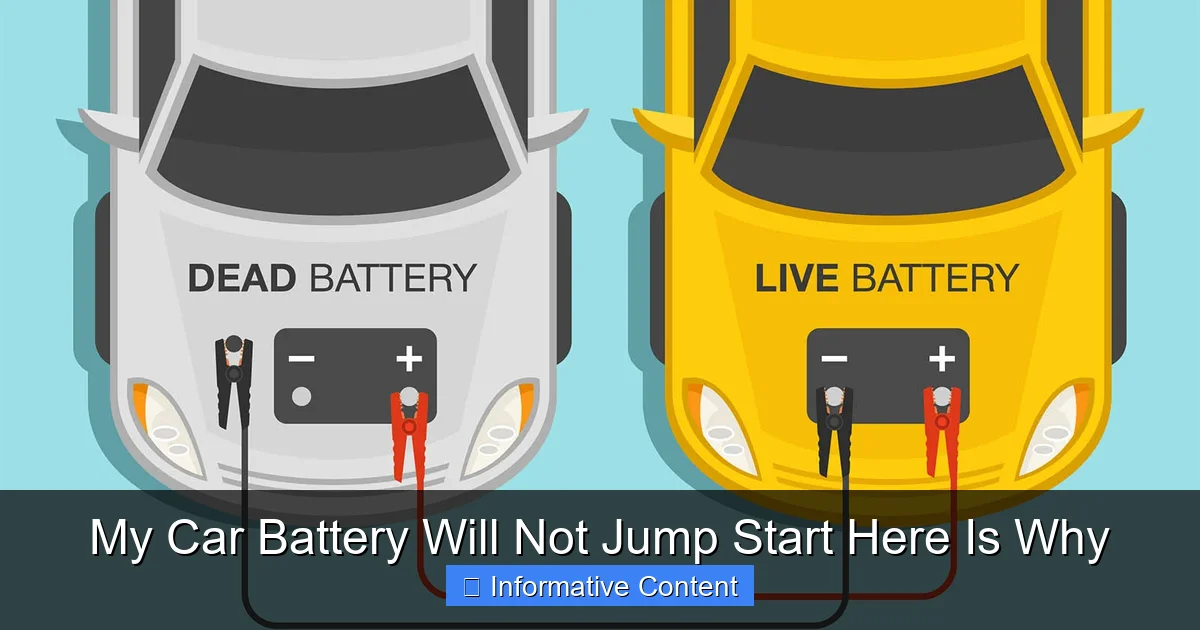
Here’s the correct way:
- Park the working car close (but not touching) the dead one.
- Turn off both engines.
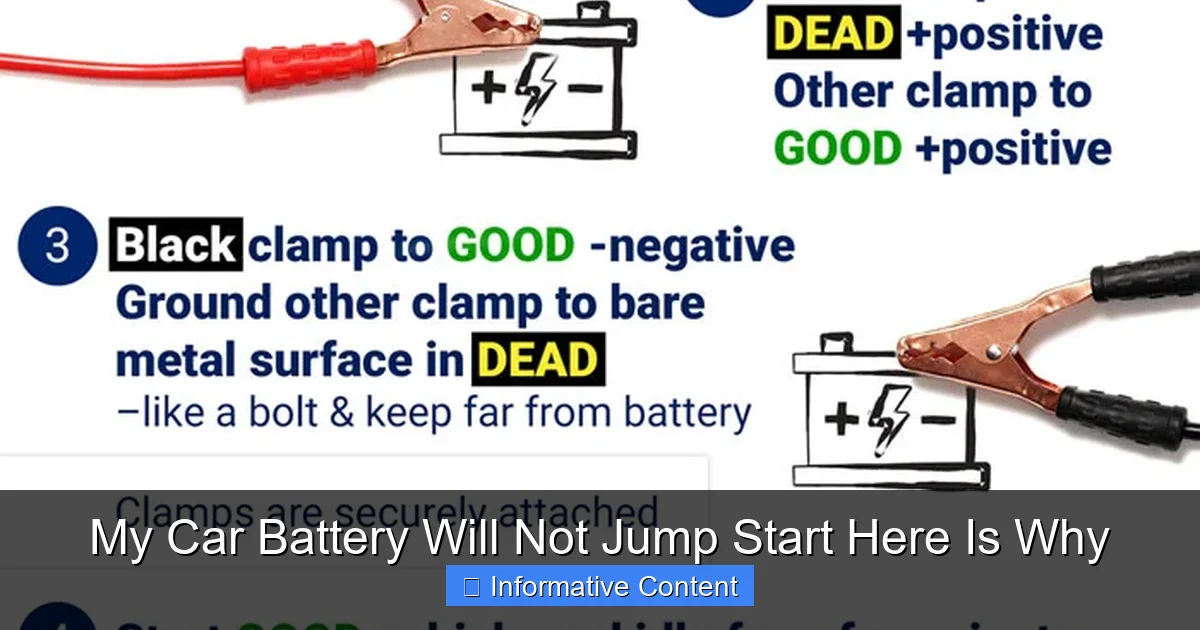
- Connect the red (positive) clamp to the positive terminal of the dead battery.
- Connect the other red clamp to the positive terminal of the good battery.
- Connect the black (negative) clamp to the negative terminal of the good battery.
- Connect the last black clamp to an unpainted metal surface on the dead car’s engine block—not the negative terminal of the dead battery.
Why the engine block? Because the dead battery might be damaged or leaking gas. Connecting the final clamp directly to it could cause a spark and ignite fumes. The engine block is grounded and safer.
One time, a friend connected the last clamp to the dead battery’s negative terminal. It sparked, and the battery made a loud “pop.” We were lucky—no fire. But it scared us enough to learn the right method.
Insufficient Charging Time
Many people connect the cables, wait 30 seconds, and try to start the car. That’s often not enough time. A deeply discharged battery needs 5–10 minutes of charging from the donor car before it can deliver enough current to start the engine.
Tip: After connecting, let the dead car sit for at least 5 minutes with the cables connected. You can even rev the engine of the donor car slightly (to 1,500–2,000 RPM) to increase charging speed. But don’t overdo it—excessive revving can damage the alternator.
Using Damaged or Inadequate Jumper Cables
Not all jumper cables are created equal. Thin, cheap cables (often under 4-gauge) can’t carry enough current to jump a large battery. Look for cables labeled 6-gauge or 4-gauge, at least 12–16 feet long.
- Damaged insulation or loose clamps reduce conductivity.
- Warm or hot cables during use indicate high resistance—replace them.
- Store cables in a dry, accessible place in your car (not under the spare tire where they get wet).
I once used a set of thin, 20-foot cables. They were so long and thin that by the time current reached the dead car, it was too weak. Switched to a heavy-duty 4-gauge set—problem solved.
3. The Alternator Is Failing (Even If It Seems Fine)
How the Alternator Powers the Car
The alternator is the heart of your car’s charging system. It generates electricity while the engine runs to power the car and recharge the battery. If it’s failing, your battery won’t get enough charge—even if you jump-start the car, it might die again as soon as you disconnect the cables.
Signs of a failing alternator:
- Battery light on the dashboard
- Dim or flickering headlights
- Electrical issues (radio cuts out, power windows slow)
- Car dies shortly after jump-starting
I had a 2015 sedan that started fine after a jump, but died within 2 minutes of driving. The battery was new. Took it to a shop, and the alternator was putting out only 11 volts (should be 13.5–14.5). Replaced it, and the car ran smoothly.
Testing the Alternator
You don’t need a mechanic to check your alternator. Here’s a simple test:
- Start the car (or jump-start it).
- Use a multimeter to measure voltage at the battery terminals.
- With the engine running, the voltage should read 13.8 to 14.8 volts.
- If it’s below 13 or above 15, the alternator is likely faulty.
Tip: Rev the engine to 2,000 RPM. Voltage should stay stable. If it spikes or drops, the voltage regulator (part of the alternator) is failing.
Alternator vs. Battery: How to Tell Which Is the Problem
This is a common confusion. Here’s a quick way to tell:
- Jump-start the car. If it starts and runs fine, but the battery dies again after a few hours, the battery might be the issue.
- If it starts but dies within minutes of driving, or the battery light comes on, the alternator is likely failing.
Pro tip: Some alternators have a “limp mode” where they produce just enough power to keep the car running—until you turn on the AC or headlights. Then it dies. Always test with accessories off, then on.
4. Electrical or Starter Motor Issues
Faulty Starter Motor
The starter motor is what cranks the engine when you turn the key. If it’s failing, it won’t turn over—even with a fully charged battery.
Symptoms of a bad starter:
- Clicking noise when turning the key (but no cranking)
- Grinding or whirring sounds
- Engine cranks slowly, then stops
- Intermittent starting—works sometimes, not others
One winter morning, my car made a loud “click” when I turned the key. No cranking. Jump-start did nothing. Took it to a shop—the starter solenoid was stuck. Replaced the starter, and it started perfectly.
Bad Ground Connections or Wiring
Your car’s electrical system relies on good grounding. If the ground wire from the battery to the chassis is corroded or loose, current can’t flow properly—even with a strong battery.
- Check the ground strap between the battery and engine block.
- Inspect the chassis ground near the frame rail.
- Corrosion, rust, or loose bolts can break the circuit.
Quick test: Try starting the car while wiggling the ground wire. If it starts intermittently, the connection is bad.
Blown Fuses or Relay Issues
Some cars have a starter relay or fuse that cuts power if there’s a fault. If it’s blown or stuck, the starter won’t engage.
- Check the fuse box for a “Starter” or “Ignition” fuse.
- Swap the starter relay with an identical one (like the horn relay) to test.
- A bad relay often causes a clicking sound but no cranking.
I once had a car that wouldn’t start after a jump. The starter relay was corroded inside. Swapped it with the horn relay (same part), and it started right up.
5. Environmental and Usage Factors
Extreme Cold Weather Effects
Cold weather is a battery killer. At 32°F (0°C), a battery can lose up to 35% of its power. At 0°F (-18°C), it can lose 60%.
- Oil thickens, making the engine harder to crank.
- Battery chemical reactions slow down.
- Even a jump might not provide enough current in sub-zero temps.
Tip: In cold climates, use a battery with higher CCA (Cold Cranking Amps). Park in a garage if possible. Use a battery blanket or block heater in extreme cold.
Parasitic Drain: The Silent Battery Killer
Some electrical components draw power even when the car is off—like the clock, alarm, or infotainment system. But if there’s a parasitic drain (more than 50 milliamps), it can drain the battery overnight.
Common causes:
- Faulty trunk or glove box light
- Aftermarket electronics (dash cams, GPS, chargers)
- Stuck relay or shorted wiring
How to check:
- Wait 20 minutes after turning off the car (so modules go to sleep).
- Set a multimeter to DC amps.
- Disconnect the negative battery cable.
- Connect the multimeter between the cable and battery post.
- Current should be under 50 mA. If higher, you have a drain.
I had a dash cam that kept drawing power. Took 3 days to drain the battery. Found it by pulling fuses one by one until the current dropped.
Short Drives and Infrequent Use
Frequent short trips (under 10–15 minutes) don’t give the alternator enough time to recharge the battery. Over time, this leads to a chronically undercharged battery.
- Take a 30-minute highway drive once a week to recharge.
- Use a battery maintainer if you don’t drive often.
- Turn off all accessories before starting the car.
6. When to Call a Professional: Knowing Your Limits
When DIY Isn’t Enough
Sometimes, the problem is beyond what you can fix with jumper cables or basic tools. If you’ve:
- Tried a proper jump (correct cables, time, connections)
- Confirmed the battery is good (load tested)
- Checked alternator output and starter function
- Inspected wiring and grounds
…and the car still won’t start, it’s time to call a mechanic. Issues like:
- Internal engine problems (seized engine, broken timing belt)
- Fuel system failure (clogged fuel filter, bad fuel pump)
- ECU (computer) faults or immobilizer issues
What a Mechanic Will Check
A professional will use diagnostic tools to:
- Scan for trouble codes (even if the check engine light isn’t on)
- Test the fuel pressure and spark
- Inspect the timing belt or chain
- Check the immobilizer system (especially in modern cars)
One time, my car wouldn’t start after a jump. The mechanic found that the timing belt had snapped—engine damage. Not something I could fix at home.
Preventive Maintenance Tips
To avoid future “my car battery will not jump start” situations:
- Test your battery annually after year 3.
- Replace it before it fails (around year 4–5).
- Keep terminals clean and tight.
- Use a battery maintainer for long storage.
- Drive regularly, especially in winter.
- Invest in quality jumper cables and a portable jump starter.
Here’s a quick reference table for common causes and solutions:
| Issue | Symptoms | Quick Fix | Long-Term Solution |
|---|---|---|---|
| Battery Sulfation | Won’t hold charge, jump fails | Try jump with long charge time | Replace battery |
| Corroded Terminals | Dim lights, poor connection | Clean terminals with baking soda | Inspect and clean regularly |
| Bad Alternator | Dies after jump, battery light on | Test voltage with multimeter | Replace alternator |
| Faulty Starter | Clicking, no cranking | Tap starter gently with wrench | Replace starter |
| Parasitic Drain | Dies overnight | Check fuse box with multimeter | Fix wiring or remove aftermarket devices |
| Extreme Cold | Weak cranking, no start | Use block heater or battery blanket | Use high-CCA battery |
Dealing with a car that won’t jump start is frustrating, but it doesn’t have to be a mystery. Most of the time, the issue isn’t just a “dead battery”—it’s a symptom of a deeper problem. By understanding the why behind your car’s refusal to start, you can take smarter steps to fix it and prevent it from happening again.
Remember: a jump start is a temporary fix. It won’t revive a sulfated battery, fix a broken starter, or replace a failing alternator. Use it as a diagnostic tool—if the car starts and runs fine, the battery might be weak. If it dies quickly, look deeper.
And most importantly—don’t panic. Stay calm, check the basics, and know when to call for help. With the right knowledge and tools, you’re not helpless. You’re prepared. The next time someone says, “My car battery will not jump start,” you’ll know exactly what to do—and why.
Frequently Asked Questions
Why won’t my car battery jump start even with cables connected?
If your car battery will not jump start despite using jumper cables, the issue may be corroded or loose connections. Ensure the clamps are securely attached to clean metal surfaces on both batteries for proper conductivity.
Can a completely dead battery be jump started?
A severely discharged or “dead” battery may resist jump starting if it has internal damage or is too old. Even if jump-started, a faulty battery often needs replacement to hold a charge reliably.
Why does my car battery not jump start but the lights turn on?
If dashboard lights work but the engine won’t crank, the issue could be a faulty starter, bad ground connection, or a battery that can’t deliver high cranking amps. A battery load test can confirm if it’s failing despite holding some voltage.
How long should I let a car run after a jump start to recharge the battery?
After a jump start, drive your car for at least 20–30 minutes at highway speeds to allow the alternator to recharge the battery. Short trips may not provide enough charge, especially if the battery is deeply discharged.
Could a bad alternator cause my car battery to not jump start?
Yes, a failing alternator can prevent your car battery from jump starting or staying charged. Even if you get a temporary start, a bad alternator won’t recharge the battery, leading to repeated failure.
What are common reasons a car battery will not jump start?
Common causes include corroded terminals, a dead cell in the battery, a faulty starter, or a bad alternator. Always check connections first, then test the battery and charging system to pinpoint the issue.