
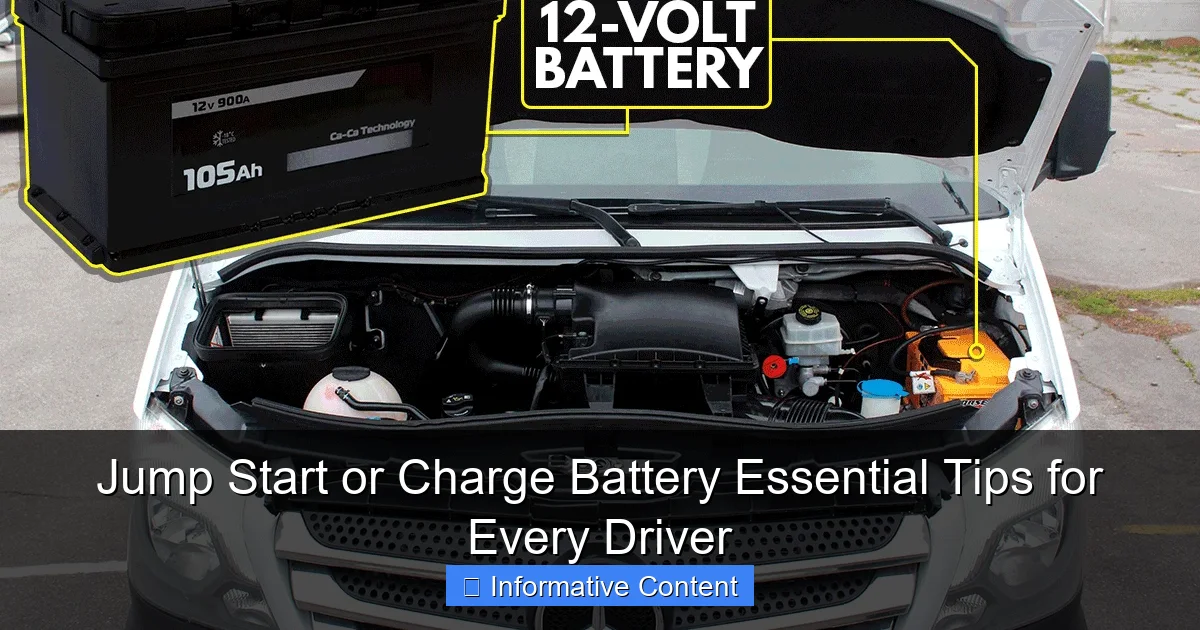
Featured image for jump start or charge battery
Image source: vehq.com
Knowing how to jump start or charge a battery can save you from being stranded and extend your battery’s life. Always prioritize safety—use proper cables, connect in the correct order, and avoid sparks near the battery. For frequent issues, a portable charger or battery maintainer is a smarter, long-term solution than repeated jump starts.
Key Takeaways
- Always carry jumper cables: Be ready for emergencies with reliable, high-quality cables.
- Check battery health regularly: Test voltage every 6 months to avoid surprises.
- Turn off electronics first: Prevent surges by powering down before jump-starting.
- Use a battery charger overnight: Slow charging revives deeply drained batteries safely.
- Clean terminals monthly: Remove corrosion to maintain strong electrical connections.
- Know your battery type: AGM and lithium require specific chargers and methods.
📑 Table of Contents
- Jump Start or Charge Battery: Essential Tips for Every Driver
- Understanding Your Car Battery: The Basics
- Jump Start or Charge Battery? Knowing the Difference
- How to Jump Start a Battery Safely
- How to Charge a Battery Effectively
- Preventing Battery Issues: Maintenance Tips
- Data Table: Jump Start vs. Charge Battery – Quick Reference
- Conclusion: Be Prepared, Stay Safe
Jump Start or Charge Battery: Essential Tips for Every Driver
Imagine this: It’s a crisp winter morning, and you’re running late for work. You hop into your car, turn the key, and… nothing. The engine doesn’t even crank. The headlights are dim, and the radio won’t turn on. Your heart sinks—your car battery is dead. Sound familiar? It’s a scenario that’s happened to nearly every driver at some point. Whether it’s due to leaving the lights on, extreme temperatures, or just an aging battery, a dead battery can throw a wrench into your plans. But here’s the good news: knowing whether to jump start or charge battery can save you time, money, and stress. In this guide, we’ll walk you through everything you need to know to handle a dead battery like a pro.
A dead battery doesn’t have to mean calling a mechanic or waiting for roadside assistance. With the right tools and a little know-how, you can get back on the road in no time. But first, let’s clear up a common confusion: jump starting and charging a battery are not the same thing. Jump starting gives your car a quick burst of power to start the engine, while charging restores the battery’s energy over time. Understanding the difference—and when to use each method—is key to keeping your vehicle running smoothly. Whether you’re a seasoned driver or a new one, these tips will help you tackle battery issues with confidence.
Understanding Your Car Battery: The Basics
How a Car Battery Works
Your car battery is the unsung hero of your vehicle’s electrical system. It provides the power needed to start the engine, run the lights, and operate everything from your radio to your power windows. Most cars use a 12-volt lead-acid battery, which stores chemical energy and converts it into electrical energy when needed. Think of it like a rechargeable flashlight—except it’s powering a 2-ton machine.
Visual guide about jump start or charge battery
Image source: i.ytimg.com
The battery works by using chemical reactions between lead plates and sulfuric acid (the electrolyte) to produce electricity. When you turn the key, the battery sends a surge of power to the starter motor, which cranks the engine. Once the engine is running, the alternator takes over, recharging the battery and powering the car’s systems. If the battery can’t deliver that initial surge, your car won’t start—no matter how hard you turn the key.
Signs of a Weak or Dying Battery
Not all dead batteries come out of nowhere. Often, there are warning signs that your battery is on its last legs. Here are some red flags to watch for:
- Slow cranking: The engine turns over sluggishly when you start the car, as if it’s struggling to wake up.
- Dim lights: Headlights, dashboard lights, or interior lights appear weaker than usual.
- Electrical issues: Power windows, locks, or the radio may work intermittently or not at all.
- Frequent jump starts: If you’ve had to jump start or charge battery more than once in a few weeks, it’s time to investigate.
- Swollen battery case: A bulging or cracked battery case is a sign of overheating or overcharging.
Pro tip: If you notice any of these signs, don’t wait for a complete failure. Get your battery tested at an auto parts store—many offer free battery checks. Catching a weak battery early can save you from being stranded.
Jump Start or Charge Battery? Knowing the Difference
When to Jump Start
Jump starting is the go-to solution when your battery is completely dead but still in working condition. It’s like giving your car a shot of espresso to get it moving again. You’ll need a set of jumper cables and another vehicle (or a portable jump starter) to transfer power to your battery.
Best scenarios for jump starting:
- You left your headlights or interior lights on overnight.
- The battery died due to cold weather (common in winter).
- The car sat unused for an extended period.
- You accidentally ran the battery down by using electronics with the engine off.
Jump starting is quick and effective, but it’s a temporary fix. Once your car is running, the alternator will recharge the battery—but it can take 20-30 minutes of driving to restore enough charge for the next start. If you jump start frequently, your battery may be failing and need replacement.
When to Charge the Battery
Charging a battery is a slower, more methodical process. It’s ideal when the battery is low on charge but not completely dead, or when you want to restore a deeply discharged battery. A battery charger connects directly to the battery terminals and slowly replenishes the charge over several hours (or even days, for deeply drained batteries).
Best scenarios for charging:
- The battery is weak but still holds some charge.
- You’re preparing for a long trip and want to ensure your battery is fully charged.
- You’re restoring an old battery (common in classic cars).
- You want to maintain a battery in storage (e.g., for a motorcycle or RV).
Charging is gentler on the battery than jump starting and helps extend its lifespan. However, it requires time and access to a charger, making it less practical for emergencies.
How to Jump Start a Battery Safely
Tools You’ll Need
Before you attempt a jump start, make sure you have the right tools:
- Jumper cables: Look for thick, 4- to 6-gauge cables at least 10-20 feet long. Cheap, thin cables won’t deliver enough power.
- Another vehicle: A working car with a healthy battery (or a portable jump starter).
- Protective gear: Gloves and safety glasses (batteries can leak acid or spark).
- Owner’s manual: Some cars have specific jump-starting instructions (e.g., for hybrids or EVs).
Step-by-Step Jump Starting Guide
Follow these steps carefully to avoid injury or damage to your car:
- Park the cars close: Position the working car so the batteries are within reach of the jumper cables (nose-to-nose is ideal). Turn off both engines and set the parking brakes.
- Connect the cables:
- Red (positive) clamp to the dead battery’s positive terminal (+).
- Other red clamp to the working battery’s positive terminal (+).
- Black (negative) clamp to the working battery’s negative terminal (–).
- Other black clamp to an unpainted metal surface on the dead car (e.g., a bolt or engine block)—this grounds the connection.
- Start the working car: Let it run for 3-5 minutes to charge the dead battery.
- Start the dead car: Try starting the engine. If it doesn’t start, wait a few more minutes and try again.
- Disconnect the cables: Remove the clamps in reverse order (black from the dead car first, then red from the dead car, etc.).
- Let the car run: Keep the jumped car running for at least 20 minutes to recharge the battery.
Safety tips:
- Never let the clamps touch each other while connected.
- Don’t smoke or create sparks near the battery (hydrogen gas is flammable).
- If the battery is cracked or leaking, don’t jump start—replace it.
How to Charge a Battery Effectively
Choosing the Right Charger
Not all battery chargers are created equal. Here’s what to look for:
- Amperage: A 2-amp charger is slow but safe for long-term charging (great for maintenance). A 10-amp charger is faster but should be monitored to avoid overheating.
- Smart chargers: These automatically adjust voltage and amperage to prevent overcharging. They’re safer and more efficient than manual chargers.
- Compatibility: Ensure the charger works with your battery type (lead-acid, AGM, lithium, etc.).
Pro tip: For occasional use, a 10-amp smart charger is a great balance of speed and safety. For frequent use, consider a multi-amp charger with multiple settings.
Step-by-Step Charging Guide
Follow these steps to charge your battery safely:
- Disconnect the battery: For safety, remove the negative (–) cable first, then the positive (+) cable. (Some chargers allow charging without disconnecting, but it’s safer to remove the battery.)
- Clean the terminals: Use a wire brush to remove corrosion from the terminals.
- Connect the charger:
- Red (positive) clamp to the battery’s positive terminal (+).
- Black (negative) clamp to the negative terminal (–) or a ground point.
- Set the charger: Choose the correct voltage (usually 12V) and amperage (start with 2-4 amps for a slow charge).
- Start charging: Turn on the charger and let it run. A smart charger will shut off automatically when the battery is full. A manual charger will need to be monitored.
- Check the charge: Use a multimeter or hydrometer to test the battery’s charge level. A fully charged 12V battery should read 12.6V or higher.
- Reconnect the battery: Reinstall the battery and connect the positive cable first, then the negative.
Charging tips:
- Charge in a well-ventilated area (batteries release hydrogen gas).
- Don’t overcharge—this can damage the battery or cause leaks.
- For deeply drained batteries, charge slowly (2-4 amps) to avoid overheating.
Preventing Battery Issues: Maintenance Tips
Regular Battery Checks
Prevention is better than cure. A little maintenance can keep your battery in top shape:
- Clean terminals: Corrosion on terminals reduces conductivity. Clean them every 3-6 months with a baking soda and water solution.
- Tighten connections: Loose terminals can cause intermittent power loss. Check them monthly.
- Test voltage: Use a multimeter to check battery voltage every few months. A healthy battery should read 12.6V when the engine is off.
Driving Habits That Preserve Battery Life
Your driving style impacts battery health:
- Avoid short trips: Short drives don’t give the alternator enough time to recharge the battery. Take longer trips occasionally or use a battery maintainer.
- Turn off electronics: Avoid using lights, radio, or AC with the engine off.
- Park in the shade: Extreme heat accelerates battery fluid evaporation. Park in a garage or shaded area when possible.
- Use a battery tender: If you store your car for weeks, use a smart charger to maintain the battery.
Extreme Weather Considerations
Temperature extremes are tough on batteries:
- Cold weather: Battery capacity drops in cold temperatures. A battery that works fine in summer may fail in winter. Consider a battery with higher cold-cranking amps (CCA) for cold climates.
- Hot weather: Heat accelerates corrosion and fluid evaporation. Inspect your battery more frequently in summer.
Data Table: Jump Start vs. Charge Battery – Quick Reference
| Factor | Jump Start | Charge Battery |
|---|---|---|
| Best for | Completely dead battery | Weak or partially charged battery |
| Time required | 5-10 minutes | Hours to days |
| Tools needed | Jumper cables + another car (or portable jump starter) | Battery charger |
| Risk level | Moderate (risk of sparks or acid leaks) | Low (safer for long-term use) |
| Lifespan impact | Shortens battery life if done frequently | Extends battery life with proper use |
| Cost | Jumper cables: $20-$50 | Charger: $30-$200 |
Conclusion: Be Prepared, Stay Safe
Whether you choose to jump start or charge battery, the key is being prepared. A dead battery is one of the most common—and preventable—car problems. By understanding the difference between jump starting and charging, you can handle most battery issues yourself, saving time and money.
Remember: Jump starting is for emergencies, while charging is for maintenance. Keep jumper cables in your trunk and a battery charger in your garage. Regularly check your battery’s health, and practice good driving habits to extend its life. And if you’re ever unsure, don’t hesitate to consult a professional—your safety comes first.
Next time your car won’t start, don’t panic. Take a deep breath, grab your tools, and follow these tips. With a little knowledge and preparation, you’ll be back on the road in no time. After all, every driver should know how to handle a dead battery—it’s one of those skills that just might save your day.
Frequently Asked Questions
Should I jump start or charge my battery when it’s dead?
If your car won’t start but the electronics still work, a jump start is usually the quickest solution. However, if the battery is old or frequently loses charge, charging it fully with a battery charger is the better long-term fix.
How do I safely jump start a car battery?
Connect the red jumper cable to the positive terminal of the dead battery and the other red clamp to the donor battery’s positive terminal. Attach the black clamp to the donor’s negative terminal and the other end to an unpainted metal surface on the dead car to ground it, then start the working vehicle and let it charge the dead battery.
Can I charge a car battery without removing it?
Yes, you can charge a car battery without removing it by using a portable battery charger or maintainer. Just ensure the ignition is off, connect the charger to the terminals correctly, and follow the manufacturer’s instructions for safe charging.
How long does it take to charge a dead car battery?
Charging time depends on the battery’s condition and charger type—typically 4 to 24 hours. A trickle charger takes longer but is safer, while a fast charger can replenish a battery in a few hours, though it may reduce battery lifespan if overused.
Is it better to jump start or charge a battery in cold weather?
In cold weather, a jump start is often necessary to get the engine running quickly, as low temperatures reduce battery efficiency. Afterward, use a charger to fully restore the battery, as cold weather can mask deeper charging issues.
What tools do I need to jump start or charge a battery?
For a jump start, you’ll need jumper cables and a working vehicle or portable jump starter. To charge a battery, a battery charger or maintainer is required—choose one compatible with your battery type (e.g., lead-acid, AGM) for optimal results.