
Featured image for jump start charges
Image source: fighterjetsworld.com
Jump start charges deliver a quick, temporary power boost to revive a dead battery—ideal for emergencies when time is critical. Safety first: always connect cables in the correct order (positive to positive, negative to ground) and use a quality jump starter or donor vehicle to avoid damaging electronics. Never attempt a jump start on a cracked or leaking battery.
Key Takeaways
- Always check battery condition before jump starting to avoid damage or sparks.
- Connect cables in correct order: red to dead battery, then good battery, black to ground.
- Never let clamps touch each other while connected to a live battery.
- Start the donor car first, then the dead one to ensure strong power flow.
- Remove cables in reverse order to prevent electrical surges or short circuits.
- Drive for at least 30 minutes after jump starting to recharge the battery fully.
📑 Table of Contents
- Jump Start Charges Explained: How to Safely Revive Your Battery
- What Is a Jump Start Charge and How Does It Work?
- Essential Tools and Safety Gear for Jump Starting
- Step-by-Step Guide: How to Jump Start a Car Safely
- Common Mistakes and How to Avoid Them
- When to Replace Your Battery Instead of Jumping
- Data Table: Battery Health Indicators
- Final Thoughts: Be Prepared, Not Scared
Jump Start Charges Explained: How to Safely Revive Your Battery
There’s nothing quite as frustrating as turning the key in your car’s ignition, only to hear that dreaded clicking sound—or worse, complete silence. It’s a moment that can throw off your entire day, especially if you’re already running late. I’ve been there, and I’m guessing you have too. Whether it’s a freezing winter morning or a hot summer afternoon, a dead battery can strike at the worst possible time. But here’s the good news: a jump start charge can often get you back on the road in minutes. No tow truck, no expensive repairs—just a simple, effective fix.
But while jump starting sounds easy, it’s not something you should take lightly. Done incorrectly, it can damage your vehicle’s electrical system, harm your battery, or even lead to a dangerous explosion. That’s why understanding the ins and outs of jump start charges is essential for every driver. In this guide, I’ll walk you through everything you need to know: how a jump start works, the tools you need, the safest methods, and common mistakes to avoid. Think of it as your friendly, no-nonsense crash course in battery revival—because let’s face it, no one wants to be stranded again.
What Is a Jump Start Charge and How Does It Work?
At its core, a jump start charge is a method of transferring electrical energy from a working battery to a depleted one. It’s not magic—it’s science. Your car battery stores chemical energy and converts it into electrical power to start the engine, run lights, and power electronics. When the battery loses too much charge (due to age, cold weather, or leaving lights on), it can’t deliver the necessary current. A jump start gives it that extra “kick” to get going again.
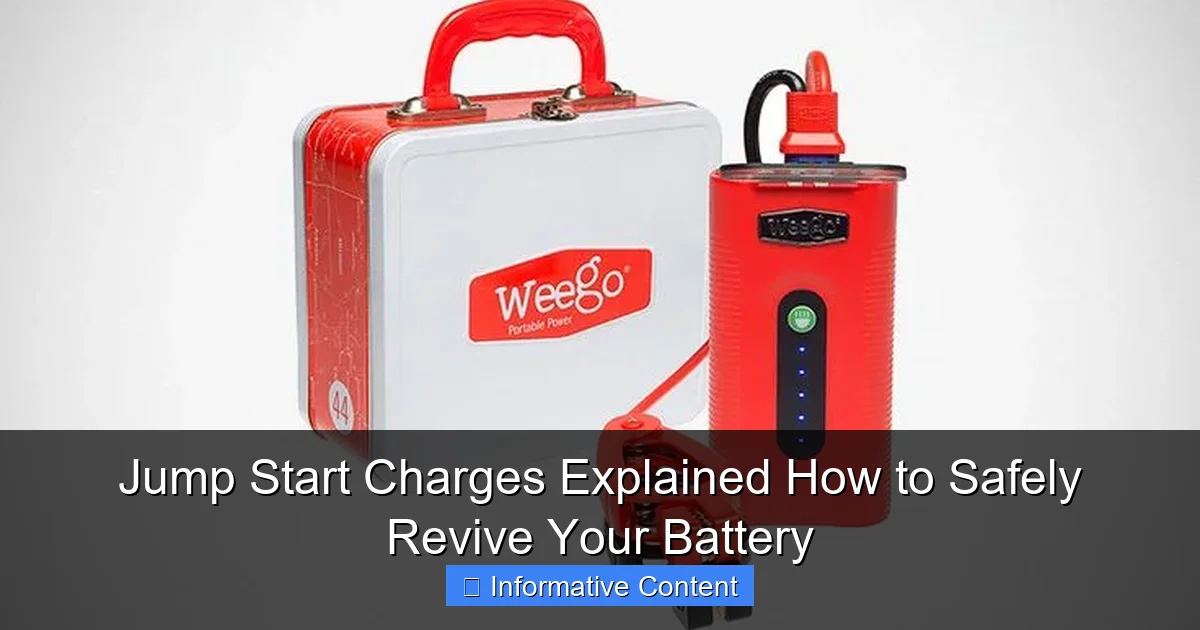
Visual guide about jump start charges
Image source: i.pinimg.com
The Science Behind the Spark
A car battery typically operates at 12 volts. When you connect jumper cables from a good battery to a dead one, you create a closed circuit. The working battery pushes electrons through the cables, recharging the dead battery enough to allow the starter motor to turn over the engine. Once the engine runs, the alternator takes over, recharging the battery and powering the vehicle’s electrical systems.
Think of it like giving a weak battery a temporary energy boost—like a cup of coffee for your car. The key is ensuring the connection is correct and the transfer happens safely. A single wrong move—like reversing the clamps—can cause sparks, damage electronics, or even fry your car’s computer system.
Types of Jump Start Charges
There are a few different ways to deliver a jump start charge, each with pros and cons:
- Traditional Jumper Cables: The classic method. You use thick cables to connect your dead battery to another vehicle’s working battery. It’s reliable, low-cost, and widely available.
- Portable Jump Starters (Battery Packs): Compact, rechargeable devices with built-in batteries. You connect them directly to your battery or use a cigarette lighter port. Great for emergencies when no other car is around.
- Push-Start (For Manual Transmissions): If you drive a stick shift, you can “bump start” the car by releasing the clutch while rolling. It’s less common and requires a downhill or a strong push, but it works in a pinch.
Each method has its place. For example, portable jump starters are perfect for solo drivers who often park in remote areas. But traditional cables are still the go-to for most people because they’re cheap, effective, and don’t require charging beforehand.
Essential Tools and Safety Gear for Jump Starting
Before you attempt a jump start, you need the right tools. Skimping on quality or using the wrong equipment can turn a simple fix into a costly disaster. Let’s break down what you’ll need and why each item matters.
1. Jumper Cables (Or a Portable Jump Starter)
Not all jumper cables are created equal. Look for:
- At least 10-gauge wire thickness: Thinner cables can overheat and fail under high current.
- 20+ feet in length: Gives you flexibility if the cars are parked awkwardly.
- Clamps with good grip and insulation: Prevents slippage and accidental short circuits.
For portable jump starters, choose models with at least 12,000 mAh capacity and built-in safety features like reverse polarity protection and overload protection. I once used a cheap knockoff that sparked like a firework—lesson learned!
2. Safety Gloves and Goggles
Yes, really. Car batteries contain sulfuric acid and can release flammable hydrogen gas when charging. While rare, a spark near the battery can cause an explosion. Safety goggles protect your eyes from acid splashes, and insulated gloves reduce the risk of electric shock.
3. A Second Vehicle (If Using Cables)
Make sure the donor car is running and in good condition. A weak alternator or old battery in the helping vehicle can cause more harm than good. Also, never attempt a jump start if either battery is cracked, leaking, or frozen—those are fire hazards.
4. A Fire Extinguisher (Optional but Smart)
Keep a small Class B or Class C extinguisher in your trunk. If a battery overheats or sparks get out of control, you’ll be glad you had it. I keep a 2-pound model in my glovebox—it’s lightweight but gives peace of mind.
5. Owner’s Manual
Some vehicles—especially newer models with sensitive electronics—require special jump-starting procedures. For example, some hybrids or EVs have specific battery locations or need the ignition in a certain mode. Always check your manual first.
Step-by-Step Guide: How to Jump Start a Car Safely
Now that you’ve got your gear, let’s walk through the process. I’ll cover the traditional jumper cable method, which is the most common. Follow these steps carefully—your safety and your car’s health depend on it.
Step 1: Park the Vehicles Close (But Not Touching)
Position the working car so the batteries are as close as possible. Leave about 18 inches between the cars to prevent accidental contact. Turn off both engines, set the parking brakes, and put both vehicles in Park (or Neutral for manuals).
Pro Tip: If it’s raining or snowing, try to park under a cover or in a garage. Moisture increases the risk of electrical shorts.
Step 2: Connect the Cables in the Right Order
Color coding is your friend here. Always connect:
- Red (Positive) Clamp to the positive terminal of the dead battery.
- Red (Positive) Clamp to the positive terminal of the good battery.
- Black (Negative) Clamp to the negative terminal of the good battery.
- Black (Negative) Clamp to a metal ground on the dead car—NOT the dead battery’s negative terminal. Use an unpainted engine bracket or bolt.
Why the ground? Connecting to the dead battery’s negative terminal can cause sparks near flammable gas. The ground reduces this risk.
Step 3: Start the Working Vehicle
Start the engine of the good car and let it run for 2–3 minutes. This allows current to flow and begins recharging the dead battery. You might hear the starter motor whine a bit—that’s normal.
Step 4: Try Starting the Dead Car
Attempt to start the dead vehicle. If it doesn’t turn over on the first try, wait 30 seconds and try again. Avoid cranking the engine for more than 5–10 seconds at a time—this can overheat the starter.
If it starts: Great! Let both cars run for another 5–10 minutes to ensure the battery gets a solid jump start charge.
Step 5: Disconnect the Cables in Reverse Order
Remove the clamps in this sequence:
- Black clamp from the ground point (dead car).
- Black clamp from the negative terminal (good car).
- Red clamp from the positive terminal (good car).
- Red clamp from the positive terminal (dead car).
Never let the clamps touch each other or any metal while connected. A sparking clamp is a short-circuit warning.
Step 6: Drive the Revived Car
Take the jump-started car for a 15–20 minute drive. This helps the alternator fully recharge the battery. Avoid turning off the engine until you’ve driven at least 30 minutes. If the battery dies again shortly after, it may be time for a replacement.
Common Mistakes and How to Avoid Them
Even experienced drivers make jump-starting errors. Here are the most common pitfalls—and how to dodge them.
Mistake 1: Reversing the Cable Clamps
Connecting the negative to the positive (and vice versa) is a recipe for disaster. It can:
- Blow fuses.
- Damage the alternator.
- Cause a battery explosion.
Solution: Always double-check the color coding. Red = positive (+), Black = negative (–). If you’re unsure, look for the “+” and “–” symbols on the battery terminals.
Mistake 2: Letting the Cables Touch
When cables are connected, the circuit is live. If the clamps touch each other or a metal surface, they can spark violently. I once saw a friend’s jumper cables melt from a short circuit—it was scary.
Solution: Keep the cables separated. Hang them over the fenders or use a cable holder. Never lay them across the engine bay.
Mistake 3: Jump Starting a Damaged Battery
Never jump start a battery that’s:
- Cracked or leaking acid.
- Frozen (ice inside the case).
- Swollen or bloated.
A damaged battery can explode during a jump start. Replace it instead.
Mistake 4: Cranking the Engine Too Long
Repeatedly trying to start the car without success can overheat the starter motor and drain both batteries.
Solution: Limit cranking to 5–10 seconds. Wait 30 seconds between attempts. If it doesn’t start after three tries, check the connections or call for help.
Mistake 5: Forgetting to Recharge the Battery
A jump start is a temporary fix. The battery still needs to be recharged by the alternator. If you turn off the engine too soon, the battery may die again.
Solution: Drive for at least 30 minutes after jump starting. If possible, use a battery charger at home to fully restore the charge.
When to Replace Your Battery Instead of Jumping
Jump starting is great—but it’s not a permanent solution. Sometimes, the battery is beyond revival. Here’s how to know when it’s time to replace it.
Signs of a Failing Battery
- Slow engine cranking: The engine turns over slowly, even in warm weather.
- Frequent jump starts: If you’ve needed more than 2–3 jumps in a year, the battery is likely dying.
- Swollen or bloated case: Heat damage or overcharging can warp the battery.
- Corrosion on terminals: White, green, or blue crust on the terminals indicates a leak.
- Age: Most batteries last 3–5 years. If yours is older, replacement is likely due.
The Cost of Ignoring a Bad Battery
A failing battery can:
- Strain the alternator, leading to expensive repairs.
- Leave you stranded at the worst possible time (like in a remote area or during a storm).
- Cause voltage spikes that damage electronics (e.g., GPS, radio, or engine control unit).
Replacing a battery costs $100–$300, depending on the vehicle. That’s a lot cheaper than a tow truck or alternator replacement.
Testing Your Battery
You don’t need to guess. Most auto parts stores offer free battery and alternator tests. They’ll measure the battery’s voltage, cold-cranking amps (CCA), and overall health. If the test shows low CCA or a high internal resistance, it’s time for a new battery.
Pro Tip: Test your battery at least once a year—especially before winter. Cold temperatures reduce battery performance by up to 60%.
Data Table: Battery Health Indicators
| Indicator | Normal Range | Warning Signs | Recommended Action |
|---|---|---|---|
| Voltage (Engine Off) | 12.6–12.8 volts | Below 12.4 volts | Recharge or replace battery |
| Voltage (Engine Running) | 13.7–14.7 volts | Below 13.5 or above 15.0 volts | Check alternator or voltage regulator |
| Cold-Cranking Amps (CCA) | Matches vehicle specs (e.g., 600 CCA) | Below 70% of rated CCA | Replace battery |
| Battery Age | 0–3 years | 5+ years | Test annually; replace if weak |
| Terminal Corrosion | None or minimal | Thick white/green crust | Clean or replace battery |
Final Thoughts: Be Prepared, Not Scared
A dead battery is one of those car problems that feels like a crisis—but it doesn’t have to be. With the right knowledge and tools, a jump start charge can get you back on the road quickly and safely. The key is preparation: keep a good set of jumper cables (or a portable starter) in your trunk, know the correct steps, and never skip safety precautions.
Remember, jump starting is a temporary fix. If your battery keeps dying, it’s a sign of a deeper issue—whether it’s age, a parasitic drain, or a failing alternator. Don’t ignore it. Test your battery regularly, and replace it before it leaves you stranded.
And here’s a final tip: share this knowledge with someone who might need it. Maybe it’s a friend who’s new to driving, a family member who’s never had to jump a car, or a neighbor who’s always asking for help. A little guidance can make a big difference. After all, we’ve all been the one with the dead battery at some point. The next time it happens, you’ll be ready—and maybe even the hero of the moment.
Frequently Asked Questions
What are jump start charges and how do they work?
Jump start charges, also known as jump starting, involve using another vehicle’s battery or a portable jump starter to provide a temporary power boost to a dead battery. This process transfers electrical energy to your car’s battery, allowing the engine to start and recharge the battery normally.
Is it safe to use jump start charges on modern vehicles?
Yes, jump start charges are generally safe for modern vehicles when done correctly. However, always consult your owner’s manual first, as some cars with sensitive electronics may require special procedures or a memory saver to prevent data loss.
What tools do I need for a jump start charge?
You’ll need a set of jumper cables and a working vehicle with a charged battery, or a portable jump starter. Ensure both vehicles are turned off before connecting the cables to avoid electrical damage or injury.
Can jump start charges damage my car’s battery or alternator?
When performed properly, jump start charges won’t damage your battery or alternator. However, incorrect connections—like reversing the positive and negative terminals—can cause sparks, short circuits, or damage to electrical systems.
How long should I let my car run after a jump start charge?
After a jump start charge, let your engine run for at least 20–30 minutes to allow the alternator to recharge the battery. If the battery dies again shortly after, it may need replacement or a professional inspection.
Are portable jump starters better than using another car for jump start charges?
Portable jump starters offer convenience and safety since they don’t require another vehicle. They’re ideal for emergencies, but ensure the device is fully charged and compatible with your car’s battery size for effective jump start charges.