
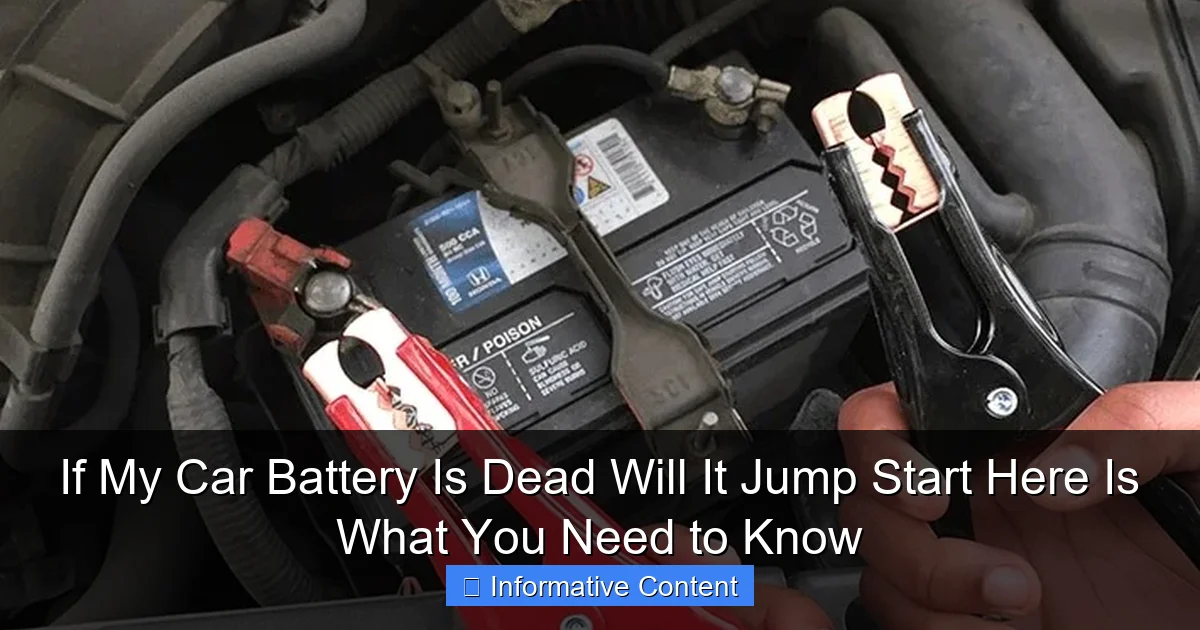
Featured image for if my car battery is dead will it jump start
Image source: motorspider.com
Yes, a dead car battery can usually be jump-started if the issue is a simple power drain and not a deeper electrical failure. Using jumper cables and a working vehicle or portable jump starter, you can restore enough charge to get your engine running again—just follow safety steps and proper connection order to avoid damage.
Key Takeaways
- Jump-starting works if the battery is dead but not damaged.
- Use proper cables and connect red to positive, black to ground.
- Wait 5 minutes after connecting before attempting to start.
- Drive 20+ minutes post-jump to fully recharge the battery.
- Test battery health after a jump to avoid future failures.
- Never jump a frozen or leaking battery—replace it instead.
- Turn off all electronics before starting to reduce strain.
📑 Table of Contents
- Understanding the Basics of a Dead Car Battery
- How Jump Starting Works (And Why It Often Succeeds)
- Step-by-Step Guide: How to Safely Jump Start Your Car
- Common Myths and Mistakes About Jump Starting
- Alternatives to Traditional Jump Starting
- When to Replace the Battery Instead of Jump Starting
- Final Thoughts: Is Jump Starting Your Best Option?
Understanding the Basics of a Dead Car Battery
We’ve all been there: you’re running late for work, the kids need to get to school, and you hop in the car, turn the key, and—nothing. Just a dull click or maybe a few dim dashboard lights. Your heart sinks. Is my car battery dead? And if so, will a jump start fix it? It’s one of the most common car problems, and the good news is, yes, a dead battery can often be revived with a jump start. But it’s not always that simple. Let’s break down what happens when your battery dies, why it happens, and whether a jump start is the real solution—or just a temporary fix.
A car battery isn’t just a box of power under the hood. It’s a critical component that provides the initial burst of energy needed to start your engine. Once the engine runs, the alternator takes over, powering the electrical systems and recharging the battery. But when that battery loses its charge—whether from age, extreme weather, or leaving lights on—the engine can’t turn over. This is where jump starting comes in. But before you grab those jumper cables, it’s important to understand the nuances of how it works, when it’s safe, and what it really means for your battery’s health. Think of it like CPR for your car—sometimes it saves the day, but it doesn’t fix the underlying heart condition.
What Exactly Is a Dead Battery?
When we say a battery is “dead,” we usually mean it’s discharged—it no longer holds enough voltage to crank the starter motor. A fully charged 12-volt car battery should read around 12.6 volts when the engine is off. If it drops below 12 volts, especially under load, it may not start the car. But “dead” can also mean the battery is physically damaged, sulfated (a buildup of lead sulfate crystals), or simply at the end of its lifespan (typically 3–5 years).
- Discharged battery: Can often be jump started and recharged by driving or using a charger.
- Damaged or aged battery: May not accept a charge even after a jump start.
- Parasitic drain: Something in the car (like a glove box light) is drawing power when the engine is off.
Common Signs Your Battery Is Failing
You don’t always have to wait for a total no-start situation. Watch for these early warning signs:
- Slow engine cranking (takes longer to turn over)
- Dim headlights or interior lights
- Frequent need for jump starts
- Dashboard warning light (often a battery-shaped icon)
- Clicking sound when turning the key (starter solenoid engaging but not enough power to turn the engine)
One winter morning, I left my phone charger plugged in overnight. The next day, my car wouldn’t start. A quick jump got me going, but I later realized the battery was only 2 years old—so the issue was likely the parasitic drain. A simple habit change saved me from repeated jump starts and a potential roadside call.
How Jump Starting Works (And Why It Often Succeeds)
Jump starting is essentially borrowing power from another vehicle’s battery to give your car the jolt it needs to start. It’s a bridge—a way to bypass a weak or discharged battery long enough for the engine to fire up. Once the engine runs, the alternator kicks in, recharging the battery and powering the car’s systems. But how exactly does this magic happen?
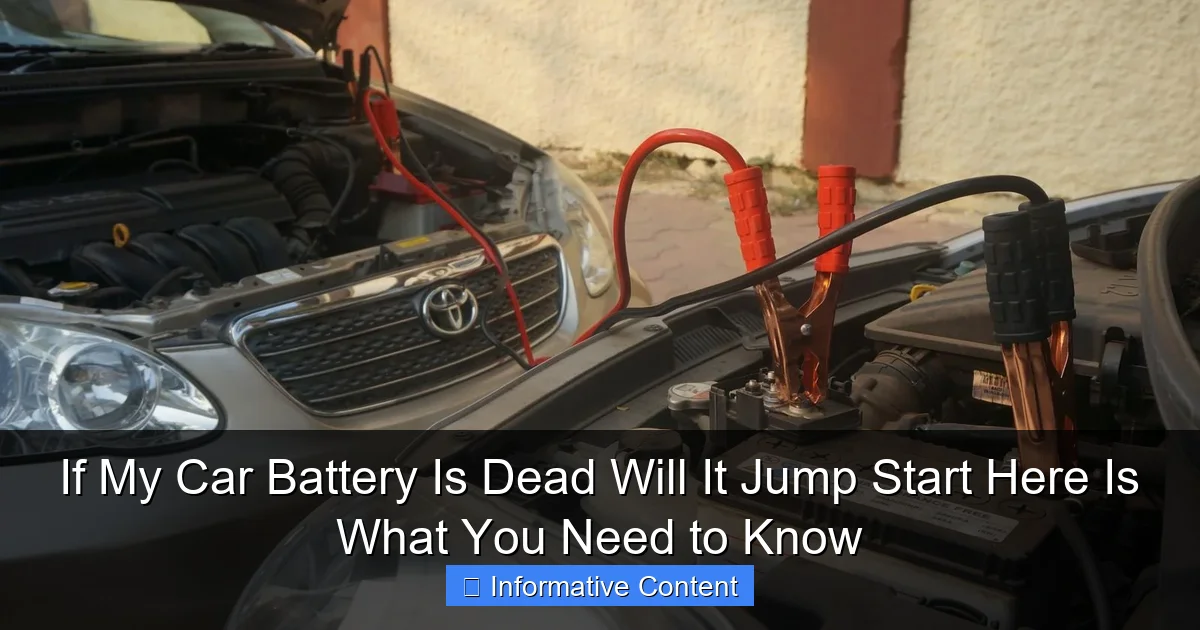
Visual guide about if my car battery is dead will it jump start
Image source: team-bhp.com
The Science Behind the Jump
When you connect jumper cables correctly, you’re creating a parallel circuit between two batteries. This means:
- Both batteries share the same voltage (12V), but their amperage (current) combines.
- The healthy battery supplies extra current to help crank your engine.
- Once the engine starts, the alternator begins charging both batteries (though your car’s alternator primarily recharges your own battery).
Think of it like two people pushing a stalled car. One person (the good battery) gives a strong push to get it rolling. Once it’s moving (engine running), the car’s own momentum (alternator) takes over and keeps it going.
Why Jump Starts Usually Work (When the Battery Is Just Discharged)
If your battery is merely discharged—say, from leaving the headlights on, a cold night, or a faulty charging system—it can often accept a charge after being jump started. Here’s why:
- The battery cells are intact and capable of holding a charge.
- There’s no internal short circuit or physical damage.
- The alternator is working properly and can recharge the battery once the engine runs.
For example, my neighbor once left her car’s trunk light on for two days. The battery was completely dead. We jump started it, and she drove 30 minutes to work. By the end of the drive, the battery had regained enough charge to start the car the next morning. No permanent damage—just a lesson in checking the trunk light.
When Jump Starting Might Not Be Enough
However, jump starting won’t help if the battery is truly dead in the sense of being:
- Old and sulfated: Sulfate crystals form on the plates, reducing capacity.
- Internally shorted: One or more cells are damaged.
- Corroded or leaking: Physical damage prevents proper charging.
In these cases, even if you get the car started, the battery may die again within hours or fail to hold a charge. A jump start is just a band-aid—not a cure.
Step-by-Step Guide: How to Safely Jump Start Your Car
Jump starting isn’t just about connecting cables. Done wrong, it can damage electronics, cause sparks, or even lead to battery explosions. Let’s walk through the safest, most effective way to do it—step by step.
What You’ll Need
- Jumper cables (at least 10–15 feet long, 4–6 gauge for best performance)
- A second vehicle with a working battery
- Rubber gloves (optional, for added safety)
- Wire brush or rag (to clean terminals if corroded)
Pro tip: Keep a set of jumper cables in your trunk. I learned this the hard way when my battery died in a grocery store parking lot at 8 PM—no one around, no cell service. I now keep cables, a flashlight, and a portable jump starter just in case.
Step 1: Position the Vehicles
- Park the working car close to yours—but don’t let the bumpers touch.
- Turn off both engines and set parking brakes.
- Make sure both batteries are 12V (most cars are; check if driving an older or specialty vehicle).
Step 2: Connect the Jumper Cables (Order Matters!)
Follow this exact sequence to avoid sparks and damage:
- Connect red (+) to dead battery’s positive terminal.
- Connect red (+) to good battery’s positive terminal.
- Connect black (-) to good battery’s negative terminal.
- Connect black (-) to a grounded metal point on the dead car (e.g., engine block, unpainted bracket—not the dead battery’s negative terminal).
Why the last connection to ground? It reduces the risk of igniting hydrogen gas that may be escaping from the dead battery. A spark near the battery is dangerous.
Step 3: Start the Working Vehicle
- Start the car with the good battery and let it run for 2–3 minutes. This “primes” the system.
- Rev the engine slightly (1,500–2,000 RPM) for 30 seconds to increase charging current.
Step 4: Try Starting the Dead Car
- Attempt to start the dead car. If it doesn’t start, wait another 2–3 minutes and try again.
- If it starts, let it run for at least 10–15 minutes to begin recharging the battery.
Step 5: Disconnect Cables (Reverse Order)
- Remove black (-) from the grounded point on the jumped car.
- Remove black (-) from the good battery.
- Remove red (+) from the good battery.
- Remove red (+) from the jumped battery.
Always disconnect in reverse order to avoid short circuits. After removing cables, take a moment to check that all terminals are clean and tight.
What If It Still Won’t Start?
- Double-check all connections. Loose or corroded terminals are common culprits.
- Try letting the good car run longer (5–10 minutes).
- Check if the starter is clicking but not turning. This could mean a bad starter, not just a dead battery.
- If nothing works, the battery may be beyond jump starting—time for a replacement or professional help.
Common Myths and Mistakes About Jump Starting
Jump starting is surrounded by myths and misconceptions. Some are harmless, but others can lead to serious damage or danger. Let’s clear up the confusion.
Myth 1: “Any Car Can Jump Start Any Other Car”
Not always true. While most 12V systems are compatible, there are exceptions:
- Hybrid or electric vehicles: May have high-voltage systems. Jump starting them can be dangerous unless done correctly (check the manual).
- Modern cars with sensitive electronics: Sudden voltage spikes can damage ECUs or sensors. Some manufacturers recommend using a portable jump starter instead.
- Diesel engines: Require more cranking amps. A small car may struggle to jump start a large diesel truck.
I once tried to jump start my friend’s diesel pickup with my compact sedan. The cables got hot, the engine barely turned over, and we gave up after two attempts. A portable jump starter with high cranking amps would’ve been a better choice.
Myth 2: “You Can Leave the Jumper Cables On While Driving”
Absolutely not. Once the car starts, remove the cables immediately. Leaving them connected can cause:
- Voltage surges damaging both vehicles’ electronics.
- Overheating cables or terminals.
- Short circuits if cables touch moving parts.
Myth 3: “Jump Starting Fully Recharges the Battery”
No. A jump start only gives you enough power to start the engine. The battery needs time—usually 30 minutes to a few hours of driving—to fully recharge. If your battery is old or damaged, it may not hold that charge.
After a jump, avoid short trips. I once jump started my car, drove 10 minutes to a store, and it died again in the parking lot. The battery needed a full charge, not a quick spin.
Myth 4: “You Can Jump Start a Car in the Rain”
Yes, but with caution. Water and electricity don’t mix, but modern jumper cables are insulated. Still:
- Keep connections as dry as possible.
- Wear rubber gloves if possible.
- Don’t touch bare metal or wet terminals.
I’ve jump started cars in light rain without issues, but I avoid heavy downpours. Safety first.
Myth 5: “Jump Starting Is Bad for the Good Car’s Battery”
Not if done correctly. The good battery is temporarily sharing its charge, but the alternator quickly replenishes it once both engines are running. However, repeated jump starting (especially for large vehicles) can shorten the good battery’s life.
Alternatives to Traditional Jump Starting
While jumper cables are reliable, they’re not the only option. Modern technology and smart habits offer safer, more convenient alternatives.
Portable Jump Starters (Jump Boxes)
These are compact lithium-ion battery packs designed to jump start a car without another vehicle. Benefits include:
- No need for a second car.
- Safer for modern electronics (built-in surge protection).
- Can also charge phones, tablets, and other devices.
Downsides: They lose charge over time and need to be recharged every few months. I keep one in my trunk and test it every three months. It’s saved me twice—once in a remote area with no cell service.
Smart Battery Chargers and Maintainers
Instead of relying on jump starts, consider a battery maintainer (like a trickle charger). These devices:
- Slowly recharge a dead or weak battery.
- Prevent sulfation during long storage.
- Are ideal for classic cars, motorcycles, or seasonal vehicles.
I use one for my vintage motorcycle. It sits for months at a time, but the maintainer keeps the battery in top shape—no jump starts needed.
Preventive Measures to Avoid Dead Batteries
The best jump start is the one you never need. Try these habits:
- Turn off all lights and accessories before exiting the car.
- Unplug chargers and devices when not in use.
- Drive at least 30 minutes weekly to keep the battery charged.
- Get your battery tested annually (many auto shops do it free).
- Replace batteries every 3–5 years, even if they seem fine.
One winter, I started my car and noticed the battery light stayed on. I ignored it for a week—big mistake. The alternator failed, and I ended up with a dead battery and a $500 repair bill. Regular checks could’ve caught it early.
When to Replace the Battery Instead of Jump Starting
Jump starting is a temporary fix. If you’re doing it frequently, it’s time to ask: Is the battery the real problem?
Signs You Need a New Battery
- Age: 3+ years old (check the date code on the battery).
- Frequent jump starts: More than once every few months.
- Battery won’t hold a charge: Dies again after a short drive.
- Swollen case or corrosion: Physical signs of failure.
- Low voltage after jump: Below 12.4V after running for 15+ minutes.
Testing Your Battery
You don’t need to guess. Use a multimeter or visit an auto parts store:
- Multimeter test: Check voltage with the engine off (should be 12.6V) and running (13.7–14.7V).
- Load test: Simulates starting conditions. Most shops do this free.
Cost vs. Safety
A new battery costs $100–$250, but it’s cheaper than repeated towing, missed appointments, or being stranded. I once delayed replacing a weak battery because “it still works.” Two weeks later, I was stuck at night in a sketchy area. The $150 battery saved me from a $200 tow and a lot of stress.
Data Table: Battery Health Indicators
| Condition | Voltage (Engine Off) | Voltage (Engine Running) | Action |
|---|---|---|---|
| Fully Charged | 12.6–12.7V | 13.7–14.7V | Normal—no action needed |
| Weak/Discharged | 12.0–12.4V | 13.7–14.7V | Jump start, then recharge or replace |
| Dead | Below 11.8V | Below 13.5V | Likely needs replacement |
| Alternator Issue | 12.6V | Below 13.5V or above 15V | Check alternator, not just battery |
Final Thoughts: Is Jump Starting Your Best Option?
So, back to the original question: If my car battery is dead, will it jump start? The short answer is: often, yes—but with conditions. A jump start can revive a discharged battery, get you back on the road, and even recharge the battery enough for the next few days. But if the battery is old, damaged, or suffering from a deeper electrical issue, a jump is just a temporary reprieve.
Think of it like this: jump starting is the emergency room for your car. It’s great for urgent care, but it doesn’t replace regular checkups. If you’re constantly needing jumps, it’s a sign something’s wrong—whether it’s the battery, the alternator, or your driving habits. The real solution isn’t just getting the car started; it’s understanding why it died in the first place.
From personal experience, I’ve learned that a little prevention goes a long way. A $50 portable jump starter, a free battery test at AutoZone, or simply checking your lights before exiting the car can save hours of stress. And when you do need to jump start, do it safely, follow the steps, and don’t ignore the warning signs afterward.
At the end of the day, your car’s battery is a hardworking but fragile part. Treat it with care, and it’ll keep you moving. Abuse it with neglect, and you’ll be calling for help—or worse, stuck on the side of the road. So the next time you hear that dreaded click, don’t panic. Grab your cables, call a friend, or use your jump box. But also ask yourself: What can I do to make sure this doesn’t happen again? Because the best jump start is the one you never need.
Frequently Asked Questions
Can a completely dead car battery be jump started?
Yes, in most cases, a dead car battery can be jump started using jumper cables and another vehicle or a portable jump starter. However, if the battery is severely damaged or sulfated, a jump start may not work, and replacement might be necessary.
What do I need to jump start a dead car battery safely?
You’ll need jumper cables, a working donor vehicle (or a jump starter pack), and basic safety gear like gloves and eye protection. Ensure both vehicles are turned off before connecting the cables, and follow proper polarity (red to positive, black to negative) to avoid sparks or damage.
If my car battery is dead, will it jump start and stay charged?
A jump start will get your engine running, but the battery may not stay charged if it’s old or faulty. The alternator will recharge a healthy battery, but if it’s beyond its lifespan, you’ll need a replacement to avoid repeated issues.
How long should I drive after a jump start to recharge the battery?
Drive for at least 20–30 minutes to allow the alternator to replenish the battery’s charge. For deeply drained batteries, longer drives (or multiple shorter trips) may be needed to fully restore power.
Is it safe to jump start a frozen car battery?
No, never jump start a frozen battery—it can explode due to pressure buildup. Thaw the battery in a warm area first, and check for cracks or leaks before attempting a jump start.
Can I use a portable jump starter instead of another car?
Absolutely. Portable jump starters are a convenient, cable-free way to revive a dead battery. Just ensure the jump starter is fully charged and matches your vehicle’s voltage (usually 12V for standard cars).