
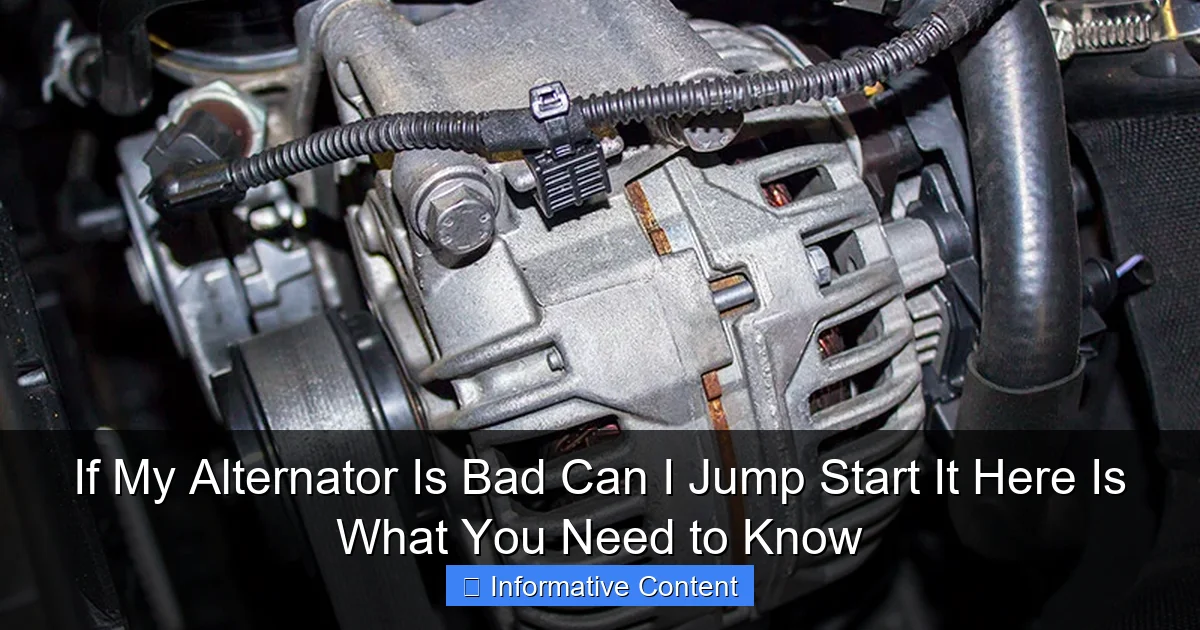
Featured image for if my alternator is bad can i jump start it
Image source: cdn.autoguru.com.au
Yes, you can jump start a car with a bad alternator, but it’s only a temporary fix—the engine will likely die once the battery drains, as a faulty alternator can’t recharge it. Drive straight to a mechanic or replacement battery source, as prolonged driving risks stalling and further electrical damage. Safety first: monitor voltage and avoid sudden shutdowns.
Key Takeaways
- Jump-starting won’t fix a bad alternator: It only provides temporary power.
- Test the alternator first: Use a multimeter to confirm voltage output.
- Drive immediately after jump-start: Visit a mechanic to avoid stalling.
- Dimming lights signal failure: Check alternator if headlights flicker or dim.
- Repeated jump-starts indicate danger: Replace the alternator to prevent breakdowns.
- Disconnect battery safely: Avoid sparks by removing negative terminal first.
- Professional diagnosis is crucial: Get expert help for long-term solutions.
📑 Table of Contents
- What Happens When Your Alternator Fails? A Real-Life Wake-Up Call
- How the Alternator Works (And Why It Matters)
- Can You Jump Start a Car With a Bad Alternator?
- How to Jump Start a Car With a Bad Alternator (Step-by-Step)
- How Long Can You Drive After a Jump Start? (The Reality Check)
- What to Do After the Jump Start (Critical Next Steps)
- The Bottom Line: Jump Start as a Last Resort
What Happens When Your Alternator Fails? A Real-Life Wake-Up Call
Picture this: You’re late for work, rushing out the door, and your car sputters to life—only to die a few seconds later. You try again, and the engine groans, the lights flicker, and the dashboard warning lights dance like a disco ball. You’re not alone. This is a classic sign of a failing alternator, and it’s one of the most frustrating car issues you can face. But here’s the big question: *If my alternator is bad, can I jump start it?* The short answer? Yes, but with a big “but.” It’s not a fix—it’s a temporary lifeline.
As someone who’s had to jump-start my own car in a grocery store parking lot (thanks, aging alternator), I’ve learned that understanding how this works can save you time, money, and stress. Jump-starting a car with a bad alternator is like putting a band-aid on a broken arm. It might get you moving, but you still need a doctor. In this post, I’ll walk you through exactly what happens when your alternator fails, whether jump-starting helps, and what to do next—all in plain, no-nonsense terms.
How the Alternator Works (And Why It Matters)
Your Car’s Power Plant: The Alternator’s Role
Think of the alternator as your car’s personal power generator. While the battery starts the engine, the alternator takes over once the engine is running. It charges the battery, powers the lights, keeps the radio going, and runs all your electronics. Without it, your car is essentially running on borrowed time—and borrowed battery power.
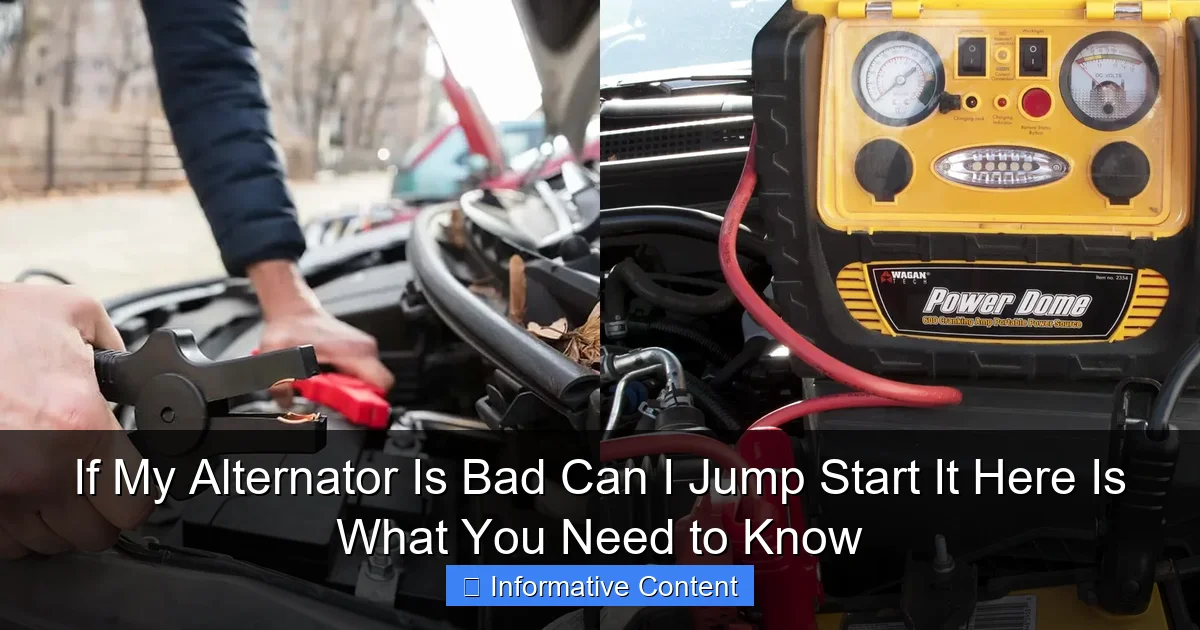
Visual guide about if my alternator is bad can i jump start it
Image source: everstartjumpstarter.com
Here’s a simple analogy: The battery is like a phone’s power bank, and the alternator is the charger. If the charger stops working, the power bank will eventually run dry. The same thing happens in your car. A failing alternator can’t keep up with the electrical demands, so the battery drains faster than it can recharge.
Signs Your Alternator Is Failing
How do you know if the alternator is the culprit? Look for these red flags:
- Dim or flickering lights: Especially noticeable at night or when idling.
- Warning light on the dashboard: Usually shaped like a battery or labeled “ALT” or “GEN.”
- Strange noises: Grinding, whining, or squealing from under the hood.
- Electrical issues: Power windows, radio, or dashboard lights acting erratically.
- Engine stalls or dies: Especially after driving for a while.
I once ignored a faint whine from my alternator, thinking it was just a loose belt. Big mistake. By the time my headlights started dimming, the alternator was on its last legs. Don’t make the same error.
Why a Bad Alternator Drains the Battery
A healthy alternator produces about 13.5 to 14.5 volts. If it’s failing, it might output less—or even nothing. That means the battery is doing all the work. Over time, this drains the battery completely. It’s like asking a single battery to power a whole house. Eventually, it gives out.
For example, if you’re driving with a weak alternator and use the AC, headlights, and phone charger, the electrical load can exceed what the battery can handle. Result? Your car dies—often at the worst possible moment.
Can You Jump Start a Car With a Bad Alternator?
The Short Answer: Yes, But…
Yes, you can jump start a car with a bad alternator. The jump provides a burst of energy to crank the engine. But here’s the catch: Once the engine starts, the alternator *should* take over. If it’s broken, the battery keeps supplying power. And since the alternator isn’t charging it, the battery will drain again—fast.
I learned this the hard way. I jump-started my car, drove 10 minutes to a mechanic, and the engine died right in front of the shop. The mechanic laughed (kindly) and said, “You’re lucky you made it here.”
What Happens During a Jump Start?
When you jump start, the donor car’s battery gives your car enough juice to start the engine. But the alternator needs to:
- Produce voltage to charge the battery.
- Power all the electrical systems.
- Handle additional loads (like lights, AC, etc.).
If the alternator can’t do this, the battery voltage drops rapidly. Within minutes or hours, your car could stall again. In extreme cases, it might even die while driving—which is dangerous.
Real-World Example: A 30-Minute Lifeline
Say your alternator is putting out only 10 volts (instead of the required 13.5–14.5). You jump start the car, and the engine runs. But the battery is now powering everything. If the battery has 50% charge, it might last 20–30 minutes before dying. That’s your window to get to a mechanic—but no stops, no detours, and definitely no idling.
Tip: If you must jump start, drive directly to a repair shop. Avoid highways or heavy traffic where stalling could put you at risk.
How to Jump Start a Car With a Bad Alternator (Step-by-Step)
Gather Your Tools
Before you start, make sure you have:
- Jumper cables (heavy-duty, 4–6 gauge).
- A working donor car (or portable jump starter).
- Protective gloves and safety glasses.
- A voltage meter (optional, but helpful).
Pro tip: Keep a portable jump starter in your trunk. They’re affordable (around $50–$100) and don’t rely on another car.
Step 1: Park the Cars Safely
Position the donor car close to yours, but don’t let the bumpers touch. Turn off both engines and set the parking brakes. If you’re on a slope, chock the wheels.
Step 2: Connect the Jumper Cables
Follow this order to avoid sparks or damage:
- Connect the red clamp to the dead battery’s positive (+) terminal.
- Connect the other red clamp to the donor battery’s positive (+) terminal.
- Connect the black clamp to the donor battery’s negative (-) terminal.
- Connect the other black clamp to an unpainted metal surface on the dead car (e.g., a bolt or bracket). Never connect it to the dead battery’s negative terminal.
Why? Connecting to the engine block grounds the circuit safely and reduces the risk of a battery explosion.
Step 3: Start the Donor Car
Start the donor car and let it idle for 2–3 minutes. This charges the cables and stabilizes the voltage. If the donor car has a high-output alternator (like a truck or SUV), rev the engine slightly to increase voltage.
Step 4: Start the Dead Car
Try starting the dead car. If it doesn’t start, wait another 2–3 minutes and try again. If it still won’t start, check the connections and try revving the donor car’s engine to 2,000 RPM.
Step 5: Disconnect the Cables (Carefully!)
Once the dead car starts, disconnect the cables in reverse order:
- Remove the black clamp from the dead car’s ground.
- Remove the black clamp from the donor battery.
- Remove the red clamp from the donor battery.
- Remove the red clamp from the dead battery.
Important: Keep the cables from touching each other or any metal surfaces.
Step 6: Drive Immediately
Drive straight to a mechanic or auto parts store. Don’t turn off the engine. If you stop, the car might not start again. Use the shortest route possible and avoid using non-essential electronics (e.g., AC, radio).
How Long Can You Drive After a Jump Start? (The Reality Check)
Battery Capacity vs. Electrical Load
How long your car runs after a jump depends on two things:
- Battery capacity: Measured in amp-hours (Ah). A typical car battery has 40–70 Ah.
- Electrical load: How much power your car uses. For example:
| Component | Average Power Draw (Amps) | Notes |
|---|---|---|
| Headlights | 10–20 | Halogen vs. LED |
| AC/Heater | 10–30 | Depends on fan speed |
| Radio | 2–5 | Bluetooth/USB adds load |
| Dashboard | 5–10 | Always on |
| Engine systems | 10–20 | Fuel pump, sensors, etc. |
Example: If your battery has 50 Ah and the total load is 40 amps, the battery will last roughly 1.25 hours (50 ÷ 40 = 1.25). But this is a best-case scenario. Real-world factors like cold weather, battery age, and voltage drop can cut that time in half.
Factors That Shorten Your Lifeline
- Old or weak battery: A 3-year-old battery might only hold 60–70% of its original capacity.
- Cold weather: Cold reduces battery efficiency by up to 50%.
- High electrical loads: Running AC, heated seats, or a subwoofer drains the battery faster.
- Short trips: If you drive 10 minutes, stop, and restart, the battery doesn’t have time to recover.
I once had to jump-start my car in winter. Even with a fresh battery, it died after 15 minutes because the cold drained it faster than I could drive.
What to Do After the Jump Start (Critical Next Steps)
1. Get to a Mechanic ASAP
Your priority is to get the alternator tested and replaced. Most auto parts stores (like AutoZone, O’Reilly) offer free alternator testing. Drive there immediately after the jump start.
Tip: Call ahead to confirm they can test your alternator. Some shops do it right in the parking lot.
2. Test the Voltage
While driving, check the battery voltage with a multimeter. A healthy alternator should show 13.5–14.5 volts. If it’s below 13 volts, the alternator isn’t charging.
How to test: Set the multimeter to DC voltage (20V range). Touch the red probe to the positive terminal and the black probe to the negative terminal. With the engine running, the reading should be 13.5–14.5V.
3. Avoid Repeated Jump Starts
Jumping a car with a bad alternator repeatedly can damage the battery. Each jump stresses the battery plates, reducing its lifespan. Plus, if the alternator is failing completely, it might not just stop working—it could overcharge, frying the battery or other electronics.
4. Replace the Alternator (Don’t Delay)
Alternator replacement costs $300–$800, depending on the car. But it’s worth it. A failing alternator can:
- Destroy the battery (costing $100–$200).
- Damage the voltage regulator or ECU.
- Leave you stranded in a dangerous place.
I waited two weeks to replace mine, and the battery died—twice. Total cost? $450 (alternator + two new batteries). Lesson learned.
The Bottom Line: Jump Start as a Last Resort
So, *if my alternator is bad, can I jump start it?* Yes—but it’s not a solution. It’s a bridge to get you to a mechanic. Think of it like using a spare tire: It gets you to the shop, but you still need a real tire.
Here’s what to remember:
- Jump starting works temporarily, but the car will die again once the battery drains.
- Drive straight to a repair shop after the jump. No stops, no detours.
- Test the alternator voltage to confirm it’s the problem.
- Replace the alternator promptly to avoid bigger issues.
Your car’s electrical system is like a delicate ecosystem. When one part fails, the rest suffer. By understanding how the alternator works—and what to do when it fails—you’ll save yourself from costly repairs and stressful breakdowns. And if you’re ever in doubt, don’t guess. Get it checked. Your car (and your sanity) will thank you.
Frequently Asked Questions
Can I jump start a car with a bad alternator?
Yes, you can jump start a car with a bad alternator, but it will only work temporarily. The jump provides enough power to start the engine, but the failing alternator won’t recharge the battery, leaving you stranded again soon.
How long can I drive after a jump if my alternator is bad?
You can typically drive 30 minutes to an hour after a jump start if your alternator is bad, depending on battery condition. However, electrical systems will weaken as the battery drains, increasing the risk of stalling.
Is it safe to jump start a car when the alternator is failing?
Jump starting a car with a failing alternator is safe for short-term use, but not a permanent fix. Avoid driving long distances, as a dead battery could leave you stranded or damage sensitive electronics.
What happens if I keep jump starting a car with a bad alternator?
Repeatedly jump starting a car with a bad alternator strains the battery and risks damaging the electrical system. The battery may eventually fail entirely, requiring costly replacements and leaving you without a reliable vehicle.
Can a bad alternator ruin a new battery after a jump start?
Yes, a bad alternator can overcharge or undercharge a new battery after a jump start, shortening its lifespan. Without proper voltage regulation, the battery may sulfate or overheat, leading to premature failure.
What should I do after jump starting if my alternator is bad?
After jump starting, drive directly to a mechanic to diagnose and replace the bad alternator. Avoid turning off the engine, and minimize electrical load (e.g., AC, radio) to preserve battery power.