
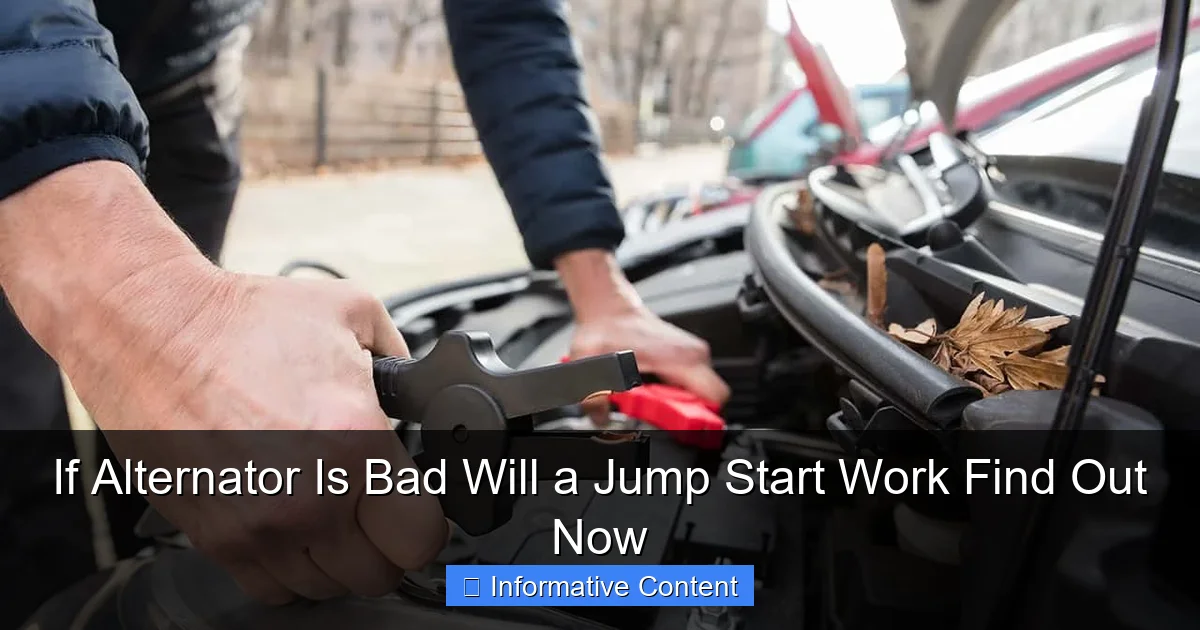
Featured image for if alternator is bad will a jump start work
Image source: everstartjumpstarter.com
A jump start will not fix a bad alternator—it may get your car running temporarily, but the battery will quickly drain once the engine is off. The alternator is essential for recharging the battery and powering electrical systems, so if it’s failing, repeated jump starts are a short-term fix at best—get the alternator tested and replaced immediately to avoid being stranded.
Key Takeaways
- A jump start may work temporarily if the alternator is failing but the battery has some charge left.
- Test alternator output immediately after jump-starting to confirm if it’s charging the battery properly.
- Don’t rely on jump starts long-term—a bad alternator will drain the battery again quickly.
- Dimming lights or electrical issues after starting signal a likely alternator problem.
- Replace the alternator promptly to avoid complete battery failure and costly repairs.
- Use a multimeter to check voltage—below 13.5V while running means the alternator isn’t charging.
📑 Table of Contents
- Understanding the Alternator and Its Role in Your Vehicle
- How the Alternator and Battery Work Together
- If Alternator Is Bad Will a Jump Start Work? The Short Answer
- Signs Your Alternator Might Be Failing (And What to Do)
- Jump Starting a Car with a Bad Alternator: Step-by-Step Guide
- Alternator Replacement: Costs, Options, and What to Expect
- Prevention and Maintenance: How to Avoid Alternator Failure
- Conclusion
Understanding the Alternator and Its Role in Your Vehicle
Imagine this: you’re running late for work, you hop in your car, turn the key, and… nothing. Or worse, the car starts, but the battery light flickers on, and you’re stuck wondering if a quick jump start will save the day. If you’ve ever been in this situation, you’re not alone. A failing alternator is one of the most common causes of unexpected car trouble, and it often leaves drivers asking, “If alternator is bad will a jump start work?”
The alternator is the unsung hero of your vehicle’s electrical system. While the battery provides the initial power to start the engine, it’s the alternator that keeps everything running—charging the battery, powering lights, the radio, and even your phone charger. Think of it like a power plant for your car. When it starts to fail, your car becomes a ticking time bomb. The battery might have enough juice to start the engine, but without the alternator doing its job, the battery will eventually die, leaving you stranded. This is where the big question comes in: can a jump start help if your alternator is bad? Let’s dive in and find out.
How the Alternator and Battery Work Together
The Dynamic Duo: Battery and Alternator
Your car’s battery and alternator are a team. The battery is like a storage tank—it holds the energy needed to start the engine and run the starter motor. Once the engine is running, the alternator takes over, generating electricity to power all the car’s systems and recharge the battery. This cycle is essential for smooth operation.
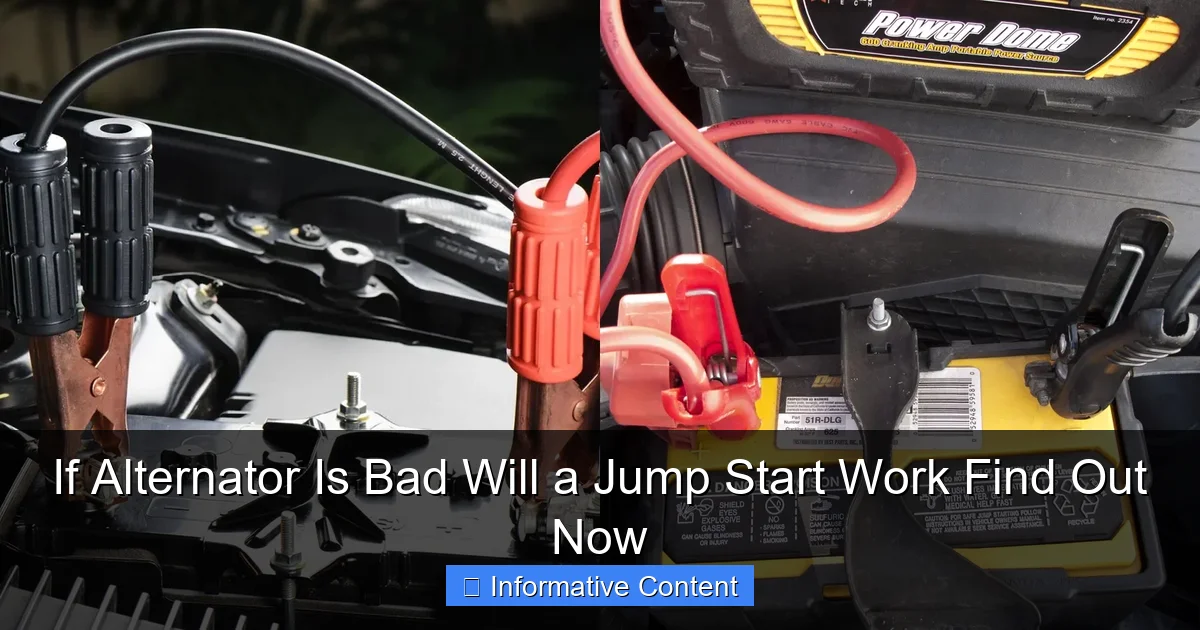
Visual guide about if alternator is bad will a jump start work
Image source: everstartjumpstarter.com
When the alternator is working properly, it produces around 13.5 to 14.5 volts of electricity. This is just enough to keep the battery fully charged while powering the car’s lights, sensors, and electronics. But if the alternator is failing, it may not produce enough voltage—or any at all. The battery will then have to pick up the slack, but it can’t do this forever. It’s like asking a water bottle to refill itself while you keep drinking from it. Eventually, it runs dry.
What Happens When the Alternator Fails?
A bad alternator doesn’t always mean your car won’t start. In fact, it often starts just fine because the battery still has some charge. But here’s the catch: the battery is only a temporary solution. As soon as the engine is running, the alternator should take over. If it can’t, the battery drains rapidly. You might notice:
- The dashboard lights dimming or flickering
- The radio cutting out
- Difficulty starting the car after driving for a while
- The battery warning light (usually shaped like a battery) glowing on your dashboard
For example, I once drove 20 miles with a failing alternator, thinking the jump start had fixed everything. Halfway through, my headlights started dimming, the AC fan slowed down, and my GPS rebooted. I managed to make it to a mechanic, but the car died as I pulled into the parking lot. The alternator had given up, and the battery had nothing left.
If Alternator Is Bad Will a Jump Start Work? The Short Answer
Yes, But It’s a Temporary Fix
So, if alternator is bad will a jump start work? Yes, it can work—but only temporarily. A jump start gives your battery a fresh supply of energy, allowing the engine to start. However, once the engine is running, the alternator is still needed to keep the battery charged and power the car’s systems. If the alternator is faulty, the battery will drain again, usually within minutes or a few hours, depending on how much charge it had and how much electrical load the car is under.
Think of it like plugging a phone into a broken charger. The phone might turn on, but it won’t charge. Eventually, the battery dies, and you’re back to square one. The same logic applies here. A jump start is like a “get out of jail free” card—it gets you moving, but it doesn’t solve the underlying problem.
How Long Can You Drive After a Jump Start?
The duration varies. In ideal conditions (short drive, minimal electrical use), you might get 30 minutes to an hour. But if you’re driving at night with headlights, wipers, and the heater on, the battery will drain much faster—possibly within 15–20 minutes. I once made the mistake of trying to drive 50 miles after a jump start with a bad alternator. I didn’t even make it 10 miles before the car sputtered and died on a busy highway. Not fun.
Here’s a quick tip: if you suspect the alternator is bad, drive straight to a mechanic or auto parts store. Avoid side trips, turning on extra lights, or using the radio. The less strain on the battery, the longer you can limp to safety.
Signs Your Alternator Might Be Failing (And What to Do)
Early Warning Signs
Alternator failure rarely happens overnight. There are usually warning signs. Pay attention to these:
- Dashboard battery light: If it’s on while the engine is running, the alternator isn’t charging the battery.
- Dim or flickering lights: Headlights, dash lights, or interior lights that dim when idling or flicker when you turn on accessories.
- Electrical issues: Power windows moving slowly, radio resetting, or dashboard warnings.
- Strange noises: A grinding or whining sound from the engine bay (often from a failing alternator bearing).
- Frequent jump starts: If you need to jump your car more than once, it’s not the battery—it’s the alternator.
Testing Your Alternator at Home
You don’t need to be a mechanic to check if your alternator is working. Here’s a simple test:
- Start your car and let it idle.
- Turn on the headlights, AC, and radio (max load).
- Use a multimeter to check the voltage at the battery terminals.
- If the voltage is below 13.5 volts, the alternator isn’t charging properly.
- If the voltage is above 14.5 volts, it could be overcharging (also dangerous).
For example, my friend noticed his battery light flickering. He tested it with a $20 multimeter and found the voltage was only 12.1 volts with the engine running—definitely a bad alternator. He got it replaced the same day.
What to Do If You Suspect a Bad Alternator
If you see these signs, don’t wait. Here’s what to do:
- Get a jump start if needed to get the car running.
- Drive directly to a repair shop or auto parts store (many offer free alternator testing).
- Call a tow truck if you’re far from help—better safe than stranded.
- Avoid turning off the engine once it’s running. Every time you shut it off, you’ll need another jump.
Jump Starting a Car with a Bad Alternator: Step-by-Step Guide
Preparing for a Jump Start
Even with a bad alternator, a jump start can get you moving. But preparation is key:
- Park the working car close so the jumper cables can reach, but don’t let the bumpers touch.
- Turn off both cars and set the parking brakes.
- Wear gloves and eye protection—batteries can spark or leak acid.
- Check the battery terminals for corrosion. Clean them with a wire brush if needed.
Step-by-Step Jump Start Process
- Connect the red (positive) clamp to the dead battery’s positive terminal.
- Connect the other red clamp to the working battery’s positive terminal.
- Connect the black (negative) clamp to the working battery’s negative terminal.
- Connect the other black clamp to a ground point on the dead car (like a metal engine bracket, not the dead battery’s negative terminal—this reduces spark risk).
- Start the working car and let it run for 2–3 minutes to charge the dead battery slightly.
- Try starting the dead car. If it starts, don’t turn it off.
- Disconnect the cables in reverse order (black first, then red).
Driving After the Jump: What to Expect
Once the car is running, drive it immediately to a mechanic. But keep these tips in mind:
- Keep the engine running at all times. If you turn it off, it likely won’t start again.
- Minimize electrical use. Turn off the radio, AC, and lights if possible.
- Drive at a steady speed. Revving the engine won’t help—the alternator isn’t working.
- Listen for warning signs. If the lights dim or the car sputters, pull over safely and call for help.
I once helped a neighbor jump-start her car with a bad alternator. She drove 12 miles to a repair shop, but halfway there, her headlights started flickering. I told her to turn them off and drive with just the parking lights. She made it—just barely. The mechanic confirmed the alternator was completely dead.
Alternator Replacement: Costs, Options, and What to Expect
How Much Does an Alternator Replacement Cost?
Alternator replacement isn’t cheap, but it’s far less than the cost of a new car. Here’s a rough breakdown:
| Component | Average Cost | Notes |
|---|---|---|
| New Alternator (OEM) | $300–$600 | Higher quality, longer warranty |
| Rebuilt/Remanufactured Alternator | $150–$300 | Cost-effective, good for older cars |
| Labor (1–2 hours) | $80–$150 | Depends on shop rates |
| Total Cost | $230–$750 | Can vary by car model and location |
For example, my 2010 Honda Civic alternator cost $220 (rebuilt) plus $100 for labor. The repair took about 90 minutes. A friend with a luxury SUV paid over $700 for the same job. Always get multiple quotes.
OEM vs. Aftermarket: What’s the Best Choice?
- OEM (Original Equipment Manufacturer): Made by the car’s manufacturer. Highest quality, longest lifespan, but most expensive.
- Aftermarket: Made by third-party companies. Varies in quality—some are great, others fail quickly. Look for brands with good reviews and warranties.
- Rebuilt/Remanufactured: Old alternators repaired with new parts. A solid middle ground—cheaper than OEM, often with a warranty.
Tip: If your car is under warranty, insist on an OEM alternator. Otherwise, a quality remanufactured unit is usually fine.
DIY vs. Professional Installation
Replacing an alternator isn’t the hardest job, but it’s not for beginners. You’ll need:
- Basic tools (wrenches, sockets, screwdrivers)
- A jack and jack stands (on some cars)
- Patience and a repair manual
The process usually involves:
- Disconnecting the battery
- Removing the serpentine belt
- Unbolting the old alternator
- Installing the new one and reconnecting wires
- Reinstalling the belt and testing
I tried replacing my alternator myself once. I got stuck on the belt tensioner and ended up paying a mechanic to finish the job. Save yourself the headache—unless you’re confident, let a pro handle it.
Prevention and Maintenance: How to Avoid Alternator Failure
Regular Inspections and Maintenance
Alternators typically last 80,000 to 150,000 miles, but they can fail earlier due to:
- Worn bearings or brushes
- Overheating (often from engine bay heat or poor airflow)
- Corrosion on connections
- Excessive electrical load (aftermarket accessories)
To extend your alternator’s life:
- Check the serpentine belt annually. A cracked or loose belt reduces efficiency and can damage the alternator.
- Clean battery terminals and alternator connections regularly.
- Avoid overloading the system. Don’t install high-power stereos or lights without upgrading the alternator.
- Get a battery and alternator test every 2–3 years, especially if your car is over 5 years old.
When to Replace the Battery and Alternator Together
Here’s a pro tip: if your alternator fails and your battery is over 3 years old, replace them both. Why? A weak battery puts extra strain on the new alternator. It’s like replacing one tire on a car with three bald ones—it won’t last. Many mechanics recommend this “preventive replacement” to avoid future breakdowns.
For example, my mechanic once told me, “If you replace the alternator and the battery is old, you’re just kicking the can down the road.” I took his advice, replaced both, and haven’t had an issue in three years.
Conclusion
So, if alternator is bad will a jump start work? The answer is yes—but only as a short-term solution. A jump start gives you a fighting chance to get the car running, but without a functioning alternator, the battery will drain quickly. You’ll need to drive straight to a mechanic, avoid turning off the engine, and minimize electrical use to make it.
The real solution is diagnosing and replacing the alternator. While it’s not the cheapest repair, it’s far better than being stranded on the side of the road. And remember: alternators rarely fail without warning. Listen for dimming lights, strange noises, and frequent jump starts. Test your system regularly, and don’t ignore the dashboard battery light.
Your car’s alternator is too important to ignore. Treat it with care, maintain it properly, and when it does fail, act fast. Whether you jump-start it or call a tow, the goal is the same: get it fixed before you’re left in the dark—literally and figuratively.
Frequently Asked Questions
Will a jump start work if the alternator is bad?
A jump start can get your car running temporarily if the alternator is failing, but it won’t fix the root issue. The battery will eventually drain again since a bad alternator can’t recharge it while driving.
How long can I drive with a bad alternator after a jump start?
You may only get 15-30 minutes of driving time before the battery dies completely. The exact duration depends on your battery’s remaining charge and electrical load.
If my alternator is bad, will a jump start damage my car?
No, jump-starting itself won’t cause further damage, but driving with a faulty charging system risks stranding you. Avoid using high-power accessories to extend battery life.
Can I recharge my battery instead of replacing a bad alternator?
Temporarily yes, but the battery will keep losing charge until you repair the alternator. This creates a dangerous cycle of repeated jump starts and roadside emergencies.
What are the signs that my alternator is bad after a jump start?
Dim lights, flickering gauges, or stalling while driving are common signs. If these appear immediately after a jump start, the alternator likely isn’t recharging the battery.
Should I get a tow truck if I suspect a bad alternator?
Yes, it’s safer than risking sudden shutdowns. Even if a jump start works, a professional inspection is urgent – most auto shops can test your charging system on-site.