

Featured image for how much charge for jump start
Image source: cdn1.iconfinder.com
The average cost to jump start a car ranges from $50 to $150, depending on your location, time of day, and whether you use a roadside assistance service or a private mechanic. Many auto clubs and insurance providers offer free jump starts as part of their emergency coverage—check your policy before paying out of pocket.
Key Takeaways
- Jump-start costs vary: Expect $50–$150 depending on vehicle and service provider.
- DIY saves money: Use jumper cables or portable starters to avoid service fees.
- Roadside assistance perks: Check insurance or auto clubs for free jump-start services.
- Battery health matters: Frequent jump-starts signal a failing battery needing replacement.
- Time impacts pricing: Emergency or off-hours calls often cost more than daytime visits.
- Preventive checks help: Test battery and alternator to avoid future jump-start needs.
📑 Table of Contents
- How Much Charge for Jump Start? Let’s Clear Up the Confusion
- What Exactly Is a Jump Start and Why Might You Need One?
- How Much Charge for Jump Start? Breaking Down the Costs
- Factors That Affect Jump Start Pricing
- DIY Jump Start: A Step-by-Step Guide (And How to Do It Safely)
- How to Avoid Needing a Jump Start (And Save Money Long-Term)
- Jump Start Cost Comparison Table
- Final Thoughts: Don’t Let a Dead Battery Drain Your Wallet
How Much Charge for Jump Start? Let’s Clear Up the Confusion
Picture this: it’s 7 a.m., you’re running late for work, and your car won’t start. You turn the key—click, click, click—and that dreaded silence hits. The battery is dead. Your heart sinks. Now, you’re stuck, and the only solution seems to be a jump start. But before you call for help, one question pops into your mind: how much charge for jump start? Is it a simple favor from a neighbor, or will you be handed a bill that feels like a punch in the gut?
You’re not alone. Every year, millions of drivers face the same scenario. Whether it’s due to cold weather, leaving lights on, or an aging battery, a dead battery is one of the most common—and frustrating—car issues. But here’s the good news: jump starts are often more affordable than people think. The real challenge is knowing what to expect, where to go, and how to avoid getting overcharged. In this guide, we’ll break down everything you need to know about jump start costs, from DIY options to professional services, and even how to prevent needing one in the first place. So grab a coffee, and let’s get into it—your wallet (and your sanity) will thank you.
What Exactly Is a Jump Start and Why Might You Need One?
Understanding the Basics of a Jump Start
A jump start is a simple but effective way to revive a dead car battery using another power source—usually another vehicle or a portable jump starter. Think of it like giving your car a temporary energy boost. When your battery loses its charge (due to age, extreme temperatures, or leaving electronics on), it can’t deliver the necessary voltage to crank the engine. A jump start provides that extra power to get things moving again.
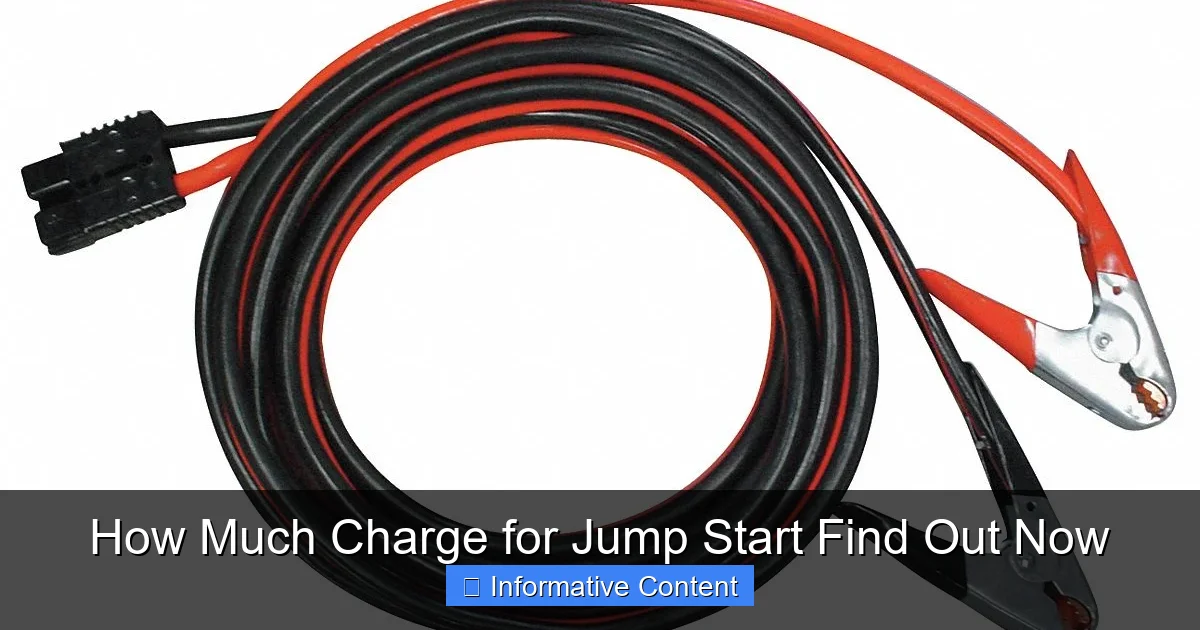
Visual guide about how much charge for jump start
Image source: static.grainger.com
Here’s how it works: jumper cables connect your car’s battery to a live battery (either from another car or a portable device). Electricity flows through the cables, charging your battery just enough to start the engine. Once the car is running, the alternator takes over, recharging the battery naturally. It’s not magic—it’s science!
Common Reasons Your Car Needs a Jump Start
Why do car batteries die? It’s not always obvious. Here are the most common culprits:
- Leaving lights or electronics on: Forgetting to turn off headlights, interior lights, or phone chargers can drain a battery overnight.
- Extreme temperatures: Cold weather slows chemical reactions in batteries, reducing their capacity. Hot weather can cause fluid evaporation and internal damage.
- Aging batteries: Most car batteries last 3–5 years. After that, their ability to hold a charge drops significantly.
- Parasitic drain: Some cars have systems (like alarms or computers) that draw power even when off. Over time, this can kill the battery.
- Faulty charging system: If the alternator isn’t working, the battery won’t recharge while driving.
For example, my cousin once left her trunk light on during a camping trip. By morning, her battery was dead—and she had to call roadside assistance. That’s when she learned: always double-check before leaving your car!
Jump Start vs. Other Solutions
Sometimes, a jump start isn’t the answer. If your battery is completely dead, corroded, or damaged, it might need a replacement. Similarly, if the starter motor or alternator is failing, jumping won’t fix the issue. But for a simple power drain, a jump start is usually the fastest, cheapest fix.
How Much Charge for Jump Start? Breaking Down the Costs
DIY Jump Start: The Free (or Very Low-Cost) Option
The cheapest way to get a jump start? Do it yourself. All you need are jumper cables and access to another vehicle or a portable jump starter. Let’s break down the costs:
- Jumper cables: A basic set costs $20–$50, depending on quality. Look for cables with thick gauge (4 or 6 AWG) for better conductivity.
- Portable jump starter: These battery packs range from $50 to $150. Higher-end models can jump-start larger vehicles (like SUVs or trucks) and include USB ports for charging phones.
- Asking a friend or neighbor: If you already have cables, this is free—just bring snacks or coffee as a thank-you!
Pro tip: Keep a portable jump starter in your trunk. I bought one for $75 last winter, and it’s already saved me twice. It’s like having a superhero in your glovebox.
Roadside Assistance Services: What You’ll Pay
No cables? No problem. Roadside assistance services (like AAA, insurance add-ons, or manufacturer programs) often include free jump starts. But if you don’t have coverage, here’s what to expect:
- AAA: Free for members. Membership costs $60–$100/year, but includes towing, lockout help, and more.
- Insurance add-ons: Some insurers offer roadside assistance for $5–$10/month.
- Car manufacturers: New cars often come with free roadside help (e.g., GM’s OnStar or Toyota’s Safety Connect).
- Pay-per-call services: If you call a local mechanic or tow company, expect to pay $50–$150 for a jump start.
For example, a friend called a towing company after her battery died in a parking lot. The driver charged her $90—and she didn’t even need a tow! Lesson learned: always ask about pricing upfront.
Auto Shops and Dealerships: Convenience vs. Cost
Need a jump start while at work or shopping? Many auto shops (like AutoZone, O’Reilly, or dealerships) offer free jump starts as a courtesy. But there’s a catch: they’ll likely try to upsell you a new battery or inspection. Here’s the typical cost breakdown:
- Free jump starts: Most major chains do this at no cost to build customer loyalty.
- Battery testing: Free at many stores, but they may recommend a replacement if your battery is weak.
- New battery installation: If you need a replacement, expect to pay $100–$300, including labor.
My local mechanic once jumped my car for free but pointed out my battery was at 30% capacity. I replaced it for $150—and avoided getting stranded later. Sometimes, that “upsell” is actually helpful!
Factors That Affect Jump Start Pricing
Location Matters: Urban vs. Rural Costs
Where you are can significantly impact the price. In urban areas, competition among towing companies and mechanics drives prices down. But in rural areas, limited options and longer service times can lead to higher costs.
- City jump start: $50–$100 (due to multiple service providers).
- Rural jump start: $75–$150 (longer drive time, fewer companies).
For instance, a friend in rural Montana paid $120 for a jump start—double what she’d pay in Chicago. The driver drove 20 miles to reach her!
Vehicle Type: Cars vs. Trucks vs. Luxury Vehicles
Larger vehicles need more power to jump start, which can increase costs:
- Compact car (e.g., Honda Civic): $50–$75.
- SUV/truck (e.g., Ford F-150): $75–$100.
- Luxury vehicles (e.g., Tesla, BMW): $100–$150 (due to specialized equipment or higher labor rates).
Electric vehicles (EVs) are a special case. While they don’t have traditional batteries, their 12V auxiliary battery can still die. Jump starting an EV requires specific procedures—and some companies charge more for the expertise.
Time of Day: Daytime vs. Night/Weekend Rates
Many services charge extra for after-hours calls. Here’s a rough guide:
- Daytime (8 a.m.–6 p.m.): Standard rates.
- Evening (6 p.m.–10 p.m.): +$20–$50.
- Night/weekends/holidays: +$50–$100 (or double the rate).
I once called a tow truck at 2 a.m. for a jump start. The base fee was $75, but with a “night surcharge,” it came to $130. Lesson: if possible, wait until morning!
Additional Services: Towing, Battery Replacement, and More
Sometimes, a jump start is just the start. If your car still won’t run, the technician might recommend:
- Towing: $75–$200, depending on distance.
- Battery replacement: $100–$300 (parts + labor).
- Diagnostic fee: $50–$100 (to check why the battery died).
Always ask: “Is this included in the jump start fee?” Many companies charge separately for extras.
DIY Jump Start: A Step-by-Step Guide (And How to Do It Safely)
Tools You’ll Need
Before you start, gather these items:
- Jumper cables (or a portable jump starter).
- Rubber gloves and safety glasses (for protection).
- Owner’s manual (for battery location and safety tips).
Step-by-Step Instructions
- Park the working car close: Position it nose-to-nose with your car, but don’t let them touch.
- Turn off both cars: Shut off engines, lights, and accessories.
- Connect the cables:
- Red clamp to the dead battery’s positive (+) terminal.
- Red clamp to the good battery’s positive (+) terminal.
- Black clamp to the good battery’s negative (-) terminal.
- Black clamp to an unpainted metal surface (e.g., bolt) on the dead car’s engine block (not the battery).
- Start the working car: Let it run for 2–3 minutes.
- Try starting your car: If it doesn’t start, wait another 2 minutes and try again.
- Disconnect cables in reverse order: Remove black, then red, from the dead car first.
Pro tip: If your car starts, let it run for at least 20 minutes to recharge the battery. Or take a 30-minute drive.
Safety Tips to Avoid Damage (Or Injury)
Jump starting isn’t dangerous if done right, but mistakes can cause sparks, battery damage, or even explosions. Follow these rules:
- Never touch clamps together.
- Don’t let cables touch moving parts (like fans or belts).
- Wear gloves and eye protection.
- If the battery is cracked or leaking, don’t jump it—replace it.
- For EVs, consult your manual first. Some EVs require special procedures.
My neighbor once connected the cables backward—and fried his car’s computer! A $200 repair could’ve been avoided with a quick manual check.
How to Avoid Needing a Jump Start (And Save Money Long-Term)
Maintain Your Battery
Prevention is key. A well-maintained battery can last years longer. Here’s how:
- Check terminals for corrosion: Clean with baking soda and water.
- Test your battery annually: Most auto shops do this free.
- Keep it charged: Use a battery tender if your car sits for long periods.
Drive Regularly (Or Use a Battery Maintainer)
Batteries die faster when cars sit idle. If you’re not driving daily:
- Take a 20-minute drive weekly.
- Use a battery maintainer (a small charger that keeps the battery at full charge). These cost $20–$50.
Turn Off Electronics
Before exiting your car:
- Check all lights (interior, headlights, trunk).
- Unplug phone chargers and accessories.
- Use a battery monitor (like a NOCO Genius) to alert you if power drops.
Know When to Replace Your Battery
Don’t wait for a complete failure. Replace your battery if:
- It’s over 3 years old.
- Your car cranks slowly.
- The battery case is swollen or cracked.
I replaced my battery at 4 years old—and avoided a jump start during a blizzard. Worth every penny!
Jump Start Cost Comparison Table
| Service Type | Cost Range | Best For | Notes |
|---|---|---|---|
| DIY (with cables) | $0–$50 | People with another car nearby | Buy cables once; reuse forever. |
| Portable jump starter | $50–$150 | Solo drivers, frequent travelers | Rechargeable; no second car needed. |
| AAA/roadside assistance | $60–$100/year | Frequent drivers, peace of mind | Free jump starts + other services. |
| Pay-per-call towing | $50–$150 | Emergency situations | Ask about after-hours fees. |
| Auto shop (free jump) | $0 | Quick fix, battery testing | They may recommend a battery replacement. |
Final Thoughts: Don’t Let a Dead Battery Drain Your Wallet
So, how much charge for jump start? The answer depends on your situation, but the good news is that it’s rarely as expensive as you fear. Whether you DIY it for free, use a portable starter, or call a pro, there’s a solution that fits your budget.
Here’s my final advice: invest in prevention. A $75 portable jump starter or $60/year roadside membership can save you hundreds in emergency fees. And always—always—double-check your lights and electronics before leaving your car. A little awareness goes a long way.
Remember: a dead battery isn’t a disaster. It’s a reminder to take care of your car (and yourself). With the right knowledge, you’ll never be stuck again. Now go charge up—your car (and your peace of mind) will thank you.
Frequently Asked Questions
How much charge for jump start services on average?
The average cost for a jump start ranges from $50 to $100, depending on your location, time of day, and service provider. Some roadside assistance programs or auto clubs may offer free jump starts if you’re a member.
Does the price for a jump start vary by vehicle type?
Yes, larger vehicles like trucks or SUVs may incur higher jump start charges due to increased battery complexity or labor time. Always confirm pricing with the service provider beforehand to avoid surprises.
Can I get a free jump start, or is there always a fee?
Many auto insurance plans, credit card benefits, or membership programs (e.g., AAA) include free jump starts as part of their roadside assistance. Check your policy or benefits to see if you qualify for no-cost service.
How much charge for jump start during emergencies or after hours?
Emergency or after-hours jump starts often cost more—up to $150 or higher—due to urgency and limited availability. Always ask about after-hours surcharges when calling for service.
Do mechanics charge differently for jump starts compared to towing companies?
Mechanics often charge less for jump starts ($40–$80) than towing companies, as they’re already on-site. Towing services may add fuel or mileage fees, increasing the total cost.
Is the jump start charge refundable if my battery needs replacement?
Jump start fees are typically non-refundable, even if your battery requires replacement. However, some shops may waive the fee if you purchase a new battery from them—ask before service.