
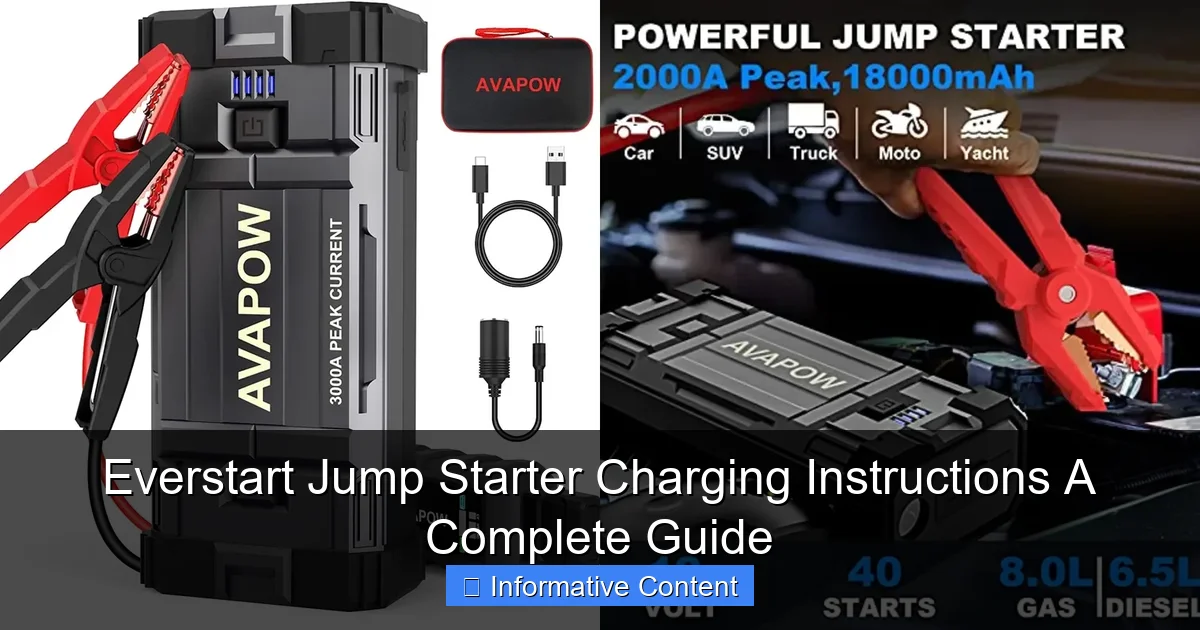
Featured image for everstart jump starter charging instructions
Image source: docerp.s3.amazonaws.com
Properly charging your Everstart jump starter is crucial for reliable performance and long-term durability. Always use the included AC or DC charger, connect it to the unit’s input port, and ensure the battery level indicator shows a full charge—typically taking 4–6 hours. Never leave it charging unattended or use third-party chargers to avoid damaging the internal lithium-ion battery.
Key Takeaways
- Charge fully before first use to ensure peak performance and battery longevity.
- Use the correct cable—only the provided or manufacturer-recommended charger.
- Monitor charging time to avoid overcharging; typically 3–5 hours is sufficient.
- Check indicator lights to confirm charging status and completion.
- Store at partial charge if unused for long periods to protect battery health.
- Keep ports clean and dry to ensure safe, reliable charging connections.
📑 Table of Contents
- Why Proper Charging Is Crucial for Your Everstart Jump Starter
- Understanding Your Everstart Jump Starter’s Battery and Charging Needs
- Step-by-Step Guide to Charging Your Everstart Jump Starter
- Best Practices and Maintenance Tips for Longevity
- Troubleshooting Common Charging Issues
- Comparing Charging Methods: A Quick Reference
- Final Thoughts: Keeping Your Everstart Ready for Anything
Why Proper Charging Is Crucial for Your Everstart Jump Starter
Imagine this: you’re late for an important meeting, your car won’t start, and you reach for your trusty Everstart jump starter. You press the power button—nothing. No lights, no beep, just silence. Your heart sinks. The last thing you need in an emergency is a dead jump starter. I’ve been there, and it’s a sinking feeling I wouldn’t wish on anyone.
That’s why knowing how to properly charge and maintain your Everstart jump starter isn’t just helpful—it’s essential. These handy devices are lifesavers, but they’re only as good as their charge. Whether you’re a seasoned driver or a new car owner, understanding the ins and outs of charging your jump starter can mean the difference between a quick fix and a frustrating delay. In this guide, we’ll walk you through everything you need to know to keep your Everstart jump starter ready when you need it most. From the right charging methods to common mistakes and troubleshooting tips, consider this your go-to resource for jump starter care.
Understanding Your Everstart Jump Starter’s Battery and Charging Needs
Types of Batteries in Everstart Jump Starters
Everstart jump starters typically use one of two battery types: lead-acid or lithium-ion. Each has its own charging requirements, and knowing which one you have is the first step to proper care.
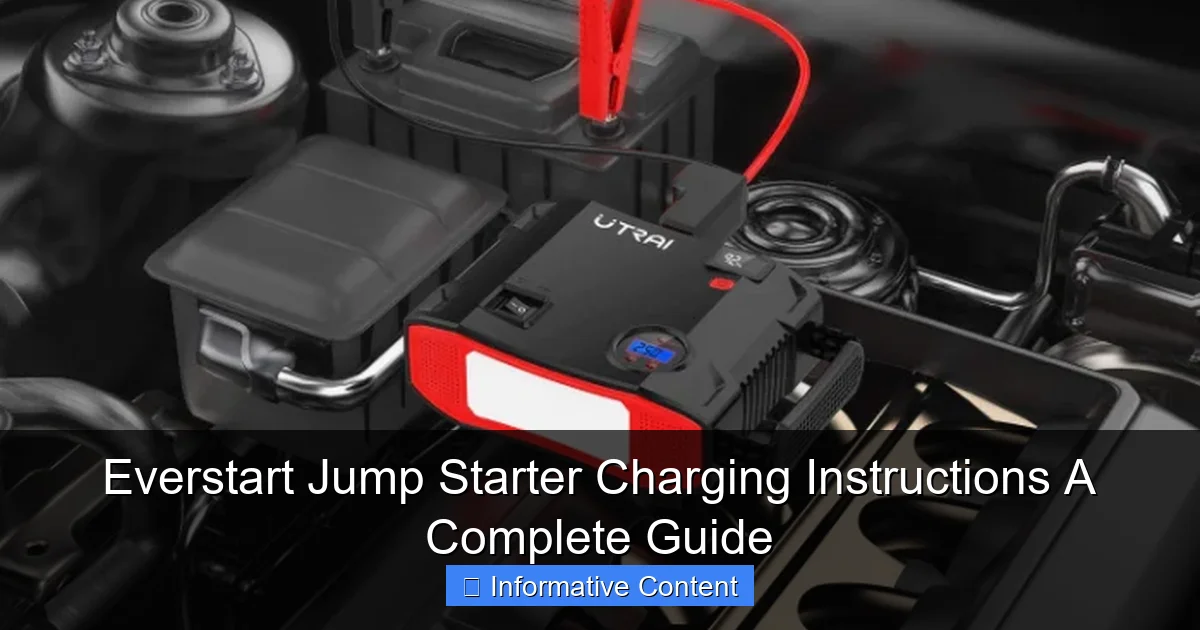
Visual guide about everstart jump starter charging instructions
Image source: everstartjumpstarter.com
- Lead-acid batteries: Found in older or more basic models. They’re heavier but more affordable. These require careful charging to avoid overcharging, which can shorten their lifespan.
- Lithium-ion batteries: Common in newer, compact Everstart models. They’re lighter and hold a charge longer. Lithium-ion batteries are more forgiving but still need proper charging habits to last.
For example, the Everstart Maxx 1200A uses a lithium-ion battery, while older models like the Everstart Power Station might have lead-acid. Check your user manual or the label on the device to confirm.
Charging Time and Battery Capacity
The time it takes to fully charge your Everstart jump starter depends on two main factors: the battery’s capacity (measured in milliamp-hours, or mAh) and the charging method. Here’s a general rule of thumb:
- Smaller models (5,000–8,000 mAh): 3–5 hours with a wall charger, 6–8 hours with a 12V car charger.
- Larger models (12,000–18,000 mAh): 6–8 hours with a wall charger, 10–12 hours with a 12V car charger.
Pro tip: Always charge your jump starter after use, even if you didn’t fully drain the battery. Lithium-ion batteries, in particular, perform better when kept between 20% and 80% charge. Think of it like a smartphone—topping it off after use keeps it healthy.
Signs Your Jump Starter Needs Charging
How do you know when your Everstart jump starter is running low? Look for these signs:
- The power indicator lights are dim or flashing.
- The jump starter struggles to power on or turns off quickly.
- The device doesn’t hold a charge as long as it used to.
I once ignored these signs with my old Everstart model, only to find it dead when I needed it most. Lesson learned: if the lights are acting funny, it’s time to charge.
Step-by-Step Guide to Charging Your Everstart Jump Starter
Using the Wall Charger (Recommended Method)
The wall charger is the safest and most reliable way to charge your Everstart jump starter. Here’s how to do it right:
- Plug in the wall charger: Use the original Everstart charger or a compatible one with the same voltage (usually 12V). Avoid cheap knockoffs—they can damage your battery.
- Connect to the jump starter: Insert the charging cable into the input port on your device. You should see a light (often red) indicating charging has started.
- Monitor the charging process: Most Everstart models have LED lights showing the charge level. A solid green or blue light usually means it’s fully charged. This can take 3–8 hours, depending on the model.
- Unplug when fully charged: Once charged, disconnect the cable and store it in a dry, cool place. Overcharging can harm lithium-ion batteries, so don’t leave it plugged in overnight unless your model has an automatic shutoff (check your manual).
Personal tip: I keep my Everstart on a shelf near a wall outlet with a smart plug. That way, I can set a timer to turn off the power after 6 hours, avoiding overcharging.
Charging with a 12V Car Socket (Cigarette Lighter)
Need to charge on the go? The 12V car charger is a handy backup, but it’s slower and less efficient than the wall charger. Here’s how to use it:
- Start your car or keep it running: The car socket only provides power when the ignition is on or in accessory mode. If you’re parked, keep the engine running to avoid draining your car battery.
- Plug in the 12V adapter: Connect the Everstart 12V cable to the car socket and the jump starter. You’ll see a charging light (often yellow or red).
- Wait patiently: This method takes longer—usually 6–12 hours for a full charge. It’s best for topping off, not a full recharge.
- Unplug when done: Remove the cable and turn off your car. Never leave the jump starter charging unattended in a parked car, as it can drain your car battery.
Real-world example: On a road trip last year, I used my 12V charger to top off my Everstart after using it to jump a friend’s car. It added enough charge to last the rest of the trip, but I made sure to plug it into the wall charger at our hotel that night for a full recharge.
Using a USB Port (For Smaller Models with USB Charging)
Some compact Everstart models (like the Everstart 500A) can be charged via USB-C or Micro-USB. This is convenient but very slow—best for emergencies or small top-offs.
- Use a high-quality USB cable: A 2.4A or higher charger (like a phone wall adapter) works best. Avoid charging from a laptop or power bank—it can take 12+ hours.
- Connect and monitor: Plug the USB cable into the jump starter. The charging light will come on, but it may take 8–12 hours for a full charge.
- Prioritize wall charging: USB is a last resort. For example, if your Everstart is at 20% and you need it for an emergency, charge it via USB overnight, but switch to the wall charger as soon as possible.
Best Practices and Maintenance Tips for Longevity
Storage Conditions Matter
Where and how you store your Everstart jump starter has a big impact on its battery life. Here’s what to do:
- Keep it cool and dry: Avoid extreme temperatures. Store it in a garage, closet, or car trunk (if temperatures are moderate). Never leave it in direct sunlight or a freezing garage in winter.
- Charge it to 50% before long storage: If you won’t use your jump starter for 3+ months, charge it to 50% first. Lithium-ion batteries degrade faster when fully charged or fully drained.
- Check every 3 months: Even in storage, batteries lose charge. Test your Everstart every few months and recharge if needed.
I learned this the hard way—I left my Everstart in a hot attic during summer, and the battery swelled after a year. Now I store it in my basement with a temperature monitor.
Regular Testing and Calibration
Just like your car battery, your jump starter needs occasional “exercise” to stay healthy. Here’s how:
- Test the charge monthly: Press the power button and check the LED indicator. If it’s low, recharge it.
- Do a full discharge/recharge cycle every 6 months: For lithium-ion models, run the jump starter down to 10–20% (e.g., by using the USB power bank function), then charge it fully. This helps recalibrate the battery meter.
- Inspect the cables and ports: Look for frayed wires or bent pins. Clean the ports with a dry cloth if they’re dusty.
Example: I test my Everstart every month by turning it on and using the LED light for 30 seconds. It takes 2 minutes, but it gives me peace of mind.
Avoiding Common Charging Mistakes
Even small mistakes can shorten your jump starter’s lifespan. Steer clear of these pitfalls:
- Overcharging: Never leave your lithium-ion Everstart plugged in for days. Most modern models have automatic shutoff, but it’s safer to unplug when charged.
- Using incompatible chargers: Stick to Everstart-branded or high-quality replacements with the same voltage and current (e.g., 12V, 2A).
- Ignoring warning signs: If your jump starter gets unusually hot, smells strange, or the battery swells, stop using it immediately. Contact Everstart customer support.
Pro tip: I keep a sticky note on my Everstart with the charging time for my model (6 hours for my 1200A). It helps me remember to unplug it on time.
Troubleshooting Common Charging Issues
Jump Starter Not Charging
If your Everstart won’t charge, don’t panic. Try these steps:
- Check the power source: Plug a lamp or phone into the same outlet to confirm it’s working. For 12V charging, test the car socket with a phone charger.
- Inspect the cables: Look for damage or bent pins. Try a different charging cable if possible.
- Reset the jump starter: Some models have a reset button or require holding the power button for 10+ seconds. Check your manual.
- Try a different charger: Borrow a friend’s Everstart wall charger to see if yours is faulty.
Real story: My Everstart stopped charging once, and I realized the wall charger’s prongs were bent. A quick fix with pliers saved me from buying a new charger.
Charging Takes Too Long
If your jump starter is charging slower than usual, consider these causes:
- Old or degraded battery: Batteries lose capacity over time. If your Everstart is 3+ years old, it may charge slower.
- Low-quality charger: Cheap chargers often provide lower current (e.g., 1A instead of 2A), doubling the charging time.
- Temperature issues: Charging in very hot or cold environments slows the process. Move to a moderate temperature if possible.
Example: In winter, I once tried to charge my Everstart in my unheated garage. It took 12 hours instead of the usual 6. Now I bring it inside to charge.
Battery Drains Quickly
If your fully charged jump starter dies fast, it’s likely a battery health issue:
- Age: Most Everstart batteries last 3–5 years. If yours is older, it may need replacement.
- Deep discharges: Frequently draining to 0% harms lithium-ion batteries. Try to recharge at 20–30%.
- Parasitic drain: Some models have a small standby drain. If unused for weeks, the charge will drop. Recharge monthly.
Data point: A 2022 study by Battery University found that lithium-ion batteries charged to 80% and never fully discharged last 2–3 times longer than those cycled to 100%.
Comparing Charging Methods: A Quick Reference
| Charging Method | Time to Full Charge | Best For | Pros | Cons |
|---|---|---|---|---|
| Wall Charger | 3–8 hours | Regular use, full recharges | Fastest, safest, most efficient | Requires an outlet |
| 12V Car Socket | 6–12 hours | On-the-go top-ups, emergencies | Portable, no outlet needed | Slow, can drain car battery |
| USB Port | 8–12+ hours | Small models, emergencies | Convenient, uses phone charger | Very slow, not for full recharges |
This table summarizes the trade-offs. For example, if you’re home and need a full charge, the wall charger is your best bet. But if you’re camping with no electricity, the 12V car charger (while slow) keeps you from being stranded.
Final Thoughts: Keeping Your Everstart Ready for Anything
Your Everstart jump starter is more than just a tool—it’s peace of mind. Whether you’re dealing with a dead battery on a freezing morning or helping a stranded friend, a properly charged jump starter can make all the difference. By following these charging instructions and maintenance tips, you’re not just extending your device’s lifespan; you’re ensuring it’s ready when you need it most.
Remember the key takeaways: charge after every use, store at 50% for long periods, avoid extreme temperatures, and never ignore warning signs. Think of it like a fire extinguisher—you hope you’ll never need it, but you want it to work perfectly when you do. With a little care, your Everstart jump starter will serve you reliably for years to come. So plug it in, keep it charged, and drive with confidence—because you’re prepared for whatever the road throws your way.
Frequently Asked Questions
How do I charge my Everstart jump starter for the first time?
For first-time use, charge your Everstart jump starter fully using the included AC adapter or 12V car charger. It typically takes 3 to 5 hours to reach a full charge, indicated by a solid green LED light.
What type of charger do I need for the Everstart jump starter?
You can use the standard AC wall charger or a 12V DC car charger that came with your Everstart jump starter. Both are safe and effective for charging, so choose based on your location and convenience.
How long does it take to fully charge an Everstart jump starter?
Most Everstart jump starters take between 3 to 5 hours to fully charge, depending on the model and remaining battery level. The charging indicator light will turn green when charging is complete.
Can I charge my Everstart jump starter while it’s in use?
No, you should not charge your Everstart jump starter while jump-starting a vehicle. Always charge it when not in use to ensure safety and optimal battery performance.
How do I know when my Everstart jump starter is fully charged?
Look for the LED indicator light on your Everstart jump starter—when it turns solid green, the device is fully charged. Some models may also have a digital display showing battery percentage.
Is it safe to leave my Everstart jump starter charging overnight?
Yes, most Everstart jump starters have built-in overcharge protection, making it safe to leave them plugged in overnight. However, it’s still recommended to unplug once fully charged to prolong battery life.