
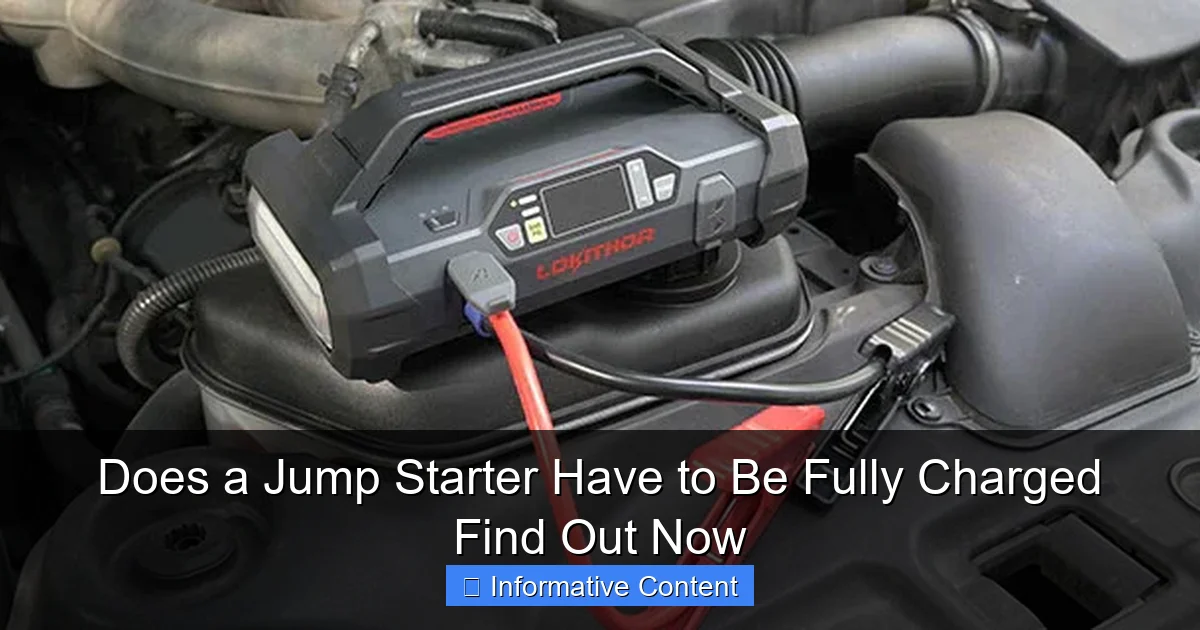
Featured image for does a jump starter have to be fully charged
Image source: lokithorshop.com
A jump starter does not need to be fully charged to work effectively, but it must have enough power to deliver the necessary cranking amps for your vehicle. Even a partially charged unit can jump-start a car in emergencies, though performance may vary based on battery condition and engine size—always check your device’s charge level before relying on it.
Key Takeaways
- Jump starters don’t need full charge: Most work effectively even at 50% battery.
- Check charge level before use: Ensure it has enough power to start your vehicle.
- Keep it maintained: Charge regularly to preserve battery life and performance.
- Low charge reduces power output: May fail to start larger engines when depleted.
- Use built-in indicators: Rely on LED lights or displays to monitor charge status.
- Store in moderate temperatures: Extreme heat or cold affects charge retention.
📑 Table of Contents
- Why Jump Starters Are a Lifesaver (And Why Their Charge Level Matters)
- How Jump Starters Work and Why Charge Matters
- The Risks of Using a Low-Charge Jump Starter
- How to Maintain Your Jump Starter’s Charge
- Jump Starter Charge Levels vs. Vehicle Types: What You Need to Know
- Common Myths About Jump Starter Charging
- When a Fully Charged Jump Starter Isn’t Enough (And What to Do)
Why Jump Starters Are a Lifesaver (And Why Their Charge Level Matters)
Imagine this: it’s early in the morning, you’re running late for work, and your car won’t start. The engine cranks, but nothing happens. You’ve left your lights on, or maybe the cold weather drained your battery. You’re stranded, and calling a tow truck feels like overkill for a simple jump. That’s where a jump starter comes in—a compact, portable device that gives your car battery the boost it needs to fire up. But here’s the question: does a jump starter have to be fully charged to do its job?
Jump starters have become a must-have for every driver, especially in unpredictable weather or remote areas. But unlike your phone, which you charge daily, a jump starter often sits in your trunk, forgotten until you need it. And when you do need it, the last thing you want is to find out it’s as dead as your car battery. This post will break down everything you need to know about jump starter charge levels, how to maintain them, and what to expect when your device isn’t at 100%.
How Jump Starters Work and Why Charge Matters
Jump starters are essentially portable batteries designed to deliver a high burst of power to your car’s engine. Unlike traditional jumper cables, which rely on another vehicle’s battery, jump starters are self-contained. But their effectiveness hinges on one key factor: how charged they are.

Visual guide about does a jump starter have to be fully charged
Image source: amproad.ca
The Science Behind Jump Starting
When you turn the ignition, your car battery sends a surge of electricity to the starter motor. If the battery is weak, it can’t deliver enough current. A jump starter steps in, providing the extra amps (measured in peak and cranking amps) needed to turn the engine over. Think of it like a defibrillator for your car—it needs enough power to deliver a shock.
But here’s the catch: if your jump starter’s own battery is low, it can’t give your car the boost it needs. A device at 50% charge might work for a small sedan but fail on a larger SUV or truck. The higher the charge, the more reliably it can jump-start your vehicle.
Real-Life Example: The Cold Weather Test
Let’s say it’s -10°C (14°F), and your car battery is already struggling. A jump starter at 30% charge might struggle to deliver enough power in these conditions. Cold temperatures reduce battery efficiency, so you’ll need a device with a higher reserve of energy. A fully charged jump starter is more likely to succeed, even in subzero temps.
Pro Tip: Check the Specs
- Look for jump starters with high cranking amps (CA) and peak amps for larger vehicles.
- For small cars, a 10,000mAh battery is usually sufficient, but trucks may need 20,000mAh+.
- Always verify the manufacturer’s recommended charge level for optimal performance.
The Risks of Using a Low-Charge Jump Starter
Using a jump starter that isn’t fully charged isn’t just risky—it can be downright frustrating. Here’s what happens when your device is undercharged:
1. Failed Jump Attempts
A jump starter at 20% might not have enough juice to crank your engine. You’ll hear a faint click or no sound at all, leaving you stranded longer than if you’d used cables and called for help.
2. Damage to the Jump Starter
Repeatedly discharging a battery too low (especially lithium-ion) can shorten its lifespan. Some devices have protection circuits to prevent this, but it’s still not ideal. For example, a jump starter rated for 500 cycles might only last 300 if you constantly drain it below 20%.
3. Safety Hazards
Low-charge devices can overheat during use. While rare, this can lead to swelling, leaks, or even fires. Always inspect your jump starter for signs of wear before use.
4. Wasted Time and Frustration
Imagine trying to jump-start your car three times before realizing the issue is your jump starter, not your battery. It’s a classic case of “the fix becomes the problem.”
What the Experts Say
Mechanics recommend keeping your jump starter at at least 50% charge for emergencies. For frequent use or extreme weather, aim for 75-100%. As one technician told me, “A jump starter is like a fire extinguisher—you hope you never need it, but when you do, it better work.”
How to Maintain Your Jump Starter’s Charge
Now that we’ve established why charge matters, let’s talk about how to keep your jump starter ready when you need it.
1. Regular Charging Schedule
Most manufacturers recommend recharging every 3-6 months, even if you haven’t used the device. Lithium-ion batteries self-discharge over time (about 5% per month), so a jump starter left untouched for a year could be useless.
2. Use Smart Chargers
Many jump starters come with built-in USB ports or wall chargers. For faster charging, use a 2-amp USB charger instead of a 1-amp one. Some high-end models support fast charging, reaching 80% in under an hour.
3. Store in a Temperature-Controlled Environment
Extreme heat or cold degrades batteries. Store your jump starter in your car’s trunk (if insulated) or a cool, dry place indoors. Avoid leaving it in a hot garage or freezing car overnight.
4. Check the Battery Level Indicator
Most modern jump starters have an LED display showing charge percentage. Make it a habit to check this monthly. If it’s below 50%, plug it in.
5. Avoid Deep Discharge
Never let your jump starter drop below 20% regularly. If you use it for smaller tasks (like charging a phone), recharge it immediately afterward.
Pro Tip: The “Test Jump” Routine
- Every 3 months, perform a test jump on a working car (don’t start the engine).
- This ensures your jump starter is functional and maintains its charge.
- It also helps you identify any issues (e.g., loose clamps, faulty cables) before an emergency.
Jump Starter Charge Levels vs. Vehicle Types: What You Need to Know
Not all cars are created equal, and neither are jump starters. Your device’s charge level matters even more depending on what you’re driving.
Small Cars and Sedans
A jump starter at 50-75% charge is usually enough for a 4-cylinder engine. For example, a 12,000mAh device at 60% can typically start a Honda Civic or Toyota Corolla.
Trucks and SUVs
Larger engines need more power. A 20,000mAh jump starter at 80% might be required for a Ford F-150 or a diesel SUV. Cold weather? Aim for 100%.
Motorcycles and ATVs
Smaller batteries mean a 30% charge could suffice, but always check the manufacturer’s guidelines. A Yamaha R1 might need less power than a Harley-Davidson Touring model.
Data Table: Charge Recommendations by Vehicle Type
| Vehicle Type | Minimum Recommended Charge | Notes |
|---|---|---|
| Small Sedan (4-cylinder) | 50% | Works in mild weather; 75% for cold climates. |
| SUV/Truck (6-8 cylinder) | 75% | 100% for diesel engines or extreme cold. |
| Motorcycle | 30% | Verify with manufacturer; some need 50%. |
| RV/Boat | 100% | High cranking amps required; charge fully before trips. |
Common Myths About Jump Starter Charging
Misinformation about jump starters is rampant. Let’s debunk some myths to keep you safe and informed.
Myth 1: “Jump Starters Don’t Need Charging”
Some people treat jump starters like magic boxes that work forever. But like any battery, they degrade and self-discharge. A 2-year-old jump starter might hold less than half its original capacity if neglected.
Myth 2: “Any Charge Level Works”
While a 20% jump starter might start a small car, it’s unreliable. I once had a friend whose 30% jump starter failed to start his SUV in winter. He ended up waiting 2 hours for a tow.
Myth 3: “Charging Takes Hours”
Modern jump starters charge quickly. A 10,000mAh device can go from 0% to 100% in 3-4 hours with a 2-amp charger. Fast-charging models do it in half the time.
Myth 4: “Jump Starters Are Only for Cars”
Many devices double as power banks. If you use yours to charge a laptop or tablet, remember to recharge it afterward. Draining it for other tasks reduces its emergency readiness.
Myth 5: “All Jump Starters Are the Same”
Brands like NOCO, DBPOWER, and TACKLIFE offer different features. Some have built-in flashlights, air compressors, or solar charging. Choose based on your needs, but always prioritize battery capacity and charge maintenance.
When a Fully Charged Jump Starter Isn’t Enough (And What to Do)
Even a 100% jump starter can fail—but it’s rarely the device’s fault. Here’s what to check if your car still won’t start:
1. Corroded or Loose Battery Terminals
Clean the terminals with a wire brush. A weak connection can prevent the jump starter from delivering power.
2. Extreme Battery Drain
If your battery is completely dead (e.g., left on for days), a jump starter might not revive it. Try using jumper cables and a running vehicle first.
3. Faulty Starter Motor
A jump starter can’t fix mechanical issues. If you hear a grinding noise or no sound at all, the starter motor might be the culprit.
4. Bad Alternator
If your car starts but dies immediately, the alternator isn’t charging the battery. A jump starter is only a temporary fix here.
Pro Tip: The “Double Jump” Trick
- Connect the jump starter, wait 2 minutes for the battery to absorb some charge.
- Disconnect and reconnect the clamps (this resets the connection).
- Try starting again—sometimes the second attempt works.
So, does a jump starter have to be fully charged? The short answer is: not always, but it’s the best bet. A partially charged device might work for small cars in mild conditions, but for reliability, especially with larger vehicles or in cold weather, 100% is ideal. Treat your jump starter like an emergency tool—check it regularly, charge it before trips, and store it properly. A little maintenance now can save you hours of frustration later. And remember: when it comes to jump starters, the only thing worse than a dead battery is a dead jump starter.
Frequently Asked Questions
Does a jump starter have to be fully charged before use?
Yes, a jump starter should ideally be fully charged to ensure it has enough power to start your vehicle. While some models can work with a partial charge, performance may be reduced, especially in cold weather or with larger engines.
Can I use a jump starter if it’s not 100% charged?
You can use a jump starter that isn’t fully charged, but it may not deliver enough power to jump-start your car reliably. It’s best to keep your jump starter charged between 80% and 100% for optimal performance.
How long does it take to fully charge a jump starter?
Most jump starters take between 3 to 6 hours to fully charge, depending on the model and battery capacity. Always refer to the manufacturer’s instructions for accurate charging times and safety tips.
What happens if I use a jump starter with a low charge?
Using a jump starter with a low charge might result in failure to start your vehicle or damage to the device over time. A weak charge can also shorten the overall lifespan of the jump starter’s internal battery.
Do I need to recharge my jump starter after every use?
Yes, it’s recommended to recharge your jump starter after each use to maintain its readiness. Keeping it fully charged ensures it will work when you need it most, especially in emergencies.
Can a fully charged jump starter lose power over time?
Even when not in use, a jump starter can lose charge gradually due to self-discharge. Check and recharge your jump starter every few months to ensure it remains fully charged and ready for use.