
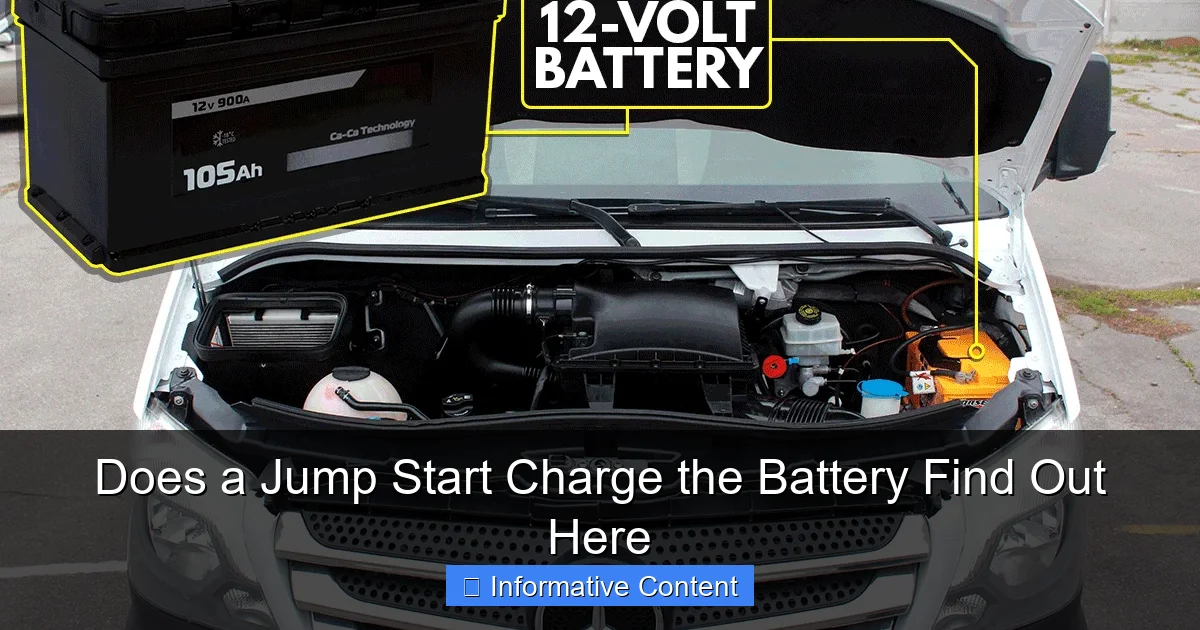
Featured image for does a jump start charge the battery
Image source: vehq.com
Jump-starting a car does not fully charge a dead battery—it only provides enough power to start the engine. The alternator recharges the battery gradually during normal driving, so a jump start is just a temporary fix, not a long-term solution.
Key Takeaways
- A jump start does not fully charge a battery—it only provides enough power to start the engine.
- Drive at least 20-30 minutes after a jump to allow the alternator to recharge the battery partially.
- Repeated jump starts indicate a deeper issue like a failing battery, alternator, or parasitic drain.
- Use a battery charger for a complete recharge if the battery is deeply discharged or old.
- Test the battery and charging system after a jump to ensure long-term reliability.
- Keep jumper cables or a portable jump starter in your vehicle for emergency preparedness.
📑 Table of Contents
- Does a Jump Start Actually Charge the Battery? The Truth Revealed
- How a Jump Start Works: The Science Behind the Spark
- Does a Jump Start Fully Charge the Battery? The Short Answer
- What Happens After a Jump Start? The Critical Next Steps
- Jump Start vs. Battery Charger: Which Is Better for Charging?
- Common Myths and Mistakes About Jump Starts
- Final Thoughts: Jump Starts Are a Temporary Fix, Not a Solution
Does a Jump Start Actually Charge the Battery? The Truth Revealed
Imagine this: It’s a cold winter morning, you’re running late for work, and your car refuses to start. The engine turns over weakly, and you realize your battery is dead. You call a friend, they show up with jumper cables, and after a few minutes of connecting cables, your car roars back to life. You breathe a sigh of relief—but then a nagging question pops into your head: does a jump start actually charge the battery, or does it just give it a temporary jolt?
This is one of the most common misconceptions about car batteries and jump-starting. Many people assume that once their car starts, the battery is good to go and will recharge fully. But the reality is more nuanced. A jump start doesn’t charge your battery in the traditional sense. Instead, it provides the necessary power to crank the engine and get the car running. Whether or not the battery gets charged after that depends on several factors we’ll explore in this post. By the end, you’ll know exactly what a jump start does, why it’s not a substitute for proper charging, and what you should do next to avoid being stranded again.
How a Jump Start Works: The Science Behind the Spark
What Happens During a Jump Start?
When you jump-start a car, you’re essentially using another vehicle (or a jump starter device) as a temporary power source. The dead battery receives a surge of electricity through jumper cables, which provides enough voltage to activate the starter motor and crank the engine. Once the engine is running, the alternator takes over, generating electricity to power the car’s electrical systems and, ideally, recharge the battery.
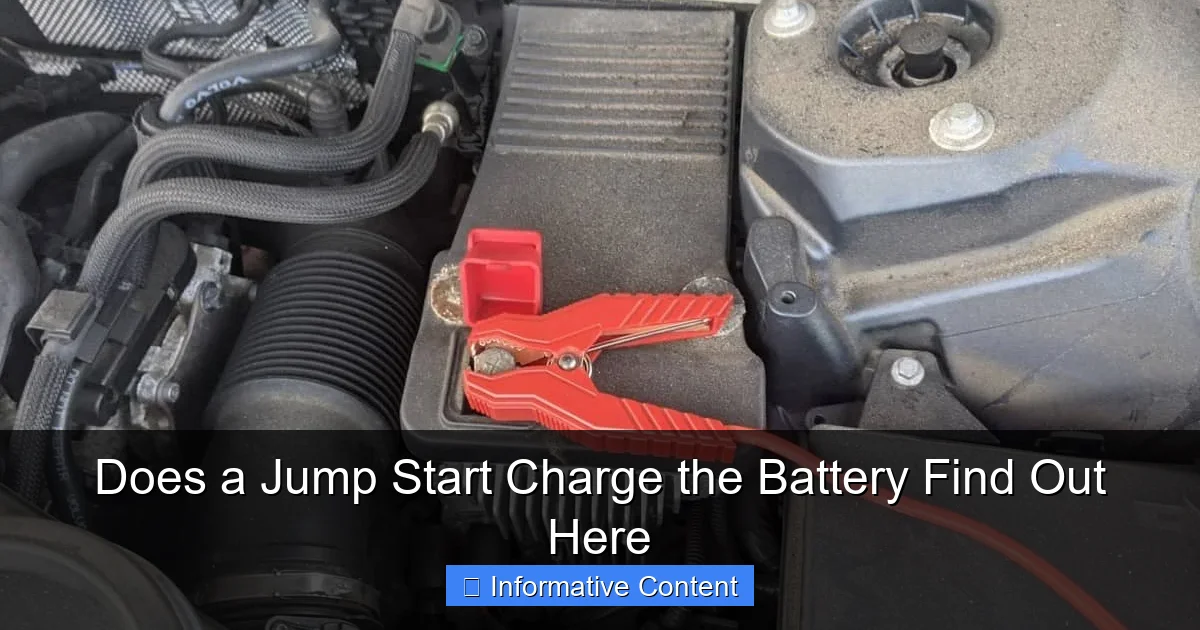
Visual guide about does a jump start charge the battery
Image source: youcanic.com
Think of it like giving a sleeping person a quick jolt to wake them up. The jolt doesn’t make them well-rested—it just wakes them. Similarly, a jump start doesn’t fix a dead battery; it just gives it enough energy to start the engine. The real work of recharging happens afterward, if conditions are right.
The Role of the Alternator
The alternator is a small but vital component in your car’s charging system. Once the engine is running, the alternator uses mechanical energy from the engine (via a belt) to generate electricity. This electricity does two things:
- Powers your car’s electrical systems (lights, radio, AC, etc.) while the engine is running.
- Charges the battery to replenish the energy used during the jump start.
However, the alternator isn’t designed to fully recharge a deeply discharged or damaged battery in a short time. It’s more of a maintenance charger. If your battery was completely dead, it might take 30 minutes to several hours of driving for the alternator to bring it back to a reasonable charge level. And if the battery is old or damaged, the alternator might not be able to charge it at all.
Example: A Real-Life Scenario
Let’s say you left your headlights on overnight, draining your battery to 10% capacity. A jump start gives it the boost it needs to start the engine. But if you only drive for 10 minutes to get home, the alternator might only have restored 15-20% of the lost charge. You’re still left with a weak battery that could die again soon. This is why short drives after a jump start often lead to repeat failures.
Does a Jump Start Fully Charge the Battery? The Short Answer
The Reality: Jump Starts Don’t Charge—They Borrow Power
To answer the question directly: No, a jump start does not charge your battery. It transfers power from a working battery (or jump starter) to a dead one, allowing the engine to start. The charging process happens afterward, and it’s dependent on:
- The health of your battery.
- The condition of your alternator.
- How long and how hard you drive after the jump.
A healthy battery with a surface charge (e.g., from leaving the radio on briefly) might regain a usable charge after 30-60 minutes of driving. But a deeply discharged or sulfated battery (common in older batteries) might never fully recover, no matter how long you drive.
Why People Get Confused
The confusion arises because many people jump-start their car and then drive away without issues. They assume the battery is “fine” because the car runs. But this is often because:
- The battery wasn’t fully dead—just low enough to prevent starting.
- They drove long enough (or the alternator worked well enough) to restore a functional charge.
- They didn’t test the battery afterward to see its actual state of charge.
Think of it like borrowing money from a friend to buy groceries. You have food on the table, but you still owe your friend. Similarly, a jump start “borrows” power—you still owe the battery a proper recharge.
When a Jump Start Might Seem Like It “Charged” the Battery
There are cases where a jump start appears to fully restore a battery:
- Short-term drain: If the battery died because you left the dome light on for an hour, a 30-minute drive might restore it.
- Newer batteries: Modern AGM (Absorbent Glass Mat) or EFB (Enhanced Flooded Battery) batteries charge faster than older lead-acid ones.
- Highway driving: Long drives at higher RPMs (e.g., 60+ mph) generate more alternator output, speeding up charging.
But these are exceptions, not the rule. Relying on a jump start to “charge” your battery is like expecting a band-aid to heal a broken arm.
What Happens After a Jump Start? The Critical Next Steps
Step 1: Drive Long Enough to Recharge
After a jump start, your priority should be driving to recharge the battery. Here’s what to aim for:
- Minimum 30 minutes of continuous driving: This gives the alternator time to generate meaningful charge.
- Higher speeds help: Driving at highway speeds (55-65 mph) increases alternator output. Avoid short trips or idling.
- Avoid heavy electrical loads: Turn off the radio, AC, and headlights while recharging to reduce demand on the alternator.
Example: If you jump-start your car at a gas station, drive 20 miles on the highway instead of taking backroads. This maximizes charging efficiency.
Step 2: Test the Battery
After driving, don’t assume the battery is fine. Test it using:
- A multimeter: Measure voltage with the engine off. A healthy battery should read 12.6 volts or higher. Below 12.4 volts indicates a weak charge.
- A battery load tester: Available at auto shops, this tool simulates the load of starting the engine to check the battery’s true capacity.
Pro tip: Many auto parts stores (like AutoZone or O’Reilly) offer free battery testing. Take advantage of this!
Step 3: Address the Root Cause
Ask yourself: Why did the battery die in the first place? Common causes include:
- Leaving lights/accessories on: A common mistake. Use a reminder app or checklist.
- Parasitic drain: Some electrical systems (like alarms or GPS trackers) draw power even when the car is off. A mechanic can diagnose this.
- Old or damaged battery: Batteries last 3-5 years. If yours is older, replace it proactively.
- Alternator issues: If the alternator isn’t charging properly, the battery will die repeatedly. Look for warning signs like dimming lights or a battery light on the dashboard.
<
When to Use a Battery Charger Instead
If you have access to a battery charger (trickle charger or smart charger), use it after a jump start. A charger delivers a controlled, slow charge that’s far more effective than driving. For example:
- A trickle charger (2-4 amps) can fully recharge a dead battery in 12-24 hours.
- A smart charger automatically adjusts the charge rate and stops when the battery is full, preventing overcharging.
Example: If you jump-start your car on a Saturday, plug in a smart charger overnight. By Sunday morning, your battery will be fully charged—no guesswork.
Jump Start vs. Battery Charger: Which Is Better for Charging?
The Key Differences
Jump starts and battery chargers serve different purposes. Here’s a comparison:
| Feature | Jump Start | Battery Charger |
|---|---|---|
| Primary Purpose | Start the engine immediately | Recharge the battery fully |
| Charging Speed | None (borrows power) | Slow (trickle charger) to fast (smart charger) |
| Effectiveness for Dead Batteries | Works if battery has some residual charge | Can revive deeply discharged batteries |
| Portability | Requires another vehicle or jump starter | Requires access to power (except portable jump starters) |
| Risk to Battery | Low (if done correctly) | Low (smart chargers prevent overcharging) |
When to Use Each
- Use a jump start when:
- You need to start the car immediately (e.g., you’re stranded).
- You don’t have access to a charger (e.g., on the road).
- You’re confident the battery isn’t damaged.
- Use a battery charger when:
- You have time to recharge properly (e.g., at home).
- The battery was deeply discharged or old.
- You want to avoid repeated jump starts.
Pro Tip: Combine Both for Best Results
The ideal approach? Use a jump start to get the car running, then immediately switch to a battery charger. This ensures the battery gets a full, safe charge without overworking the alternator.
Common Myths and Mistakes About Jump Starts
Myth 1: “A Jump Start Fully Recharges the Battery”
As we’ve covered, this is false. A jump start is a temporary fix. The real charging happens afterward, and it’s not guaranteed. Many people make the mistake of assuming the battery is fine after a quick drive—only to find it dead the next morning.
Myth 2: “You Can Jump-Start Any Dead Battery”
Jump starting only works if the battery has some residual charge. If the battery is completely dead (e.g., 0 volts due to a short circuit or severe sulfation), a jump start won’t work. In these cases, you need a battery charger or replacement.
Myth 3: “Jump Starting Is Harmless”
While jump starting is generally safe, mistakes can damage your car’s electrical system or even cause explosions. Common errors include:
- Connecting cables incorrectly: Reversing polarity can fry the alternator or ECU.
- Using damaged cables: Frayed wires can spark or overheat.
- Jump-starting a damaged battery: A cracked or leaking battery can explode during charging.
Always follow these safety tips:
- Turn off both vehicles before connecting cables.
- Connect cables in the correct order: red to dead battery’s positive (+), red to donor battery’s positive (+), black to donor battery’s negative (-), black to a grounded metal point on the dead car (not the battery’s negative terminal).
- Let the donor car run for 5 minutes before attempting to start the dead car.
Mistake: Not Testing the Battery After a Jump
Many people skip this step, assuming the battery is fine. But testing reveals:
- Whether the battery can hold a charge.
- If the alternator is working properly.
- If there’s an underlying issue (e.g., parasitic drain).
Final Thoughts: Jump Starts Are a Temporary Fix, Not a Solution
So, does a jump start charge the battery? The answer is a clear no. A jump start is a life raft—it gets you out of immediate trouble, but it doesn’t solve the underlying problem. The real charging happens afterward, and it’s not guaranteed. To avoid repeat failures, you need to:
- Drive long enough (30+ minutes) after a jump start.
- Test the battery’s voltage and capacity.
- Use a battery charger for a full, safe recharge.
- Address the root cause of the battery drain.
Think of your battery like a savings account. A jump start is like a short-term loan—it gets you by, but you still need to pay it back. A battery charger is like making regular deposits—it builds long-term resilience. By understanding the difference, you can keep your car running smoothly and avoid the stress of a dead battery.
Next time you need a jump start, remember: the real work happens after the cables come off. Drive smart, test your battery, and recharge properly. Your car (and your sanity) will thank you!
Frequently Asked Questions
Does a jump start charge the battery completely?
A jump start doesn’t fully charge a dead battery—it only provides enough power to start the engine. To fully recharge the battery, you’ll need to drive the vehicle for 20-30 minutes or use a dedicated battery charger.
How long should I drive after a jump start to charge the battery?
After a jump start, driving for at least 20-30 minutes at highway speeds allows the alternator to replenish some charge. However, severely drained batteries may require longer driving or a battery charger for a full recharge.
Can a jump starter pack charge a car battery over time?
No, a jump starter pack is designed to deliver a quick burst of energy to start the engine, not to slowly charge the battery. For a proper charge, use a battery maintainer or trickle charger after jump-starting.
Why does my battery die again after a jump start?
If your battery dies repeatedly after a jump start, it may be too old, damaged, or the alternator isn’t charging it properly. A professional battery and charging system test can pinpoint the issue.
Does a jump start charge the battery if the alternator is bad?
No, a jump start won’t help if the alternator is faulty—the battery will drain again quickly since the alternator isn’t recharging it. The alternator must be repaired or replaced to maintain battery charge.
Is jump-starting bad for your battery or car?
Occasional jump-starting is safe, but frequent jump starts can shorten battery life or damage electronics. Always investigate the root cause of battery drain to avoid repeated reliance on jump starts.