
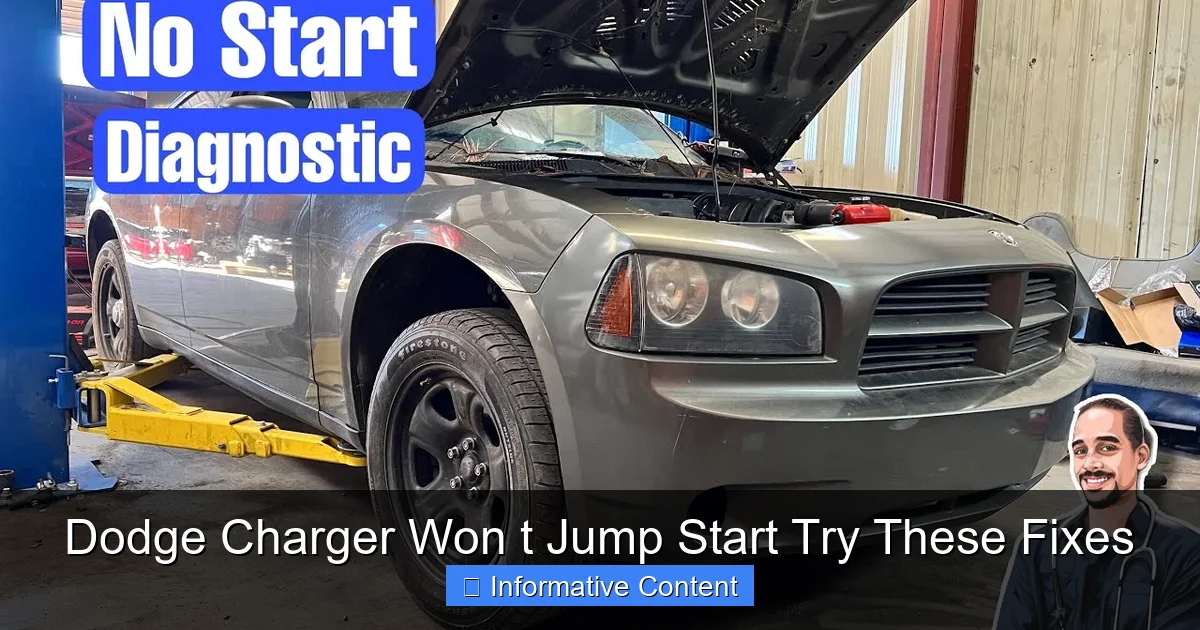
Featured image for dodge charger won t jump start
Image source: i.ytimg.com
If your Dodge Charger won’t jump start, the issue is often a faulty battery, poor connections, or a deeper electrical problem—not the jump itself. Check for corroded terminals, ensure secure cable connections, and test the battery’s voltage to rule out a dead or failing cell before assuming a bad starter or alternator. Following proper jump-start procedures and inspecting the charging system can save time and costly repairs.
Key Takeaways
- Check battery connections: Clean and tighten terminals to ensure proper contact.
- Test the battery: Use a multimeter to confirm voltage is above 12 volts.
- Inspect alternator: Verify it’s charging the battery correctly during operation.
- Try a hard reset: Disconnect the battery for 10 minutes to reset the ECU.
- Use a memory saver: Prevent ECU reset issues when jump-starting or replacing the battery.
- Verify starter health: Listen for clicking or grinding noises indicating starter failure.
📑 Table of Contents
- Dodge Charger Won’t Jump Start? Try These Fixes
- Understanding Why Your Dodge Charger Won’t Jump Start
- Step-by-Step: How to Safely Jump Start Your Dodge Charger
- Top 5 Fixes When Your Dodge Charger Won’t Jump Start
- When to Call a Professional: Signs You Need a Mechanic
- Preventing Future Jump Start Problems
- Battery and Charging System Specs for Dodge Charger
- Final Thoughts: Getting Your Charger Back on the Road
Dodge Charger Won’t Jump Start? Try These Fixes
Picture this: It’s a chilly Monday morning, you’re running late for work, and you rush to your Dodge Charger—only to find it completely dead. You grab your jumper cables, hook them up to a friend’s car, and wait… but nothing happens. No crank, no click, not even a flicker of the dashboard lights. Your heart sinks. “Why won’t my Dodge Charger jump start?” you wonder, frustration mounting.
Don’t panic—you’re not alone. A dead battery is one of the most common car troubles, and the Dodge Charger, despite its powerful performance and sleek design, isn’t immune. But here’s the thing: just because your Charger won’t jump start doesn’t always mean the battery is the culprit. In fact, there are several underlying issues that could be preventing your car from coming back to life, even with a proper jump. Whether you’re a longtime Charger owner or new to the muscle car scene, understanding why your vehicle refuses to start—and how to fix it—can save you time, money, and a lot of stress.
In this guide, we’ll walk you through the most common reasons your Dodge Charger won’t jump start, step-by-step troubleshooting tips, and practical solutions you can try at home or on the roadside. From checking your battery connections to diagnosing faulty alternators, we’ve got you covered. Let’s get your Charger back on the road—fast.
Understanding Why Your Dodge Charger Won’t Jump Start
Before diving into fixes, it’s important to understand why your Dodge Charger might not respond to a jump start. A jump start works by using another vehicle’s battery to send power to your dead battery, giving it enough juice to turn over the engine. But if your Charger still won’t start after a jump, something else is blocking that power from doing its job.
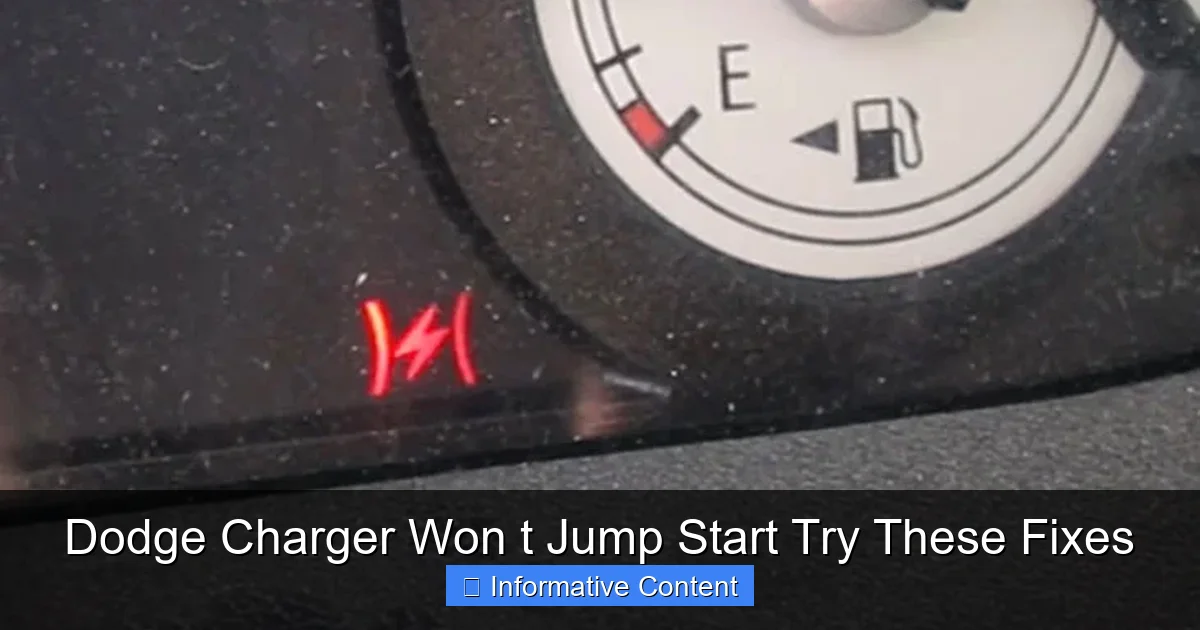
Visual guide about dodge charger won t jump start
Image source: bryansgarage.com
Common Causes Behind Jump Start Failures
Several issues can prevent a successful jump start, even when the battery appears to be the problem. These include:
- Corroded or loose battery terminals – Dirt, corrosion, or loose connections can block electrical flow, making it impossible for the jump to work.
- A completely dead or damaged battery – If the battery is internally damaged or has been dead for too long, it may not accept a charge.
- Faulty alternator – The alternator charges the battery while the engine runs. If it’s broken, the battery won’t recharge, even after a jump.
- Bad ground connection – A weak or broken ground wire between the battery and the chassis can disrupt the electrical circuit.
- Blown fuses or relays – Critical fuses in the starting system might be blown, cutting off power to the starter.
- Starter motor failure – If the starter is dead, no amount of jump power will get the engine turning.
Understanding these potential causes helps you approach the problem methodically. Instead of assuming the battery is the issue, you can test each component to find the real culprit. For example, if your Charger’s lights and electronics turn on but the engine won’t crank, the battery might still have some charge—but the starter or ignition system could be faulty.
Signs Your Battery Might Not Be the Problem
It’s easy to blame the battery, but sometimes the issue lies elsewhere. Here are a few clues that your Dodge Charger’s no-start issue isn’t just about a dead battery:
- The dashboard lights up brightly when you turn the key, but the engine doesn’t turn over.
- You hear a rapid clicking sound when trying to start—this often points to a weak battery or bad connection, but could also mean a faulty starter.
- The car starts after a jump but dies again shortly after—this suggests the alternator isn’t recharging the battery.
- You’ve jump-started the car successfully before, but this time nothing happens at all.
Paying attention to these signs can save you from replacing a perfectly good battery. Instead, you might need to inspect the alternator, check the starter, or examine the wiring. The key is to diagnose systematically rather than guessing.
Step-by-Step: How to Safely Jump Start Your Dodge Charger
If your Dodge Charger won’t start, the first step is usually to attempt a jump start. But doing it incorrectly can damage your vehicle or even cause injury. Follow these steps carefully to ensure a safe and effective jump.
Gather the Right Tools
Before you begin, make sure you have:
- A set of high-quality jumper cables (preferably 4-gauge or thicker)
- A working vehicle with a compatible battery (12-volt system)
- Safety gloves and glasses (optional but recommended)
- A clean cloth or wire brush (for cleaning terminals)
Never use damaged or frayed cables—they can spark or fail under load. Also, avoid using a hybrid or electric vehicle to jump a traditional gasoline-powered Charger unless you’re certain it’s safe (most modern EVs can jump gas cars, but check your manual).
Proper Jump Start Procedure
Follow these steps in order:
- Park the working vehicle close – Position the donor car so the batteries are near each other, but the vehicles shouldn’t touch.
- Turn off both engines and remove keys – Safety first. Ensure both cars are off and in park (or neutral with the parking brake on).
- Identify the battery terminals – Open the hood of your Charger and locate the positive (+) and negative (-) terminals. The positive is usually red and marked with a “+,” while the negative is black and marked with a “–.”
- Connect the jumper cables in the correct order:
- Red clamp to the dead battery’s positive terminal
- Red clamp to the donor battery’s positive terminal
- Black clamp to the donor battery’s negative terminal
- Black clamp to an unpainted metal surface on your Charger’s engine block (not the negative terminal)—this grounds the circuit and reduces sparking risk
- Start the donor vehicle – Let it run for 3–5 minutes to charge the dead battery.
- Try starting your Charger – Turn the key. If it starts, great! If not, wait another 5 minutes and try again.
- Disconnect cables in reverse order – Remove the black clamp from the engine block, then the donor’s negative, then the red from the donor’s positive, and finally the red from your Charger’s positive.
After a successful jump, drive your Charger for at least 20–30 minutes to allow the alternator to recharge the battery. Avoid turning off the engine immediately—this gives the system time to stabilize.
What to Do If the Jump Doesn’t Work
If your Dodge Charger still won’t start after a proper jump, don’t keep trying—this could damage the electrical system. Instead, move on to diagnostics. Common next steps include:
- Checking for corrosion on the battery terminals
- Testing the battery voltage with a multimeter
- Inspecting the alternator and starter
- Looking for blown fuses
Remember: a jump start is only effective if the battery can accept a charge and the rest of the electrical system is intact. If multiple jump attempts fail, the issue is likely deeper than a simple dead battery.
Top 5 Fixes When Your Dodge Charger Won’t Jump Start
When a jump start fails, it’s time to dig deeper. Here are the five most effective fixes for a Dodge Charger that won’t respond to a jump, based on real-world experience and mechanic recommendations.
1. Clean or Tighten Battery Terminals
Corrosion—a white, green, or blue powdery substance—can build up on battery terminals over time. This crust acts as an insulator, blocking electrical current. Even if your battery has charge, dirty terminals can prevent it from reaching the starter.
How to fix it:
- Disconnect the negative cable first, then the positive.
- Use a wire brush or battery terminal cleaner to scrub the terminals and cable ends.
- Rinse with a baking soda and water solution (1 tablespoon baking soda to 1 cup water) to neutralize acid.
- Dry thoroughly and reconnect cables, tightening them securely.
Pro tip: Apply a thin layer of dielectric grease to the terminals after cleaning. This prevents future corrosion and ensures a solid connection.
2. Test the Battery Voltage
A multimeter is a cheap tool that can save you hundreds in unnecessary repairs. A healthy 12-volt battery should read between 12.4 and 12.7 volts when the car is off. If it’s below 12 volts, the battery is likely discharged or damaged.
How to test:
- Set the multimeter to DC voltage (20V range).
- Touch the red probe to the positive terminal and the black probe to the negative.
- Read the voltage:
- 12.6V+ = Fully charged
- 12.0–12.4V = Partially charged
- Below 12.0V = Dead or failing
If the voltage is low even after a jump, the battery may need replacement. However, if it reads normal but the car still won’t start, the issue lies elsewhere.
3. Check the Alternator
The alternator keeps the battery charged while the engine runs. If it’s faulty, your Charger might start with a jump but die again within minutes—or not start at all if the battery has been drained completely.
How to test the alternator:
- Start the car (after a successful jump).
- Use the multimeter to check voltage at the battery terminals.
- A healthy alternator should produce 13.8–14.4 volts while the engine is running.
- If the voltage is below 13V or fluctuates wildly, the alternator may be failing.
You can also listen for unusual noises (whining or grinding) from the alternator area, or check for a burning smell—both signs of mechanical failure.
4. Inspect the Starter Motor
The starter motor engages the engine’s flywheel to begin combustion. If it’s faulty, you might hear a single loud click when turning the key, but the engine won’t turn over.
How to diagnose:
- Tap the starter gently with a hammer while someone tries to start the car (this can temporarily free a stuck solenoid).
- If the car starts after tapping, the starter is likely failing and needs replacement.
- Alternatively, use a multimeter to test for power at the starter when the key is turned. No power? Check fuses and relays.
Starter replacement is a job for experienced DIYers or professionals—it involves removing parts of the exhaust or transmission on some Charger models.
5. Look for Blown Fuses or Relays
The Dodge Charger has multiple fuses and relays that control the starting system. A blown fuse in the ignition or starter circuit can prevent the car from starting, even with a good battery.
How to check:
- Locate the fuse box (usually under the hood or inside the cabin near the driver’s side kick panel).
- Consult your owner’s manual for the fuse diagram.
- Look for fuses labeled “IGN,” “STARTER,” or “ECM.”
- Use a fuse puller or needle-nose pliers to remove and inspect each fuse. A broken filament means it’s blown.
- Replace with a fuse of the same amperage.
Relays can be trickier—swap a suspected faulty relay with a known good one (like the horn relay) to test.
When to Call a Professional: Signs You Need a Mechanic
While many jump start issues can be resolved at home, some problems require expert diagnosis and repair. Knowing when to call a mechanic can prevent further damage and save you time.
Red Flags That Warrant Professional Help
- Smoke or burning smell – This could indicate an electrical short or overheating component.
- Repeated jump failures – If your Charger won’t start after multiple jumps and basic fixes, the issue is likely complex.
- Electrical system malfunctions – Flickering lights, dead accessories, or warning lights on the dashboard suggest deeper electrical problems.
- Strange noises during startup – Grinding, whining, or clunking sounds may point to internal engine or transmission issues.
- Battery keeps dying – If your battery dies frequently, even after replacement, there may be a parasitic drain or charging system fault.
A certified Dodge technician has access to specialized tools like OBD-II scanners and can perform advanced diagnostics, such as checking for parasitic battery drain or testing the ignition control module.
What a Mechanic Might Do
When you bring your Charger to a shop, the mechanic will likely:
- Perform a full battery and charging system test
- Scan for diagnostic trouble codes (DTCs)
- Inspect wiring harnesses and connectors
- Test the starter, alternator, and ignition switch
- Check for software updates or recalls related to the starting system
Some modern Chargers have push-button start systems with proximity sensors—issues here can prevent the car from recognizing the key fob, even if the battery is fine.
Preventing Future Jump Start Problems
The best fix is prevention. With a few simple habits, you can reduce the chances of your Dodge Charger refusing to start—even in cold weather or after long periods of inactivity.
Maintain Your Battery
- Check battery terminals every 3–6 months for corrosion.
- Keep the battery securely mounted to prevent vibration damage.
- Replace the battery every 3–5 years, even if it seems fine—batteries degrade over time.
Drive Regularly
If you don’t drive your Charger often, the battery can slowly drain. Consider using a battery maintainer or trickle charger during long storage periods. These devices keep the battery at full charge without overcharging.
Watch for Warning Signs
Pay attention to early symptoms of battery or alternator trouble:
- Slow engine crank
- Dim headlights or interior lights
- Frequent need for jump starts
- Check Engine or Battery warning light
Addressing these early can prevent a full breakdown.
Battery and Charging System Specs for Dodge Charger
Understanding your Charger’s electrical system can help you make informed decisions about maintenance and repairs. Below is a quick reference table for common battery and charging specs across recent models.
| Model Year | Recommended Battery Type | Voltage | CCA (Cold Cranking Amps) | Alternator Output |
|---|---|---|---|---|
| 2015–2023 | Group 48 H6 | 12V | 700–800 CCA | 160–220 amps |
| 2011–2014 | Group 48 H6 | 12V | 650–750 CCA | 160–180 amps |
| 2006–2010 | Group 49 H8 | 12V | 750–850 CCA | 180–200 amps |
Always consult your owner’s manual or a trusted parts store to confirm the correct battery for your specific trim and engine.
Final Thoughts: Getting Your Charger Back on the Road
Dealing with a Dodge Charger that won’t jump start is frustrating, but it’s rarely a sign of a catastrophic failure. In most cases, the issue comes down to a few common culprits: dirty terminals, a weak battery, or a faulty component in the starting system. By following the steps in this guide—cleaning connections, testing voltage, checking fuses, and knowing when to call a pro—you can get your Charger running again with confidence.
Remember, prevention is key. Regular maintenance, attentive driving habits, and early diagnosis can save you from being stranded in the future. And if all else fails, don’t hesitate to reach out to a certified Dodge technician. Your Charger is a high-performance machine—it deserves expert care when needed.
So the next time your Dodge Charger won’t jump start, take a deep breath, grab your tools, and work through the fixes step by step. With a little patience and know-how, you’ll be back behind the wheel, engine roaring, in no time.
Frequently Asked Questions
Why won’t my Dodge Charger jump start even with a good battery?
This could be due to corroded terminals, a faulty starter, or a weak connection in the charging system. Inspect the battery cables and terminals first, then test the starter and alternator if the issue persists.
Can a bad alternator cause a Dodge Charger not to jump start?
Yes, a failing alternator may prevent the battery from holding a charge, making jump-starting ineffective. If the battery repeatedly dies after a jump, have the alternator tested at an auto shop.
What should I check first when my Dodge Charger won’t jump start?
Start by inspecting the battery terminals for corrosion or loose connections. Ensure the jump leads are properly attached and try using a different battery or jumper cables to rule out equipment issues.
Why does my Dodge Charger click but not start after a jump?
A clicking sound often points to a weak battery, poor connection, or a failing starter motor. Clean the terminals and try jump-starting again; if it still clicks, the starter may need replacement.
Is there a fuse or relay that could prevent a Dodge Charger from jump starting?
Yes, a blown fuse or faulty relay in the power distribution center can disrupt the starting circuit. Check the owner’s manual to locate and inspect the starter relay and related fuses.
How do I know if my Dodge Charger’s battery is beyond jump-starting?
If the battery is more than 3-5 years old or won’t hold a charge after repeated jump attempts, it likely needs replacement. A load test at an auto parts store can confirm its condition.