
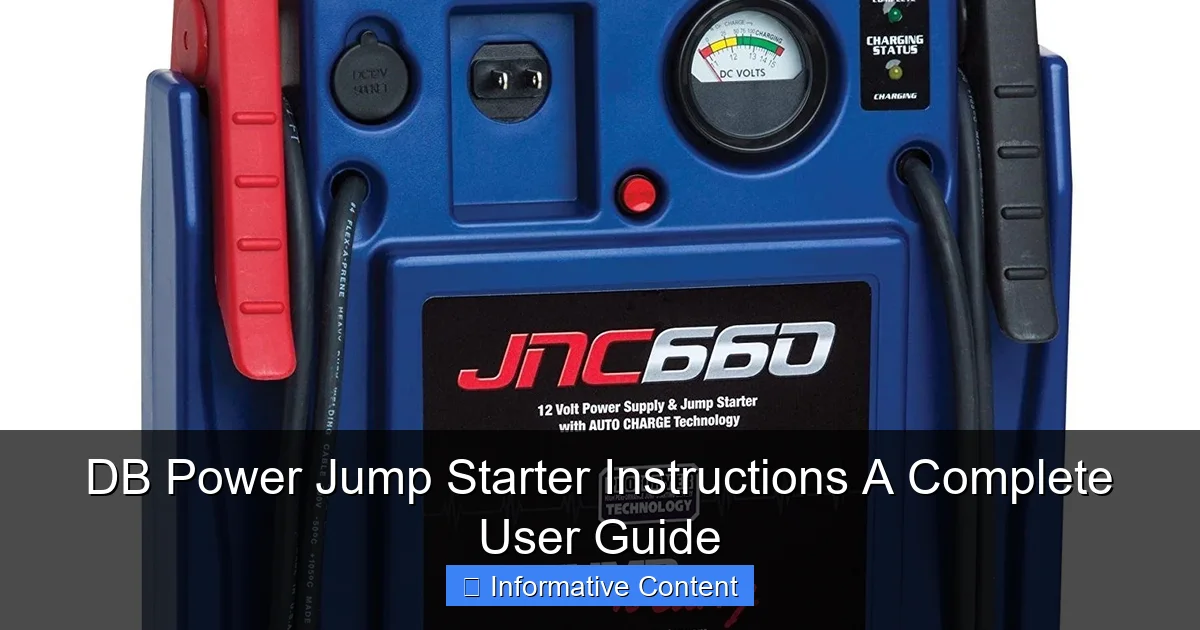
Featured image for db power jump starter instructions
Image source: images-na.ssl-images-amazon.com
Master your DB Power Jump Starter with this clear, step-by-step user guide designed to get your vehicle running fast and safely. Follow essential instructions—from proper cable connection to jump-starting techniques—to avoid damage and ensure peak performance every time. Perfect for emergencies, this guide simplifies the process so you’re always prepared.
Key Takeaways
- Always charge fully before first use to maximize jump starter lifespan.
- Connect red clamp first to positive terminal, then black to ground.
- Check LED indicators to verify power level and operational status.
- Use safety mode to prevent reverse polarity and short circuits.
- Store in cool, dry place to maintain battery health over time.
- Test monthly to ensure readiness during emergencies.
📑 Table of Contents
- Why You Need a Reliable Jump Starter in Your Life
- What Is a DB Power Jump Starter and How Does It Work?
- Step-by-Step: How to Use Your DB Power Jump Starter Safely
- Common Mistakes and How to Avoid Them
- Maximizing Performance: Charging, Maintenance, and Care
- DB Power Jump Starter Comparison: Models and Specs
- Beyond Jump Starting: Other Useful Features
- Final Thoughts: Your Jump Starter, Your Lifesaver
Why You Need a Reliable Jump Starter in Your Life
We’ve all been there—running late, keys in hand, heart pounding—only to turn the ignition and hear… nothing. Just a weak click or total silence. A dead battery can strike at the worst possible moment, whether you’re leaving for work, heading to an appointment, or stranded in a parking lot after a long day. That’s where a DB Power jump starter comes in. It’s not just another gadget; it’s peace of mind in a compact, portable package.
Unlike traditional jumper cables that require another vehicle and a good Samaritan, a DB Power jump starter gives you independence. No waiting, no awkward favors, no risk of damaging your car’s electrical system. With the right knowledge and a few simple steps, you can get your engine roaring back to life in minutes. But here’s the catch: even the best tools are only as good as your understanding of them. That’s why I’ve put together this complete guide to DB Power jump starter instructions, so you can use yours safely, effectively, and with total confidence—no mechanic required.
What Is a DB Power Jump Starter and How Does It Work?
At first glance, a DB Power jump starter looks like a sleek, oversized power bank. But don’t let its size fool you—inside that compact shell is a high-capacity lithium-ion battery designed to deliver a powerful burst of energy to start your vehicle. Think of it as a superhero battery that swoops in when your car’s battery is down for the count.
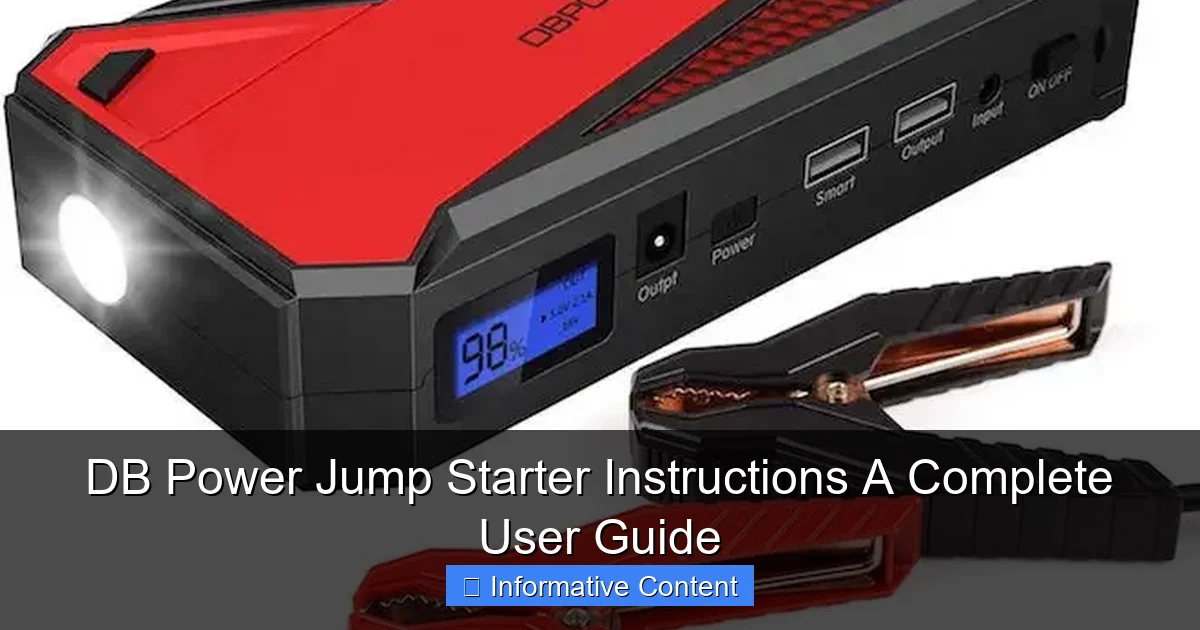
Visual guide about db power jump starter instructions
Image source: ripsandrides.com
Core Components You Should Know
- Battery Pack: The heart of the device, usually rated between 12,000 and 20,000 mAh. This stores the charge needed to jump-start your engine.
- Jump Start Cables: Heavy-duty clamps (red for positive, black for negative) that connect the jump starter to your car’s battery terminals.
- Smart Protection Circuit: Prevents reverse polarity, over-current, over-voltage, and short circuits—critical for safety.
- USB Ports: Allows you to charge phones, tablets, or other USB devices, turning your jump starter into a multi-tool.
- LED Flashlight: Often includes SOS and strobe modes for emergencies, especially useful at night.
How It Delivers Power (The Science Simplified)
When you connect the clamps correctly and press the jump start button, the DB Power jump starter sends a high-current pulse to your car’s battery. This pulse “wakes up” the dead battery just enough to turn over the engine. Unlike older lead-acid jump starters, DB Power uses lithium-ion tech, which means:
- Faster charging times (often under 3 hours)
- Lighter weight (usually 1–2 lbs)
- Longer shelf life (retains charge for months)
- Better performance in cold weather
Real-life example: Last winter, my neighbor’s SUV wouldn’t start after sitting for a week. The temperature had dropped to 15°F. I pulled out my DB Power 1500A model, connected it in under two minutes, and the engine fired up on the first try. No cables, no second car, no drama.
Step-by-Step: How to Use Your DB Power Jump Starter Safely
Using a DB Power jump starter is simple, but skipping steps or making a small mistake can lead to sparks, damage, or even injury. Here’s a clear, foolproof method to follow every time.
Step 1: Check the Jump Starter’s Charge Level
Before you even open your hood, check the LED indicator on your DB Power jump starter. Most models have 4–5 lights showing battery level. You’ll want at least 75% charge (3–4 lights lit) for reliable starting. If it’s low, plug it into a wall charger or car adapter. Never attempt a jump with a nearly dead jump starter—it won’t have enough power and could overheat.
Pro tip: Keep your jump starter charged monthly, even if you haven’t used it. Lithium-ion batteries degrade faster when left fully drained.
Step 2: Park Safely and Turn Off Everything
- Turn off the ignition, lights, radio, and all accessories.
- Put your car in “Park” (automatic) or “Neutral” (manual), and engage the parking brake.
- If possible, park on level ground and away from traffic.
This reduces electrical load and prevents surges when the engine starts.
Step 3: Open the Hood and Locate the Battery
Find your car’s battery. It’s usually under the hood, but some vehicles (like certain BMWs or Mercedes) have it in the trunk or under a seat. If you’re unsure, check your owner’s manual.
Look for the positive (+) terminal (marked with a red cap or + symbol) and the negative (-) terminal (black or bare metal). Avoid touching both terminals at once with metal objects—sparks can fly!
Step 4: Connect the Clamps (The Right Way)
Follow this order:
- Connect the red clamp to the positive terminal on your car battery.
- Connect the black clamp to a ground point—not the negative battery terminal. Use a clean, unpainted metal surface like a bolt on the engine block or chassis. This reduces the risk of hydrogen gas explosions near the battery.
- Double-check: Are both clamps secure and not touching each other or any moving parts?
Why ground matters: Batteries release tiny amounts of hydrogen gas, especially when charging. A spark near the negative terminal could ignite it. Grounding to the chassis keeps the spark away from the battery.
Step 5: Power On the Jump Starter and Start the Engine
- Press the power button on the jump starter. Some models have a “Jump Start” mode—select it if available.
- Wait 30 seconds. This gives the jump starter time to sync with the battery.
- Get in the car, turn the key, and crank the engine. If it doesn’t start, wait 10–15 seconds and try again. Most DB Power models allow 3–5 attempts before needing a cooldown.
Real tip: If the engine turns over slowly, don’t panic. Let it crank for 3–4 seconds max. Over-cranking can overheat the starter motor.
Step 6: Disconnect in Reverse Order
After the engine starts:
- Turn off the jump starter.
- Remove the black clamp first (from the ground point).
- Remove the red clamp next (from the positive terminal).
- Close the hood and let your car run for at least 15–20 minutes to recharge the battery.
Never leave the jump starter connected after starting—it can backfeed power and damage the unit.
Common Mistakes and How to Avoid Them
Even experienced users make errors. Here are the top pitfalls and how to steer clear of them.
Mistake #1: Reverse Polarity (Swapping Clamps)
Connecting red to negative and black to positive is the #1 cause of jump starter damage. DB Power models have reverse polarity protection, which means they’ll shut off if you mess up—but it can still stress the internal components.
How to avoid it: Always double-check before connecting. Use the color coding (red = positive, black = negative) and look for the + and – symbols on the battery. When in doubt, pause and confirm.
Mistake #2: Using a Low-Charge Jump Starter
Trying to jump a dead battery with a jump starter at 20% charge is like asking a tired runner to sprint a marathon. It might work once, but it’s unreliable and can shorten the jump starter’s lifespan.
Solution: Keep it charged. Set a phone reminder every 30 days to top it off. Most DB Power models take 2–3 hours to charge fully.
Mistake #3: Ignoring the Ground Rule
Connecting the black clamp directly to the negative terminal might seem easier, but it’s riskier. Sparks near the battery can ignite hydrogen gas, leading to explosions (rare but serious).
Better approach: Use a solid metal bolt on the engine block or chassis. If the engine is painted, scrape the paint lightly with the clamp to ensure a good connection.
Mistake #4: Cranking for Too Long
Holding the ignition for 10+ seconds strains the starter motor and drains the jump starter. Most engines should start within 3–5 seconds.
What to do: Crank for 3–4 seconds, then wait 10–15 seconds before trying again. If it doesn’t start after 3 attempts, stop. The issue might be fuel, spark plugs, or something else—not just the battery.
Mistake #5: Storing It in Extreme Temperatures
Leaving your DB Power jump starter in a freezing car or hot trunk can degrade the battery. Lithium-ion performs best between 32°F and 113°F.
Storage tip: Keep it in a climate-controlled area (like your home or office). If it’s been in the cold, warm it up for 10–15 minutes before use.
Maximizing Performance: Charging, Maintenance, and Care
Your DB Power jump starter is a long-term investment. With proper care, it can last 3–5 years or more. Here’s how to keep it in peak condition.
Charging Best Practices
- Use the included wall charger or a high-quality USB-C/USB-A adapter (5V/2A minimum).
- Don’t use fast chargers (like 9V/12V) unless the manual explicitly allows it. High voltage can damage the battery.
- Charge to 80–100% for regular use, but if storing long-term, keep it at 50%. This slows battery degradation.
Example: I keep mine at 80% in my car for quick access and top it off to 100% once a month.
Cleaning and Storage
- Wipe the unit and clamps with a dry, slightly damp cloth. Never submerge it.
- Check the clamps for corrosion or bent tips. Clean with baking soda and water if needed.
- Store in a dry, cool place. Use the included carry case to protect it from dust and moisture.
When to Replace the Jump Starter
Signs it’s time for a new one:
- Charging takes much longer than before
- LED indicators show incorrect levels
- It fails to start a car even with a full charge
- Physical damage (cracks, swollen casing)
Most DB Power jump starters have a 1–2 year warranty. Register your purchase online to extend coverage.
DB Power Jump Starter Comparison: Models and Specs
DB Power offers several models, each suited to different needs. Here’s a quick comparison to help you choose—or understand your current model better.
| Model | Peak Current | Battery Capacity | USB Ports | Flashlight | Best For |
|---|---|---|---|---|---|
| DB Power 1500A | 1500A | 18,000 mAh | 2 (USB-A) | Yes (SOS mode) | Sedans, SUVs, light trucks |
| DB Power 2000A | 2000A | 20,000 mAh | 3 (2x USB-A, 1x USB-C) | Yes (3 modes) | Trucks, vans, diesel engines |
| DB Power 1200A | 1200A | 15,000 mAh | 1 (USB-A) | Yes (basic) | Compact cars, daily use |
| DB Power 3000A (Pro) | 3000A | 22,000 mAh | 4 (2x USB-A, 2x USB-C) | Yes (strobe, SOS) | Large trucks, commercial use |
Note: Peak current is the maximum burst of power the jump starter can deliver. Higher amps = better for larger engines. For most 4–6 cylinder cars, 1500A is plenty. Diesel engines or big V8s may need 2000A+.
Beyond Jump Starting: Other Useful Features
Your DB Power jump starter isn’t just for emergencies. It’s a multi-tool that can save the day in other ways.
USB Charging for Devices
With built-in USB ports, you can charge your phone, tablet, or GPS device. The 18,000 mAh model can charge an iPhone 15 about 6–7 times. Keep it in your car for road trips, camping, or power outages.
Pro tip: Use a low-power mode (if available) to preserve jump start capability while charging devices.
Emergency LED Flashlight
Many models include a bright LED light with multiple modes:
- Steady: For checking under the hood at night
- Strobe: To signal for help on the roadside
- SOS: Sends a distress signal (three short, three long, three short blinks)
I’ve used the SOS mode once when I got a flat tire on a dark highway. A passing driver noticed the light and stopped to help.
Air Compressor (Select Models)
Some DB Power jump starters (like the 2000A Pro) include a built-in air compressor for inflating tires, sports balls, or air mattresses. The 12V DC port connects to a tire inflator nozzle.
Final Thoughts: Your Jump Starter, Your Lifesaver
Having a DB Power jump starter in your car is like carrying a spare tire for your battery. It’s not about if you’ll need it—it’s about when. And when that moment comes, you’ll be ready. No panic, no waiting, no expensive towing fees.
Remember: DB Power jump starter instructions aren’t just a checklist. They’re your safety net. By following the steps—checking charge, connecting correctly, grounding properly, and maintaining your unit—you turn a potential disaster into a minor hiccup.
Keep it charged, keep it clean, and keep it accessible. Store it in your glove compartment, center console, or trunk (in a cool spot). And don’t forget to share your knowledge with family and friends. You never know who might need a hand—and a jump—one day.
At the end of the day, it’s not just about starting a car. It’s about getting back on the road, on time, with confidence. And that’s worth every penny.
Frequently Asked Questions
How do I use the DB Power jump starter to start my car?
To use the DB Power jump starter, first ensure the device is charged. Connect the red clamp to the positive terminal and the black clamp to the negative terminal of your car battery, then turn on the jump starter and start your vehicle. Always follow the safety guidelines in the user manual.
How long does it take to fully charge the DB Power jump starter?
The DB Power jump starter typically takes 4-6 hours to fully charge using the included wall or car charger. A solid LED indicator light will signal when charging is complete. Avoid overcharging to prolong battery life.
Can the DB Power jump starter be used on other vehicles besides cars?
Yes, the DB Power jump starter is compatible with trucks, motorcycles, boats, and SUVs, as long as the vehicle’s battery voltage matches the device specifications. Always check the manual for recommended applications.
What safety features does the DB Power jump starter have?
The DB Power jump starter includes reverse polarity, over-current, and short-circuit protection to prevent damage during use. These features ensure safe operation, even if clamps are incorrectly connected.
How do I maintain my DB Power jump starter for long-term use?
Store the DB Power jump starter in a cool, dry place and recharge it every 3-6 months to maintain battery health. Keep the clamps clean and inspect the unit for damage regularly.
What should I do if my DB Power jump starter doesn’t work during an emergency?
First, check that the device is charged and the connections are secure. If issues persist, consult the troubleshooting section of the DB Power jump starter instructions or contact customer support for assistance.