
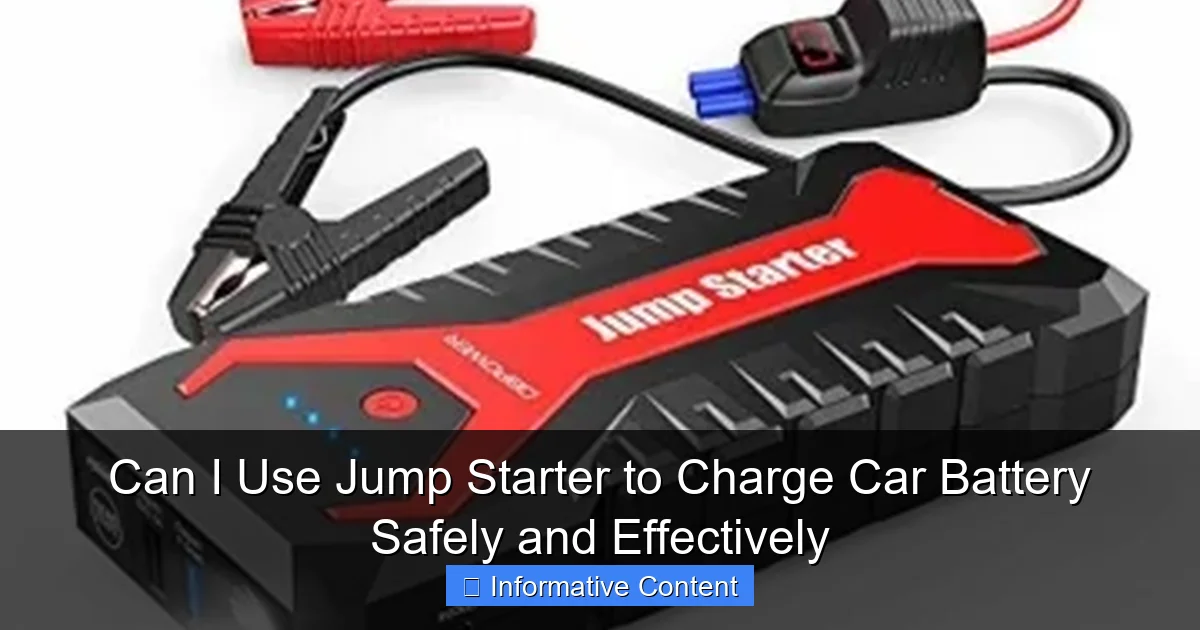
Featured image for can i use jump starter to charge car battery
Image source: jumpstarter.io
Yes, you can use a jump starter to charge a car battery, but it’s not a long-term charging solution. While jump starters provide a quick power boost to start your engine, they lack the sustained output needed to fully recharge a depleted battery—unlike a dedicated battery charger. For safety and effectiveness, use a jump starter only for emergency starts and follow up with proper charging or alternator recharging to maintain battery health.
Key Takeaways
- Jump starters can charge batteries: Use only if designed for slow charging, not just boosting.
- Check compatibility first: Match voltage and chemistry (e.g., Li-ion vs. lead-acid).
- Prioritize safety: Wear gloves, ensure ventilation, and follow device instructions precisely.
- Avoid prolonged use: Limit charging sessions to prevent overheating or damage.
- Monitor battery status: Use a multimeter to track charge level and avoid overcharging.
- Not a long-term fix: Recharge or replace deeply discharged or old batteries promptly.
📑 Table of Contents
- Can I Use a Jump Starter to Charge a Car Battery? Here’s the Truth
- How Jump Starters Work (And What They’re Actually Designed For)
- Can You Actually Charge a Car Battery with a Jump Starter?
- Step-by-Step: How to Safely Use a Jump Starter to Charge Your Battery
- Risks and Limitations: What You Need to Know
- When to Use a Jump Starter vs. a Battery Charger
- Final Thoughts: Smart Use for Long-Term Battery Health
Can I Use a Jump Starter to Charge a Car Battery? Here’s the Truth
We’ve all been there—rushing to get to work, only to find your car won’t start because the battery is dead. It’s a sinking feeling. You pop the hood, stare at the battery terminals, and wonder: Can I use my jump starter to charge this thing, or am I just wasting time? Maybe you’ve used a jump starter before to get your engine running, but now you’re curious if it can do more. Can it actually charge your car battery, not just give it a quick jolt?
The short answer? Yes, you can use a jump starter to charge a car battery—but with some important caveats. It’s not quite the same as plugging into a wall charger, and how you do it matters a lot. I’ve been in situations where I thought I was “topping off” my battery with a portable jump starter, only to realize I was doing more harm than good. Over time, I’ve learned the ins and outs of how these devices work, what they’re designed for, and when it’s safe (and effective) to use them for charging. In this post, I’ll walk you through everything you need to know—no fluff, no sales pitch—just real, practical advice to help you make the right call for your car and your safety.
How Jump Starters Work (And What They’re Actually Designed For)
The Basics: Jump Starters vs. Battery Chargers
First, let’s clear up a common confusion: jump starters and battery chargers are not the same. A jump starter is a portable power pack that delivers a high burst of current (measured in amps) to start your engine. It’s like a defibrillator for your car—it shocks the battery into action. A battery charger, on the other hand, is designed to slowly and safely replenish a battery’s charge over time, often with features like trickle charging, desulfation, and voltage monitoring.
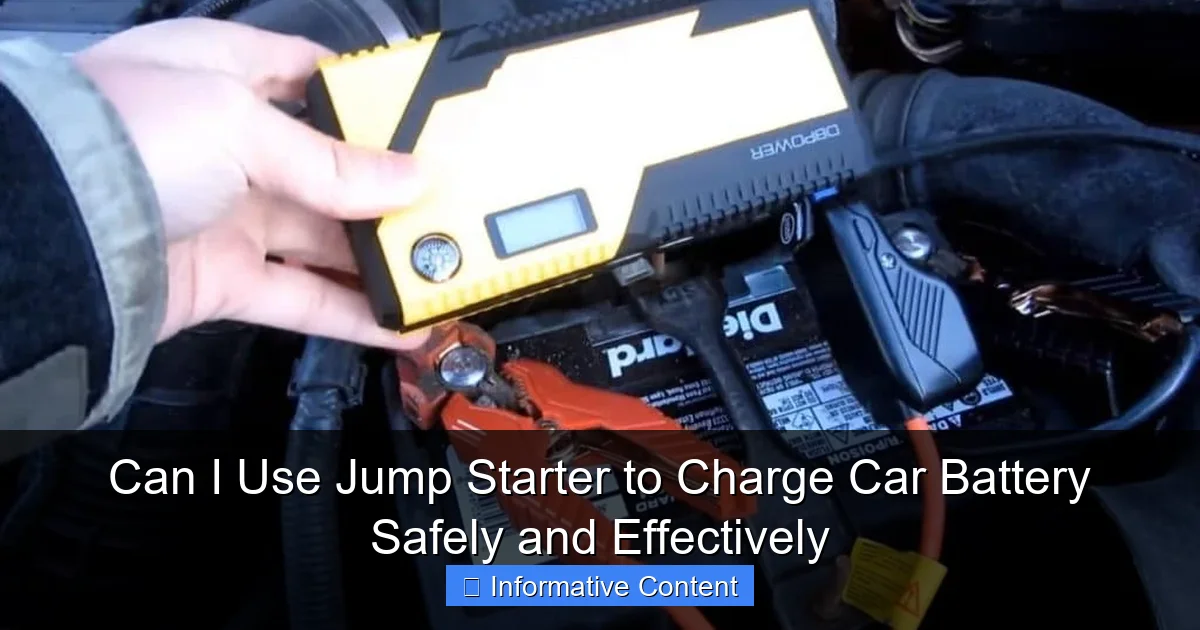
Visual guide about can i use jump starter to charge car battery
Image source: weeklytools.com
Think of it this way: if your battery is a glass of water, a jump starter is like pouring in a cup of water all at once—it might get things moving, but it doesn’t fill the glass completely. A charger, meanwhile, is like using a small hose to refill it gradually and evenly.
Internal Components and Power Output
Most modern jump starters use lithium-ion batteries (like those in your phone or laptop) or AGM (absorbent glass mat) lead-acid batteries. They typically range from 12,000 to 30,000 milliamp-hours (mAh) and can deliver 1,000 to 4,000 peak amps. That’s enough to start most cars, trucks, and even small SUVs—but not enough to fully recharge a completely dead battery in one go.
For example, a typical car battery holds about 48 amp-hours. A jump starter with 15,000 mAh (15 Ah) might deliver 10–15 amps for a few minutes—enough to start the engine, but not enough to fully charge the battery. That’s why using it as a charger requires multiple sessions and careful monitoring.
Smart Features in Modern Jump Starters
Many newer jump starters come with “smart” charging modes. These include:
- Trickle charge mode – delivers low current over time to avoid overcharging
- Voltage detection – automatically stops charging when the battery reaches full
- Reverse polarity protection – prevents damage if you connect the clamps backwards
- USB and 12V outputs – useful for charging phones or powering accessories
These features make modern jump starters safer and more versatile, but they don’t turn them into full battery chargers. They’re still limited by size, power, and heat management.
Can You Actually Charge a Car Battery with a Jump Starter?
Short Answer: Yes, But It’s Not Ideal
So, can you use a jump starter to charge a car battery? Technically, yes—but it’s more of a “partial” or “temporary” charge. Jump starters can deliver a slow, low-current charge over time, especially if they have a dedicated charging mode. But they’re not built for long-term, deep-cycle charging like a traditional charger.
I learned this the hard way. One winter, my battery died after leaving the lights on overnight. I used my jump starter to start the car, drove around for 30 minutes, and assumed the alternator had “charged” the battery. But a week later, it died again. Why? Because the alternator only restores surface charge—it doesn’t fully recharge a deeply discharged battery. And my jump starter didn’t have enough capacity to do it either.
When It Works (And When It Doesn’t)
Here’s when using a jump starter to charge can be effective:
- Partially discharged battery – If your battery is at 60–80% charge, a jump starter can top it off in 30–60 minutes.
- Emergency situations – If you’re stranded and need to get home, a jump starter can give you enough charge to drive to a mechanic.
- Modern smart jump starters – Models with trickle charge and auto-stop features are safer and more efficient.
But here’s when it won’t work well:
- Completely dead battery – A jump starter might not have enough capacity to fully charge a 48 Ah battery.
- Old or sulfated batteries – Batteries with internal damage or buildup won’t hold a charge, no matter what you use.
- Long-term charging needs – Jump starters can’t handle overnight charging or deep-cycle recovery.
Real-World Example: A Weekend Road Trip
Last summer, my friend Sarah was on a road trip when her car wouldn’t start at a rest stop. She used her jump starter to get going, then connected it again that evening using the “charge” mode. It took about 90 minutes to get the battery to 70%. The next morning, the car started—but only after a few cranks. She made it to a shop, where they told her the battery needed a full charge or replacement. Her jump starter helped, but it wasn’t a long-term fix.
Step-by-Step: How to Safely Use a Jump Starter to Charge Your Battery
Step 1: Check Your Jump Starter’s Capabilities
Not all jump starters can charge batteries. Before you start, check the manual or product specs. Look for:
- A “charge” or “trickle charge” mode
- Voltage output (should be 12V for car batteries)
- Charging current (ideally 2–10 amps)
- Auto-shutoff or overcharge protection
If your jump starter only has a “jump” function, it’s not designed for charging. Using it this way could damage the device or the battery.
Step 2: Prepare the Battery and Vehicle
Safety first! Follow these steps:
- Park on a flat surface and turn off the engine.
- Open the hood and locate the battery (usually in the engine bay).
- Inspect for corrosion, leaks, or damage. If you see white powder or cracks, don’t charge—replace the battery.
- Disconnect any battery maintainers or smart chargers.
- Ensure the jump starter is fully charged (check the LED indicator).
Step 3: Connect the Jump Starter
Connect the clamps in this order:
- Red (positive) to positive terminal – Look for a “+” sign.
- Black (negative) to negative terminal – Or to a bare metal ground point (like a bolt or bracket) if the terminal is corroded.
Pro tip: If your jump starter has a “charging” mode, select it. If not, some models will automatically switch to low-current mode when the engine isn’t running.
Step 4: Start the Charging Process
Here’s what to do:
- Turn on the jump starter (if it doesn’t start automatically).
- Check the display (if available) for charging current and time.
- Let it charge for 30–60 minutes. Most jump starters can’t sustain high current for long due to heat buildup.
- Monitor the battery temperature. If it feels hot, stop charging immediately.
Step 5: Disconnect and Test
After charging:
- Turn off the jump starter.
- Remove the black clamp first, then the red.
- Try starting the engine. If it starts, drive for at least 20–30 minutes to let the alternator finish charging.
- Use a multimeter to check the battery voltage. A fully charged 12V battery should read 12.6–12.8V.
Step 6: Recharge the Jump Starter
Don’t forget: your jump starter used power. Recharge it fully before storing. Most take 4–8 hours to charge via wall outlet or USB-C.
Risks and Limitations: What You Need to Know
Overcharging and Heat Buildup
Jump starters aren’t built to handle long charging sessions. If you leave one connected for hours, it can:
- Overheat the internal battery
- Damage the car battery’s plates
- Cause swelling or leakage in lithium-ion jump starters
I once left a cheap jump starter connected overnight. The next morning, it was warm to the touch, and the car battery was only at 50%. That’s a sign it wasn’t delivering consistent charge—and could’ve been dangerous.
Battery Sulfation and Deep Discharge
When a lead-acid battery discharges deeply, sulfate crystals form on the plates. These reduce capacity and can permanently damage the battery. Jump starters can’t reverse sulfation. Only a smart charger with a “desulfation” mode can help—and even that’s not guaranteed.
If your battery has been dead for days, a jump starter might give you a temporary fix, but it won’t restore lost capacity.
Alternator Dependency
Here’s a key point: driving your car doesn’t fully charge a dead battery. The alternator restores surface charge, but it can’t deliver the slow, deep charge needed after a deep discharge. That’s why many people think their jump starter “failed” when the battery dies again—they didn’t realize the alternator couldn’t finish the job.
Jump Starter Capacity Limitations
Even the best portable jump starters have limited energy. Here’s a quick comparison:
| Jump Starter Capacity (mAh) | Estimated Charge Time (12V, 50% Discharged) | Max Charge % for 48Ah Battery |
|---|---|---|
| 10,000 | 60–90 minutes | 10–15% |
| 15,000 | 90–120 minutes | 15–20% |
| 20,000+ | 120–180 minutes | 20–25% |
As you can see, even a high-capacity jump starter can only add a fraction of a full charge. It’s a band-aid, not a cure.
When to Use a Jump Starter vs. a Battery Charger
Jump Starter: Best for Emergencies and Short-Term Help
Use a jump starter when:
- You’re stranded and need to start the car
- You’re on the road and don’t have access to a wall outlet
- Your battery is only slightly discharged
- You need a quick top-off before a long drive
It’s portable, fast, and convenient—perfect for unexpected breakdowns.
Battery Charger: Best for Full Charging and Maintenance
Use a traditional battery charger when:
- Your battery is deeply discharged (below 50%)
- You’re storing a vehicle for weeks or months
- You want to extend battery life with regular maintenance
- You have access to power and can wait several hours
Smart chargers (like NOCO Genius or CTEK models) are worth the investment. They adjust voltage and current based on the battery’s needs, preventing overcharging and sulfation.
Hybrid Option: Jump Starter with Built-In Charger
Some premium models (like the NOCO Boost Plus or DBPOWER 2000A) include a “smart charge” mode. These can:
- Jump start the car
- Slowly charge the battery when the engine is off
- Monitor voltage and stop when full
They’re more versatile, but still limited by capacity. Think of them as a “best of both worlds” option—but not a full replacement for a dedicated charger.
Final Thoughts: Smart Use for Long-Term Battery Health
So, can you use a jump starter to charge your car battery? Yes—but with realistic expectations. It’s a great tool for emergencies, short-term fixes, and topping off a partially discharged battery. But it’s not a substitute for a proper battery charger when you need a full, deep charge.
From my experience, the best approach is to use your jump starter when you need to get moving, then follow up with a proper charge or visit a mechanic if the battery is deeply discharged. Think of it like treating a cut: you can use a band-aid to stop the bleeding, but you still need to clean and care for the wound.
Here’s my final advice:
- Always check your jump starter’s manual before charging.
- Never leave it connected for more than a few hours.
- Use a multimeter to check battery voltage after charging.
- Invest in a smart charger for regular maintenance.
- Replace old or damaged batteries—don’t keep “reviving” them.
Your car battery is a critical part of your vehicle’s health. Treat it right, and it’ll keep you on the road for years. Whether you’re using a jump starter, a charger, or just driving around to top it off, understanding how these tools work will help you make smarter choices—and avoid those frustrating “no start” mornings.
And hey, if you’re ever stuck in a parking lot with a dead battery, now you know: your jump starter might not fully charge it, but it could be just enough to get you to safety. That’s worth its weight in gold.
Frequently Asked Questions
Can I use a jump starter to charge my car battery instead of a regular charger?
Yes, you can use a jump starter to charge a car battery, but it’s primarily designed for emergency jump-starting, not long-term charging. For a full recharge, a dedicated battery charger is more effective and safer for prolonged use.
How long should I leave a jump starter connected to charge a car battery?
Jump starters typically charge a car battery for 10–30 minutes, depending on the model and battery condition. Avoid leaving it connected for more than the manufacturer’s recommended time to prevent overheating or damage.
Is it safe to use a jump starter to charge a car battery overnight?
No, leaving a jump starter connected overnight can overcharge the battery, leading to potential damage or safety hazards. Always monitor the charging process and follow the device’s safety guidelines.
Can a jump starter fully charge a dead car battery?
A jump starter can provide enough charge to restart a car, but it won’t fully recharge a deeply discharged battery. For complete recharging, use a traditional battery charger or drive the vehicle for an extended period.
What’s the difference between jump-starting and charging a car battery with a jump starter?
Jump-starting delivers a quick power surge to start the engine, while charging gradually replenishes the battery’s charge. Jump starters are optimized for the former, so use them sparingly for charging.
Can I use a portable jump starter to charge my car battery repeatedly?
While you can use a portable jump starter multiple times, frequent use for charging may wear out the device or battery. Reserve it for emergencies and opt for a dedicated charger for routine maintenance.