

Featured image for black & decker jump starter instructions
Image source: drodd.com
Master your Black & Decker jump starter with these simple, step-by-step instructions to safely jump dead batteries in seconds—no tools or guesswork required. Follow the clear safety tips and connection sequence to avoid sparks, reverse polarity, or damage to your vehicle and device. Always consult your model’s manual for specific voltage and charging details.
Key Takeaways
- Always charge fully before first use to maximize performance.
- Connect red clamp first to positive terminal, then black to ground.
- Never jump start a damaged or leaking battery.
- Check compatibility with your vehicle’s voltage (12V/24V).
- Turn off all electronics before connecting the jump starter.
- Store in a cool, dry place to preserve battery life.
- Use safety goggles to protect eyes during jump starting.
📑 Table of Contents
- Why Every Car Owner Should Know Their Jump Starter
- Understanding Your Black & Decker Jump Starter Model
- Step-by-Step Black & Decker Jump Starter Instructions
- Charging and Maintaining Your Jump Starter
- Common Mistakes and How to Avoid Them
- Advanced Tips and Real-World Use Cases
- Final Thoughts: Be Prepared, Not Panicked
Why Every Car Owner Should Know Their Jump Starter
Picture this: It’s a cold winter morning, you’re running late for work, and your car won’t start. The engine clicks once, twice, then nothing. The battery is dead—again. You call a friend, wait 20 minutes for them to show up with jumper cables, and hope their car’s battery has enough juice to help. Sound familiar? That’s the moment you realize how valuable a portable jump starter can be. No waiting, no awkward favors, just you, your device, and a quick fix. Among the many options out there, Black & Decker jump starters have earned a reputation for reliability, ease of use, and safety. But even the best tool is only as good as your understanding of how to use it. That’s where this guide comes in.
Whether you’re a first-time car owner, a seasoned DIYer, or just someone who wants peace of mind on the road, knowing how to use your Black & Decker jump starter correctly is essential. It’s not just about saving time—it’s about safety, avoiding costly mistakes, and making sure your device lasts for years. In this complete guide, we’ll walk you through everything from unboxing to troubleshooting, with practical tips, real-life examples, and clear instructions. Think of this as a friendly chat between you and a car-savvy friend who’s been through the jump-starting drill a few times. Let’s dive into the Black & Decker jump starter instructions and make sure you’re ready for any roadside surprise.
Understanding Your Black & Decker Jump Starter Model
Before you even think about jump-starting a car, it’s important to know exactly what you’re working with. Black & Decker offers several models of jump starters, each with unique features, power levels, and capabilities. While the core functionality remains the same—providing a surge of power to start a dead battery—the details matter. Let’s break down what you need to know.
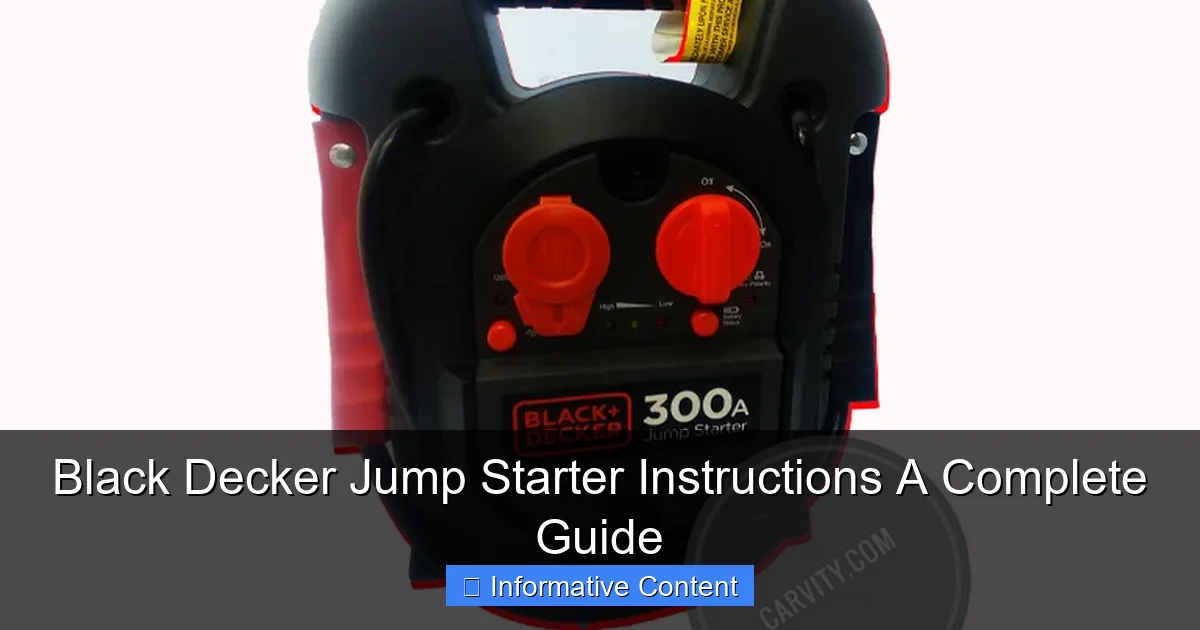
Visual guide about black & decker jump starter instructions
Image source: carvity.com
Common Models and Their Key Features
Black & Decker jump starters come in various power ratings, measured in peak amps and cranking amps. Here’s a quick rundown of popular models you might own or consider:
- Black & Decker PS1400: 1400 peak amps, 700 cranking amps. Great for small to midsize vehicles. Includes a built-in air compressor—ideal for inflating tires.
- Black & Decker PS2000: 2000 peak amps, 1000 cranking amps. Handles larger engines, including SUVs and trucks. Also features a compressor and USB ports.
- Black & Decker BDL10: A more compact, 1000-peak-amp model. Lightweight and portable, perfect for city drivers or as an emergency backup.
- Black & Decker BDL20: 2000 peak amps, with added features like a digital display, LED light, and dual USB charging ports.
Each model has a slightly different interface and set of controls, so always refer to the user manual that came with your specific unit. But don’t worry—most follow the same basic principles we’ll cover here.
Key Components You’ll Use Regularly
No matter which model you have, your jump starter will include a few essential parts:
- Jump Start Cables: These are the red (positive) and black (negative) clamps that connect to your car battery. They’re usually permanently attached to the unit or stored in a built-in compartment.
- Battery Pack: The internal lithium-ion or lead-acid battery that stores the power. This needs to be charged before use.
- Power Switch or Button: Turns the jump starter on. Some models have a “boost” button specifically for jump-starting.
- LED Indicators: Show battery charge level, error codes, and status (e.g., charging, ready, fault).
- USB Ports and Accessories: Many models include USB ports to charge phones, tablets, or other small devices. Some even have built-in lights or air compressors.
One thing I learned the hard way? Always check the clamps for corrosion or damage before use. A friend of mine once tried to jump-start her car, only to realize the red clamp had a small crack—no connection, no start. A quick visual inspection saves a lot of frustration.
How to Identify Your Model
If you’re not sure which model you have, look for the label on the back or bottom of the unit. It will list the model number, voltage, and amperage. You can also check the packaging or the manual. If you’ve lost the manual, don’t panic—Black & Decker provides downloadable PDFs on their website. Just search for “[your model] user manual” and you’ll find it.
Pro tip: Take a photo of your model number and save it in your phone’s notes. That way, you can quickly reference it when you need to troubleshoot or buy replacement parts.
Step-by-Step Black & Decker Jump Starter Instructions
Now that you know your device, let’s get into the meat of it: how to actually use your Black & Decker jump starter. These Black & Decker jump starter instructions are designed to be simple, safe, and foolproof—even if you’ve never jump-started a car before. Follow these steps carefully, and you’ll be back on the road in minutes.
Step 1: Prepare Your Vehicle
Before you touch the jump starter, make sure your car is in a safe, accessible spot. Park on level ground, turn off the ignition, and engage the parking brake. Pop the hood and locate the battery. If it’s under a plastic cover, remove it carefully. You’ll need to see the battery terminals clearly.
Look for the positive (+) and negative (-) terminals. They’re usually labeled, but if not, the positive terminal is typically larger and has a red plastic cap or cable. The negative is smaller and often connected to the car’s chassis (the frame).
Important: Never jump-start a battery that’s cracked, leaking, or frozen. That’s a fire hazard. If you see any damage, call for professional help instead.
Step 2: Check Your Jump Starter’s Charge
Your jump starter needs to be charged to work. Most models have a simple LED indicator: green means fully charged, yellow means partial, and red means low or dead. If it’s below 50%, charge it before attempting to use it. A partially charged jump starter might not deliver enough power, especially in cold weather.
How to charge: Use the included AC adapter and plug it into a wall outlet. Charging time varies by model—anywhere from 2 to 8 hours. Some newer models support USB charging via a power bank, which is handy when you’re on the go.
Real talk: I once tried to jump-start a car with a jump starter that was only 30% charged. The car cranked once, then died. After that, I made it a rule—always charge it fully after every use, even if it was a short jump.
Step 3: Connect the Clamps Correctly
This is the most critical step. Connecting the clamps in the wrong order can damage your car’s electronics or even cause sparks and injury. Follow this sequence:
- Connect the red (positive) clamp to the positive terminal of the car battery.
- Connect the black (negative) clamp to a bare metal ground—not the negative battery terminal. Use an unpainted bolt, bracket, or the car’s frame. This reduces the risk of sparks near the battery, where flammable gases can collect.
Why the ground? Because the negative terminal on a battery is often close to the positive, and connecting there can cause a spark. A ground point is safer and just as effective.
Tip: If the battery is in a tight spot, use a flashlight to see clearly. And wear gloves if the terminals are corroded—it protects your hands and gives you a better grip.
Step 4: Turn On the Jump Starter
Now, turn on your Black & Decker jump starter. Most models have a simple power button. Some have a separate “boost” or “jump start” mode—use that if available. You should see an LED light up, indicating the unit is active.
Wait a few seconds. The jump starter needs a moment to stabilize the connection. You might hear a faint hum—that’s normal.
Step 5: Start the Engine
Get in the car, turn the key, and start the engine. It might take a few seconds to crank, especially if the battery was completely dead. Don’t pump the gas pedal—just turn the key and let the starter do its job.
If the engine doesn’t start on the first try, wait 15–30 seconds before trying again. Repeated attempts can overheat the starter. If it fails after 3 tries, stop and check the connections. Are the clamps tight? Is the jump starter still charged?
Once the engine runs, let it idle for a minute or two. This helps the alternator begin recharging the battery.
Step 6: Disconnect and Pack Up
After the car is running, reverse the connection order:
- Turn off the jump starter.
- Remove the black (negative) clamp from the ground point.
- Remove the red (positive) clamp from the battery.
- Stow the cables neatly in the unit’s storage compartment.
Important: Never leave the jump starter connected while the engine is running. It can damage the device or the car’s electrical system.
Bonus tip: After jump-starting, drive for at least 20–30 minutes to let the alternator fully recharge the battery. If the car dies again shortly after, the battery may be too old and need replacement.
Charging and Maintaining Your Jump Starter
A jump starter is an investment—treat it like one. With proper care, it can last 3 to 5 years or more. But neglect it, and you might find yourself with a dead device when you need it most. Here’s how to keep your Black & Decker jump starter in top shape.
How to Charge Your Jump Starter
Always use the charger that came with your unit. Third-party chargers might not deliver the right voltage or current, which can damage the battery.
- Plug the AC adapter into a standard wall outlet.
- Connect the other end to the jump starter’s charging port (usually labeled “DC IN” or similar).
- Let it charge until the LED shows full (green). Avoid leaving it plugged in for days—overcharging can shorten battery life.
For models with USB charging: Use a high-quality power bank or wall adapter with at least 2.1A output. Charging will be slower than with the AC adapter, but it’s great for emergencies.
Storage Tips
Where and how you store your jump starter matters:
- Keep it charged: Store it at 50–80% charge, not fully charged or completely drained. Lithium-ion batteries degrade faster at extreme charge levels.
- Avoid extreme temperatures: Don’t leave it in a hot car trunk in summer or a freezing garage in winter. Room temperature (60–75°F) is ideal.
- Store in a dry place: Moisture can corrode connections and damage electronics.
- Use the storage case: If your model came with a carrying case, use it. It protects the clamps and keeps dust out.
I keep mine in the footwell of my car, under the front seat. It’s out of the way, protected from heat and cold, and always ready to go.
Regular Maintenance Checks
Every 3–6 months, do a quick inspection:
- Check the clamps for corrosion, cracks, or loose connections.
- Inspect the cables for fraying or damage.
- Test the jump starter by turning it on and checking the charge level.
- Clean the terminals with a dry cloth if they look dirty.
If you notice any issues, contact Black & Decker support or a certified technician. Don’t try to repair it yourself unless you’re trained.
When to Replace the Battery
Jump starters don’t last forever. Signs it’s time for a new one:
- It won’t hold a charge for more than a few days.
- It fails to start a car even when fully charged.
- The LED lights flicker or show error codes.
Some models have replaceable batteries, but most don’t. In that case, it’s usually more cost-effective to buy a new unit. But hey, that’s still cheaper than a tow truck!
Common Mistakes and How to Avoid Them
Even with clear Black & Decker jump starter instructions, mistakes happen. I’ve made a few myself—and learned from them. Here are the most common pitfalls and how to avoid them.
Mistake 1: Connecting Clamps in the Wrong Order
Connecting black to negative first, then red to positive? Big no-no. This can cause sparks, damage electronics, or even blow a fuse. Always follow the red-then-black sequence.
Fix: If you accidentally connected them wrong, disconnect immediately and wait 30 seconds before trying again. Check your car’s fuse box for any blown fuses.
Mistake 2: Using a Low-Charge Jump Starter
As mentioned earlier, a jump starter below 50% charge might not deliver enough power. This is especially true in cold weather, where batteries need more juice to start.
Fix: Charge it fully after every use. Set a reminder on your phone to check the charge every month if it’s stored for long periods.
Mistake 3: Leaving It Connected While the Engine Runs
Some people think it’s safe to leave the jump starter connected while driving. It’s not. The car’s alternator can send voltage back into the jump starter, damaging its internal circuitry.
Fix: Always disconnect as soon as the engine starts. No exceptions.
Mistake 4: Not Using a Ground Point
Connecting the black clamp to the negative battery terminal increases the risk of sparks near flammable gases. A ground point is safer and just as effective.
Fix: Always look for a bare metal spot on the engine block or frame. If you can’t find one, use the negative terminal—but only if the battery is in a well-ventilated area and you’re careful.
Mistake 5: Ignoring the Manual
Every model has slight differences. Skipping the manual might mean missing a key feature or safety step.
Fix: Read the manual once, then keep it in your glove compartment. It’s also handy for troubleshooting.
Advanced Tips and Real-World Use Cases
Now that you’ve mastered the basics, let’s go beyond the Black & Decker jump starter instructions and explore some advanced tricks and real-life scenarios.
Using Your Jump Starter in Cold Weather
Cold temperatures drain batteries fast. A jump starter can help, but it needs to be warm too. If it’s been sitting in a cold garage, bring it inside for 10–15 minutes before use. This warms up the internal battery and improves performance.
Tip: Keep a hand warmer in your car kit. Tuck it against the jump starter under the seat to keep it warm in winter.
Jump-Starting Larger Vehicles
Trucks, SUVs, and diesel engines need more power. If you’re using a lower-amp model (like the PS1400), you might need to wait a bit longer between cranks—up to 60 seconds. This gives the jump starter time to recover.
Real story: My brother tried to start his diesel pickup with a 1000-amp jump starter. It took three attempts and a 2-minute wait between tries, but it worked. Just be patient.
Using the Extra Features
Many Black & Decker jump starters come with bonus tools:
- Air compressor: Great for topping off tires. Check your tire pressure monthly—underinflated tires wear out faster and hurt fuel economy.
- LED light: Use it when working at night or in low-light conditions. Some models have flashing modes for emergencies.
- USB ports: Charge your phone if you’re stuck waiting for help. I’ve used mine to keep my phone alive while calling roadside assistance.
When Jump-Starting Isn’t the Solution
Sometimes, a dead battery isn’t the real problem. If your jump starter works but the car still won’t start, check for:
- Faulty starter motor
- Bad alternator
- Fuel delivery issues
- Ignition problems
In these cases, a jump starter won’t help. It’s time to call a mechanic.
| Model | Peak Amps | Cranking Amps | Special Features | Best For |
|---|---|---|---|---|
| PS1400 | 1400 | 700 | Air compressor, LED light | Sedans, compact SUVs |
| PS2000 | 2000 | 1000 | Compressor, dual USB, digital display | Trucks, large SUVs |
| BDL10 | 1000 | 500 | Compact, lightweight | City drivers, emergencies |
| BDL20 | 2000 | 1000 | Digital display, flashlight, dual USB | Frequent travelers, off-roaders |
Final Thoughts: Be Prepared, Not Panicked
Having a Black & Decker jump starter in your car isn’t just about convenience—it’s about confidence. It means you’re not at the mercy of dead batteries, bad weather, or roadside strangers. With the right knowledge, you can handle a dead battery with calm, clarity, and a few simple steps.
We’ve covered everything from understanding your model to mastering the Black & Decker jump starter instructions, avoiding common mistakes, and even using advanced features. Remember: safety first, always charge your device, and treat it with care. A well-maintained jump starter can be a lifesaver—literally.
So, the next time you hear that dreaded “click” instead of an engine roar, don’t panic. Grab your jump starter, follow the steps we’ve laid out, and get back on the road. And hey, if you’re feeling generous, help someone else out too. You never know when you’ll need the same favor. Safe driving, and stay charged!
Frequently Asked Questions
How do I use my Black & Decker jump starter for the first time?
Before using your Black & Decker jump starter, fully charge it using the provided AC or DC adapter. Connect the clamps to the vehicle battery (red to positive, black to negative), then turn on the unit and start the engine. Always follow the safety instructions in the manual.
What should I do if my Black & Decker jump starter doesn’t turn on?
Ensure the unit is fully charged and check the power switch or button for responsiveness. If it still won’t turn on, try resetting the device or contact Black & Decker customer support for troubleshooting.
Can I leave my Black & Decker jump starter charging overnight?
Yes, most Black & Decker models have built-in overcharge protection, making it safe to charge overnight. However, always refer to your specific model’s manual to confirm this feature.
How do I maintain my Black & Decker jump starter for long-term use?
Recharge the jump starter every 3–6 months if unused, and store it in a cool, dry place. Clean the clamps and ports regularly to prevent corrosion and ensure optimal performance.
What does the flashing LED indicator mean on my Black & Decker jump starter?
A flashing LED typically signals low battery, a connection error, or a fault during use. Consult your model’s manual for the exact meaning and follow the recommended steps to resolve the issue.
Can I use my Black & Decker jump starter on a 12V and 24V battery?
Most Black & Decker jump starters are designed for 12V systems only. Using it on a 24V battery can damage the unit—always verify your vehicle’s voltage and check the product specifications before use.