
Featured image for battery will not start even with a jump
Image source: images.online-stores.net
If your battery won’t start even with a jump, the issue likely goes beyond a simple dead cell—common culprits include a failing alternator, corroded connections, or a deeply sulfated battery. Electrical system faults or extreme cold can also prevent a jump from working, leaving your engine completely unresponsive. Ignoring these signs risks leaving you stranded—diagnose the root cause fast to avoid costly repairs or replacements.
Key Takeaways
- Check battery age: Replace if over 3-5 years old.
- Inspect terminals: Clean corrosion for better connectivity.
- Test alternator: Ensure it charges the battery properly.
- Look for parasitic drain: Unplug devices when not in use.
- Verify starter health: Seek professional diagnosis if faulty.
- Use jumper cables correctly: Follow proper connection sequence.
📑 Table of Contents
- Why Your Battery Won’t Start Even With a Jump: The Hidden Culprits
- 1. The Battery Itself Is Beyond Saving
- 2. The Alternator Is Failing or Already Dead
- 3. Starter Motor or Solenoid Failure
- 4. Electrical Connections and Grounds Are Corroded or Loose
- 5. Computer or Security System Glitches
- 6. Other Hidden Causes: Fuel, Spark, or Mechanical Failure
- Final Thoughts: Don’t Jump to Conclusions
Why Your Battery Won’t Start Even With a Jump: The Hidden Culprits
We’ve all been there: you hop into your car, turn the key, and—nothing. The engine groans weakly, or worse, there’s total silence. You call a friend, drag out the jumper cables, and connect your battery to a working vehicle. You wait a few minutes, cross your fingers, and try again. But the engine still refuses to turn over. What gives? You’ve done everything “right,” but the car won’t start. If this sounds familiar, you’re not alone. A dead battery that won’t respond to a jump is one of the most frustrating—and misunderstood—car problems out there.
The truth is, a jump start isn’t a magical fix-all. It’s a temporary solution designed to bypass a weak or drained battery and get the engine running so the alternator can take over. But when the battery will not start even with a jump, it’s a signal that something deeper is going wrong. It could be a failing alternator, a bad starter, a corroded connection, or even a computer system glitch. In this guide, we’ll walk through the most common reasons your car won’t start despite a jump, how to diagnose them, and what you can do—without spending a fortune at the mechanic. Whether you’re stranded in a parking lot or just trying to avoid the next breakdown, this post will help you understand what’s really happening under the hood.
1. The Battery Itself Is Beyond Saving
Age and Wear: The Silent Killer
Even if your battery looks fine on the outside, its internal health might be failing. Most car batteries last 3 to 5 years. After that, their ability to hold a charge—even temporarily—diminishes. Think of it like an old phone battery: it might power on when plugged in, but it can’t sustain itself. A battery that won’t start even with a jump may have reached this point. The jump provides a burst of energy, but the battery can’t “hold” that charge long enough to crank the engine.
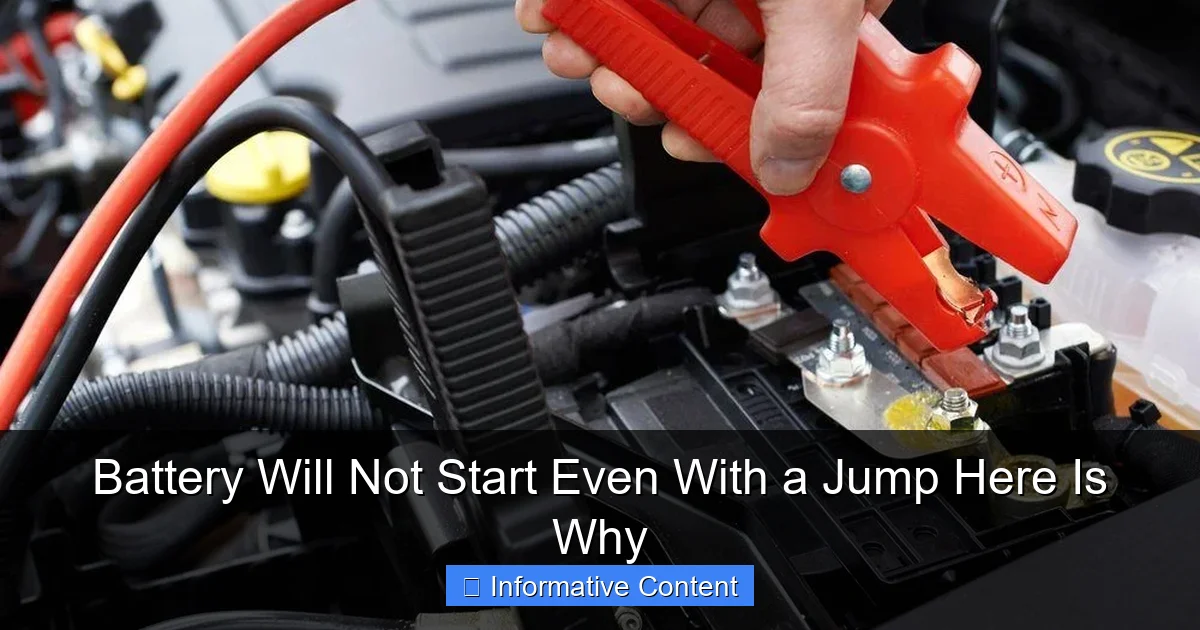
Visual guide about battery will not start even with a jump
Image source: familyhandyman.com
Real-life example: Sarah, a college student, jumped her 2012 Honda Civic twice in one week. The third time, nothing happened. She took the battery to AutoZone, where a free test revealed it was 6 years old and had a shorted cell—meaning it couldn’t accept or store power.
Internal Short Circuits and Sulfation
Batteries contain lead plates submerged in an electrolyte solution. Over time, sulfate crystals can build up on the plates (a process called sulfation), reducing conductivity. Worse, internal shorts—where the plates touch due to physical damage or wear—can render the battery useless. A jump may briefly light up the dash, but without a functional internal structure, the battery can’t deliver the sustained current needed to start the engine.
Tip: If your battery is more than 4 years old and you’ve had multiple jump starts, it’s likely time for a replacement. Don’t wait for a total failure—swap it before you’re stranded.
Freeze Damage (Yes, It Happens in Cold Weather)
Cold temperatures don’t just slow down chemical reactions in batteries—they can also cause physical damage. A fully charged battery freezes around -76°F (-60°C), but a partially discharged one can freeze at 32°F (0°C). If your battery froze, the internal plates may have cracked or warped, leading to a complete loss of function. Even a jump won’t help if the battery’s internal structure is physically compromised.
What to do: If you suspect freeze damage, don’t try to jump it. Remove the battery, let it thaw in a warm place for 24 hours, and have it professionally tested. In most cases, it’ll need to be replaced.
2. The Alternator Is Failing or Already Dead
How the Alternator Keeps Your Battery Alive
The alternator is your car’s built-in battery charger. Once the engine starts, it takes over the job of powering the vehicle’s electrical systems and recharging the battery. If the alternator is failing, the battery slowly drains—even when the car is running. This is why a jump might get you going once, but the next time, the battery is dead again. In some cases, a completely dead alternator won’t even allow the engine to stay running after a jump.
Example: Mark’s 2015 SUV started fine after a jump, but died again within 30 minutes of driving. A mechanic found the alternator had stopped producing voltage—meaning it wasn’t charging the battery at all.
Warning Signs of a Failing Alternator
- Dim or flickering headlights
- Dashboard warning light (look for a battery icon)
- Electrical issues (power windows, radio, or AC acting up)
- Engine stalling or dying while driving
- Whining or grinding noises from the engine bay
These symptoms often appear before the alternator completely fails. Ignoring them can leave you with a car that won’t start even with a jump—because the alternator is the root cause, not the battery.
Can You Test the Alternator Yourself?
Yes! Here’s a simple test you can do at home with a multimeter:
- Start the car and let it idle.
- Set your multimeter to “DC volts” and connect the probes to the battery terminals.
- A healthy alternator should show 13.8 to 14.4 volts.
- If it reads below 13.5 volts or above 15 volts, the alternator may be failing.
Note: If the voltage drops below 12.6 volts after a few minutes, the alternator isn’t charging the battery. Time to replace it.
3. Starter Motor or Solenoid Failure
The Starter’s Job: Cranking the Engine
The starter motor is what physically turns the engine over during ignition. It’s a high-torque electric motor powered by the battery. The solenoid is a small switch that connects the starter to the battery when you turn the key. If either component fails, the engine won’t crank—even with a fully charged battery and a successful jump.
Common symptom: When you turn the key, you hear a single loud “click” but the engine doesn’t turn. This often means the starter solenoid is receiving power but the motor isn’t engaging.
Why a Jump Won’t Help a Bad Starter
A jump provides voltage, but if the starter motor is seized, the solenoid is broken, or the internal brushes are worn out, that voltage can’t do its job. It’s like trying to start a car with a broken key—no matter how much power you have, the mechanism won’t turn.
Real story: James tried jumping his truck three times. Each time, the engine wouldn’t turn over. He finally had it towed to a shop, where they found the starter motor had seized due to moisture damage. A new starter fixed the issue instantly.
DIY Diagnosis: The Tap Test
Here’s a trick mechanics use: while a helper turns the key to “start,” gently tap the starter motor (usually near the bottom of the engine) with a hammer or wrench. Sometimes, a stuck starter will free up and engage. If tapping makes the engine turn over, the starter is likely the culprit.
Caution: Don’t hit it too hard! You’re just trying to jiggle it loose. And never do this with a hot engine—wait until it’s cool.
4. Electrical Connections and Grounds Are Corroded or Loose
Why Clean Connections Matter
Even with a jump, your car needs clean, tight electrical connections to deliver power where it’s needed. Corrosion on battery terminals, loose ground wires, or damaged cables can block the flow of electricity—especially the high current required to start the engine.
Example: Lisa’s car wouldn’t start after a jump. She cleaned the battery terminals with a wire brush and baking soda solution, and the car started on the next try. The corrosion was acting like an insulator, blocking the jump’s power.
Common Connection Problems
- Corroded battery terminals: White or greenish powder buildup on the terminals.
- Loose ground strap: The wire connecting the battery to the chassis or engine block is loose or rusted.
- Damaged jumper cable clamps: Poor contact between the jump cables and battery terminals.
- Frayed or cracked cables: Internal wire breaks that reduce current flow.
How to Check and Fix Connections
- Inspect the battery terminals for corrosion. Clean with a wire brush and a mix of baking soda and water.
- Check the ground strap (usually a thick black wire from the battery to the engine block). Make sure it’s tight and free of rust.
- Inspect all visible wiring for cracks, burns, or fraying. Use electrical tape or heat-shrink tubing to cover minor damage.
- When jumping, ensure both clamps are fully seated on clean metal—not on painted or corroded surfaces.
Pro tip: After cleaning, coat the terminals with a thin layer of petroleum jelly or battery terminal protector. It prevents future corrosion and improves conductivity.
5. Computer or Security System Glitches
Modern Cars Are Run by Computers
Today’s vehicles rely on dozens of electronic control units (ECUs) to manage everything from fuel injection to ignition timing. Sometimes, a glitch in the system—like a failed sensor, a drained backup battery, or a software hiccup—can prevent the engine from starting, even with a jump.
Common culprits:
- Immobilizer system: If your key fob battery is dead or the system doesn’t recognize your key, the engine won’t crank.
- ECU reset after battery disconnect: Some cars need to be “relearned” after a battery replacement or jump.
- Faulty crankshaft position sensor: This sensor tells the computer when to fire the spark plugs. If it fails, the engine won’t start.
Signs of a Computer or Sensor Issue
- The car cranks but doesn’t start (engine turns over, but no ignition)
- Dashboard lights behave erratically (flickering, delayed, or missing)
- Check engine light is on, and a scan reveals a sensor code (e.g., P0335 for crankshaft sensor)
- Keyless entry or push-button start isn’t working
What You Can Do
Start with the simplest fixes:
- Try the spare key: If your key fob has a dead battery, use the mechanical key to unlock the door, then press the fob against the start button (many cars have a backup sensor location).
- Reset the ECU: Disconnect the battery for 15–30 minutes, then reconnect. This can clear temporary glitches.
- Scan for codes: Use an OBD2 scanner (available at auto parts stores for free) to check for sensor or system errors.
When to call a pro: If the scanner shows a critical sensor code (like the crankshaft or camshaft position sensor), or if the immobilizer light is flashing, it’s time for a mechanic. These issues often require specialized tools to diagnose and reset.
6. Other Hidden Causes: Fuel, Spark, or Mechanical Failure
It’s Not Always Electrical
Even if the battery and jump are working, the engine needs three things to start: fuel, spark, and compression. A jump can’t fix a fuel pump failure, a clogged fuel filter, or a bad ignition coil. In rare cases, mechanical problems like a seized engine or broken timing belt can prevent starting—no matter how much power you have.
Common Non-Battery Issues
- Fuel pump failure: The pump delivers gas to the engine. If it’s dead, the engine cranks but won’t start.
- Clogged fuel filter: Over time, debris can block fuel flow. A jump won’t help if there’s no gas reaching the engine.
- Bad ignition coils or spark plugs: Without spark, the engine can’t ignite the fuel-air mixture.
- Seized engine: Often caused by lack of oil or overheating. The engine won’t turn at all, even with a jump.
How to Rule Out Non-Electrical Causes
- Listen for the fuel pump: Turn the key to “on” (don’t start). You should hear a humming noise from the rear of the car for 2–3 seconds. No sound? The pump may be out.
- Check for spark: Remove a spark plug, connect it to the wire, and ground it against the engine block. Have a helper crank the engine. If you don’t see a spark, the ignition system is faulty.
- Smell for gas: After cranking, open the hood. If you don’t smell gasoline, there may be a fuel delivery issue.
- Check oil level: If the engine won’t turn at all, check the oil. If it’s empty or extremely low, the engine may be seized.
Data Table: Quick Diagnosis Guide
| Symptom | Likely Cause | Quick Fix | When to Call a Mechanic |
|---|---|---|---|
| No sound when turning key | Dead battery, bad starter, or loose connection | Check terminals, try jump, tap starter | If jump doesn’t work after cleaning |
| Loud click, no crank | Bad starter motor or solenoid | Tap starter, check connections | If tapping doesn’t help |
| Cranks but won’t start | Fuel, spark, or sensor issue | Check fuel pump sound, spark, scan codes | If no spark or fuel smell |
| Engine dies after jump | Failing alternator | Test alternator voltage | If voltage is below 13.5V |
| Erratic dashboard lights | ECU or sensor glitch | Reset battery, scan codes | If immobilizer light is on |
Final Thoughts: Don’t Jump to Conclusions
When your battery will not start even with a jump, it’s easy to assume the battery is the problem—but that’s rarely the whole story. As we’ve seen, the issue could be a failing alternator, a bad starter, corroded connections, or even a computer glitch. The key is to diagnose systematically. Start with the simplest checks—clean terminals, test voltage, listen for the fuel pump—and work your way up. Use tools like a multimeter and OBD2 scanner to gather data, not just guesses.
Remember, a jump start is a temporary bridge, not a repair. It can help you get to a mechanic or a parts store, but it won’t fix the underlying issue. By understanding the possible causes and knowing how to test them, you’ll save time, money, and frustration. And the next time your car won’t start, you won’t just reach for the jumper cables—you’ll reach for your knowledge.
Stay safe, stay curious, and keep your toolkit ready. Because when the engine refuses to turn over, you’ll know exactly what to do—and why.
Frequently Asked Questions
Why won’t my battery start even with a jump?
A battery that won’t start even with a jump may indicate deeper issues like a completely dead cell, sulfation, or an internal short. Corroded or loose connections can also prevent the jump from transferring power effectively.
Can a bad alternator cause a battery not to start after a jump?
Yes, a failing alternator may not recharge the battery properly, leaving it too weak to start the engine even after a jump. This often results in the vehicle dying shortly after starting or failing to start again later.
Is it possible my battery is too old to hold a charge?
Absolutely. Most car batteries last 3–5 years; an old battery may not retain a charge due to wear and tear. If your battery is near or past this age, it likely needs replacement even if jump-starting temporarily works.
Could a parasitic drain be why my battery won’t start with a jump?
Yes, a parasitic drain—such as a faulty accessory or electrical short—can deplete the battery even when the car is off. This can leave insufficient power to start the engine, even after a jump.
Why does my car battery not start after a jump, but the lights and radio turn on?
If lights and radio work but the engine won’t crank, the issue may be a weak battery unable to deliver the high cranking amps needed to start. This often points to a failing battery or starter motor problems.
What should I check first if my battery won’t start even with a jump?
First, inspect the battery terminals for corrosion or looseness and clean/secure them. Then, test the battery’s voltage and health—most auto shops offer free testing to confirm if it’s the battery or another component.