
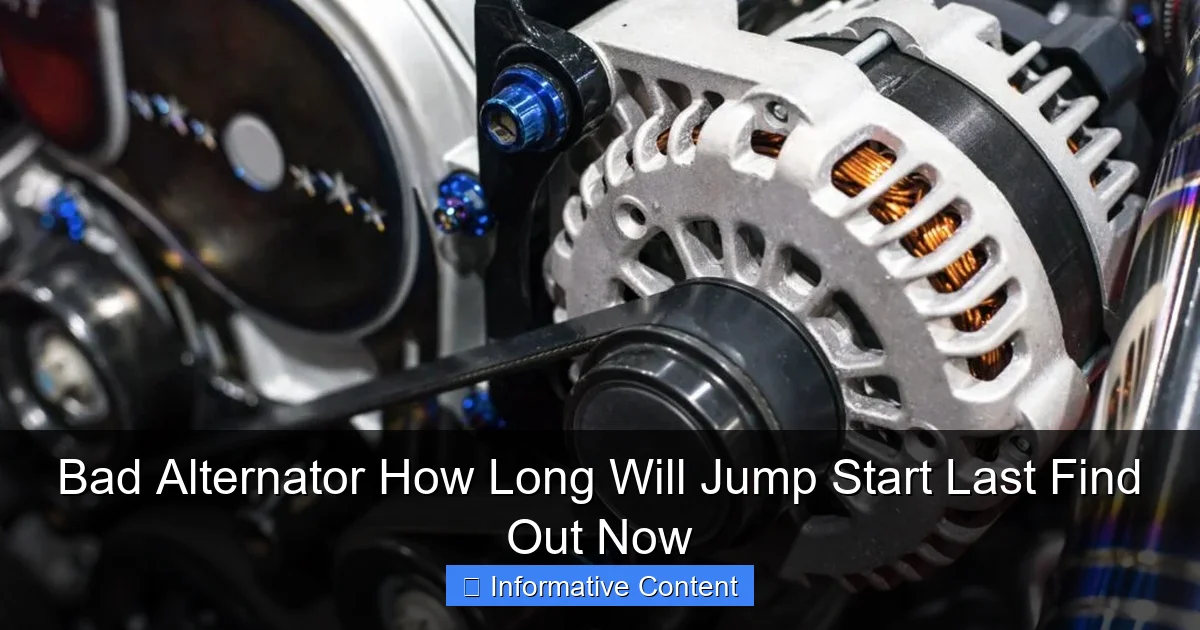
Featured image for bad alternator how long will jump start last
Image source: understandyourcar.com
A bad alternator can leave you stranded fast—even with a jump start, your battery may die within 30 minutes to an hour, depending on its condition and electrical load. Jump-starting provides only a temporary fix, as the failing alternator can’t recharge the battery while driving. Don’t risk getting stuck: get your alternator tested immediately to avoid sudden breakdowns.
Key Takeaways
- Jump starts fail fast with a bad alternator—expect minutes, not hours.
- Test alternator first using voltage checks to confirm it’s the culprit.
- Drive immediately after jump to reach help before battery drains again.
- Avoid short trips—they worsen battery depletion with a failing alternator.
- Replace alternator ASAP to prevent stranded breakdowns and costly repairs.
- Keep emergency tools like a portable jump starter for backup reliability.
📑 Table of Contents
- What Happens When Your Alternator Starts Failing?
- How a Bad Alternator Affects Your Car’s Electrical System
- How Long Will a Jump Start Last with a Bad Alternator?
- What You Can Do to Extend the Life of a Jump Start
- When to Call for Help: Recognizing the Point of No Return
- Alternator Replacement: What to Expect
- Conclusion: Don’t Gamble with a Bad Alternator
What Happens When Your Alternator Starts Failing?
Picture this: You’re late for an important meeting, jump in your car, turn the key—and nothing. The engine doesn’t crank. The lights are dim. The radio stays silent. You’ve seen this before. A quick call to a friend, a pair of jumper cables, and a few minutes later, the engine roars to life. But here’s the real question: bad alternator how long will jump start last? It’s a common scenario, especially during winter months or after long drives. But relying on a jump start with a failing alternator isn’t a fix—it’s a temporary lifeline.
Many drivers don’t realize that a jump start only addresses the symptom, not the cause. Your battery may be fine, but if the alternator—the part that keeps the battery charged while driving—is on its last legs, you’re just buying time. That jump might get you to the next gas station, but it won’t prevent the next stall on the highway. Understanding how long a jump start will last with a bad alternator isn’t just about convenience; it’s about safety, reliability, and avoiding costly towing bills.
How a Bad Alternator Affects Your Car’s Electrical System
Let’s break down what’s really happening under the hood. Your car’s electrical system is like a power grid: the battery is the storage unit, and the alternator is the generator that keeps it charged. When you start the engine, the battery provides the initial burst of power. Once running, the alternator takes over, powering the lights, radio, AC, and recharging the battery. But if the alternator is failing, it can’t keep up.
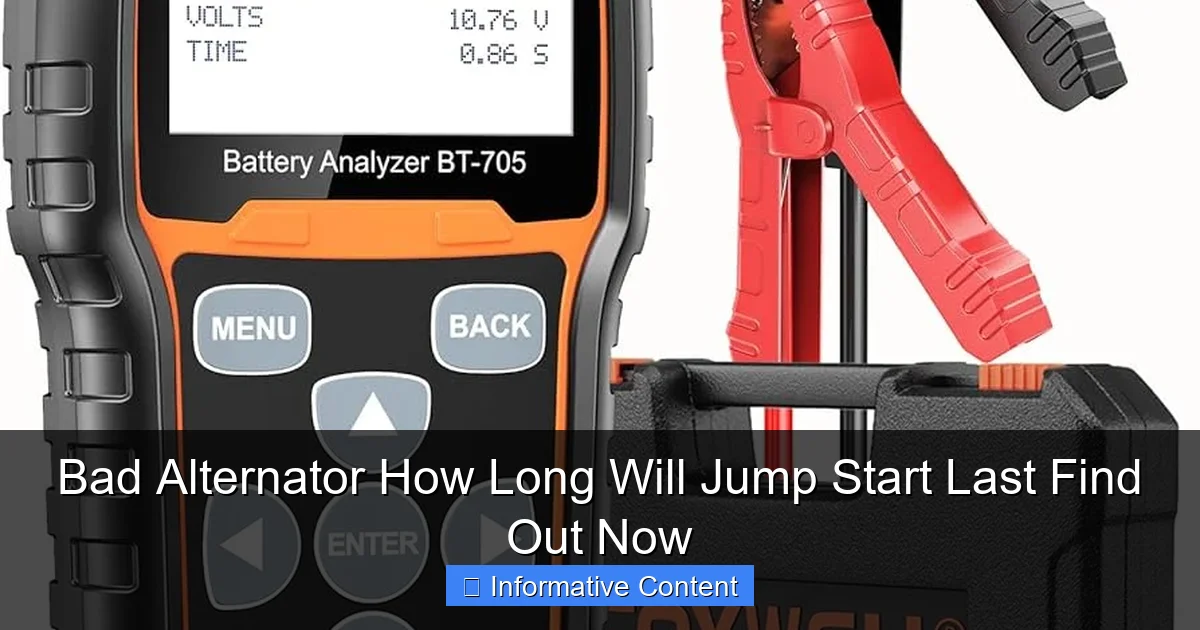
Visual guide about bad alternator how long will jump start last
Image source: m.media-amazon.com
The Role of the Alternator
The alternator converts mechanical energy from the engine into electrical energy. It maintains a steady voltage (around 13.5 to 14.5 volts) while the engine runs. Without this, the battery drains rapidly. Think of it like a phone charger: you can power your phone with a power bank (battery), but if you’re not plugged into a wall (alternator), it’ll eventually die.
When the alternator fails, the car begins to run solely on the battery. This is why jump-starting works at first—the battery is fully charged. But as soon as you disconnect the jumpers, the car starts draining that battery with no way to replenish it.
Signs Your Alternator Is Failing
Before we dive into how long a jump start will last, let’s spot the warning signs:
- Dim or flickering headlights: Especially noticeable at night or when using AC or radio.
- Warning lights: A battery or ALT light on the dashboard. Don’t ignore it!
- Electrical issues: Power windows slow down, radio cuts out, dashboard lights behave erratically.
- Strange noises: A whining or grinding sound from the engine bay could be a failing alternator bearing.
- Frequent jump starts: If you’re jump-starting more than once a week, it’s a red flag.
I once ignored a flickering dashboard light for weeks. I thought, “It’s fine, the car starts every time.” Then one rainy evening, my headlights dimmed, the wipers slowed, and the car died in a parking lot. The alternator had completely failed. The jump start lasted exactly 18 minutes before the battery gave out.
Why a Jump Start Is Only a Band-Aid
A jump start is like giving your car a full tank of gas, but the fuel pump is broken. You’ve got fuel, but no way to deliver it. The battery stores energy, but without the alternator, there’s no way to refill it. Every electrical component—from the ignition system to the fuel pump—draws power from the battery. Once that power is gone, the engine stops.
So, while a jump start can get you moving, it doesn’t fix the root problem. And the longer you drive, the faster the battery depletes. This is why understanding bad alternator how long will jump start last is crucial for planning your next steps.
How Long Will a Jump Start Last with a Bad Alternator?
This is the million-dollar question. And the answer? It depends—but rarely more than 30 to 60 minutes under normal driving conditions. Let’s explore the factors that influence this.
Battery Health and Capacity
Not all batteries are created equal. A brand-new, fully charged battery (typically 45–70 amp-hours) might power your car for up to an hour. But an older battery—say, 3 years or more—may only last 15–25 minutes. Why? Because as batteries age, their capacity drops. Even a “good” battery at 5 years might only hold 60% of its original charge.
For example, my friend had a 4-year-old battery. He jumped his car, drove 20 minutes to work, and it died in the parking lot. The alternator was shot, and the battery couldn’t sustain the load.
Electrical Load (What You’re Using)
The more electrical devices you use, the faster the battery drains. Here’s a quick breakdown:
- Minimal load (just engine and ignition): 45–60 minutes
- Moderate load (lights, radio, wipers): 25–40 minutes
- Heavy load (AC, headlights, heated seats, phone charging): 15–25 minutes
On a cold winter night, I once drove with headlights, defroster, wipers, and the heater on. My alternator was failing, and the jump start lasted only 17 minutes. The moment I turned off the defroster, I gained a few more minutes—but not much.
Driving Conditions and Engine RPM
Higher engine speeds (RPMs) can slightly increase alternator output—even if it’s weak. So, highway driving (2,500–3,500 RPM) might help a partially working alternator produce a tiny bit of charge. But if it’s fully failed, RPM doesn’t matter. In stop-and-go traffic, the engine idles at 600–800 RPM, which means even less chance of trickle charging.
Also, frequent stops (like in city driving) mean the engine is off more often, so the battery isn’t being used continuously—but it’s not being charged either. This can actually extend the life of a jump start slightly, because the engine isn’t drawing power when off. But it’s risky—you might not restart after a stop.
Real-World Example: The 30-Minute Rule
Based on data from mechanics and real driver reports, here’s a general guideline:
- With a good battery and minimal electrical use: Up to 60 minutes
- With a moderate battery and normal use: 30–45 minutes
- With a weak or old battery and high electrical load: 15–25 minutes
One mechanic told me, “I’ve seen jump starts last 90 minutes in ideal conditions—but that’s rare. Most people get 30 minutes or less. And the second jump? It’ll last half as long.”
What You Can Do to Extend the Life of a Jump Start
So, you’ve got a bad alternator and a jump start. You need to get to a mechanic, but you’re not sure if you’ll make it. Here are practical, real-world tips to squeeze every minute out of that battery.
Minimize Electrical Load
Turn off everything you don’t need:
- Headlights (use low beams if driving at night)
- AC or heater (open windows instead)
- Radio, phone chargers, USB devices
- Interior lights, heated seats, defroster (use intermittently)
- Power windows (keep them up)
When my alternator started failing, I drove home with only the engine running. No music, no heater, just silence. I made it—35 minutes—with 20% battery left. It was uncomfortable, but I avoided a tow.
Plan Your Route Wisely
Choose the shortest, most direct route to your destination. Avoid:
- Highway exits that require long idle times
- Areas with heavy traffic lights
- Hilly terrain (uses more engine power)
- Construction zones (frequent stops)
GPS apps like Waze can help you avoid traffic. Set your destination before you jump-start, so you don’t waste battery on navigation.
Drive Smoothly and Consistently
Rapid acceleration uses more power. Instead, accelerate gently and maintain a steady speed. Avoid sudden stops. Use coasting when possible (e.g., take your foot off the gas when approaching a red light).
One driver told me he made it 42 minutes by driving at 55 mph on a back road, avoiding highways and traffic. “I treated it like a fuel-efficient challenge,” he said. “It worked.”
Keep the Battery Terminals Clean
Corrosion on the battery terminals can increase resistance, reducing available power. If you have time, clean the terminals with a wire brush before jump-starting. A clean connection means more efficient power delivery.
Tip: Carry a small terminal cleaning tool in your glove box. It takes 2 minutes and can add a few extra minutes to your drive.
Use a Portable Jump Starter (If Available)
Modern portable jump starters (lithium-based) can give you a second chance. If your car dies, you can restart it without another vehicle. But remember: this just gives you more time on the same dying battery. It won’t fix the alternator.
I keep a NOCO Boost Plus in my trunk. After my first jump died, I restarted it and drove another 10 minutes to a mechanic. It cost $100, but saved me a $200 tow.
When to Call for Help: Recognizing the Point of No Return
Let’s be honest: sometimes, pushing your luck ends badly. Here’s how to know when it’s time to stop driving and call for help.
Warning Signs You’re Running on Empty
Your car will tell you when the battery is nearly dead:
- Engine cranks slowly when starting (after a stop)
- Dashboard lights dim when idling
- Stalling at low speeds or when turning
- Hesitation when accelerating
- “Battery” or “ALT” light flickers on and off
If you notice these, pull over immediately. The next stop might be your last.
Where to Pull Over Safely
Never stop on a highway or busy road. If possible, pull into a parking lot, gas station, or side street. Turn on your hazard lights. If you’re on a highway, pull as far to the shoulder as possible and call for roadside assistance.
One driver ignored the dimming lights and tried to cross a busy intersection. The car died mid-crossing. It was dangerous and could have caused an accident.
Cost of Towing vs. Alternator Repair
Let’s talk money. A tow truck typically costs $75–$150, depending on location and distance. An alternator replacement? $400–$800 (parts + labor). But if you keep driving with a bad alternator, you risk:
- Failing to start at all (stranded)
- Damaging other electrical components
- Needing a new battery (due to deep discharge)
- Causing a breakdown in a dangerous location
Spending $100 on a tow now might save you $1,000 in repairs later. And more importantly, it keeps you safe.
Alternator Replacement: What to Expect
Once you’re at the shop, here’s what happens—and what you should know.
Diagnosis and Testing
Don’t let a mechanic replace your alternator without testing. A simple voltage test can confirm the issue:
- With engine off: Battery should read ~12.6 volts
- With engine running: Should read 13.5–14.5 volts
- If it’s below 13.5 volts, the alternator isn’t charging properly
Many auto parts stores (like AutoZone, O’Reilly) offer free alternator testing. Use it!
Choosing the Right Alternator
Alternators come in different amperage ratings (e.g., 80A, 120A). Your car’s manual specifies the correct one. Don’t go cheaper—low-quality alternators fail faster. Look for reputable brands like Bosch, Denso, or ACDelco.
Labor and Total Cost
Here’s a typical cost breakdown for alternator replacement:
| Component | Cost Range |
|---|---|
| Alternator (OEM or quality aftermarket) | $150 – $400 |
| Labor (1.5–2.5 hours) | $150 – $300 |
| Total | $300 – $700 |
| Additional (if battery needs replacement) | $100 – $200 |
Some mechanics recommend replacing the belt (serpentine or V-belt) at the same time, since it’s already being removed. This adds $50–$100 but prevents future issues.
After the Repair: What to Check
Once your alternator is replaced:
- Drive for 20–30 minutes to recharge the battery
- Check that the “ALT” or battery light is off
- Test all electrical components (lights, radio, AC)
- Get a voltage test to confirm charging (13.5–14.5 volts)
Don’t skip the post-repair check. A faulty installation can lead to new problems.
Conclusion: Don’t Gamble with a Bad Alternator
So, bad alternator how long will jump start last? The honest answer is: not long enough to rely on. You might get 15 minutes or 60, but it’s unpredictable and risky. Every minute you drive with a failing alternator is a minute closer to being stranded.
Jump-starting is a temporary fix—not a solution. It’s like putting a band-aid on a broken bone. You need to see a doctor (or mechanic). Use the jump to get to safety, not to continue your daily commute. Minimize electrical use, drive smart, and get to a repair shop as soon as possible.
Remember: your car’s electrical system is delicate. A failing alternator can damage other components, including the battery, voltage regulator, and even the engine control module. The cost of ignoring it far outweighs the inconvenience of a tow.
Next time your car struggles to start, don’t just grab the jumper cables. Ask yourself: “Is this the alternator?” Listen for the signs. Check the voltage. And if you’re unsure, get it tested. Because when it comes to a bad alternator, the jump start is just the beginning of the story—not the end.
Frequently Asked Questions
How long will a jump start last with a bad alternator?
A jump start with a bad alternator typically lasts only 15–30 minutes, depending on battery charge and electrical load. The battery will drain quickly since the failing alternator can’t recharge it while driving.
Can I drive my car with a bad alternator using a jump start?
You can drive short distances after a jump start, but the battery will deplete rapidly if the bad alternator isn’t replaced. Avoid high electrical loads (AC, lights) to extend the battery’s life.
Why does my car die after a jump start if the alternator is bad?
A failing alternator can’t supply power to the engine or recharge the battery, causing the car to shut off once the jump-started battery is drained. This confirms the need for alternator replacement.
How far can I drive on a jump start with a bad alternator?
Most vehicles will only run for 10–20 miles after a jump start if the alternator is faulty. Stopping or turning off the engine may leave you stranded if the battery is too weak to restart.
Will a jump start damage a car with a bad alternator?
Jump-starting itself won’t damage the car, but repeated attempts with a bad alternator can strain the battery and electrical systems. Replace the alternator ASAP to avoid costly repairs.
What happens if I keep jump-starting a car with a bad alternator?
Continuously jump-starting will degrade the battery and may cause other electrical issues. The root problem—the faulty alternator—must be fixed to prevent ongoing breakdowns.