
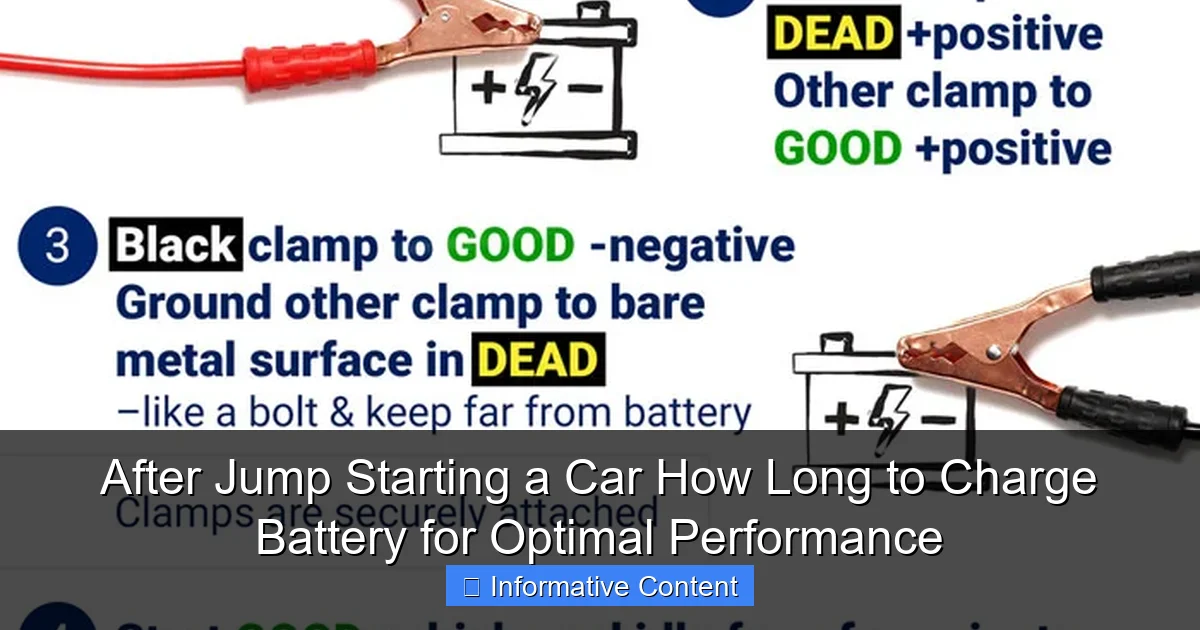
Featured image for after jump starting a car how long to charge battery
Image source: unitedautoinsurance.com
After jump starting a car, drive for at least 30 minutes to allow the alternator to recharge the battery sufficiently for reliable performance. For optimal results, avoid short trips and instead take a continuous drive of 45–60 minutes, especially if the battery was deeply discharged. Repeated jump starts or prolonged inactivity may require a dedicated battery charger to fully restore capacity and prevent future failure.
Key Takeaways
- Drive immediately after jump start: Run the engine 20-30 mins to begin recharging.
- Avoid short trips: Long drives ensure the battery fully recharges.
- Use a battery charger: For optimal results, charge with a smart charger overnight.
- Check battery health: Test voltage to confirm if replacement is needed.
- Turn off accessories: Reduce load on the alternator during recharge.
- Monitor warning lights: Address charging system alerts immediately.
📑 Table of Contents
- After Jump Starting a Car How Long to Charge Battery for Optimal Performance
- Why Jump Starting Isn’t Enough: The Real Battery Story
- How Long Should You Drive After a Jump Start?
- Factors That Affect Battery Recharge Time
- Using a Battery Charger: A Faster, More Reliable Option
- Signs Your Battery Isn’t Holding a Charge
- Best Practices for Battery Maintenance and Prevention
- Battery Recharge Time Comparison Table
- Conclusion: Don’t Just Jump Start—Recharge and Maintain
After Jump Starting a Car How Long to Charge Battery for Optimal Performance
Picture this: It’s a cold Monday morning, you’re running late for work, and you hop into your car—only to find it won’t start. The dashboard lights flicker weakly, the engine groans but refuses to turn over. Panic sets in. You remember your neighbor once helped you jump start your car last winter, so you grab the jumper cables and give it a try. Success! The engine roars to life. But now you’re left wondering: What’s next? Specifically, after jump starting a car how long to charge battery so it doesn’t leave you stranded again?
You’re not alone. Thousands of drivers face this same dilemma every year, especially during extreme weather or after leaving lights on overnight. Jump starting your car is a temporary fix—it gets you moving, but it doesn’t solve the underlying issue: a depleted or failing battery. The real question isn’t just about getting the car started; it’s about restoring your battery to full health so it can reliably power your vehicle again. And that means understanding how long to charge the battery after a jump start, what factors affect that time, and how to maintain your battery for long-term performance.
Why Jump Starting Isn’t Enough: The Real Battery Story
Jump starting a car is like giving someone a shot of adrenaline—it revives them momentarily, but they still need rest and recovery. The same goes for your car’s battery. When you jump start, you’re essentially borrowing power from another battery (usually from another vehicle or a portable jump starter) to kick your engine into gear. But once the engine is running, the alternator—your car’s built-in charger—takes over to replenish the battery.
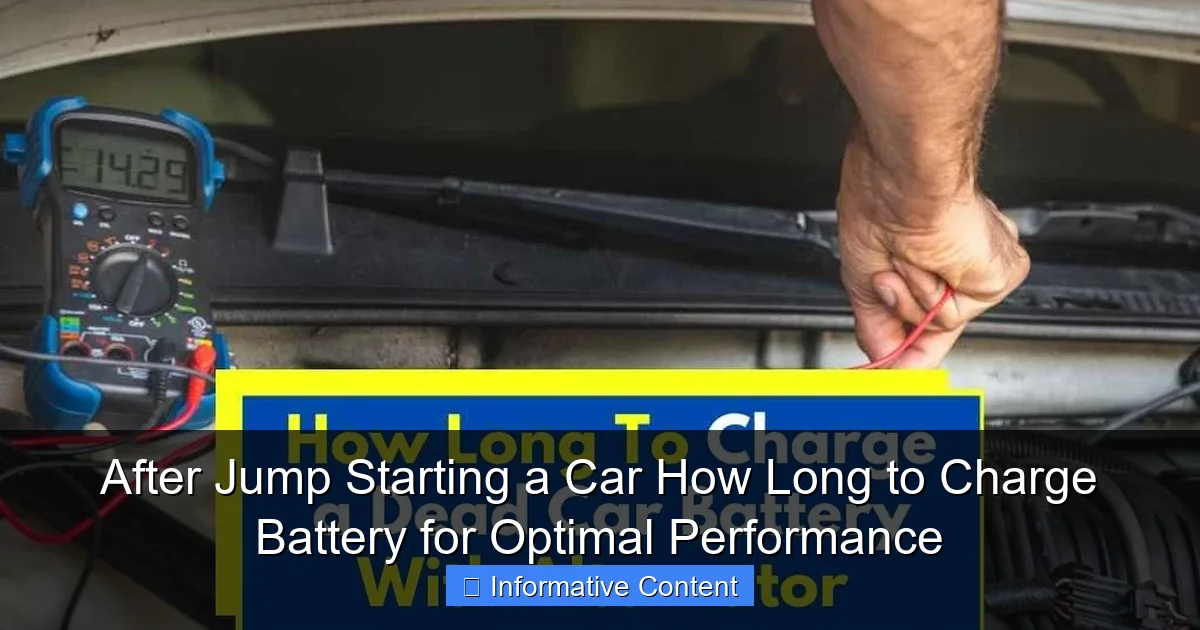
Visual guide about after jump starting a car how long to charge battery
Image source: weldingtroop.com
How the Alternator Recharges the Battery
The alternator is a small but mighty component under your hood. Once your engine is running, it generates electricity to power your car’s electrical systems and recharge the battery. Think of it as your car’s internal power plant. However, it doesn’t instantly refill a dead battery. It works gradually, and the speed depends on several factors, including how drained the battery was, the age of the battery, and how much electrical load your car is using (like headlights, AC, or radio).
Common Misconceptions About Jump Starting
Many people assume that once the car starts, the battery is “fixed.” But that’s far from the truth. A jump start only provides enough power to turn the engine over. It doesn’t fully recharge the battery. If you turn the car off too soon after a jump, the battery may not have stored enough energy to start the car again. This is why understanding after jump starting a car how long to charge battery is critical for avoiding repeat breakdowns.
Another myth is that driving for just 5–10 minutes is enough. While that might help a little, it’s rarely sufficient for a deeply discharged battery. In fact, some experts recommend driving for at least 30 minutes to an hour to allow the alternator to restore a meaningful charge.
How Long Should You Drive After a Jump Start?
So, how long do you actually need to drive or let your car run after a jump start? The short answer: at least 30 minutes of continuous driving is ideal. But let’s break that down based on different scenarios.
Light Discharge (e.g., Left Lights On Overnight)
If your battery died because you accidentally left your headlights or interior lights on, the drain is usually moderate. In this case, driving for 20–30 minutes at highway speeds (where the alternator works more efficiently) should restore enough charge to restart the car later. For example, if you jump start your car at 7 a.m. and drive to work (a 25-minute commute), you’re likely in good shape—assuming you don’t turn the car off and on multiple times during that trip.
Deep Discharge (e.g., Car Sat for Weeks or Extreme Cold)
If your car hasn’t been driven in weeks or was exposed to freezing temperatures, the battery may be deeply discharged. Cold weather slows chemical reactions inside the battery, reducing its capacity. In these cases, 30 minutes may not be enough. You might need to drive for 45 minutes to an hour, or even use a dedicated battery charger at home.
Old or Weak Batteries
Batteries degrade over time. A typical car battery lasts 3–5 years. If yours is nearing the end of its life, it may not hold a charge well—even after a long drive. In such cases, driving for an hour might only partially recharge it. You’ll know your battery is struggling if the car struggles to start again after being turned off, or if dashboard warning lights flicker.
Pro Tip: If you’re unsure about your battery’s health, visit an auto parts store. Most offer free battery testing. They can tell you if your battery is holding a charge or if it’s time for a replacement.
Factors That Affect Battery Recharge Time
Not all batteries recharge at the same rate. Several variables influence how quickly your battery regains its charge after a jump start. Understanding these can help you make smarter decisions about driving time and battery care.
Battery Age and Condition
As mentioned, older batteries lose their ability to hold a charge. A 4-year-old battery might take twice as long to recharge as a new one. Sulfation—a buildup of lead sulfate crystals—can also reduce efficiency. This happens when a battery sits discharged for too long. Once sulfation sets in, it’s hard to reverse, and the battery may need replacement.
Electrical Load During Driving
The more electrical devices you use while driving, the harder your alternator has to work—and the less power goes to recharging the battery. For example, running the heater, defroster, headlights, and stereo at full blast can significantly slow recharge time. If you’re trying to recharge a dead battery, it’s best to minimize extra electrical usage. Turn off non-essential systems and drive with just the basics: engine, lights, and maybe the radio.
Engine Speed and Alternator Output
Alternators produce more power at higher RPMs. That’s why driving on the highway (where the engine runs faster) is more effective for recharging than idling in traffic or driving short distances at low speeds. Idling for 30 minutes might only add a small amount of charge, whereas 30 minutes of highway driving can make a big difference.
Temperature and Weather Conditions
Extreme cold slows down the chemical reactions in your battery, making it harder to recharge. In winter, you may need to drive longer or use a battery charger. Conversely, very hot weather can accelerate battery degradation, especially if the battery is already weak.
Real-Life Example: Sarah, a nurse who works night shifts, once jump started her car after leaving her headlights on. She drove 20 minutes to work, but when she tried to leave at 7 a.m., the car wouldn’t start again. Why? She had the heater, defroster, and seat warmers on full blast during her drive—draining power instead of recharging. The next time, she drove with minimal electrical load and made it home without issues.
Using a Battery Charger: A Faster, More Reliable Option
While driving is the most convenient way to recharge your battery after a jump start, it’s not always the most effective—especially if you have a weak battery or limited driving time. That’s where a dedicated battery charger comes in.
Why a Charger Is Better Than Just Driving
A quality battery charger delivers a controlled, consistent charge directly to the battery. Unlike the alternator, which prioritizes powering the car’s systems, a charger focuses solely on restoring the battery. This means faster, more complete recharging—often in just a few hours.
For example, a 10-amp charger can fully recharge a moderately drained battery in 4–6 hours. Some smart chargers even have maintenance modes that keep the battery at optimal levels without overcharging.
Types of Battery Chargers
- Trickle Chargers: Deliver a slow, steady charge (1–2 amps). Ideal for long-term maintenance or very weak batteries. Takes 12–24 hours for a full charge.
- Standard Chargers: 4–10 amps. Good for most everyday needs. Recharge in 4–8 hours.
- Fast Chargers: 15–50 amps. Can recharge quickly but risk overheating or damaging older batteries if not used carefully.
- Smart Chargers: Automatically adjust charge rate based on battery condition. Safe for all battery types and often include desulfation modes.
How to Safely Use a Battery Charger
Using a charger is simple, but safety matters. Always:
- Turn off the car and remove the keys.
- Connect the charger’s red clamp to the positive terminal (+) and black clamp to the negative terminal (–).
- Plug in the charger and select the appropriate setting (e.g., 12V, maintenance mode).
- Let it charge for the recommended time—don’t rush it.
- Disconnect in reverse order: unplug first, then remove clamps.
Pro Tip: If you live in a cold climate or don’t drive often, consider keeping a smart charger in your garage. It’s a small investment that can save you from repeated jump starts.
Signs Your Battery Isn’t Holding a Charge
Even after driving for an hour or using a charger, your battery might still struggle. That’s a red flag. Here are common signs that your battery is failing and may need replacement:
Slow Engine Crank
When you turn the key, the engine turns over slowly—like it’s struggling. This is one of the earliest signs of a weak battery. If it takes longer than usual to start, especially in cold weather, pay attention.
Dim Lights and Electrical Issues
Headlights that dim when the engine is idling, flickering dashboard lights, or slow power windows can all indicate a battery that’s not holding a charge. These symptoms often worsen as the battery deteriorates.
Check Engine or Battery Warning Light
Modern cars have warning lights that alert you to charging system problems. If the battery light stays on while driving, it could mean the alternator isn’t charging the battery properly—or the battery itself is too weak to accept a charge.
Swollen Battery Case
Heat can cause the battery case to swell. If your battery looks bloated or distorted, it’s likely damaged and should be replaced immediately. A swollen battery can leak acid or even explode in extreme cases.
Old Age
Even if your battery seems fine, most don’t last beyond 5 years. If yours is 4+ years old and you’ve had to jump start it more than once, it’s probably time for a new one.
Real-Life Example: Tom, a delivery driver, noticed his car was slow to start in the mornings. He jump started it twice in one week, but it kept dying. He took it to a shop, and they found his battery was 5 years old and had a bad cell. Replacing it solved the problem instantly.
Best Practices for Battery Maintenance and Prevention
The best way to avoid jump starts altogether is to maintain your battery and charging system. A little prevention goes a long way.
Regular Driving Habits
Short trips don’t give the alternator enough time to fully recharge the battery. If you only drive 5–10 minutes at a time, your battery is constantly undercharged. Try to take longer drives weekly, or use a battery maintainer if your car sits for days.
Turn Off Accessories When Parked
It’s easy to forget interior lights, phone chargers, or dash cams running when the car is off. These “parasitic drains” can kill your battery over time. Make it a habit to double-check before walking away.
Clean Battery Terminals
Corrosion on the battery terminals (white or greenish powder) can block electrical flow. Clean them with a mixture of baking soda and water, then apply a thin layer of petroleum jelly to prevent future buildup.
Check Battery Health Annually
Most auto parts stores offer free battery and charging system tests. Get yours checked once a year, especially before winter. It’s quick, free, and could save you from a breakdown.
Invest in a Portable Jump Starter
Instead of relying on another driver, keep a portable jump starter in your car. These compact devices can jump start your battery without another vehicle. Many also include USB ports for charging phones—perfect for emergencies.
Battery Recharge Time Comparison Table
| Battery Condition | Recommended Recharge Method | Estimated Time to Recharge | Notes |
|---|---|---|---|
| Light Discharge (e.g., lights left on) | Driving (highway) | 20–30 minutes | Minimize electrical load |
| Moderate Discharge (e.g., cold weather start) | Driving (highway) | 30–45 minutes | Avoid short trips |
| Deep Discharge (e.g., car unused for weeks) | Battery charger (10-amp) | 4–6 hours | Smart charger recommended |
| Old or Weak Battery (3+ years) | Battery charger + replacement | 6+ hours or replace | Test battery first |
| Extreme Cold Weather | Charger or long drive | 45–60 minutes driving or 6+ hours charging | Use block heater if available |
Conclusion: Don’t Just Jump Start—Recharge and Maintain
Jump starting your car is a lifesaver when you’re stranded, but it’s only the first step. To ensure your battery is truly ready for the road, you need to understand after jump starting a car how long to charge battery for optimal performance. While 30 minutes of driving is a good rule of thumb, the real answer depends on your battery’s condition, how deeply it was drained, and your driving habits.
For the best results, combine driving with smart charging practices. Use a battery charger when possible, minimize electrical load, and keep up with regular maintenance. And if your battery is old or showing signs of failure, don’t wait—replace it before it leaves you stuck again.
Remember, your car’s battery is the heart of its electrical system. Treat it well, and it’ll keep you moving reliably for years. So the next time you reach for those jumper cables, think beyond the jump. Think recharge. Think prevention. Think long-term performance.
Frequently Asked Questions
How long should I drive my car after jump starting to charge the battery?
After jump starting a car, you should drive it for at least 20 to 30 minutes to allow the alternator to recharge the battery sufficiently. This helps restore enough charge for reliable starts in the future.
Can a car battery recharge fully after a jump start without being driven?
No, idling the engine alone may not fully recharge a depleted battery after a jump start. Driving the car at normal speeds ensures the alternator works efficiently to restore optimal battery charge.
How long to charge battery after jump starting if the battery is old?
If the battery is old or weak, it may take longer—up to an hour of driving—to charge the battery after jump starting. Consider testing or replacing the battery if it fails to hold a charge.
Is it safe to turn off the engine immediately after jump starting?
It’s not recommended to turn off the engine right after jump starting, as the battery hasn’t had time to recharge. Drive for at least 15–20 minutes to help replenish the charge and prevent another dead battery.
Will the alternator fully recharge a dead battery after a jump start?
The alternator can recharge a dead battery after a jump start, but it may take 30 minutes to several hours depending on driving conditions and battery health. For deeply discharged batteries, a dedicated charger is more effective.
How long to charge battery after jump starting before using accessories?
Wait at least 10–15 minutes of driving after jump starting before using high-drain accessories like headlights or the radio. This gives the battery time to stabilize and begin recharging.