
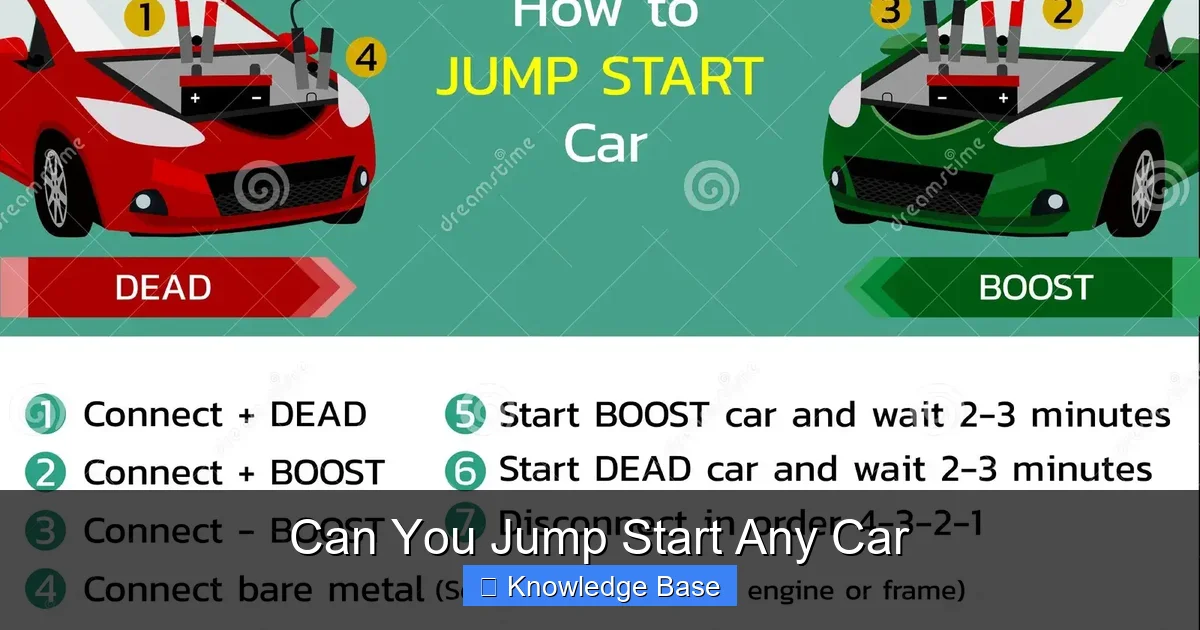
Not all cars can be jump-started successfully, and attempting it incorrectly can damage your battery or vehicle. Compatibility depends on battery type, voltage, and electrical systems, while safety precautions like correct terminal connections are critical. Always check your owner’s manual before attempting a jump-start.
This is a comprehensive guide about can you jump start any car.
Key Takeaways
- Battery Type Matters: Only jump-start cars with identical 12V lead-acid batteries (AGM or flooded). Lithium-ion or hybrid batteries often require professional help.
- Voltage Must Match: A 6V battery won’t work on a 12V system, and vice versa. Most modern cars run on 12V.
- Electrical System Compatibility: Some hybrids/electric cars have sensitive electronics that may fry from improper jump-starting.
- Correct Connections: Always connect red (+) to positive first, black (-) to negative last (on donor car, then dead car).
- Risk of Sparks: Loose cables near fuel tanks can cause fires. Keep them away from gas caps.
- Don’t Overdo It: If the engine cranks but won’t start, stop—your battery might need replacement.
- Safety First: Wear gloves/glasses, avoid wet conditions, and never leave cables unattended.
—
[FEATURED_IMAGE_PLACEHOLDER]
Introduction: Why Not Every Car Can Be Jump-Started
Car trouble lights flashing? A dead battery is one of the most frustrating emergencies—especially when you’re stranded in traffic or at an inconvenient location. While jump-starting seems simple, not every car can be revived this way. Factors like battery chemistry, voltage mismatch, and even the age of the vehicle play a role. This guide breaks down which cars are jump-startable, how to do it safely, and when to call a tow instead.
Imagine you’re out camping when your truck dies. Do you grab jumper cables and hope for the best? Or do you research first? The answer matters. Missteps can cost more than just time—they risk damaging expensive alternators or even igniting fuel vapors. Let’s demystify the process step by step.
Section 1: What Makes a Car Jump-Startable?
1.1 Battery Type & Voltage
For a successful jump-start, both cars must use compatible batteries:
- 12V Systems: Nearly all modern cars (sedans, SUVs, trucks) rely on 12V lead-acid batteries. These are the standard for jumper cables.
- 6V Systems: Older European/Russian cars may use 6V batteries. Attempting a 12V-to-6V jump-start will damage both batteries.
- AGM vs. Flooded: Absorbent Glass Mat (AGM) batteries (common in newer cars) handle rapid charging better than traditional flooded batteries but still need proper connections.
1.2 Electrical System Compatibility
Hybrids and electric vehicles (EVs) often have high-voltage systems. For example:
- Prius/Civic Hybrids: Their 12V starter battery isn’t designed to power the entire vehicle’s electronics during a jump-start. A weak 12V battery might not engage the engine at all.
- Electric Cars (Tesla, etc.): These don’t have a conventional starter; they require specialized equipment.
Section 2: How to Safely Jump-Start a Car
2.1 Step-by-Step Guide
- Park Closer: Position donor car within reach (5 feet max) to avoid cable strain.
- Turn Off Both Engines: Prevent electrical shorts or sparks.
- Identify Terminals: Red (+) on top, black (-) on bottom. Never confuse them!
- Connect Cables (Order Matters):strong>
- Red (+) to donor’s positive.
- Black (-) to donor’s negative.
- Red (+) to dead car’s positive.
- Black (-) to metal unpainted surface on dead car (e.g., frame bolt), not the battery post.
- Crank Slowly: Start the donor car, wait 2 minutes, then try starting the dead car.
- Remove Cables (Reverse Order):strong> Disconnect black (-) first, red (+) second, black from donor, finally red from dead car.
2.2 Common Mistakes to Avoid
- Reversed Cables: Connecting red to negative can short-circuit the alternator.
- Cable Loops: Loose cables touching metal parts create sparks near fuel tanks.
- Overcharging: Don’t let donor car idle too long; it wastes battery life.
Section 3: Cars That Shouldn’t Be Jump-Started
3.1 Hybrid/Electric Vehicles
Models like Toyota Prius or Chevy Bolt rely on complex systems. A failed jump-start could:
- Disable regenerative braking.
- Trigger error codes needing dealership diagnostics.
3.2 Cars With Weak Batteries
If a car’s battery is below 50% capacity, jumping it may not work. Symptoms include:
- Slow cranking despite good connections.
- Engine starts briefly then stalls.
3.3 Aftermarket Modifications
Custom-installed audio systems or LED lighting can draw extra power. If these aren’t accounted for during a jump-start, the alternator may overwork and fail.
Section 4: Tools & Equipment You’ll Need
- Jumper Cables: Look for 4-gauge wires (heavy-duty for thick batteries).
- Portable Jump Starters: Compact devices (e.g., NOCO Boost) eliminate the need for another car.
- Flashlight/Gloves: Essential for nighttime jumps or handling corroded terminals.
- Wrench Set: To tighten loose battery terminals if needed.
Section 5: When to Call a Professional
Skip DIY if:
- The car has a flashing battery warning light beyond just no-starting (possible alternator failure).
- You smell burning plastic or see smoke (electrical fault).
- The battery is leaking acid (wear PPE and dispose of it properly).
Conclusion: Know Before You Jump
A dead battery doesn’t always mean a jumper cable fix. Understanding compatibility, following safety steps, and recognizing when to seek help saves money and prevents disasters. Remember: When in doubt, consult your owner’s manual or a mechanic. With the right knowledge, you’ll be back on the road faster—and safer.
—
Quick Q&A
Question 1?
Can I jump-start my Tesla?
Question 2?
What if my battery won’t charge after a jump-start?
Question 3?
How long should I wait between cranking attempts?
Question 4?
Is it okay to jump-start a car in the rain?
Question 5?
What’s the cheapest way to replace a dead battery?
Frequently Asked Questions (FAQs)
What’s the difference between AGM and flooded batteries?
AGM batteries are sealed, vibration-resistant, and charge faster, making them ideal for modern cars. Flooded batteries require regular water refilling but are cheaper upfront.
Can I jump-start a car without another car nearby?
Yes! Portable jump starters (like those from CTEK or XDJ) mimic a donor car’s power. Ensure the device matches your car’s amperage needs (typically 400–800A).
Why does my car die after a jump-start?
This signals a failing battery, bad alternator, or parasitic drain (e.g., left-on lights). Have a mechanic diagnose the root cause.
Are jumper cables universal?
Most 12V cables work, but heavy-duty cables (4-gauge) are better for trucks or extreme cold. Avoid thin, frayed cables.
How often should I replace my car battery?
Batteries typically last 3–5 years. Check voltage with a multimeter (< 12.4V means replacement time).
Quick Answers to Common Questions
What is can you jump start any car?
can you jump start any car refers to essential knowledge and techniques.
Frequently Asked Questions
What is can you jump start any car?
can you jump start any car is an important topic with many practical applications.