
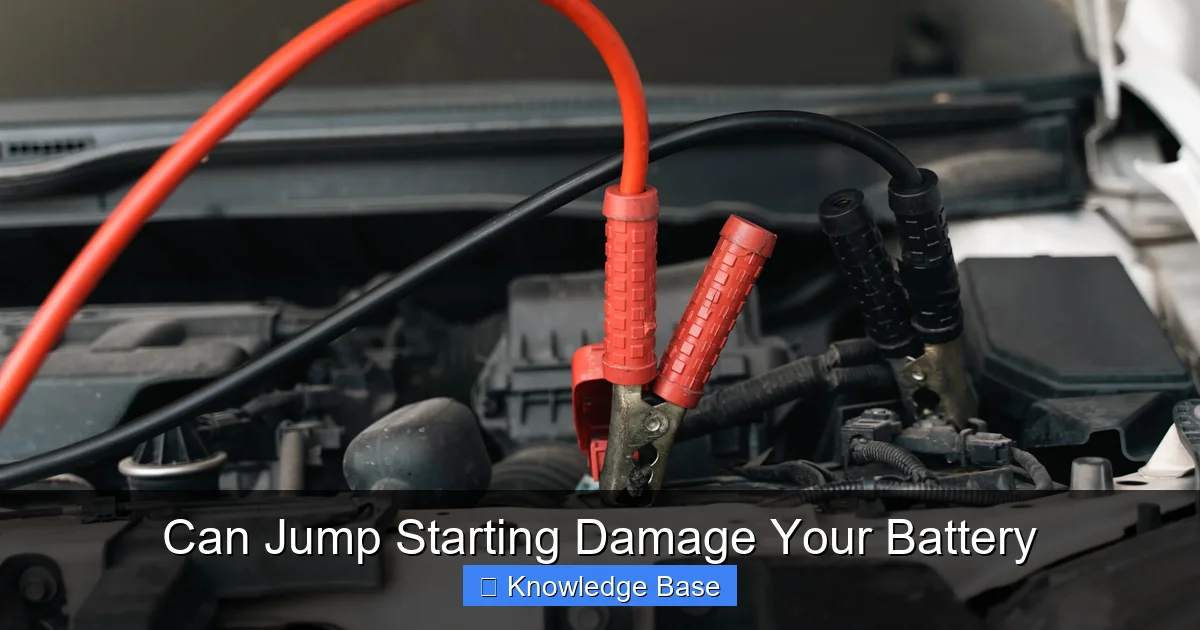
Jump-starting a dead battery can damage yours if done incorrectly, but modern vehicles are designed to handle it when proper precautions are taken. Overcharging, incorrect cable connections, or leaving jumper cables attached too long can cause overheating, sulfation, or even permanent failure. By following best practices—like checking terminals, avoiding sparks, and disconnecting cables in the right order—you minimize risks and protect your battery’s lifespan.
This is a comprehensive guide about can jump starting damage your battery.
Key Takeaways
- Modern batteries are resilient: Most OEM batteries and alternators can handle occasional jump-starts without damage.
- Cable order matters: Always connect positive (+) first, negative (-) last (to ground), and reverse when disconnecting.
- Avoid sparks: Never attach negative cables near fuel or flammable materials to prevent explosions.
- Don’t overheat: If cables get excessively hot or smoke rises, stop immediately to avoid thermal damage.
- Sulfation risk: Prolonged low voltage (e.g., frequent deep discharges) harms batteries more than one jump-start.
- Check for corrosion: Clean terminals before connecting to ensure good contact and reduce resistance.
- Alternator stress: Frequent jump-starts strain the alternator; use a portable charger for repeated needs.
—
[FEATURED_IMAGE_PLACEHOLDER]
Can Jump Starting Damage Your Battery?
Introduction: The Good News and the Caveats
You’re stuck on the side of the road, engine won’t turn, and you grab jumper cables. It happens to everyone—but can jumping start a car hurt its battery? The short answer is: It depends. While a single, properly executed jump-start rarely damages a healthy battery, doing it wrong repeatedly or ignoring warning signs can shorten its lifespan. Let’s break down the science behind jump-starts, common pitfalls, and how to keep your battery safe.
Batteries are like sponges that store energy chemically. When they drain completely (below ~12V for most 12V batteries), their internal chemistry struggles to recover. A jump-start provides temporary power to restart the alternator, which then recharges the battery. But improper techniques—like leaving cables connected too long, reversing polarity, or forcing weak connections—can push the battery beyond its limits.
How Jump-Starts Work: The Basics
The Role of Jumper Cables
Jumper cables act as a bridge between two batteries (or a donor car and your dead battery). Here’s how it works:
- Positive (+) connection: Connect the red clamp to the dead battery’s positive terminal first.
- Ground (-) connection: Attach the black clamp to a grounded metal part on the working car (not the dead battery’s negative).
- Reverse after: Disconnect in the opposite order when done.
Pro tip: Always check battery terminals for corrosion (white/green crust) with a wire brush before connecting. Corrosion increases resistance, causing heat buildup and potential damage.
Common Mistakes That Harm Batteries
Mistake 1: Leaving Cables Connected Too Long
If the donor car runs while jumper cables remain attached for more than 5–10 minutes, the dead battery may receive excessive current, overheating plates inside. Symptoms include:
- Smoke or burning smell from cables
- Swollen battery case
- Sudden voltage spikes (check with a multimeter)
Mistake 2: Incorrect Cable Order
Reversing the sequence (negative first) risks creating a spark near fuel lines or fumes, potentially igniting them. Even worse, connecting negative to the dead battery’s terminal shorts the circuit, frying electronics.
Mistake 3: Using Weak or Damaged Cables
Frayed wires or loose clamps create poor contact, forcing higher currents through thinner strands. This generates heat and can melt insulation.
Signs Your Battery Was Damaged After a Jump-Start
Physical Indicators
- Leaking electrolyte: Cracks or bulging cases suggest overheating.
- Corrosion acceleration: White powdery deposits worsen after jump-starts due to acid reactions.
Performance Warnings
- Hard cranking: If jump-starts don’t fix issues, the battery may be sulfated (plates coated with lead sulfate crystals).
- Voltage drops below 10V: Indicates severe internal damage.
Best Practices for Safe Jump-Starting
Step-by-Step Guide
- Park both cars close: Engage parking brakes and turn off all electronics (radio, lights).
- Clean terminals: Use baking soda and water paste on corroded surfaces.
- Connect correctly: Red (+) to dead battery, black (-) to donor’s chassis.
- Start donor car: Wait 2 minutes before attempting your engine.
- Disconnect in reverse: Black (-) first, then red (+).
When to Seek Help
If your battery dies frequently, consider:
- A load tester: Diagnodes if the battery or alternator is failing.
- A portable charger: Safer for multiple attempts (e.g., Noco Genius series).
- Professional inspection: For older batteries (over 3 years) with no recent jump-starts.
Alternatives to Jump-Starting
Portable Jump Starters
These compact devices ($50–$150) eliminate donor-car dependency. Features to look for:
- Minimum 600–800 peak amps (for SUVs/trucks)
- LED indicators for battery health
- USB ports for emergencies
Battery Refreshers
Devices like the Battery Doctor use pulsed currents to break down sulfate crystals, extending life by 50%+. Best for sulfated batteries.
Conclusion: Protect Your Investment
A well-executed jump-start is unlikely to damage a healthy battery, but shortcuts and negligence can accelerate wear. By prioritizing safety (no sparks, correct cable order, minimal runtime), you’ll avoid costly replacements. For recurring issues, invest in a quality portable charger or consult a mechanic. Remember: Prevention beats cure!
—
### QUICK Q&A
Question 1?
No, a single correct jump-start won’t damage a new battery, but doing it improperly (wrong cable order, overheating) can. Modern batteries are built to handle occasional jumps if done right.
Question 2?
Yes! Leaving negative cables attached too long risks overcharging, which can cause plate warping or electrolyte leakage.
Question 3?
Look for swelling, leaks, or rapid voltage drop (<10V). Test with a multimeter: Healthy batteries stay above 12.4V when idle.
Question 4?
Always connect red (+) to dead battery first, then black (-) to the donor’s chassis. Reverse when disconnecting.
Question 5?
Yes. Poor connections cause arcing, which can melt cables or ignite fuel vapors. Keep cables away from exhausts/fuel tanks.
—
### FAQs
Can jump-starting a hybrid/electric vehicle damage the battery?
Yes. Hybrids and EVs have sensitive high-voltage systems. Only use manufacturer-approved methods or a professional service.
How often should I jump-start my car?
Frequent jumps (>2/year) signal underlying issues. Investigate alternator output or battery capacity instead.
Is it better to jump-start or replace a battery?
For older batteries (3+ years), replacement may be cost-effective. Newer batteries tolerate occasional jumps better.
What if my car won’t jump-start?
Check fuses, starter motor, or alternator. If nothing helps, tow to a shop—forcing starts worsens damage.
Do I need special cables for jump-starting?
No, but heavy-duty 4-gauge cables (≥10ft) handle high currents better. Avoid thin, damaged wires.
Can jump-starting damage my car’s electronics?
Rarely, unless there’s a short circuit (e.g., reversed polarity). Most modern ECUs protect against voltage spikes.
Quick Answers to Common Questions
What is can jump starting damage your battery?
can jump starting damage your battery refers to essential knowledge and techniques.
Frequently Asked Questions
What is can jump starting damage your battery?
can jump starting damage your battery is an important topic with many practical applications.