
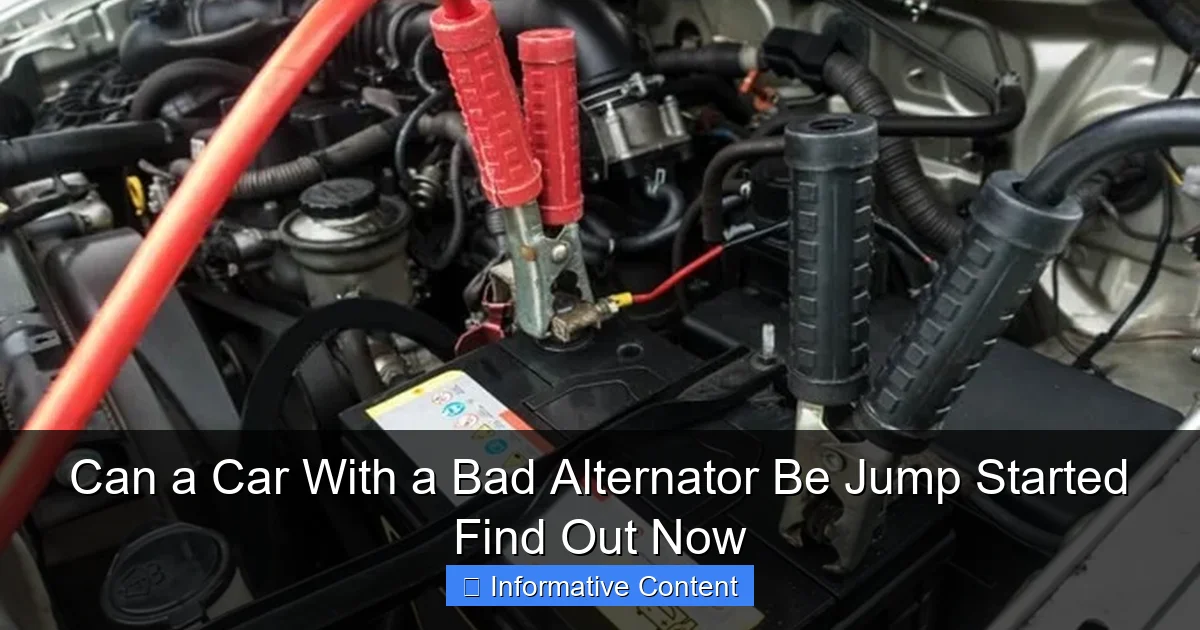
Featured image for can a car with a bad alternator be jump started
Image source: batteryskills.com
Yes, a car with a bad alternator can be jump started, but it’s only a temporary fix—the battery will quickly lose power once the engine runs since the alternator isn’t recharging it. Driving with a faulty alternator risks sudden breakdowns, so get it diagnosed and replaced immediately to avoid being stranded.
Key Takeaways
- Jump starting works temporarily: A bad alternator won’t stop a jump start, but the battery will drain again.
- Drive immediately after jump: Keep the engine running to avoid stalling due to power loss.
- Check alternator symptoms: Dim lights and warning lights signal alternator failure—diagnose promptly.
- Replace the alternator ASAP: Relying on jumps risks stranding you and damaging the electrical system.
- Use a battery charger: Recharge the battery fully before attempting a jump start for best results.
📑 Table of Contents
- Can a Car With a Bad Alternator Be Jump Started? Find Out Now
- How the Alternator Keeps Your Car Running
- Jump Starting a Car With a Bad Alternator: Is It Possible?
- Step-by-Step: Jump Starting a Car With a Bad Alternator
- Risks and Limitations of Jump Starting With a Bad Alternator
- What to Do After Jump Starting: The Next Steps
- Conclusion: Jump Start as a Temporary Fix, Not a Solution
Can a Car With a Bad Alternator Be Jump Started? Find Out Now
Imagine this: you’re running late for work, and as you turn the key, your car sputters and dies. The headlights flicker, the radio cuts out, and you’re left sitting in silence. You try again, and nothing. A quick inspection reveals the battery seems fine—but you suspect the alternator might be the culprit. Now you’re stuck, wondering: can a car with a bad alternator be jump started?
We’ve all been there. That moment of panic when the car won’t start is enough to make anyone sweat. But before you call a tow truck or start shopping for a new alternator, let’s take a step back. Jump starting a car with a failing or dead alternator is possible, but it’s not a long-term fix. Think of it like putting a bandage on a broken leg—it might get you to the hospital, but you still need proper treatment. In this post, we’ll break down how alternators work, what happens when they fail, and whether jump starting is a viable option. We’ll also cover the risks, practical steps, and what to do next. So grab a coffee, and let’s dive in.
How the Alternator Keeps Your Car Running
What Does an Alternator Do?
The alternator is your car’s electrical powerhouse. While the battery gets the engine started, the alternator takes over once the car is running. It generates electricity to power all the electrical systems—lights, radio, AC, power windows, and even the fuel injectors. Without it, your car would run on battery power alone, and that battery would drain in 20–30 minutes.
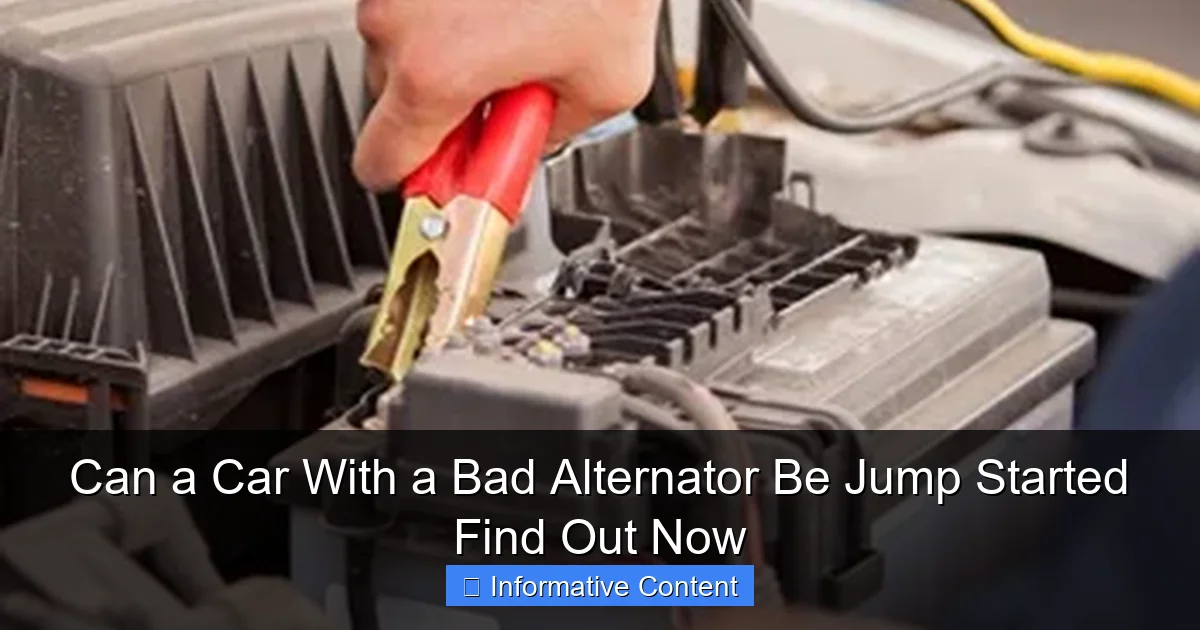
Visual guide about can a car with a bad alternator be jump started
Image source: thecarpicks.com
Here’s a simple analogy: the battery is like a water tank, and the alternator is the pump that refills it. If the pump (alternator) fails, the tank (battery) empties, and the system shuts down. So even if your battery is fully charged, a bad alternator means you’re on borrowed time.
Signs of a Failing Alternator
Before we get into jump starting, let’s identify the warning signs of alternator trouble. Catching these early can save you from being stranded:
- Dimming headlights: If your lights flicker or get noticeably dim when you accelerate or use accessories, the alternator might not be keeping up.
- Battery warning light: A glowing battery or “ALT” light on the dashboard is a red flag.
- Strange noises: Grinding, whining, or squealing sounds from the engine bay often point to worn alternator bearings.
- Electrical issues: Power windows moving slowly, radio cutting out, or dashboard lights behaving erratically.
- Car stalling: If the engine dies shortly after starting, especially when using electrical components, the alternator may be failing.
I once ignored a flickering battery light for a week. Big mistake. One evening, I drove home, turned on the AC, and the car died at a red light. The alternator was toast. Lesson learned: pay attention to those warning signs.
Jump Starting a Car With a Bad Alternator: Is It Possible?
The Short Answer
Yes, you can jump start a car with a bad alternator, but it’s not a permanent solution. The jump start gives the battery enough power to turn the engine over, but once the engine is running, the faulty alternator can’t recharge the battery. So you’re essentially driving on borrowed time—until the battery drains again.
Think of it like this: a jump start is a “get out of jail free” card. It lets you start the car, but you still need to fix the underlying problem (the bad alternator) to avoid getting stranded again.
How It Works
When you jump start a car:
- The donor car’s battery provides a surge of power to your battery.
- This extra juice lets the starter motor crank the engine.
- The engine starts, and the alternator should begin recharging the battery.
But if the alternator is bad, step 3 fails. The battery starts discharging immediately, and within minutes (or even seconds, depending on electrical load), the car will stall.
Practical tip: If you’re jump starting a car with a suspected bad alternator, turn off all non-essential electrical systems—AC, radio, heated seats, phone chargers, etc. This reduces the load on the battery and gives you more time to drive to safety.
Real-Life Example
My friend Mark had a 2008 sedan with a failing alternator. The battery light came on, but he ignored it. One morning, the car wouldn’t start. We jumped it, and the engine turned over. But the moment he turned on the headlights, the RPMs dropped, and the car sputtered. He made it two blocks before it died at a stop sign. We had to push it to a parking lot. The alternator was completely shot—no output at all. The jump start only lasted 90 seconds.
This shows that jump starting works, but the window to act is small. The goal isn’t to drive home or to work—it’s to get to a mechanic or a safe place where you can address the alternator issue.
Step-by-Step: Jump Starting a Car With a Bad Alternator
Tools You’ll Need
Before you start, make sure you have:
- Jumper cables (heavy-duty, at least 4-gauge)
- A second car with a working battery
- Gloves and safety glasses (optional but recommended)
- Owner’s manual (to locate battery terminals)
Pro tip: Keep a set of jumper cables in your trunk. You never know when you’ll need them—or when someone else will.
Step 1: Position the Cars
Park the donor car close enough for the cables to reach, but don’t let the cars touch. Turn off both engines, set the parking brakes, and put the transmissions in park (automatic) or neutral (manual).
Step 2: Connect the Jumper Cables
Follow this order to avoid sparks and battery damage:
- Connect the red (positive) clamp to the dead battery’s positive terminal.
- Connect the other red clamp to the donor battery’s positive terminal.
- Connect the black (negative) clamp to the donor battery’s negative terminal.
- Connect the other black clamp to an unpainted metal surface on the dead car’s engine block (not the battery’s negative terminal). This grounds the circuit and reduces the risk of sparks near the battery.
Why ground it? Batteries can emit hydrogen gas, which is explosive. Grounding the negative cable away from the battery minimizes spark risk.
Step 3: Start the Donor Car
Start the donor car and let it idle for 2–3 minutes. This charges the dead battery slightly. Don’t rev the engine—just let it run.
Step 4: Try Starting the Dead Car
Attempt to start the car with the bad alternator. If it doesn’t start right away, wait another minute and try again. If it still won’t start, check the cable connections.
Step 5: Disconnect the Cables (Carefully!)
Once the car starts, disconnect the cables in reverse order:
- Remove the black clamp from the engine block.
- Remove the black clamp from the donor battery.
- Remove the red clamp from the donor battery.
- Remove the red clamp from the dead battery.
Never let the clamps touch each other or any metal while connected.
Step 6: Drive Immediately (But Wisely)
As soon as the car starts, drive straight to a mechanic or a safe location. Don’t stop for gas, coffee, or errands. The battery is now your only power source. Every electrical system you use drains it faster.
Example: If you drive 10 miles to a repair shop with the lights and radio off, you’ll likely make it. But if you stop at a drive-thru, turn off the engine, and try to restart, you might not get going again.
Risks and Limitations of Jump Starting With a Bad Alternator
Risk 1: Getting Stranded
The biggest risk is that the car will stall mid-drive. If you’re on a busy road or highway, this can be dangerous. Even if you’re in a parking lot, you’ll need another jump start—or a tow.
Real-world scenario: A reader emailed me about his wife who jump started her car with a bad alternator. She made it to work, turned off the engine, and couldn’t restart. She was stranded in a parking garage for hours before a colleague helped.
Risk 2: Damaging the Battery
Repeated jump starts can stress a battery, especially if it’s old. A weak battery combined with a bad alternator is a recipe for failure. In some cases, the battery may not hold a charge at all after multiple jump attempts.
Risk 3: Electrical System Damage
Modern cars have sensitive electronics (ECUs, sensors, infotainment systems). Voltage fluctuations from a failing alternator can fry these components. A jump start might get the car running, but if the alternator is sending erratic voltage, you could damage the ECU or other systems.
When Jump Starting Won’t Work
Jump starting fails if:
- The battery is completely dead or damaged (not just discharged).
- The alternator is seized or physically broken (e.g., snapped belt).
- There’s a short circuit or wiring issue in the charging system.
- The starter motor is faulty (jump start won’t help).
In these cases, a jump start is useless. You’ll need a mechanic to diagnose the real issue.
What to Do After Jump Starting: The Next Steps
Drive to a Mechanic (Fast!)
Your priority after a jump start is to get the car to a repair shop. Drive straight there—no detours. If you’re far from a mechanic, consider calling a tow truck. It’s safer and cheaper than risking a breakdown on the road.
Test the Alternator
A mechanic can test the alternator’s output with a multimeter or a dedicated alternator tester. A healthy alternator should produce 13.8–14.4 volts when the engine is running. Less than 13.5 volts? The alternator is failing.
Tip: Many auto parts stores (like AutoZone, O’Reilly) offer free alternator testing. Just drive in, and they’ll check it while you wait.
Replace the Alternator (or Get a Refurbished One)
Alternators aren’t cheap, but they’re essential. Replacement costs range from $200 to $600, depending on the car model and labor rates. Some shops offer refurbished alternators, which can save you 30–50%.
Example: A 2015 Honda Civic alternator costs about $300 for the part and $150 for labor. A refurbished one might be $180, saving $120.
Data Table: Alternator Replacement Costs (Average)
| Car Model | New Alternator Cost | Labor Cost (1–2 hours) | Total Estimate |
|---|---|---|---|
| Honda Civic (2015) | $280–$350 | $120–$180 | $400–$530 |
| Ford F-150 (2018) | $320–$400 | $150–$200 | $470–$600 |
| Toyota Camry (2016) | $250–$320 | $120–$160 | $370–$480 |
| Chevrolet Malibu (2017) | $260–$330 | $130–$170 | $390–$500 |
Note: Prices vary by location and shop. Always get a quote before agreeing to repairs.
Prevent Future Issues
Once the alternator is fixed, take steps to avoid repeat problems:
- Check the drive belt: A loose or cracked belt can cause alternator failure. Inspect it every 15,000 miles.
- Test the battery: A weak battery forces the alternator to work harder. Replace batteries every 3–5 years.
- Listen for noises: Squealing or grinding sounds? Get it checked early.
- Use a battery tender for cars that sit unused for weeks.
Conclusion: Jump Start as a Temporary Fix, Not a Solution
So, can a car with a bad alternator be jump started? Absolutely. But remember: it’s a temporary fix, not a cure. Jump starting gives you a narrow window to get to a mechanic or a safe place. It won’t fix the alternator, and it won’t prevent future breakdowns.
The key takeaway? Don’t ignore the warning signs. A flickering battery light, dim headlights, or strange noises are your car’s way of saying, “Help me!” Address alternator issues early, and you’ll save time, money, and stress.
And if you do get stranded? Stay calm. Call for help, use jumper cables if available, and drive straight to a repair shop. Just don’t make the mistake of thinking a jump start solves everything. It’s a bridge to safety—not a destination.
Next time your car won’t start, you’ll know exactly what to do. And who knows? Maybe you’ll even help a friend in need. Because let’s face it—everyone deserves a little roadside rescue now and then.
Frequently Asked Questions
Can a car with a bad alternator be jump started?
Yes, a car with a bad alternator can be jump started temporarily using jumper cables or a portable jump starter. However, the engine may stall once the external power source is removed since the alternator can’t recharge the battery.
How long can I drive after jump starting a car with a bad alternator?
Driving after a jump start is only a short-term solution—typically 30 minutes to an hour—depending on the battery’s remaining charge. The battery will eventually die without the alternator supplying power.
Is it safe to jump start a car if the alternator is failing?
Jump starting is generally safe, but repeated attempts can strain the battery or electrical system. If the alternator is completely dead, avoid driving far and seek a mechanic immediately to prevent getting stranded.
What happens if I try to jump start a car with a bad alternator?
The car may start and run briefly using the battery’s stored charge, but the engine will likely shut off once the battery is depleted. This is a sign that the alternator isn’t recharging the battery properly.
Can a bad alternator drain a new battery after a jump start?
Yes, a faulty alternator can drain a new battery because it fails to supply power to the vehicle and recharge the battery while running. Replacing the alternator is essential to avoid recurring issues.
What are the signs I need to replace my alternator after a jump start?
Warning signs include dimming lights, frequent stalling, a dead battery, and the battery warning light on your dashboard. If these occur after a jump start, have your alternator inspected immediately.