
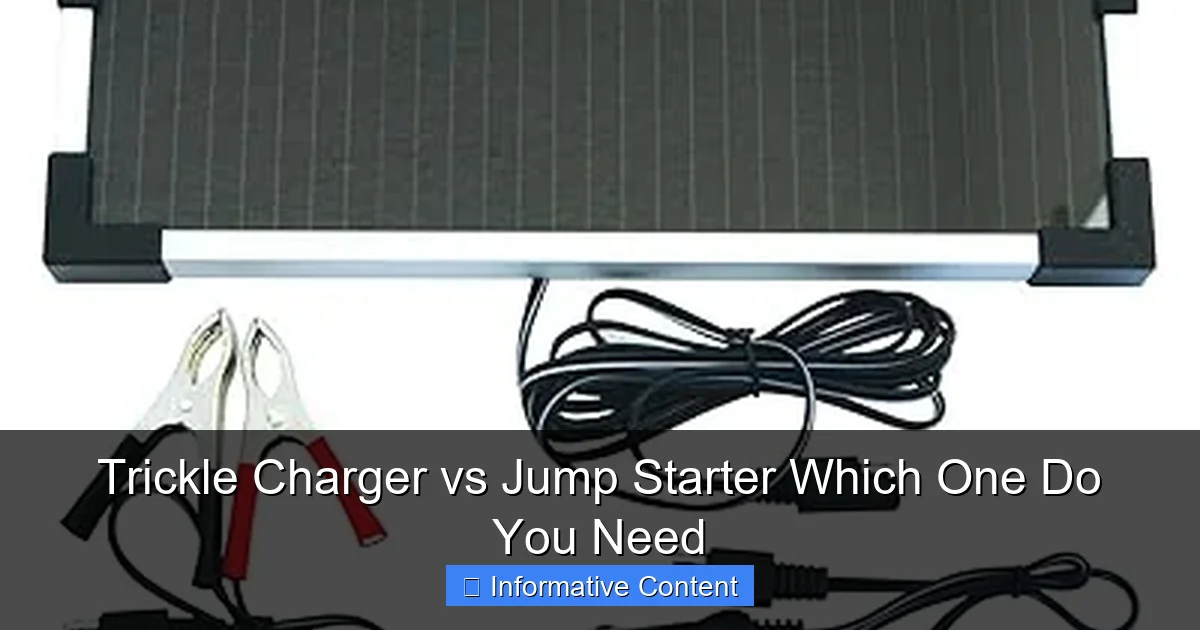
Featured image for trickle charger vs jump starter
Image source: images-na.ssl-images-amazon.com
Choosing between a trickle charger and a jump starter depends on your primary need: maintaining battery health over time or getting a dead battery started quickly. A trickle charger slowly replenishes a battery to prevent discharge during storage, ideal for seasonal vehicles, while a jump starter delivers instant power to revive a dead battery without another car—perfect for emergencies. For long-term care, go with a trickle charger; for immediate roadside rescue, a jump starter is essential.
Key Takeaways
- Choose a jump starter for quick engine starts in emergencies.
- Use a trickle charger for long-term battery maintenance and health.
- Jump starters are portable and work without another vehicle’s help.
- Trickle chargers prevent damage with slow, controlled charging over time.
- Combine both tools for optimal battery care and emergency readiness.
📑 Table of Contents
- Trickle Charger vs Jump Starter: Which One Do You Need?
- What Is a Trickle Charger? How It Works and When to Use It
- What Is a Jump Starter? The Portable Powerhouse for Emergencies
- Key Differences: Trickle Charger vs Jump Starter (Side-by-Side)
- When to Choose a Trickle Charger: The Preventative Approach
- When to Choose a Jump Starter: The Emergency Lifesaver
- Do You Need Both? The Smart Combination for Ultimate Peace of Mind
- Final Thoughts: Trickle Charger vs Jump Starter — It’s Not Either/Or
Trickle Charger vs Jump Starter: Which One Do You Need?
Let’s face it—few things are more frustrating than a dead car battery. You’re in a hurry, maybe late for work or rushing to pick up the kids, and the engine just won’t turn over. You hear that dreaded click, click, click… and your heart sinks. I’ve been there more times than I’d like to admit. It’s moments like these that make you rethink your roadside preparedness. But here’s the thing: the solution isn’t always the same. Sometimes, you need a quick jolt to get back on the road. Other times, your battery just needs a slow, steady revival. That’s where the debate between trickle charger vs jump starter comes in.
At first glance, both tools seem to do the same thing—get your car running when the battery’s down. But they work in very different ways, serve different needs, and suit different lifestyles. One is like a slow, soothing cup of tea. The other is an espresso shot straight to the engine. Whether you’re a weekend warrior, a daily commuter, or someone who only drives the car once a month, understanding the difference can save you time, money, and a whole lot of stress. In this guide, I’ll walk you through what each device does, when to use it, and—most importantly—which one (or both) you actually need.
What Is a Trickle Charger? How It Works and When to Use It
A trickle charger is like a gentle nurse for your car battery. It delivers a low, steady current to keep your battery fully charged over time. Think of it as a slow drip of energy—just enough to offset the natural self-discharge that happens when a car sits unused. Unlike a regular charger that might overcharge or damage a battery, a trickle charger is designed to be left connected for days, weeks, or even months.
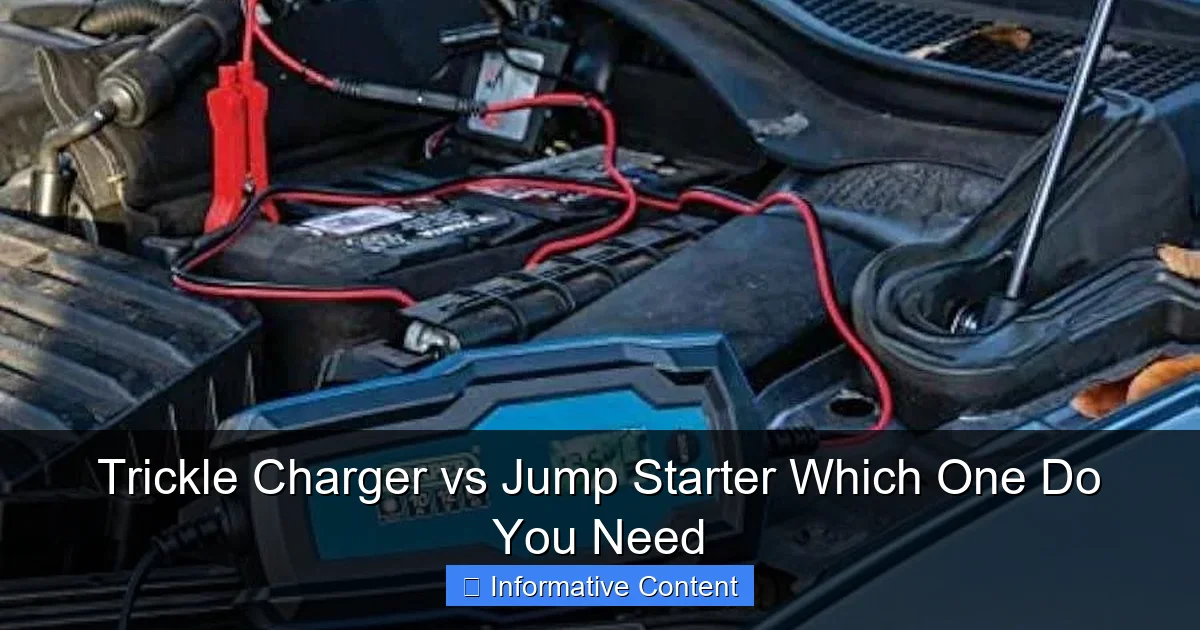
Visual guide about trickle charger vs jump starter
Image source: img.ltwebstatic.com
How Trickle Chargers Work
Trickle chargers typically output between 1 and 3 amps of current—hence the name “trickle.” This low current prevents overheating and overcharging, which can shorten a battery’s lifespan. Most modern trickle chargers are “smart” or “float” chargers, meaning they automatically adjust the voltage and current based on the battery’s state. Once the battery reaches full charge, the charger switches to maintenance mode, keeping it topped off without causing harm.
For example, if you have a classic car you only drive a few times a year, or a seasonal vehicle like a motorcycle or boat, a trickle charger is a lifesaver. I use one on my old road bike during the winter. I plug it in every few weeks, and the battery stays healthy. No surprises come spring.
Best Use Cases for Trickle Chargers
- Long-term storage: Ideal for cars, motorcycles, ATVs, or RVs that aren’t used for weeks or months.
- Maintaining battery health: Prevents sulfation—a buildup of lead sulfate crystals that kills batteries over time.
- Winter storage: Cold weather accelerates battery drain. A trickle charger keeps your battery strong through the cold months.
- Low-usage vehicles: If you drive your car once a week or less, a trickle charger helps maintain optimal charge.
One practical tip: always connect the trickle charger to the battery before plugging it into the wall. This prevents sparks that could damage the charger or, in rare cases, cause a fire. And never leave a non-smart (dumb) trickle charger connected for more than 24 hours—it can overcharge and ruin the battery.
Limitations of Trickle Chargers
Here’s the catch: a trickle charger won’t jump-start your car. If your battery is completely dead—no lights, no radio, no crank—it can take hours to charge enough to start the engine. I once tried to trickle charge a fully dead battery for 8 hours… the car still wouldn’t start. That’s when I realized I needed something faster.
Also, trickle chargers require access to an electrical outlet. If you’re stranded in a parking lot or on a rural road, you’re out of luck unless you have an extension cord and a nearby power source (which, let’s be honest, is rare).
What Is a Jump Starter? The Portable Powerhouse for Emergencies
If a trickle charger is a slow, steady drip, a jump starter is a full-on adrenaline rush. A jump starter—also called a portable jump pack or battery booster—is a compact, rechargeable device that delivers a high burst of power to start your car instantly. It’s like having a spare battery in your trunk, ready to save the day.
How Jump Starters Work
Jump starters contain a built-in lithium-ion or lead-acid battery, usually ranging from 12,000 to 20,000 milliamp-hours (mAh). When your car battery is too weak to start the engine, you connect the jump starter’s clamps to your battery terminals (red to positive, black to negative), and—boom—the device sends a surge of current to crank the engine.
Modern jump starters are smart too. Many have safety features like reverse polarity protection (so you won’t fry your car if you connect the clamps backward), short-circuit protection, and overload alerts. Some even double as power banks for charging phones, tablets, or other USB devices.
I keep a jump starter in my daily driver. Last winter, my battery died in a grocery store parking lot. No jumper cables, no helpful stranger in sight. I pulled out my jump starter, connected it, and started the car in under two minutes. No waiting, no stress. That’s when I realized: this thing was worth every penny.
Best Use Cases for Jump Starters
- Emergency jump-starts: Perfect for when your battery dies unexpectedly—no second car needed.
- Remote areas: If you live far from help or drive in isolated regions, a jump starter is essential.
- Frequent travelers: Road trips, camping, or business trips? A jump starter gives peace of mind.
- Older vehicles: Cars with aging batteries benefit from a backup power source.
- Multi-vehicle households: Use it on cars, trucks, SUVs, or even small boats (check the voltage compatibility).
Pro tip: always keep your jump starter charged. Most lose about 5–10% of their charge per month when stored. I plug mine in every three months, even if I haven’t used it. That way, it’s ready when I need it.
Limitations of Jump Starters
Jump starters aren’t perfect. First, they can’t charge a dead battery—they only provide a temporary boost. Once the engine starts, the alternator recharges the battery. But if your alternator is failing, the battery may die again soon after.
Second, jump starters have limited capacity. Most can do 2–5 jump-starts per full charge, depending on the car and battery size. If you drain it completely, you’ll need to recharge it for several hours before it’s usable again.
And while they’re portable, they’re not magic. If your battery is completely dead (below 5 volts), even the best jump starter might struggle. That’s why regular maintenance still matters.
Key Differences: Trickle Charger vs Jump Starter (Side-by-Side)
Now that we’ve covered the basics, let’s compare the two head-to-head. Understanding these differences will help you decide which tool fits your lifestyle.
Function and Speed
The biggest difference is speed. A jump starter delivers instant power—you can start your car in seconds. A trickle charger takes hours (or even days) to restore a battery to full health. Think of it this way: jump starters are for emergencies; trickle chargers are for prevention.
Portability and Power Source
- Jump starter: Fully portable, battery-powered, no outlet needed.
- Trickle charger: Requires a wall outlet. Some models have solar options, but those are less common.
If you’re often on the go, a jump starter is far more practical. But if your car sits in a garage or driveway, a trickle charger is easier to use long-term.
Cost and Longevity
Jump starters are generally more expensive—ranging from $70 to $200 for a reliable model. Trickle chargers are cheaper, often $20–$60. However, a good jump starter can last 3–5 years with proper care, while trickle chargers can last a decade or more.
Maintenance Needs
- Jump starter: Needs periodic charging (every 3–6 months), even when not in use.
- Trickle charger: Plug it in and forget it—just check the connections occasionally.
Versatility
Many jump starters now come with extra features: USB ports, LED flashlights, air compressors, and even built-in tire inflators. Trickle chargers are usually single-purpose, though some have multiple output modes (like 2A, 6A, or 10A) for faster charging when needed.
Data Table: Trickle Charger vs Jump Starter Comparison
| Feature | Trickle Charger | Jump Starter |
|---|---|---|
| Power Source | Wall outlet or solar | Built-in rechargeable battery |
| Charging Speed | 1–3 amps (slow) | Instant boost (high current) |
| Portability | Low (needs outlet) | High (fully portable) |
| Best For | Long-term battery maintenance | Emergency jump-starts |
| Time to Start Car | Hours to days | Seconds to minutes |
| Price Range | $20–$60 | $70–$200 |
| Extra Features | None (basic models) | USB ports, flashlights, air compressors |
| Maintenance | Low (plug and leave) | Medium (recharge every 3–6 months) |
When to Choose a Trickle Charger: The Preventative Approach
If you’re the type who likes to stay ahead of problems, a trickle charger might be your best friend. It’s not about fixing emergencies—it’s about preventing them in the first place.
Ideal Users for Trickle Chargers
- Classic car owners: These vehicles often sit for months. A trickle charger keeps the battery healthy without overcharging.
- RV and boat owners: Seasonal vehicles benefit from long-term charging.
- People with short commutes: If you only drive a few miles a day, the alternator may not fully recharge the battery.
- Winter drivers: Cold weather drains batteries. A trickle charger maintains charge during storage.
I have a friend who owns a vintage Mustang. He drives it maybe five times a year. Without a trickle charger, the battery would die every winter. Now, he plugs it in every time he parks it. The battery is five years old and still going strong.
How to Use a Trickle Charger Effectively
- Park your car in a well-ventilated area (like a garage).
- Turn off the ignition and remove the keys.
- Connect the charger’s red clamp to the positive terminal, black to negative.
- Plug the charger into the wall.
- Let it run for 24–48 hours (or longer for deeply discharged batteries).
- Unplug the charger first, then disconnect the clamps.
Tip: Use a timer outlet if you’re forgetful. Set it to turn off after 24 hours to avoid overcharging (especially with non-smart chargers).
Smart vs. Dumb Trickle Chargers
Always opt for a smart trickle charger if possible. These automatically shut off or switch to maintenance mode when the battery is full. “Dumb” chargers don’t—and can damage your battery if left on too long.
When to Choose a Jump Starter: The Emergency Lifesaver
Let’s be real: sometimes, you don’t have time to wait. You need to get going—now. That’s where a jump starter shines.
Ideal Users for Jump Starters
- Daily commuters: A dead battery in the morning is a nightmare. A jump starter fixes it fast.
- Rural or isolated drivers: No cell service? No roadside assistance? A jump starter is your lifeline.
- Frequent travelers: Road trips, camping, or business trips—always be prepared.
- Multi-car households: One device can help all your vehicles.
I keep my jump starter in the trunk, along with a small toolkit and first-aid kit. It’s become part of my “car survival kit.” And honestly? It’s given me peace of mind more than once.
How to Use a Jump Starter Safely
- Turn off the ignition and remove the keys.
- Connect the red clamp to the positive terminal, black to negative (or a metal ground point).
- Wait 30 seconds to allow the device to stabilize.
- Start the car. If it doesn’t start, wait 30 more seconds and try again.
- Once the engine is running, disconnect the clamps (black first, then red).
- Drive for at least 20 minutes to let the alternator recharge the battery.
Warning: Never touch the clamps together. Sparks can damage the jump starter or even cause a fire.
Choosing the Right Jump Starter
Look for one with at least 12,000 mAh capacity and peak current of 1,000+ amps. Check the vehicle compatibility—some are only for small cars, others work on trucks and SUVs. And if you want extra features, go for models with USB ports and LED lights. Just don’t let the bells and whistles distract you from the core function: jump-starting your car.
Do You Need Both? The Smart Combination for Ultimate Peace of Mind
Here’s the truth: you don’t have to choose. In fact, the smartest move is to own both a trickle charger and a jump starter. They complement each other perfectly.
How They Work Together
Use the trickle charger for long-term battery care—plug it in when your car sits for more than a few days. This prevents deep discharge and extends battery life.
Use the jump starter for emergencies. If the battery dies unexpectedly, you’re not stranded. And once the car starts, the alternator takes over.
Think of it like this: the trickle charger is your preventative medicine. The jump starter is your emergency first aid.
Real-Life Scenario: The Best of Both Worlds
Imagine you’re going on a two-week vacation. Before you leave, you plug in your trickle charger. Your battery stays healthy while you’re away.
But when you return, you realize you left the dome light on. The battery is dead. No problem—grab your jump starter, connect it, and start the car in seconds. Then, plug the trickle charger back in overnight to fully restore the battery.
No stress. No waiting. No calling roadside assistance.
Tips for Managing Both Devices
- Store the jump starter in the car (trunk or under a seat).
- Keep the trickle charger in your garage or storage area.
- Label both with your name and contact info in case they’re misplaced.
- Check the jump starter’s charge every 3–6 months.
- Clean the trickle charger’s clamps regularly to ensure good contact.
And here’s a bonus: if you have a smart home setup, consider a trickle charger with Wi-Fi. Some models let you monitor battery voltage remotely via an app. Pretty cool, right?
Final Thoughts: Trickle Charger vs Jump Starter — It’s Not Either/Or
So, which one do you need? The answer isn’t black and white. If you’re a casual driver with a reliable car and easy access to help, a jump starter might be enough. It’s portable, powerful, and perfect for emergencies.
But if you own a classic car, RV, or rarely used vehicle, a trickle charger is a must. It keeps your battery healthy and saves you from costly replacements.
And if you want true peace of mind—the kind that lets you sleep soundly, knowing you’re prepared for anything—get both. The trickle charger vs jump starter debate isn’t about picking a winner. It’s about using the right tool for the right job.
At the end of the day, car maintenance isn’t just about fixing problems. It’s about preventing them. Whether you’re a weekend mechanic or someone who just wants to avoid a morning meltdown, investing in the right tools makes all the difference. So take a look at your driving habits, your vehicle, and your lifestyle. Then decide: do you need a slow, steady drip of care? Or a powerful, instant boost?
Or maybe—just maybe—you need both.
Frequently Asked Questions
What is the difference between a trickle charger and a jump starter?
A trickle charger slowly charges a battery over time, ideal for maintaining charge during long storage, while a jump starter provides a quick burst of power to start a dead battery immediately. Trickle chargers are best for maintenance, whereas jump starters are designed for emergency use.
Can a trickle charger be used as a jump starter?
No, a trickle charger cannot jump-start a vehicle because it delivers power too slowly. It’s meant for gradual charging, not the high-current surge needed to crank an engine.
Which is better for maintaining a car battery: trickle charger or jump starter?
A trickle charger is better for maintaining a car battery, especially during winter or long periods of inactivity. Jump starters don’t charge batteries—they only provide temporary power to start the engine.
Do I need a jump starter if I have a trickle charger?
Yes, because a trickle charger requires the battery to have some charge and access to an outlet, it won’t help in an emergency. A jump starter is essential for on-the-go situations when your battery dies unexpectedly.
Can a jump starter damage your car battery?
When used correctly, a jump starter won’t damage your battery, but improper connections or using a low-quality model can cause issues. Always follow the manufacturer’s instructions to ensure safe use.
Is a trickle charger worth it for everyday drivers?
A trickle charger is most useful for vehicles that sit unused for weeks, like classic cars or seasonal vehicles. Everyday drivers may not need one unless they experience frequent battery drain.