
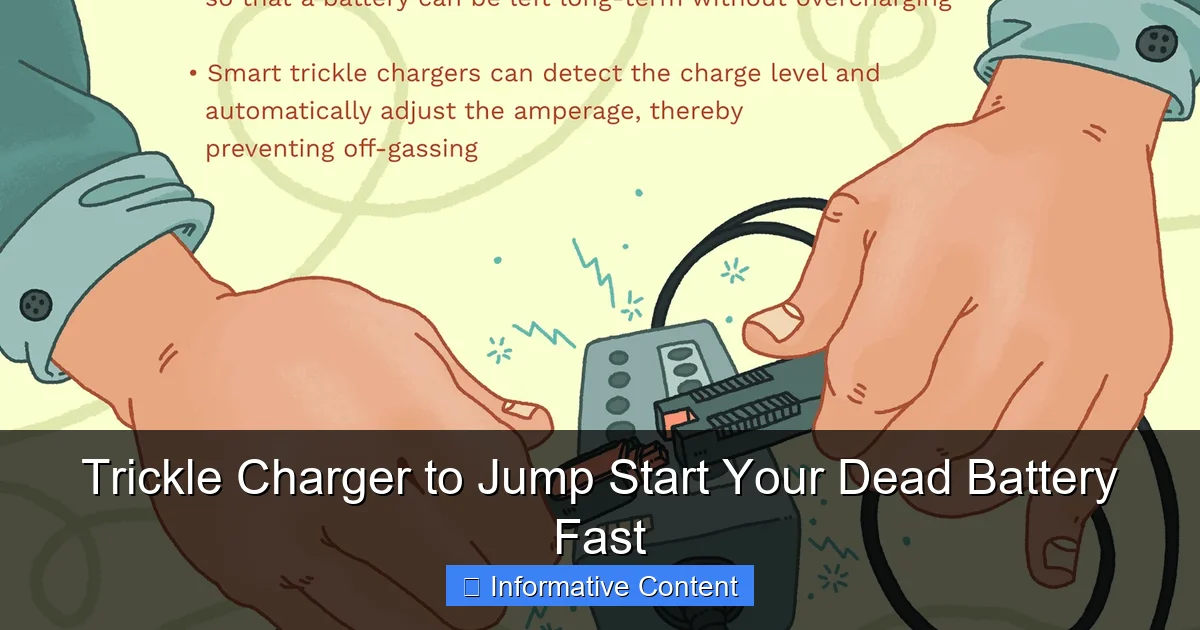
Featured image for trickle charger to jump start
Image source: lifewire.com
A trickle charger is the safest, most reliable way to jump start a dead battery without risking damage to your vehicle’s electrical system. Unlike traditional jump starters, it delivers a slow, steady charge that revives deeply drained batteries—ideal for long-term maintenance or emergency recovery. Compact and user-friendly, modern trickle chargers offer fast results with built-in safety features like reverse polarity protection.
Key Takeaways
- Use a trickle charger for slow, safe battery revival without damage.
- Check compatibility to ensure your battery type matches the charger.
- Prioritize safety by disconnecting the battery before connecting the charger.
- Monitor charging progress to avoid overcharging and extend battery life.
- Choose smart chargers with auto-shutoff to prevent overvoltage risks.
- Store properly after use to maintain charger efficiency and longevity.
📑 Table of Contents
- Trickle Charger to Jump Start Your Dead Battery Fast
- What Is a Trickle Charger and How Does It Work?
- When to Use a Trickle Charger to Jump Start Your Battery
- Choosing the Right Trickle Charger for Jump Starting
- Step-by-Step Guide: Using a Trickle Charger to Jump Start Your Car
- Tips to Maximize Your Trickle Charger’s Effectiveness
- Common Myths About Trickle Chargers Debunked
- Conclusion: Is a Trickle Charger Right for You?
Trickle Charger to Jump Start Your Dead Battery Fast
Picture this: It’s a chilly Monday morning. You’re running late for work, coffee in hand, keys jingling—only to find your car won’t start. The dashboard lights flicker weakly, the engine groans but refuses to turn over. Your heart sinks. A dead battery strikes again.
We’ve all been there. Whether it’s from leaving the headlights on overnight, extreme weather, or simply an aging battery, a dead car battery can throw a wrench into even the best-laid plans. But what if I told you there’s a smarter, safer, and more reliable way to get your car running again—without needing a friend with jumper cables or a tow truck? Enter the trickle charger. While most people think of jump starters as the go-to solution for a dead battery, a trickle charger can actually be a game-changer—not just for long-term battery maintenance, but also as a surprisingly effective tool to jump start your vehicle, especially when used correctly.
What Is a Trickle Charger and How Does It Work?
A trickle charger is a type of battery charger designed to deliver a low, steady current to a 12-volt car battery over an extended period. Unlike fast chargers that pump high amperage quickly (which can damage batteries), trickle chargers use a gentle “trickle” of electricity—typically between 1 to 3 amps—to slowly recharge a battery without overcharging it.
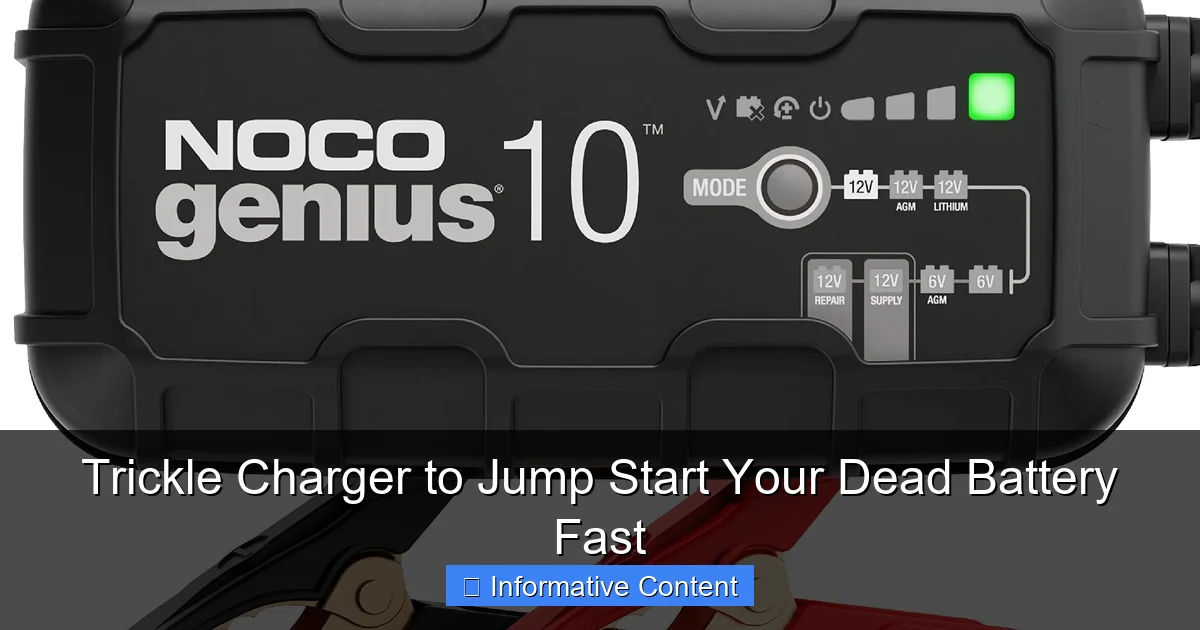
Visual guide about trickle charger to jump start
Image source: thedrive.com
How Trickle Charging Differs from Fast Charging
Think of it like filling a glass of water. A fast charger is like turning the tap on full blast—it fills the glass quickly, but you risk overflowing or splashing water everywhere. A trickle charger, on the other hand, is like a slow drip from a faucet. It takes longer, but it’s gentle, precise, and safe.
- Fast chargers: Deliver 10–20 amps, ideal for quick boosts but risky for weak or sulfated batteries.
- Trickle chargers: Deliver 1–3 amps, perfect for maintaining charge or slowly reviving deeply drained batteries.
The Science Behind Trickle Charging
Car batteries, especially lead-acid types, lose charge over time due to self-discharge and parasitic drains (like clocks, alarms, or infotainment systems). When a battery drops below 12.4 volts, it’s considered partially discharged. Below 12.0 volts? That’s when starting becomes unreliable.
A trickle charger reverses this process by supplying a constant, low-level charge that replenishes the battery’s chemical energy. It’s especially effective for batteries that have been sitting idle—like in a seasonal vehicle or a car that’s only used on weekends.
Can a Trickle Charger Actually Jump Start a Car?
Here’s the big question: Can a trickle charger jump start your car? The short answer is yes—but not instantly. Unlike a portable jump starter or jumper cables, a trickle charger doesn’t deliver a burst of power to crank the engine right away. Instead, it gradually restores the battery’s charge until there’s enough juice to start the vehicle.
For example, if your battery is at 10.5 volts (deeply discharged), a trickle charger might take 6 to 12 hours to bring it up to 12.6 volts—the level needed for a reliable start. So while it’s not a “jump” in the traditional sense, it’s a reliable way to get your car running again—especially if you have a little time to spare.
When to Use a Trickle Charger to Jump Start Your Battery
Not every dead battery situation calls for a trickle charger. But in the right scenarios, it’s an excellent solution—safer, more sustainable, and often more effective than quick fixes.
Perfect Scenarios for Trickle Charging
- Weekend or seasonal vehicles: If you drive a classic car, motorcycle, or RV only a few times a year, a trickle charger can keep the battery topped up and ready to go.
- Batteries drained from inactivity: Cars that sit for weeks or months often suffer from slow discharge. A trickle charger can revive them without stress.
- Aging batteries nearing replacement: If your battery is 4–5 years old and struggling, a trickle charge might give it one last reliable start before you replace it.
- Safety-conscious situations: Unlike jumper cables, which require another vehicle and carry risks of sparks or reverse polarity, trickle chargers are plug-and-play and much safer.
When a Trickle Charger Isn’t the Best Option
Of course, trickle chargers aren’t a magic fix for every situation. Here’s when you might want to skip it:
- You’re in a hurry: If you need to get going in 10 minutes, a portable jump starter or jumper cables are faster.
- The battery is completely dead or damaged: If the battery is below 9 volts or shows signs of swelling, leakage, or corrosion, it may be beyond saving.
- Extreme cold weather: Batteries lose capacity in freezing temperatures. A trickle charger may take much longer to work, if at all.
Real-Life Example: Reviving a Forgotten Classic Car
Last winter, my neighbor’s 1972 Mustang hadn’t been started in over six months. The battery was completely dead—no lights, no crank. Instead of calling a tow truck, he connected a smart trickle charger overnight. By morning, the battery had regained enough charge to fire up the engine on the first try. No jump, no stress—just quiet, steady power restoration.
Choosing the Right Trickle Charger for Jump Starting
Not all trickle chargers are created equal. With so many options on the market, it’s important to pick one that’s safe, reliable, and suited to your needs.
Key Features to Look For
- Smart charging technology: Modern trickle chargers often include microprocessors that monitor battery voltage and adjust the charge rate. This prevents overcharging and extends battery life.
- Automatic shutoff or float mode: Once the battery reaches full charge, the charger should switch to a maintenance (“float”) mode to keep it topped up without overcharging.
- Compatibility with different battery types: Look for chargers that work with lead-acid, AGM, gel, and lithium-ion batteries if you own multiple vehicles.
- Safety protections: Overcharge protection, reverse polarity protection, and spark-proof clamps are essential for safe use.
- Weather resistance: If you plan to use it outdoors or in a garage, choose a model with an IP rating for dust and water resistance.
Top Trickle Charger Recommendations
Based on user reviews and performance, here are a few standout models:
| Model | Amperage | Key Features | Best For |
|---|---|---|---|
| NOCO Genius1 | 1 Amp | Smart charging, works with all battery types, compact design | Everyday cars, motorcycles, boats |
| CTEK MXS 5.0 | 5 Amps (adjustable) | 8-step charging, desulfation mode, weatherproof | High-performance vehicles, RVs |
| Schumacher Fully Automatic Battery Charger | 2 Amp | Automatic float mode, reverse hook-up protection | Budget-friendly maintenance |
| Black+Decker BM3B | 1.5 Amp | LED indicators, compact, affordable | Occasional use, small vehicles |
Pro Tip: Pair with a Battery Maintainer
Many trickle chargers double as battery maintainers—devices that keep your battery at optimal charge during long periods of inactivity. If you own a second car or a motorcycle, investing in a maintainer can save you from future dead battery headaches.
Step-by-Step Guide: Using a Trickle Charger to Jump Start Your Car
Ready to give it a try? Here’s a simple, safe process to use your trickle charger to revive a dead battery.
What You’ll Need
- A trickle charger (preferably a smart model)
- Safety gloves and goggles
- A clean, dry workspace (garage or driveway)
- Access to a power outlet
Step 1: Safety First
Before touching anything, put on safety gloves and goggles. Batteries contain sulfuric acid and can produce flammable hydrogen gas—better safe than sorry.
Step 2: Locate and Inspect the Battery
Open the hood and find your car’s battery. Check for obvious signs of damage: cracks, leaks, bulging, or heavy corrosion. If you see any, do not proceed—replace the battery instead.
Step 3: Clean the Battery Terminals
Use a wire brush or battery terminal cleaner to remove any corrosion from the positive (+) and negative (−) terminals. Dirty terminals can prevent proper charging.
Step 4: Connect the Charger
Attach the charger’s red clamp to the positive terminal and the black clamp to the negative terminal. Make sure the connections are secure and metal-to-metal.
Pro Tip: If your charger has polarity protection, you don’t have to worry about reversing the clamps—but it’s still good practice to connect them correctly.
Step 5: Plug In and Start Charging
Plug the charger into a grounded outlet and turn it on. Most smart chargers will automatically detect the battery type and begin charging. You’ll usually see a green or red light indicating the charging status.
Step 6: Wait Patiently
This is the hardest part—waiting. Depending on how dead the battery is, it could take anywhere from 4 to 12 hours to reach a charge level sufficient for starting.
For example:
- A battery at 11.8 volts might take 4–6 hours.
- A deeply discharged battery at 10.0 volts could take 8–12 hours.
Step 7: Test the Battery
Once the charger indicates the battery is fully charged (usually with a green light or “float” mode), disconnect the charger. Start your car. If it turns over smoothly, you’re good to go!
Step 8: Drive to Recharge
Even after a successful start, your battery may not be fully charged. Drive for at least 20–30 minutes to allow the alternator to top it off.
Tips to Maximize Your Trickle Charger’s Effectiveness
Want to get the most out of your trickle charger? These practical tips will help you avoid common pitfalls and extend your battery’s life.
Use a Smart Charger, Not a Basic One
Older, non-smart trickle chargers run continuously, which can overcharge and damage your battery. Smart chargers adjust the charge rate and switch to maintenance mode automatically—making them safer and more efficient.
Charge in a Well-Ventilated Area
Even though trickle charging is low-risk, batteries can still release small amounts of gas. Avoid enclosed spaces like tightly sealed garages.
Don’t Leave It Plugged In Indefinitely
While many smart chargers have float modes, it’s still best to unplug the charger once the battery is fully charged. Prolonged charging can lead to electrolyte loss in older batteries.
Check Battery Health Regularly
A trickle charger can’t fix a bad battery. Use a multimeter or visit an auto shop to test your battery’s health annually. If it’s more than 5 years old, consider replacing it before it leaves you stranded.
Combine with Regular Driving
The best way to keep your battery healthy is to drive your car regularly. Short trips don’t give the alternator enough time to recharge the battery fully. Aim for longer drives (30+ minutes) at least once a week.
Common Myths About Trickle Chargers Debunked
Despite their benefits, trickle chargers are often misunderstood. Let’s clear up some common misconceptions.
Myth 1: “Trickle Chargers Are Only for Long-Term Storage”
While they’re excellent for maintaining batteries in storage, trickle chargers can also revive dead batteries—especially when you have time to wait. They’re not just for winterizing your boat or motorcycle.
Myth 2: “They’re Too Slow to Be Useful”
Yes, they’re slower than jump starters, but that’s also their strength. The slow, steady charge is gentler on the battery and reduces the risk of damage. For many users, the trade-off in time is worth the long-term battery health.
Myth 3: “All Trickle Chargers Are the Same”
Not true. Basic models lack safety features and can overcharge. Smart chargers with microprocessors, desulfation modes, and automatic shutoff are far superior—and worth the extra cost.
Myth 4: “You Can’t Use Them in Cold Weather”
While cold temperatures slow down chemical reactions in batteries, many modern trickle chargers are designed to work in temperatures as low as -4°F (-20°C). Just be patient—charging will take longer.
Conclusion: Is a Trickle Charger Right for You?
So, should you use a trickle charger to jump start your dead battery? The answer depends on your situation—but for many drivers, it’s a smart, safe, and reliable option.
If you’re someone who values long-term battery health, owns multiple vehicles, or simply wants a hassle-free way to keep your car ready to go, a trickle charger is a worthwhile investment. It won’t give you an instant jump like a portable starter, but it can revive a dead battery over time—without the risks of jumper cables or the cost of a tow.
Think of it this way: a trickle charger isn’t just a tool for emergencies. It’s a preventive measure. By keeping your battery properly charged, you reduce the chances of being stranded in the first place. And when you do face a dead battery, you’ll have a gentle, effective solution at your fingertips.
Next time your car won’t start, don’t panic. Grab your trickle charger, plug it in, and give your battery the time it needs to come back to life. It’s not the fastest fix—but sometimes, slow and steady really does win the race.
Frequently Asked Questions
Can a trickle charger jump start a completely dead battery?
Yes, a trickle charger can jump start a dead battery, but it works slowly by delivering a low, steady charge over several hours. Unlike a jump starter, it’s safer for long-term battery health and ideal if you’re not in a rush.
How long does it take for a trickle charger to start a dead car battery?
Depending on the battery’s condition, a trickle charger may take 12–24 hours to fully recharge a dead battery enough to start the engine. For faster results, consider a trickle charger with a “boost” mode.
Is it safe to leave a trickle charger connected overnight to jump start my battery?
Modern trickle chargers are designed with automatic shutoff or float modes, making them safe to leave connected overnight. Always check the manufacturer’s instructions to avoid overcharging.
What’s the difference between a trickle charger and a jump starter?
A trickle charger slowly replenishes a battery’s charge over time, while a jump starter delivers a quick, high-power burst to start the engine immediately. The trickle charger to jump start method is gentler but slower.
Can I use a trickle charger to jump start a deeply discharged or sulfated battery?
Yes, some advanced trickle chargers have desulfation modes to revive sulfated batteries. However, severely damaged batteries may not recover fully even with prolonged charging.
Do I need to disconnect the battery before using a trickle charger to jump start?
Most trickle chargers can be connected directly to the battery terminals while installed in the vehicle. Just ensure the charger is off before connecting and follow safety precautions like wearing gloves.