
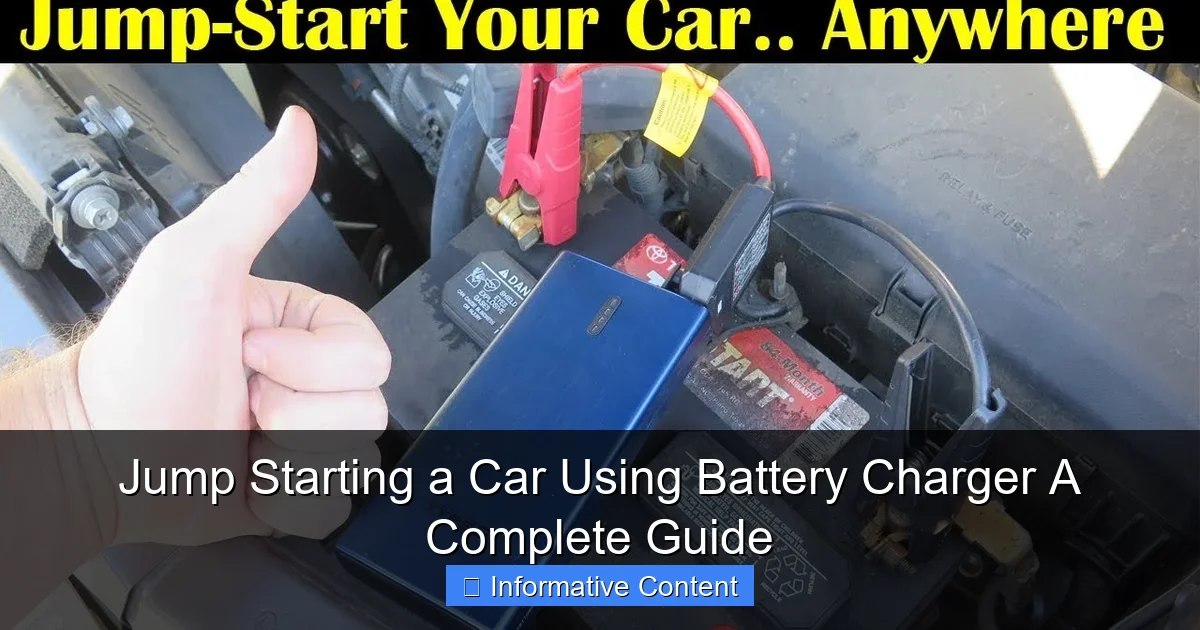
Featured image for jump starting a car using battery charger
Image source: i.ytimg.com
Jump starting a car using a battery charger is a safe, reliable method that avoids the risks of traditional jumper cables and another vehicle. By connecting the charger directly to the dead battery and allowing it to restore power gradually, you ensure a controlled charge that protects your vehicle’s electrical system. This guide walks you through every step—from selecting the right charger to proper connections and safety precautions—so you can revive your car confidently and efficiently.
Key Takeaways
- Ensure safety first: Wear gloves and goggles to protect against sparks and acid.
- Check charger compatibility: Match the charger voltage to your car battery (usually 12V).
- Connect red to positive: Attach the red clamp to the battery’s positive terminal first.
- Connect black to ground: Attach the black clamp to a metal, unpainted surface away from the battery.
- Charge before starting: Let the charger supply power for several minutes to boost battery strength.
- Start the engine gently: Turn the key slowly; if it fails, wait and retry after more charging.
- Disconnect in reverse: Remove black clamp first, then red, to prevent sparks.
📑 Table of Contents
- Why Jump Starting a Car Using a Battery Charger Is a Lifesaver
- Understanding How Car Battery Chargers Work
- Preparing for a Jump Start: Safety First
- Step-by-Step Guide to Jump Starting Your Car with a Charger
- Battery Charger vs. Jump Starter: Which Is Better?
- Maintaining Your Battery and Charger for Long-Term Success
- Final Thoughts: Empower Yourself with the Right Tools
Why Jump Starting a Car Using a Battery Charger Is a Lifesaver
Picture this: it’s a chilly Monday morning, you’re running late for work, and as you turn the key in your car’s ignition—nothing. No cranking, no lights, just silence. Your heart sinks. The battery is dead, and now you’re stuck. But here’s the good news: you don’t need to call a tow truck or wait for a stranger with jumper cables. With a battery charger, you can jump start your car safely and efficiently, right from your garage or driveway.
Jump starting a car using a battery charger isn’t just about convenience—it’s about control. Unlike traditional jumper cables that rely on another vehicle, a battery charger gives you the power to revive your battery on your own, anytime. Whether you’re at home, in a remote parking lot, or just want to avoid the hassle of flagging down a stranger, this method is reliable, safe, and surprisingly easy once you know how. And the best part? It’s a skill every driver should have in their back pocket.
Understanding How Car Battery Chargers Work
The Science Behind Battery Recharging
At its core, a car battery stores chemical energy and converts it into electrical energy to start your engine. Over time, especially in cold weather or with infrequent use, the battery can lose its charge. A battery charger reverses this process by sending a controlled electrical current back into the battery, restoring its charge. Think of it like giving your battery a second wind—without the risk of overloading or damaging it.
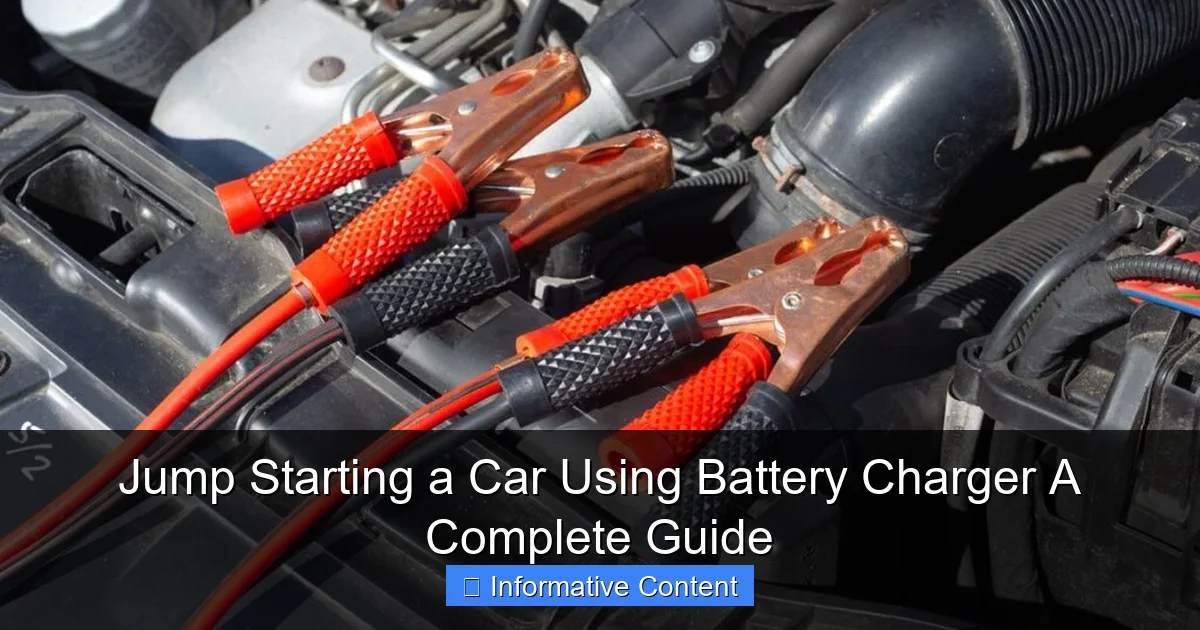
Visual guide about jump starting a car using battery charger
Image source: murraystirebargains.com
Modern chargers use smart technology to monitor the battery’s voltage and adjust the charging rate. For example, a 12-volt lead-acid battery (the most common type) typically needs around 12.6 volts to be fully charged. A smart charger will start with a bulk charge (higher current), then taper off to a float charge to avoid overcharging. This is why using a charger is often safer and more effective than a quick jump from another car.
Types of Battery Chargers: Which One Do You Need?
Not all battery chargers are created equal. Here’s a quick breakdown of the most common types:
- Trickle Chargers: Deliver a slow, steady charge (1-3 amps). Ideal for maintaining batteries during storage or long periods of inactivity.
- Smart/Automatic Chargers: Use microprocessors to adjust voltage and current. Perfect for beginners—they shut off when the battery is full.
- Jump Starters with Charging Capability: Portable units with built-in batteries. Can jump start a car without another vehicle and charge the battery over time.
- Heavy-Duty Chargers: High-amperage (10+ amps) for fast charging. Best for mechanics or frequent use, but riskier for DIYers if misused.
For most people, a smart charger (5-8 amps) is the sweet spot. It’s fast enough for a quick fix but gentle enough to avoid damage. I learned this the hard way when I used a heavy-duty charger on my mom’s old sedan—it overheated the battery terminals and required a costly replacement. Lesson learned: match the charger to your battery’s needs.
Preparing for a Jump Start: Safety First
Gather Your Tools and Check the Battery
Before you even touch the charger, make sure you have everything you need:
- A battery charger (preferably smart/automatic)
- Protective gloves and safety glasses
- A clean rag and baking soda (for cleaning corrosion)
- Your car’s owner’s manual (for battery specs)
Next, inspect the battery. Look for:
- Corrosion: White or greenish powder on the terminals. Clean with a baking soda-water paste and a wire brush.
- Damage: Cracks, leaks, or bulges. If you see any, stop—your battery needs replacing.
- Voltage: Use a multimeter to check. Below 11.8 volts? Time to charge.
I once skipped the inspection and connected a charger to a cracked battery. The result? A minor acid leak and a garage that smelled like rotten eggs for days. Not fun.
Location and Ventilation: Why It Matters
Always charge your battery in a well-ventilated area. Batteries release hydrogen gas, which is flammable. A garage with open windows or outdoors is ideal. Never charge near open flames, sparks, or in a sealed space (like a closed shed).
Also, ensure your car is in park (automatic) or neutral (manual) with the parking brake engaged. This prevents accidental movement while you’re working. And if you’re charging in a public lot, place warning cones or flares behind your car—safety first, always.
Step-by-Step Guide to Jump Starting Your Car with a Charger
Step 1: Connect the Charger to the Battery
Start by turning off the charger and unplugging it from the outlet. Then:
- Attach the red (positive) clamp to the battery’s positive terminal (+). It’s usually marked with a red cover or a “+” symbol.
- Attach the black (negative) clamp to the negative terminal (-) or a bare metal part of the engine block (away from the battery). This grounds the circuit and reduces sparking risk.
Pro Tip: If your battery terminals are corroded, clean them first. A poor connection can lead to slow charging or sparks.
Step 2: Set the Charger and Begin Charging
Plug in the charger and set it to the correct voltage (usually 12V for cars). For a smart charger, select “automatic” or “standard” mode. For manual chargers, choose an amperage setting (5-8 amps is safe for most batteries). Then:
- Turn on the charger. You’ll hear a hum or see indicator lights.
- Let it charge for 30 minutes to 2 hours, depending on the battery’s condition. A deeply discharged battery may take longer.
I once charged a battery for only 15 minutes and tried to start the car. It cranked weakly and died again. Patience is key—give it time to absorb the charge.
Step 3: Test and Start the Engine
After charging, turn off the charger and unplug it. Disconnect the clamps in reverse order:
- Remove the black clamp first.
- Remove the red clamp.
Now, try starting the car. If it starts, let it run for 10-15 minutes to recharge further. If it doesn’t, wait 10 minutes and try again. Still nothing? The battery may be too far gone, or there could be another issue (like a faulty alternator).
Troubleshooting Common Issues
- Charger not turning on? Check the outlet and circuit breaker.
- Battery not holding charge? Test the alternator or consider a battery replacement.
- Sparks when connecting? Disconnect immediately—you might have reversed the clamps.
Battery Charger vs. Jump Starter: Which Is Better?
Speed and Convenience: Jump Starters Win
Jump starters (portable battery packs) are the go-to for quick fixes. Just connect the clamps, press a button, and start your car—no waiting. They’re perfect for emergencies, especially if you’re stranded. But they’re not a long-term solution. A jump starter gives you a temporary boost, while a battery charger fully restores your battery’s health.
For example, my friend used a jump starter to get her car running after a long weekend. But the battery died again two days later because it hadn’t been properly recharged. A charger would’ve solved the root problem.
Cost and Longevity: Chargers Are the Better Investment
Jump starters are more expensive (often $100+) and have limited cycles. Chargers, on the other hand, are cheaper (starting at $30) and last years. Plus, a charger can revive multiple batteries over time. Here’s a quick comparison:
| Feature | Battery Charger | Jump Starter |
|---|---|---|
| Cost | $30–$150 | $100–$300 |
| Charging Time | 30 min–8 hours | Instant (but temporary) |
| Lifespan | 5+ years | 100–500 cycles |
| Best For | Home use, maintenance | Emergencies, portability |
Bottom line: Keep both in your garage. Use a jump starter for emergencies and a charger for regular upkeep.
Maintaining Your Battery and Charger for Long-Term Success
Regular Charging: Prevent Dead Batteries Before They Happen
Don’t wait for a dead battery to charge it. If your car sits for weeks (e.g., a vacation car), use a trickle charger monthly to maintain charge. For daily drivers, a smart charger with a “maintenance” mode can keep your battery at 100% without overcharging.
I use a smart charger with a “float” mode on my winter car. It keeps the battery ready all season, so I never have to worry about a no-start.
Charger Care: Store It Right
Your charger is an investment. To extend its life:
- Store in a dry, cool place (not the garage floor).
- Keep the cables untangled to prevent fraying.
- Test it annually with a multimeter to ensure it’s working.
And never leave a charger plugged in unattended for days. Even smart chargers can malfunction.
When to Replace Your Battery
Even with regular charging, batteries don’t last forever. Replace yours every 3–5 years, or if you notice:
- Slow cranking, even after charging
- Frequent jump starts
- A sulfur (rotten egg) smell
I ignored these signs on my old SUV and ended up stranded at a gas station. A $120 battery replacement saved me from a $500 tow.
Final Thoughts: Empower Yourself with the Right Tools
Jump starting a car using a battery charger isn’t just a handy skill—it’s a form of self-reliance. Whether you’re a seasoned DIYer or a nervous new driver, knowing how to revive a dead battery gives you peace of mind. And with the right charger, the process is safer, more effective, and less stressful than relying on jumper cables or strangers.
Remember, the key is preparation. Keep a quality battery charger in your garage, inspect your battery regularly, and don’t skip safety steps. A little effort today can save you hours of frustration tomorrow. So next time your car won’t start, don’t panic. Grab your charger, follow the steps, and get back on the road—no drama, no stress, just results.
Frequently Asked Questions
How do I safely jump start a car using a battery charger?
To safely jump start a car using a battery charger, first ensure both vehicles are turned off and the charger is unplugged. Connect the positive (red) clamp to the dead battery’s positive terminal, then the negative (black) clamp to an unpainted metal surface on the car’s frame to ground it. Plug in and set the charger to the appropriate voltage, then start the engine after a few minutes of charging.
Can I use a battery charger instead of jumper cables to start my car?
Yes, a battery charger can be used instead of jumper cables to jump start a car, especially if another vehicle isn’t available. Simply connect the charger to the battery and let it charge for a few minutes before attempting to start the engine. This method is slower but safer for deeply discharged batteries.
What type of battery charger is best for jump starting a car?
A smart or automatic battery charger with a 6V/12V switch and a “jump start” or “boost” mode is ideal for jump starting a car. These chargers regulate voltage to prevent overcharging and deliver a quick burst of power to start the engine. Look for models with safety features like reverse polarity protection.
How long should I charge a car battery before jump starting?
Charge the battery for at least 5–10 minutes using the “boost” or “jump start” mode on your battery charger before attempting to start the car. The exact time depends on the battery’s condition and the charger’s output—older or deeply discharged batteries may need longer. Always monitor the process to avoid overheating.
Is it safe to jump start a car with a damaged battery using a charger?
Jump starting a car with a damaged or leaking battery using a charger is not safe and should be avoided. A damaged battery can overheat, leak acid, or even explode during charging. Always inspect the battery for cracks, leaks, or swelling before attempting to use a battery charger.
Can I leave my battery charger connected while driving after jump starting?
No, you should never leave a battery charger connected while driving after jump starting a car. Disconnect the charger once the engine is running, as prolonged connection can damage the vehicle’s electrical system. The car’s alternator will handle charging the battery while driving.