
Jump starting a car typically requires 5 to 30 minutes of charging time to ensure the battery gains enough power to restart the engine safely. The exact duration depends on battery condition, alternator output, and vehicle model—always monitor voltage and avoid overcharging to prevent damage. For best results, drive the vehicle for at least 20 minutes post-jump to fully recharge the battery.
Key Takeaways
- Charge for 1–2 minutes before attempting to start the dead car.
- Rev the donor engine to 2,000 RPM to boost charging speed.
- Wait 5+ minutes if the first start attempt fails.
- Drive immediately after starting to recharge the battery fully.
- Check battery health if frequent jump-starts are needed.
- Disconnect cables properly to avoid voltage spikes or damage.
📑 Table of Contents
- The Day My Car Refused to Start (And What I Learned)
- How Jump Starting Actually Works (And Why Time Matters)
- How Long to Charge: The 3-Phase Jump Start Process
- Factors That Affect Charging Time (And How to Adapt)
- Common Mistakes (And How to Avoid Them)
- Data Table: Charging Time by Scenario
- When to Skip the Jump Start (And What to Do Instead)
- Final Thoughts: Confidence, Not Confusion
The Day My Car Refused to Start (And What I Learned)
It was a cold winter morning. I was running late for work, and as I turned the key in my car’s ignition, nothing happened. No engine roar. No dashboard lights flickering to life. Just… silence. My heart sank. I knew what this meant: a dead battery. I had jumper cables in my trunk, but I’d never actually used them. I fumbled with the clamps, connected them to my neighbor’s car, and waited. And waited. After a few minutes, I tried again—still nothing. Frustrated, I wondered: How long do you actually need to charge a car battery when jump starting?
This question isn’t just about convenience—it’s about safety, efficiency, and avoiding further damage. Whether you’re stuck in a grocery store parking lot or stranded on a rural road, knowing how long to charge your battery during a jump start can save you time, stress, and even a costly tow. In this guide, I’ll walk you through everything I’ve learned—from the science behind jump starting to the exact timing, tips, and real-world scenarios that’ll help you get back on the road confidently.
How Jump Starting Actually Works (And Why Time Matters)
Before diving into timing, let’s break down the mechanics. A car battery stores chemical energy that powers the starter motor, which cranks the engine to life. When the battery is dead, it lacks the voltage (usually 12.6V when fully charged) to trigger this process. Jump starting uses another vehicle’s battery (or a portable jump starter) to deliver that initial burst of power.
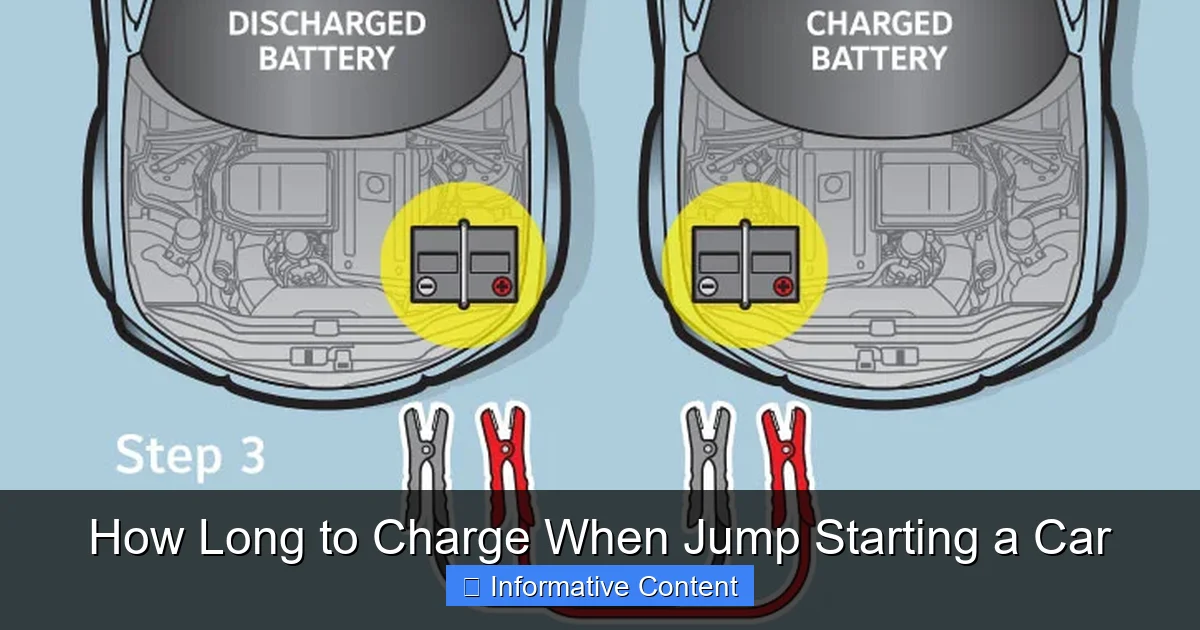
Visual guide about jump starting a car how long to charge
Image source: useast2prodbrandsites.blob.core.windows.net
The Science Behind Voltage and Amps
Here’s the key: jump starting isn’t about fully recharging the dead battery. It’s about providing enough current (amps) to start the engine. Think of it like a defibrillator for your car—it only needs a quick jolt, not a long-term charge. The working battery acts as a temporary energy source, delivering high amps (often 200–1000) to overcome the dead battery’s internal resistance.
- Voltage: Must stay above 9.6V during cranking to start the engine.
- Amps: The “oomph” needed to turn the starter motor. A dead battery can’t provide this alone.
- Time: The longer you connect, the more charge transfers—but there’s a sweet spot.
Why Charging Time Isn’t About “Fully Charging”
Many people assume jump starting should recharge the battery to 100%. But that’s a myth. A fully depleted battery takes hours to recharge—even with a dedicated charger. During a jump start, you’re only aiming for enough charge to start the engine. Once the engine runs, your car’s alternator takes over, replenishing the battery at 13.8–14.4V while you drive.
Real-World Example: I once tried to “fully charge” my battery by leaving jumper cables connected for 30 minutes. The engine started after 2 minutes, but I risked overheating the donor battery. Lesson learned: efficiency matters.
How Long to Charge: The 3-Phase Jump Start Process
Jump starting isn’t a one-size-fits-all process. The time needed depends on the battery’s condition, ambient temperature, and the donor source. Here’s the 3-phase approach I’ve found most effective:
Phase 1: Initial Connection (1–5 Minutes)
After connecting jumper cables correctly (red to dead battery’s positive, black to donor’s negative), wait 1–5 minutes before attempting to start. This allows a small charge to flow, reducing the initial voltage drop when cranking.
- 1 minute: Minimum for most modern cars. Enough to “wake up” the battery.
- 3–5 minutes: Ideal for older batteries or extreme cold. Cold weather thickens engine oil, requiring more cranking power.
Tip: If the donor car’s engine is running, rev it to ~2,000 RPM during this phase. This boosts voltage output, speeding up the charge transfer.
Phase 2: Cranking Attempt (1–3 Tries)
After the wait, try starting the dead car. If it doesn’t start:
- Wait 30–60 seconds between attempts. This prevents overheating the starter motor.
- Rev the donor car’s engine to ~2,000 RPM during each cranking try.
- Limit attempts to 3 tries max. More than this risks damaging the starter or donor battery.
Example: Last winter, my car wouldn’t start after 2 tries. I waited 60 seconds, revved the donor car, and it started on the third try. Patience pays.
Phase 3: Post-Start Charging (10–30 Minutes)
Once the engine runs, the alternator begins recharging the battery. But here’s the catch: the alternator needs time to restore the charge lost during starting. Here’s what to do:
- Drive for 10–30 minutes without turning the engine off. Short trips (e.g., 5-minute drives) won’t fully recharge the battery.
- Avoid using high-power accessories (heater, radio, headlights) during this time. They drain the battery faster than the alternator can charge it.
- If possible, drive on highways. Higher RPMs generate more charging power.
Warning: If the battery dies again immediately after driving, the alternator might be faulty. Get it checked ASAP.
Factors That Affect Charging Time (And How to Adapt)
Not all dead batteries are created equal. Here’s what can speed up or slow down the jump start process—and how to adjust:
Battery Age and Condition
- New battery (0–2 years): May start in 1–2 minutes. Less internal resistance.
- Older battery (3+ years): Needs 3–5 minutes of pre-charge. Sulfation (a white powdery buildup) reduces efficiency.
- Severely dead battery: If the battery is completely flat (below 9.6V), it might not accept a jump start at all. Use a battery charger instead.
Pro Tip: Test your battery’s voltage with a multimeter. Below 11V? It’s likely beyond jump-starting help.
Temperature: Cold vs. Hot Weather
Temperature dramatically impacts battery performance:
- Cold weather (below 32°F/0°C):
- Batteries lose 30–50% of their cranking power.
- Engine oil thickens, requiring more cranking amps.
- Solution: Wait 5 minutes before cranking. Use a battery blanket (if available).
- Hot weather (above 90°F/32°C):
- Heat accelerates battery corrosion and fluid evaporation.
- Solution: Park in shade. Avoid jump-starting during peak heat.
Donor Source Type
Not all jump sources are equal:
- Another car: Most reliable. Provides high amps (200–1000) and stable voltage.
- Portable jump starter: Faster (1–2 minutes), but amps vary. Cheap models (under 1,000 amps) may struggle with V6/V8 engines.
- Truck or SUV battery: Higher capacity (e.g., 800+ CCA) can charge faster than a compact car’s battery.
Common Mistakes (And How to Avoid Them)
Jump starting seems simple, but small errors can cause big problems. Here’s what I’ve learned the hard way:
Overcharging: The “More Time = Better” Myth
Leaving jumper cables connected for 10+ minutes is a common mistake. Why it’s dangerous:
- Overheats the donor battery. Can cause swelling, leaks, or even explosion.
- Damages the alternator. Excessive voltage can fry sensitive electronics.
- Wastes time. Most engines start within 5 minutes.
Rule of thumb: If the car doesn’t start after 5 minutes of connection + 3 cranking attempts, the issue is likely not the battery. Stop and call for help.
Incorrect Cable Connection (And Reverse Polarity)
Connecting cables backward (positive to negative) can:
- Destroy the car’s electrical system.
- Cause sparks or battery explosion.
How to avoid it:
- Always double-check cable colors: Red = positive (+), Black = negative (−).
- Connect to the dead battery’s positive terminal first, then the donor’s positive.
- Connect the donor’s negative last. Attach to a bare metal surface (e.g., engine block) on the dead car, not the battery’s negative terminal. This reduces sparking.
Ignoring Post-Jump Maintenance
A jump start is a temporary fix. Afterward:
- Drive for at least 30 minutes to recharge the battery.
- Check for underlying issues: Faulty alternator, loose terminals, or a battery older than 3 years.
- Keep jumper cables handy for the next 24 hours. The battery might die again if not fully recharged.
Data Table: Charging Time by Scenario
Below is a quick-reference table for how long to charge based on common situations. Use this as a guide—not a rulebook:
| Scenario | Pre-Charge Time (Before Cranking) | Max Cranking Attempts | Post-Start Drive Time | Notes |
|---|---|---|---|---|
| New battery, warm weather | 1–2 minutes | 2 tries | 10 minutes | Rev donor car to 2,000 RPM |
| Old battery (3+ years), cold weather | 3–5 minutes | 3 tries | 20–30 minutes | Use a battery blanket if possible |
| Portable jump starter (1,500+ amps) | 1 minute | 2 tries | 15 minutes | Ensure the jump starter is fully charged |
| Severely dead battery (below 9.6V) | Not recommended | — | — | Use a battery charger instead |
| Truck/SUV battery (high CCA) | 2–3 minutes | 2 tries | 15 minutes | More cranking power available |
When to Skip the Jump Start (And What to Do Instead)
Jump starting isn’t always the answer. Here’s when to try alternatives:
Signs Your Battery Is Beyond Jump Starting
- Swollen or leaking battery. Indicates internal damage.
- Clicking sound (no cranking). The starter motor isn’t getting enough power.
- Smell of rotten eggs. A sign of battery overheating or sulfur buildup.
- Multiple jump failures. If the car doesn’t start after 3 attempts, the battery is likely dead.
Better solutions:
- Use a battery charger: Slow, safe, and fully restores the battery.
- Replace the battery: If it’s older than 3 years or has physical damage.
- Call roadside assistance: For non-battery issues (e.g., fuel pump failure).
When the Alternator Is the Real Problem
A dead battery isn’t always the culprit. If:
- The battery keeps dying after jump starts.
- Dashboard warning lights appear (e.g., battery light).
- Headlights dim when idling.
…the alternator might be faulty. Get it tested at an auto shop. A jump start won’t fix this.
Final Thoughts: Confidence, Not Confusion
Jump starting a car isn’t rocket science—but it’s easy to overcomplicate. The key takeaway? How long to charge when jump starting a car depends on context, not a fixed number. For most situations, 1–5 minutes of pre-charge, 1–3 cranking attempts, and a 10–30 minute drive afterward is all you need.
Remember: Safety first. Double-check cable connections, avoid overcharging, and never ignore warning signs (like swelling or leaks). And if the battery keeps dying? Don’t keep jump starting—address the root cause. Whether it’s a new battery, a faulty alternator, or just old age, a little maintenance goes a long way.
Next time your car won’t start, take a breath. Grab those jumper cables, follow the steps here, and you’ll be back on the road—no towing required. After all, as my neighbor said that cold winter morning: “A few minutes of patience beats a $200 tow truck any day.” And he was right.
Frequently Asked Questions
How long to charge when jump starting a car to ensure it stays running?
After jump starting, let the engine run for at least 15–30 minutes to allow the alternator to recharge the battery. For a deeply discharged battery, longer driving (30+ minutes) is better.
Can I drive immediately after jump starting, or should I wait to charge?
You can drive immediately, but avoid turning off the engine for at least 20–30 minutes to let the alternator replenish some charge. Short trips may require a full battery recharge later.
How long to charge a car battery after jump start using another vehicle?
When jump starting from another car, keep both engines running for 10–15 minutes before disconnecting. This provides enough initial charge for the engine to stay running.
Does jump starting a car fully recharge the battery?
No, jump starting only provides enough charge to start the engine. A full recharge requires either driving for 30+ minutes or using a dedicated battery charger.
What happens if I don’t charge the battery after a jump start?
The battery may die again quickly, especially if it’s old or deeply discharged. The alternator needs time to restore power, so short trips won’t fully recharge it.
How long to charge a car battery after jump start if it’s completely dead?
If the battery is completely dead, driving for 45–60 minutes or using a battery charger is ideal. The alternator alone may not fully restore a deeply drained battery.