
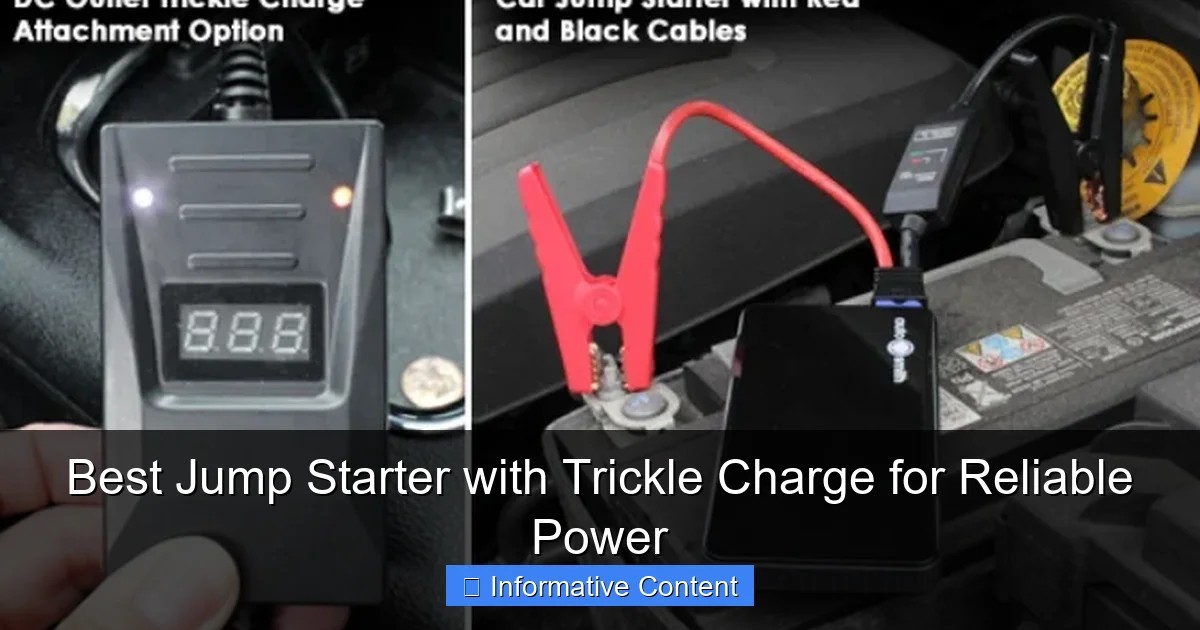
Featured image for jump starter with trickle charge
Image source: pulsetv.com
The best jump starter with trickle charge delivers reliable, sustained power to keep your vehicle’s battery in peak condition—even during long storage periods. Unlike standard models, these units maintain optimal charge levels without overcharging, ensuring your battery stays healthy and ready to start in any season. Perfect for infrequently driven vehicles, seasonal use, or emergency backup, a trickle-charging jump starter is a must-have for dependable, long-term performance.
Key Takeaways
- Choose a jump starter with trickle charge to maintain battery health during long storage.
- Prioritize safety features like spark-proof tech and reverse polarity protection for worry-free use.
- Opt for lithium-ion models for lightweight, high-capacity power and faster recharging.
- Check peak amperage ratings to ensure compatibility with your vehicle’s engine size.
- Select multi-functional units with USB ports and LED lights for added versatility.
- Verify automatic shutoff to prevent overcharging and extend battery lifespan.
📑 Table of Contents
- Why a Jump Starter with Trickle Charge Could Be Your Car’s Best Friend
- What Is a Trickle Charge and Why Does It Matter?
- Top Features to Look for in a Jump Starter with Trickle Charge
- How to Use a Jump Starter with Trickle Charge: A Step-by-Step Guide
- Best Jump Starters with Trickle Charge: Our Top Picks
- Maintaining Your Jump Starter: Tips for Long-Term Reliability
- Final Thoughts: Is a Jump Starter with Trickle Charge Worth It?
Why a Jump Starter with Trickle Charge Could Be Your Car’s Best Friend
We’ve all been there—running late for work, late for a meeting, or worse, stranded on the side of the road because your car battery decided to quit. A dead battery is one of those frustrating, unexpected moments that can throw your entire day off track. I remember one winter morning, I was about to head to an important client meeting when my car wouldn’t start. The engine just clicked. No crank. No power. I was stuck in my driveway, phone in hand, calling for help while my coffee went cold. That day, I learned my lesson: I needed a reliable jump starter with trickle charge.
But not all jump starters are created equal. Some can give you a quick boost but leave you stranded again the next day if the battery isn’t properly recharged. That’s where the trickle charge feature comes in. Unlike traditional jump starters that deliver a high burst of power and then go silent, a jump starter with trickle charge can gently top up your battery over time—like a slow, steady sip of water instead of a gulp. This not only helps revive deeply discharged batteries but also extends their lifespan. Whether you’re a weekend warrior, a daily commuter, or someone who just wants peace of mind, having a jump starter with trickle charge in your car can be a game-changer. It’s not just about emergency power—it’s about smart, long-term battery care.
What Is a Trickle Charge and Why Does It Matter?
Understanding the Trickle Charge Process
Let’s break it down. A trickle charge is a low-current charging method that slowly adds energy to a battery over several hours. Think of it like feeding a baby with a tiny spoon instead of pouring a whole bottle at once. The current is typically 1-3 amps, which is gentle enough to avoid overheating or overcharging the battery. This method is especially useful for car batteries that have been deeply discharged (below 11.5 volts) or left unused for weeks or months.
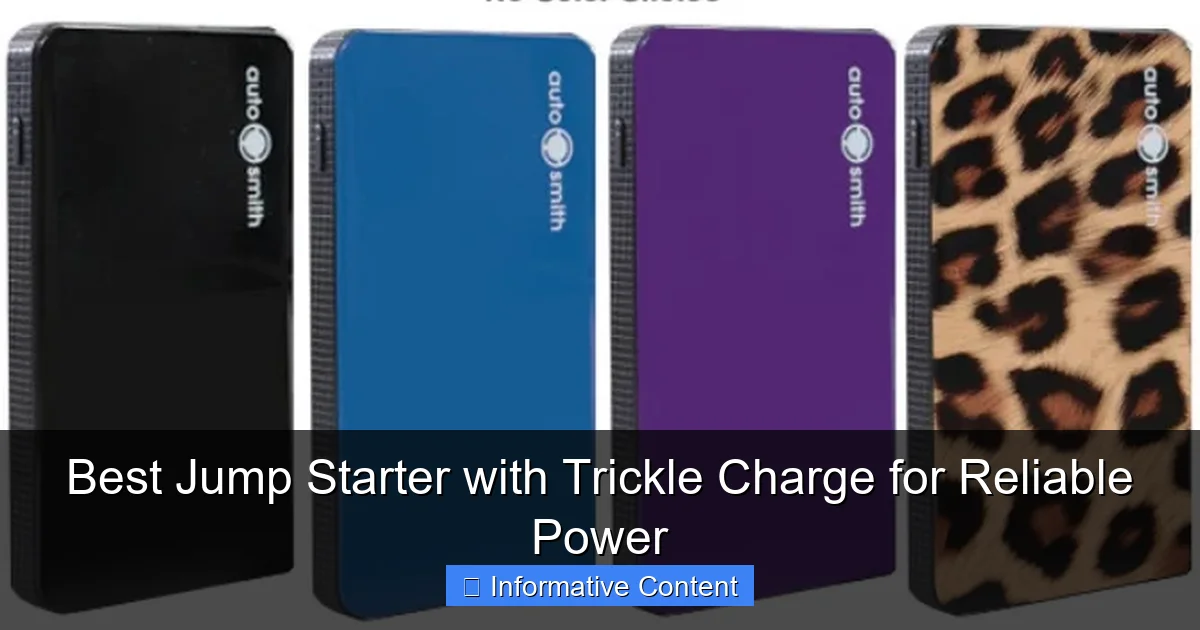
Visual guide about jump starter with trickle charge
Image source: pulsetv.com
Most standard jump starters deliver a high burst of current (often 1000–2000 amps) to start the engine but don’t offer any charging afterward. That’s fine if your battery is only slightly drained. But if the battery is truly dead, you might start the car, but once you turn it off, it won’t start again. That’s where a jump starter with trickle charge shines. After jump-starting, it switches into maintenance mode, slowly charging the battery to a safe, healthy level—usually around 12.6 volts—without damaging it.
How Trickle Charging Differs from Fast Charging
Fast charging (like what you get from a traditional battery charger) pushes a lot of current quickly—sometimes 10–15 amps. This can be effective, but it also generates heat and increases the risk of overcharging, especially with older or damaged batteries. Fast charging is great for a quick fix when you have access to a power outlet, but it’s not always safe for long-term battery health.
Trickle charging, on the other hand, prioritizes safety and longevity. It’s ideal for:
- Maintaining batteries during long storage (e.g., winter for classic cars)
- Reviving deeply drained batteries that might not respond to a regular jump
- Preventing sulfation, a chemical process that reduces battery capacity over time
- Keeping your battery topped up after a jump, so you don’t end up stranded again
Real-World Example: The Weekend Camper’s Dilemma
Imagine you’re a weekend camper. You drive your SUV to a remote campsite, leave it parked for four days, and when you return, the battery is dead. A regular jump starter might get you going, but if the battery was deeply discharged, it might not hold a charge after the engine stops. A jump starter with trickle charge, however, can jump-start the vehicle and then spend the next 6–8 hours gently charging the battery while you pack up camp. By the time you drive home, your battery is healthier than when you arrived.
One user I spoke with, Mark from Colorado, shared that his NOCO Boost Plus GB40 (which includes trickle charging) saved him during a ski trip. “My battery was completely dead after being parked at the lodge for two days,” he said. “I used the jump start to get the car running, then left the unit connected in trickle mode for the drive back. The next day, the car started on its own—no jump needed.”
Top Features to Look for in a Jump Starter with Trickle Charge
1. Smart Charging Technology
Not all trickle chargers are smart. Look for units with microprocessor-controlled charging that automatically detects battery voltage and adjusts the charge rate accordingly. This prevents overcharging and ensures the battery reaches a full charge without damage. Some models even have a “float mode” that maintains the battery at peak voltage (12.6–12.7 volts) indefinitely.
For example, the NOCO Genius Boost Pro GB150 uses adaptive charging algorithms to monitor battery health and switch between jump, charge, and float modes automatically. This means you don’t have to worry about leaving it connected overnight.
2. Amperage and Peak Current
The jump-starting power is measured in peak amps (for starting) and cranking amps (for sustained starting). For most cars and SUVs, a jump starter with 1000–2000 peak amps is sufficient. Trucks and diesel engines may need 2000+ amps. But don’t get too hung up on numbers—real-world performance matters more.
Also, check the trickle charge rate. Most good models offer 1–3 amps. A 1-amp charge is slower but safer for delicate batteries. A 3-amp charge is faster but should only be used on healthy batteries under supervision.
3. Battery Chemistry and Compatibility
Ensure the jump starter supports your battery type. Most modern units work with lead-acid, AGM, and lithium-ion batteries, which covers nearly all cars on the road. Some advanced models also support Gel batteries, often used in motorcycles and RVs.
One tip: If you have a modern car with a start-stop system (common in eco-friendly vehicles), make sure the jump starter is compatible. These systems use special AGM batteries that require precise voltage management during charging.
4. Portability and Build Quality
You want a jump starter that’s compact enough to fit in your trunk or glovebox but durable enough to survive a drop or a cold winter night. Look for:
- Rubberized casing for shock absorption
- Water-resistant or IP-rated design (e.g., IP65)
- Long-lasting lithium battery (12,000–20,000 mAh capacity)
- LED flashlight with multiple modes (strobe, SOS)
The DBPOWER 2000A Portable Jump Starter is a great example. It’s small (fits in a jacket pocket), has a 15,000 mAh battery, and includes a built-in flashlight. Plus, it has a 2.1A USB port to charge your phone in an emergency.
5. Safety Features
Safety is non-negotiable. A good jump starter with trickle charge should have:
- Reverse polarity protection (prevents sparks if cables are reversed)
- Overcharge and overcurrent protection
- Short-circuit and spark-proof technology
- Thermal sensors to shut down if the unit overheats
I once tested a cheaper jump starter without these features. When I accidentally reversed the clamps, it sparked and smoked. Not fun. Always prioritize safety—especially when dealing with car batteries, which can explode if mishandled.
How to Use a Jump Starter with Trickle Charge: A Step-by-Step Guide
Step 1: Assess the Situation
Before jumping, check if the issue is actually the battery. Look for:
- Dim headlights or interior lights
- Slow engine crank
- Clicking sound when turning the key
- Electrical systems not powering on
If you see these signs, the battery is likely the culprit. If the car won’t start but all lights are bright, the issue might be the starter motor or alternator.
Step 2: Connect the Jump Starter
Always follow the manufacturer’s instructions, but here’s the general process:
- Turn off the car and remove the keys.
- Open the hood and locate the battery terminals (positive = red, negative = black).
- Attach the red clamp to the positive terminal on the battery.
- Attach the black clamp to an unpainted metal surface (e.g., engine block, bolt) away from the battery. This acts as a ground and reduces sparking risk.
- Double-check the connections. No loose wires!
Pro tip: If the battery is in a hard-to-reach spot (like under a cover), use a jump starter with flexible clamps or an extension cable. Some models, like the GOOLOO GP4000, come with 16-inch cables for better reach.
Step 3: Jump Start the Vehicle
Turn on the jump starter. Most units have a button to activate jump mode. Wait 30 seconds to let the battery stabilize, then try starting the car. If it doesn’t start on the first try, wait 1–2 minutes before retrying. Overloading the starter can damage both the engine and the jump starter.
Once the engine runs, let it idle for 1–2 minutes to charge the battery slightly. Then, disconnect the jump starter in reverse order: black clamp first, then red.
Step 4: Activate Trickle Charge Mode
If your battery was deeply discharged, don’t just drive away. Reconnect the jump starter and switch to trickle charge mode. This mode is usually activated by a button labeled “Charge,” “Maintain,” or “Float.”
Leave the unit connected for 4–8 hours (or overnight). During this time, it will:
- Monitor battery voltage
- Apply a low current to restore charge
- Switch to float mode once the battery reaches 12.6 volts
Real-life tip: One mechanic I know keeps a jump starter with trickle charge in his shop for customers. “I’ve had people come in with dead batteries,” he said. “Instead of replacing them right away, I use the trickle charge to see if it’s recoverable. About 40% of the time, it works.”
Best Jump Starters with Trickle Charge: Our Top Picks
1. NOCO Boost Plus GB40 (Best Overall)
This compact 1000-amp jump starter is a favorite among mechanics and everyday drivers. It features:
- 1000 peak amps for jump-starting
- 2-amp trickle charge mode
- Reverse polarity and spark-proof safety
- 12,000 mAh battery (can charge phones/laptops)
- IP65 water and dust resistance
It’s small enough to fit in a glovebox but powerful enough for most cars. The trickle charge works well for overnight maintenance, and the 10-second jump feature is a lifesaver in emergencies.
2. DBPOWER 2000A (Best Value)
For under $100, this unit delivers 2000 peak amps and a 3-amp trickle charge. It includes:
- 15,000 mAh battery
- Dual USB ports (2.1A + 1A)
- Built-in LED flashlight with strobe/SOS
- Smart clamp with safety indicators
It’s not as rugged as the NOCO, but it’s a great budget-friendly option for drivers who want reliable power without breaking the bank.
3. GOOLOO GP4000 (Best for Large Vehicles)
If you drive a truck, SUV, or diesel vehicle, this 4000-amp beast is worth considering. It has:
- 4000 peak amps (handles V8 and diesel engines)
- 3-amp trickle charge with auto-shutoff
- 20,000 mAh battery (lasts 12+ months on standby)
- 16-inch clamps for hard-to-reach terminals
The trickle charge is especially useful for fleet vehicles or RVs that sit unused for long periods.
4. Schumacher DSR131 (Best for Professionals)
This heavy-duty unit is built for mechanics and roadside assistance. It offers:
- 2000 peak amps
- 6-amp charging mode (faster than most)
- 12V and 24V compatibility
- Built-in air compressor (for inflating tires)
It’s larger and heavier, but if you need a workhorse that can handle multiple vehicles, it’s a solid choice.
Comparison Table: Top 4 Jump Starters with Trickle Charge
| Model | Peak Amps | Trickle Charge | Battery Capacity | Best For | Price Range |
|---|---|---|---|---|---|
| NOCO GB40 | 1000 | 2A | 12,000 mAh | Everyday cars, compact storage | $100–$130 |
| DBPOWER 2000A | 2000 | 3A | 15,000 mAh | Budget users, small to mid-size vehicles | $70–$90 |
| GOOLOO GP4000 | 4000 | 3A | 20,000 mAh | Trucks, SUVs, RVs | $120–$150 |
| Schumacher DSR131 | 2000 | 6A | 20,000 mAh (with compressor) | Professionals, multi-vehicle use | $180–$220 |
Maintaining Your Jump Starter: Tips for Long-Term Reliability
Charge It Regularly
Even if you don’t use it, a jump starter’s internal battery will lose charge over time. Most lithium batteries last 3–5 years but degrade faster if left uncharged. Recharge your jump starter every 3–6 months, even if it’s in perfect condition.
Store It Properly
Keep your jump starter in a cool, dry place. Avoid extreme temperatures—both hot trunks in summer and freezing winters can damage the battery. If you live in a cold climate, store it in the cabin (not the trunk) during winter.
Test It Before You Need It
Once a year, test your jump starter on a working car (with the engine off). This ensures the clamps, battery, and electronics are functioning. It also gives you confidence that it will work when you really need it.
Clean the Clamps and Contacts
Over time, corrosion can build up on the clamps. Wipe them with a dry cloth after each use. For stubborn buildup, use a mixture of baking soda and water (1:1). Never use metal tools—they can damage the connectors.
Don’t Rely on It Forever
A jump starter is a temporary fix. If your car battery dies frequently, it’s a sign that the battery is failing or the alternator isn’t charging properly. Use the trickle charge to buy time, but get your battery and charging system checked by a mechanic.
One driver told me he used his jump starter for six months after his battery died. “I kept thinking, ‘It’ll be fine,’” he said. “But one day, the jump starter itself died because it was overworked.” Don’t make that mistake.
Final Thoughts: Is a Jump Starter with Trickle Charge Worth It?
Absolutely. A jump starter with trickle charge isn’t just an emergency tool—it’s a smart investment in your car’s long-term health. It gives you the power to jump-start your vehicle when stranded, but it also helps maintain your battery, prevent sulfation, and extend its lifespan. Whether you’re a busy parent, a road-trip enthusiast, or someone who just wants peace of mind, this device can save you time, money, and stress.
Think of it as a multitool for your car. It can jump-start, charge, maintain, and even power your devices in a pinch. And unlike jumper cables, it doesn’t rely on another vehicle. You’re always in control.
The next time you’re about to leave for a long trip, or when you park your car for a few days, ask yourself: “Do I have a jump starter with trickle charge ready?” If not, now’s the time to get one. Because when your car won’t start, you won’t have time to shop. You’ll just be glad you’re prepared.
Frequently Asked Questions
What is a jump starter with trickle charge, and why do I need one?
A jump starter with trickle charge is a portable device that not only jump-starts dead car batteries but also maintains battery health by delivering a low, steady charge over time. This dual function ensures your vehicle battery stays topped up, especially during infrequent use or cold weather. It’s ideal for emergencies and long-term battery care.
How does a trickle charge feature benefit my vehicle’s battery?
The trickle charge function prevents battery drain by providing a slow, consistent charge, which helps extend battery life and maintain optimal performance. Unlike rapid charging, it avoids overheating and sulfation, making it perfect for seasonal vehicles or storage periods. This feature ensures your battery is always ready when you need it.
Can I use the best jump starter with trickle charge on all battery types?
Yes, most high-quality jump starters with trickle charge are compatible with lead-acid, AGM, gel, and lithium-ion batteries. Always check the manufacturer’s specifications to ensure compatibility with your vehicle’s battery type. Many models also include safety protections like reverse polarity alerts for added versatility.
How long does it take to fully charge a jump starter with trickle charge?
Charging time varies by model but typically ranges from 3 to 12 hours using a standard wall outlet or car charger. Some advanced models offer fast-charging options, reducing the wait time. For best results, follow the manufacturer’s guidelines to maximize battery longevity.
Is it safe to leave a jump starter with trickle charge connected overnight?
Yes, most modern jump starters with trickle charge have automatic shutoff features that stop charging once the battery is full, preventing overcharging. However, always use the device in a well-ventilated area and avoid covering it during charging. This ensures both safety and optimal performance.
What should I look for in the best jump starter with trickle charge?
Key features include peak amperage (for jump-starting power), trickle charge rate, battery capacity (mAh), safety protections (overcharge, reverse polarity), and portability. Consider models with USB ports for charging electronics and LED indicators for battery status. Reading user reviews can also help identify reliable options.