
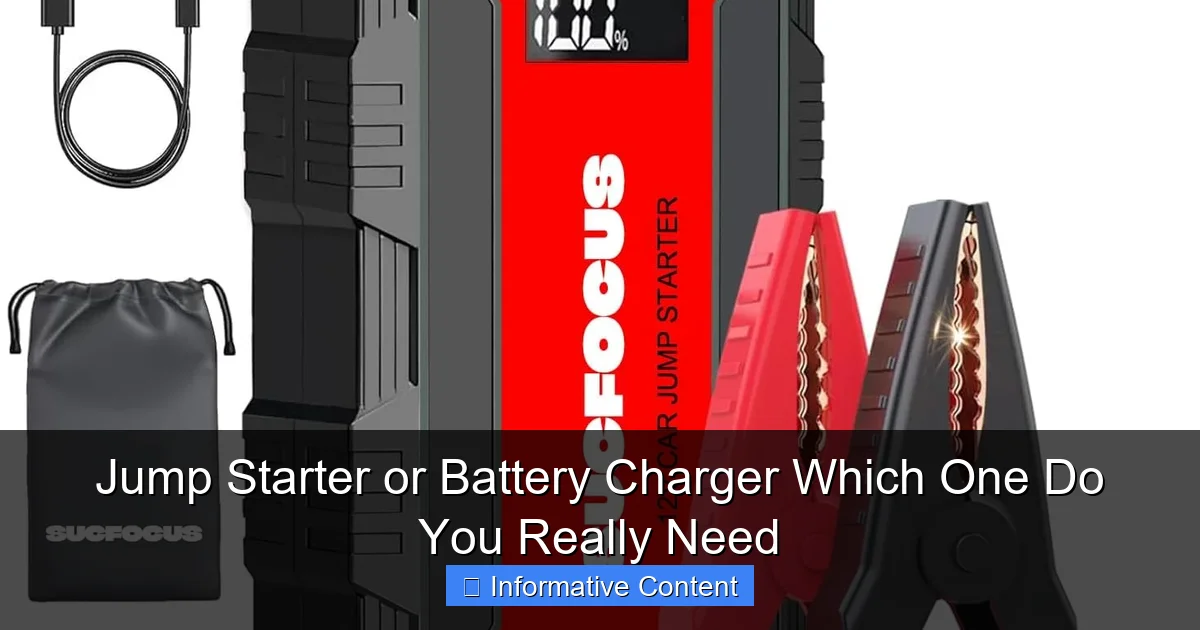
Featured image for jump starter or battery charger
Image source: m.media-amazon.com
Choosing between a jump starter and a battery charger depends on your immediate needs and long-term vehicle maintenance goals. A jump starter delivers a quick, portable power boost to revive a dead battery in emergencies, while a battery charger slowly replenishes and maintains battery health over time. Prioritize a jump starter for roadside rescues, but invest in a charger for reliable, lasting performance.
Key Takeaways
- Jump starters provide instant power to revive dead batteries fast.
- Battery chargers slowly recharge batteries, ideal for long-term maintenance.
- Portability matters: Jump starters are compact; chargers need outlets.
- Choose safety: Jump starters reduce risks of overcharging or sparking.
- Multi-use tools: Some jump starters include USB ports and lights.
- Frequency of use: Frequent travelers benefit more from jump starters.
📑 Table of Contents
- Jump Starter or Battery Charger: Which One Do You Really Need?
- Understanding the Basics: What’s the Difference?
- When to Choose a Jump Starter (And When It’s a Lifesaver)
- When a Battery Charger Makes More Sense (And Why)
- Hybrid Solutions: Can You Have Both?
- Real-World Comparison: Data and Performance
- Final Thoughts: Making the Right Choice for Your Needs
Jump Starter or Battery Charger: Which One Do You Really Need?
We’ve all been there: you’re running late, you hop in the car, turn the key, and… nothing. The engine doesn’t turn over. The lights flicker. The dreaded click-click-click signals a dead battery. It’s a frustrating, inconvenient moment—one that can derail your entire day. That’s when you start thinking: “Maybe I should get one of those portable jump starters or battery chargers.” But now you’re stuck: jump starter or battery charger—which one actually solves your problem?
The truth is, both tools are lifesavers, but they’re not interchangeable. One gets you back on the road instantly; the other helps maintain and restore your battery over time. Choosing the right one depends on your driving habits, climate, vehicle type, and how much you value peace of mind. I’ve personally used both in different situations—sometimes in the middle of winter, sometimes after leaving the dome light on overnight. In this guide, I’ll walk you through the key differences, practical use cases, and real-life scenarios so you can make an informed decision. No hype, no sales pitch—just honest, experience-based advice to help you pick the right tool for your needs.
Understanding the Basics: What’s the Difference?
Jump Starter: The Quick Fix for Dead Batteries
A jump starter is a portable power bank designed to deliver a high burst of current to your car battery, allowing you to start the engine without needing another vehicle. Think of it as a “battery in a box” that temporarily replaces your dead battery. Most modern jump starters use lithium-ion batteries (similar to your phone or laptop), which are lightweight and hold a charge for months when stored properly.
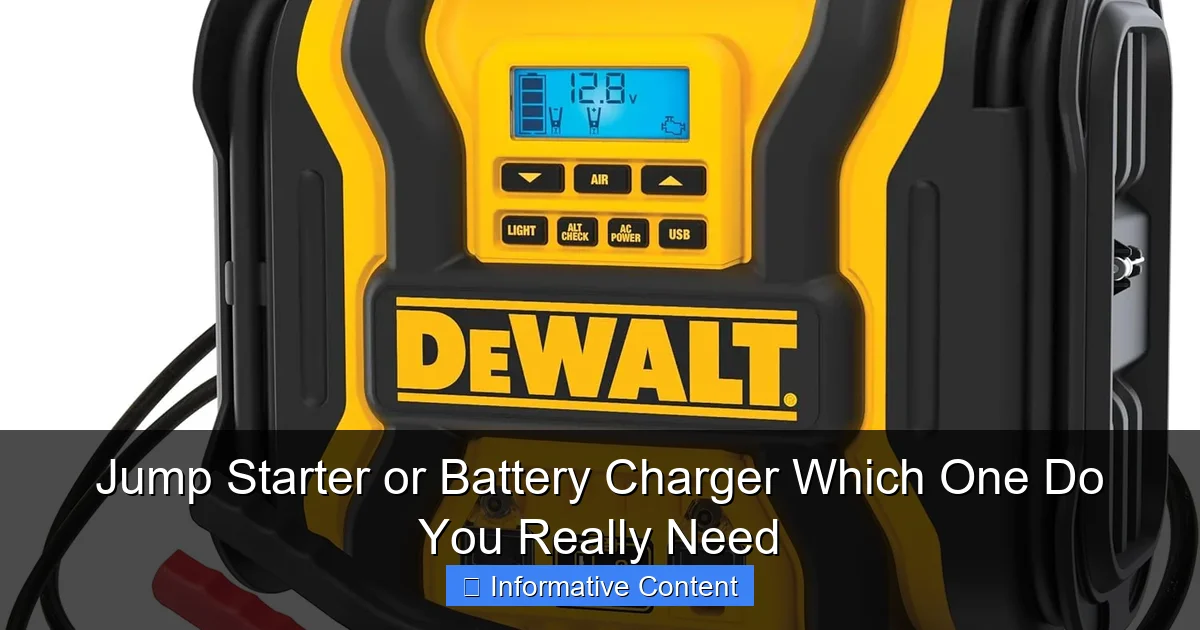
Visual guide about jump starter or battery charger
Image source: esntools.com
For example, I once left my SUV parked for three weeks during a work trip. When I returned, the battery was completely dead. No power, no lights, nothing. I grabbed my jump starter, connected the clamps, and within 30 seconds, the engine roared to life. No waiting for a neighbor, no calling roadside assistance—just instant relief. That’s the magic of a jump starter: it’s about speed and convenience.
Battery Charger: The Long-Term Battery Care Solution
A battery charger, on the other hand, is designed to slowly and safely recharge a weak or depleted battery over several hours. Unlike a jump starter, it doesn’t provide enough power to start your car immediately. Instead, it replenishes the battery’s charge using a controlled, low-current process that prevents damage.
Imagine your battery is like a phone that’s at 5%. A jump starter is like plugging it into a fast charger for 30 seconds—it gives you just enough juice to turn it on. A battery charger is like plugging it in overnight—it brings it back to 100% safely and fully.
Chargers come in different types: trickle chargers (very slow, for long-term storage), smart chargers (automatically adjust voltage and current), and fast chargers (for quicker recovery). Some even include desulfation modes to help revive old or sulfated batteries.
Key Functional Differences
- Power Output: Jump starters deliver high current (often 1,000–2,000 amps) for a few seconds. Chargers use low current (1–10 amps) for hours.
- Portability: Jump starters are compact and easy to store in your trunk. Chargers are bulkier and usually require access to an electrical outlet.
- Use Case: Jump starters are for emergencies. Chargers are for maintenance and recovery.
- Speed: Jump starters work in seconds. Chargers take 6–24 hours.
The bottom line? If you’re looking for a quick fix, go with a jump starter. If you want to prevent future dead batteries or revive a weak one, a charger is the better long-term investment.
When to Choose a Jump Starter (And When It’s a Lifesaver)
You’re Often on the Go or Travel Frequently
If you drive daily, commute long distances, or frequently take road trips, a jump starter is a must-have. You never know when a battery will fail—especially in extreme weather. I keep my jump starter in the glove compartment. It’s small, lightweight, and gives me confidence that I won’t be stranded, even if I accidentally leave the radio on or the trunk ajar.
One winter, I was in a parking garage with no cell service. The battery died, and I had no jumper cables or a second car nearby. My jump starter saved me. No panic, no stress. I just pulled it out, connected the clamps (red to positive, black to ground), and hit the button. Engine started. Crisis averted.
You Live in a Cold Climate
Cold weather is a battery killer. According to AAA, battery failure rates increase by over 50% in winter. The chemical reactions inside a battery slow down in cold temperatures, reducing its ability to deliver power. A jump starter is especially useful here because it’s designed to work in sub-zero conditions.
Tip: Look for a jump starter rated for at least -20°C (-4°F). Many models include “cold weather” modes that boost output when the temperature drops.
You Drive an Older or High-Draw Vehicle
Older cars with larger engines (like trucks or SUVs) or vehicles with lots of electronics (e.g., aftermarket stereos, LED lights, or dashcams) place higher demands on the battery. Even a small drain can kill it overnight. A jump starter gives you peace of mind, especially if you’re not home to charge it.
For example, my friend has a vintage pickup with a powerful V8 engine. The battery often dies after a weekend of inactivity. He uses a jump starter every time—no need to wait for a tow or borrow cables.
You Want a Multi-Function Tool
Many modern jump starters come with extra features that add value:
- USB ports to charge phones, tablets, or GPS devices
- Built-in LED flashlights with SOS and strobe modes
- Air compressors for inflating tires
- Power inverters to run small appliances
One model I tested even had a built-in tire inflator and a 12V power outlet—perfect for camping trips or roadside emergencies.
You Don’t Have Access to Another Vehicle
Not everyone has a second car or a neighbor with jumper cables. In rural areas, city apartments, or busy parking lots, help isn’t always nearby. A jump starter is your personal roadside assistance—always ready, always reliable.
When a Battery Charger Makes More Sense (And Why)
You Have Time and Access to an Outlet
Let’s say your battery is weak but not completely dead. You’ve noticed slow cranking or dim lights, but the car still starts. Instead of using a jump starter (which is overkill), a battery charger can slowly bring it back to full health.
I once had a battery that would start the car, but only after multiple attempts. I hooked up a smart charger overnight, and by morning, the battery was fully charged. No jump needed. The charger also ran a diagnostic and confirmed the battery was still in good condition—just needed a top-up.
You’re Storing a Vehicle Long-Term
If you’re parking your car for a month or more (e.g., during winter, travel, or seasonal use), a battery charger—especially a trickle charger—is essential. These chargers deliver a tiny, continuous current to maintain the battery’s charge without overcharging.
My dad stores his classic car in a garage for six months each year. He uses a trickle charger with a float mode. When he takes it out in spring, the battery is at 100%, and the car starts on the first try. No corrosion, no sulfation, no hassle.
You Want to Extend Battery Life
Regular charging helps prevent battery degradation. Deep discharges (letting the battery go completely flat) shorten its lifespan. A smart charger can detect the battery’s state and apply the right charging profile—bulk, absorption, and float—to maximize longevity.
For example, a charger with a desulfation mode can break down sulfate crystals that form on battery plates over time. This can revive a battery that’s been sitting for months.
You’re Environmentally Conscious
Jump starters, while convenient, are essentially disposable batteries. Most last 3–5 years before their internal cells degrade. Chargers, especially smart models, can last a decade with proper care. They also reduce waste by helping you reuse and maintain batteries instead of replacing them prematurely.
You Own Multiple Vehicles or Equipment
Do you have a motorcycle, boat, ATV, or lawn mower? A battery charger is more versatile. Most chargers come with multiple connectors (alligator clips, ring terminals, SAE plugs) and can handle 6V or 12V systems. You can use one charger for all your vehicles.
I use a single smart charger for my car, motorcycle, and generator. It’s saved me money and space in the garage.
Hybrid Solutions: Can You Have Both?
Jump Starter with Charging Capabilities
Yes! Many modern jump starters now include USB-C or DC charging ports, so you can plug in a wall adapter or solar panel to recharge the jump starter itself. But here’s the catch: you can’t charge your car battery with the jump starter’s internal battery. The jump starter only provides a burst of power to start the engine. It doesn’t act as a charger.
However, some high-end models include a pass-through charging mode, where the jump starter connects to a wall outlet and delivers a low, steady charge to your car battery—essentially turning it into a trickle charger. This is rare but growing in popularity.
Smart Chargers with Jump Start Features
Some advanced battery chargers now come with a “boost” or “start” mode that delivers a high-current pulse to help start the engine—similar to a jump starter. These are great if you want a two-in-one tool.
For example, a smart charger might:
- Charge your battery at 2A for 12 hours
- Switch to a 500A boost mode to start the engine
- Then resume charging
These are ideal for people who want the maintenance benefits of a charger but also need emergency starting power. Just keep in mind: they’re usually bulkier and more expensive than standalone jump starters.
Best of Both Worlds: The Ideal Setup
Here’s what I recommend for most drivers:
- Keep a compact jump starter in your car for emergencies
- Use a smart battery charger at home for regular maintenance
This way, you’re covered for both short-term fixes and long-term battery health. Think of it like having a first-aid kit and a full medicine cabinet—you need both for complete care.
Real-World Comparison: Data and Performance
To help you visualize the differences, here’s a comparison of typical features and performance metrics:
| Feature | Jump Starter | Battery Charger |
|---|---|---|
| Starting Power | 1,000–2,000 amps (burst) | 10–100 amps (boost mode, if available) |
| Charging Speed | Not applicable (starts engine in seconds) | 2A (12+ hours), 10A (4–6 hours) |
| Portability | High (fits in glovebox) | Low to medium (requires outlet) |
| Battery Type | Lithium-ion | Lead-acid or lithium (internal) |
| Lifespan | 3–5 years | 5–10 years |
| Best For | Emergency starts, travel, cold weather | Maintenance, storage, battery revival |
| Average Price | $80–$150 | $40–$120 |
| Extra Features | Flashlight, USB ports, air compressor | Desulfation, float mode, multiple connectors |
This table highlights the trade-offs. Jump starters win on speed and portability. Chargers win on longevity, versatility, and battery care. Your choice depends on what matters most to you.
Final Thoughts: Making the Right Choice for Your Needs
So, jump starter or battery charger? The answer isn’t one or the other—it’s about understanding your lifestyle and priorities.
If you’re a busy commuter, a frequent traveler, or live in a cold climate, a jump starter is your best friend. It’s fast, reliable, and gives you instant peace of mind. It’s the tool you reach for when time is critical and help isn’t available.
If you’re a homeowner, a classic car enthusiast, or someone who values long-term maintenance, a battery charger is the smarter investment. It keeps your battery healthy, prevents future failures, and can even save you money by extending battery life.
And if you want the ultimate coverage? Get both. Keep a compact jump starter in your car and a smart charger in your garage. That way, you’re ready for emergencies and long-term care.
One last tip: no matter which tool you choose, maintain it. Charge your jump starter every 3–6 months. Test your charger annually. Clean the clamps. Store both in a cool, dry place. A tool is only as good as how well you care for it.
At the end of the day, the goal isn’t just to start your car—it’s to feel confident, prepared, and in control. Whether you pick a jump starter, a battery charger, or both, you’re taking a smart step toward a smoother, less stressful driving experience. And that’s worth every penny.
Frequently Asked Questions
What’s the difference between a jump starter and a battery charger?
A jump starter delivers a quick, high-current burst to start a dead vehicle, while a battery charger replenishes the battery’s charge slowly over time. Jump starters are portable and ideal for emergencies, whereas chargers are better for long-term battery maintenance. Choose based on whether you need instant power or gradual recharging.
Can I use a battery charger as a jump starter?
Most standard battery chargers cannot jump-start a vehicle because they lack the high instantaneous current required. However, some modern battery chargers with jump start features combine both functions. Always check the product specifications before attempting an emergency start.
Is a portable jump starter worth it?
Yes, if you want peace of mind during roadside emergencies. A portable jump starter is compact, doesn’t require another vehicle, and can save you from being stranded. They’re especially useful in cold climates where batteries fail more often.
How long does it take a battery charger to fully recharge a dead battery?
Depending on the charger’s amperage and the battery’s condition, it can take 4–12 hours to fully recharge. Trickle chargers (low amp) are slower but safer, while higher-amp models work faster but require monitoring to avoid overcharging.
Do jump starters work on all vehicles?
Most jump starters work on cars, trucks, and SUVs with 12V batteries, but check the unit’s peak amperage rating. Larger engines (e.g., diesel trucks) require higher cranking amps. Always verify compatibility with your vehicle’s requirements.
Which one is better for long-term battery maintenance?
A battery charger is superior for long-term use because it maintains optimal charge without overloading the battery. Jump starters are for emergencies, while chargers (especially smart chargers) prevent sulfation and extend battery life during storage.