
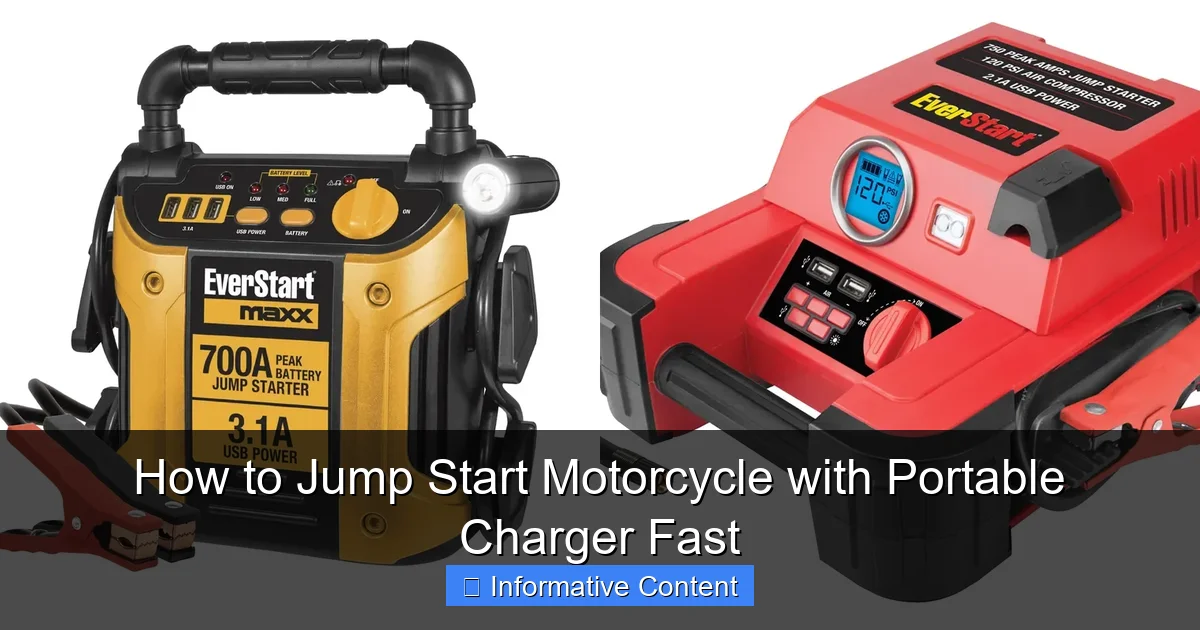
Featured image for jump start motorcycle with portable charger
Image source: docerp.s3.amazonaws.com
Jump starting your motorcycle with a portable charger is the fastest, most reliable way to get back on the road without needing another bike or bulky equipment. Choose a high-quality lithium-powered portable jump starter with sufficient peak amps (at least 800–1000 for most bikes) and follow proper polarity to avoid damage. With a fully charged portable charger, a quick connection delivers instant cranking power—safe, simple, and effective in under two minutes.
Key Takeaways
- Choose a high-amp portable charger with at least 12V output for reliable motorcycle starts.
- Always check battery terminals for corrosion or looseness before connecting the charger.
- Connect red to positive first, then black to ground to avoid sparks and damage.
- Wait 3–5 minutes after connecting to allow the battery to stabilize before starting.
- Keep the charger charged and store it in a dry, cool place for emergencies.
- Use safety gloves and goggles to protect yourself during the jump-start process.
- Test the battery afterward to ensure it’s holding a charge or needs replacement.
📑 Table of Contents
- How to Jump Start Motorcycle with Portable Charger Fast
- Why Your Motorcycle Battery Dies (And How to Prevent It)
- What Is a Portable Motorcycle Jump Starter?
- Step-by-Step Guide: How to Jump Start Motorcycle with Portable Charger
- Choosing the Right Portable Jump Starter for Your Motorcycle
- Common Mistakes to Avoid When Jump Starting
- Final Thoughts: Be Prepared, Stay Safe, Ride On
How to Jump Start Motorcycle with Portable Charger Fast
Picture this: You’re all set for a weekend ride—helmet on, gloves ready, the open road calling your name. You swing your leg over your bike, turn the key… and nothing. Just a sad, clicking sound. Your motorcycle battery is dead. Again.
It’s one of the most frustrating experiences for any rider. Whether you left your lights on, the battery’s old, or it’s just been sitting in the garage too long, a dead battery can turn a perfect day into a major inconvenience. But here’s the good news: you don’t need another vehicle or a set of jumper cables to get back on the road. With a portable motorcycle jump starter, you can revive your dead battery in minutes—no help required.
In this guide, we’ll walk you through everything you need to know about jump starting your motorcycle using a portable charger. From understanding how these devices work to choosing the right one and safely performing the jump start, we’ve got you covered. Whether you’re a seasoned rider or just getting started, knowing how to jump start motorcycle with portable charger fast could save your ride—and your sanity.
Why Your Motorcycle Battery Dies (And How to Prevent It)
Before we dive into the jump start process, it’s important to understand why motorcycle batteries die in the first place. Knowing the root causes can help you avoid future breakdowns and extend the life of your battery.
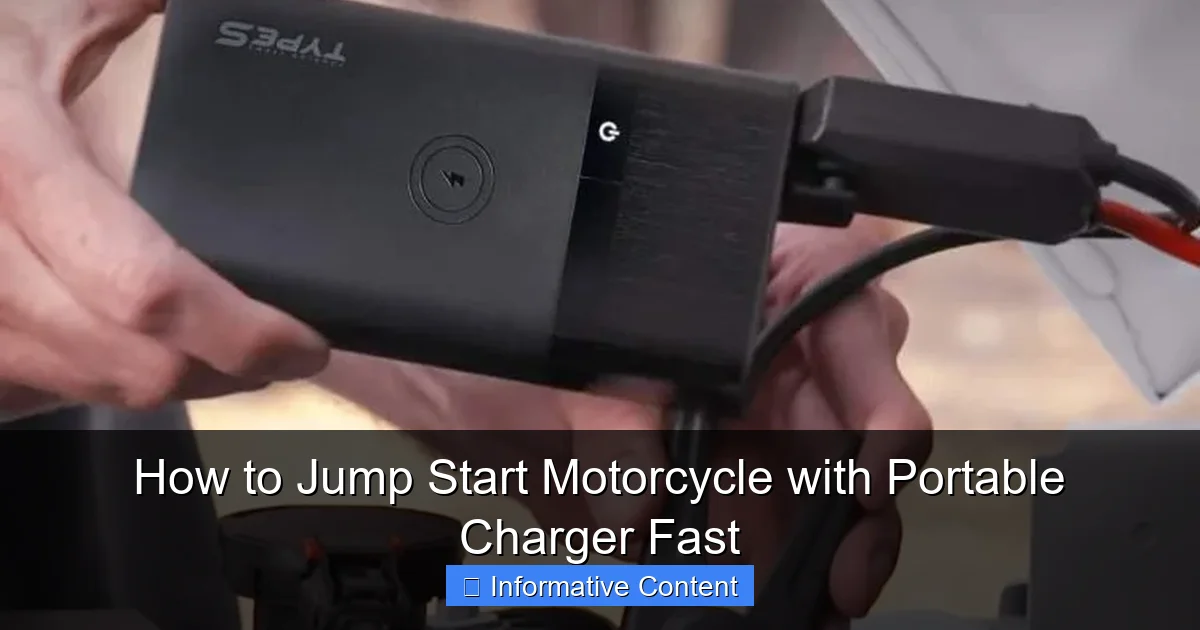
Visual guide about jump start motorcycle with portable charger
Image source: everstartjumpstarter.com
Common Causes of Dead Motorcycle Batteries
Motorcycle batteries are smaller and often more sensitive than car batteries. They’re also more exposed to the elements, which can accelerate wear and tear. Here are the most common reasons your battery might give out:
- Leaving lights or accessories on: It’s easy to forget to turn off your headlight or USB charger after parking. Even a small drain overnight can kill a weak battery.
- Short rides: Motorcycles don’t always run long enough to fully recharge the battery, especially if you’re just running errands around town. This leads to gradual depletion over time.
- Old age: Most motorcycle batteries last 3–5 years. If yours is pushing that limit, it’s time to consider a replacement.
- Extreme temperatures: Cold weather slows down chemical reactions in the battery, reducing its ability to hold a charge. Heat can cause internal damage and evaporation of electrolyte fluid.
- Parasitic drain: Faulty wiring or aftermarket electronics (like alarms or GPS trackers) can slowly drain the battery even when the bike is off.
Tips to Prevent a Dead Battery
An ounce of prevention is worth a pound of cure—especially when you’re miles from home. Here’s how to keep your battery healthy:
- Use a battery tender: If you don’t ride often, plug your bike into a smart charger or battery maintainer during storage. These devices keep the battery at optimal charge without overcharging.
- Turn off all electronics: Double-check that lights, heated grips, and USB ports are off before walking away.
- Take longer rides: Aim for at least 20–30 minutes of continuous riding a few times a week to help recharge the battery.
- Inspect regularly: Check battery terminals for corrosion and ensure connections are tight. Clean with a baking soda and water solution if needed.
- Store properly: If you’re storing your bike for the winter, remove the battery and keep it in a cool, dry place—preferably on a trickle charger.
Even with the best care, batteries eventually fail. That’s where a portable jump starter comes in handy. It’s not just a backup—it’s a lifeline when you’re stranded.
What Is a Portable Motorcycle Jump Starter?
A portable motorcycle jump starter is a compact, battery-powered device designed to deliver a burst of power to your dead motorcycle battery, allowing you to start your engine without needing another vehicle. Think of it as a personal roadside rescue kit that fits in your saddlebag or backpack.
How It Works
Portable jump starters contain a high-quality lithium-ion or lithium-polymer battery that stores electrical energy. When your motorcycle battery is dead, the jump starter sends a surge of power through jumper cables to the battery terminals, giving it enough juice to crank the engine.
Unlike traditional jumper cables, which require a second vehicle and can be risky if not connected properly, portable jump starters are self-contained and much safer. Most models also include built-in safety features like reverse polarity protection, short-circuit protection, and overcharge protection.
Key Features to Look For
Not all portable jump starters are created equal. When shopping for one, keep an eye out for these essential features:
- Peak amperage: Look for a model with at least 300–600 peak amps. This is enough to start most motorcycles, even in cold weather.
- Battery capacity (mAh): A higher mAh rating means longer runtime and more jump starts per charge. Aim for at least 10,000 mAh.
- Compact and lightweight: You want something you can easily carry on your bike. Many models weigh under 2 pounds.
- USB charging ports: Bonus points if it can charge your phone, GPS, or other devices—great for long rides.
- Built-in flashlight: Useful for nighttime emergencies or checking your engine.
- Safety protections: Reverse polarity, over-current, and short-circuit protection are must-haves.
- Weather resistance: A water-resistant or rugged casing helps it survive rain, dust, and drops.
Real-World Example: The NOCO Boost Plus GB40
One of the most popular portable jump starters for motorcycles is the NOCO Boost Plus GB40. It delivers 1000 peak amps, weighs just 2.4 pounds, and can jump start motorcycles, ATVs, and even small cars. It also includes a USB port for charging devices and a bright LED flashlight. Riders love its reliability and compact design—perfect for tossing in a tank bag.
Another great option is the Jump-N-Carry JNC300XL, which offers 600 peak amps and a built-in voltmeter to check your battery’s health. It’s a bit heavier but extremely durable and ideal for frequent use.
Investing in a quality portable jump starter isn’t just about convenience—it’s about peace of mind. You’ll never have to rely on a stranger with a truck or wait for roadside assistance again.
Step-by-Step Guide: How to Jump Start Motorcycle with Portable Charger
Now for the main event: how to actually jump start your motorcycle using a portable charger. The process is simple, safe, and takes less than 10 minutes—even if you’ve never done it before.
What You’ll Need
- A fully charged portable jump starter
- Jumper cables (usually included with the jump starter)
- Safety gloves (optional but recommended)
- Your motorcycle
Safety First: Precautions Before You Begin
Safety is critical when working with batteries and electrical systems. Follow these steps to avoid injury or damage:
- Turn off the motorcycle: Make sure the ignition is off and the key is removed.
- Wear gloves: Protect your hands from acid or sparks.
- Check for damage: Inspect the battery for leaks, cracks, or swelling. If you see any, do not attempt to jump start—replace the battery instead.
- Ensure the jump starter is charged: Most models have an LED indicator. Green means ready; red means it needs charging.
- Work in a well-ventilated area: Batteries can release flammable gases, so avoid enclosed spaces.
Step-by-Step Jump Start Process
Follow these steps carefully to jump start your motorcycle safely and effectively:
- Locate the battery: On most motorcycles, the battery is under the seat. Remove the seat panel using a screwdriver or Allen key. Some sport bikes may have it under the fuel tank or side panel.
- Identify the terminals: The positive terminal (+) is usually red and marked with a “+.” The negative terminal (–) is black and marked with a “–.”
- Connect the red (positive) clamp: Attach the red clamp from the jump starter to the positive terminal of your motorcycle battery. Make sure it’s secure and metal-to-metal contact is made.
- Connect the black (negative) clamp: Attach the black clamp to the negative terminal of the battery. If the terminal is hard to reach or corroded, you can connect it to a grounded metal part of the engine or frame (like a bolt or bracket) instead. This is called “grounding” and reduces the risk of sparks near the battery.
- Power on the jump starter: Press the power button on the device. Most models will light up or beep to indicate they’re ready.
- Wait 1–2 minutes: Give the jump starter time to transfer charge to your battery. This helps build up enough voltage to start the engine.
- Start the motorcycle: Turn the key and try to start the engine. If it doesn’t start immediately, wait 30 seconds and try again. Do not crank for more than 5 seconds at a time.
- Disconnect in reverse order: Once the engine is running, disconnect the black clamp first, then the red clamp. Turn off the jump starter.
- Replace the seat and ride: Put the seat back on and take a short ride (10–15 minutes) to allow the alternator to recharge the battery.
Pro Tips for Success
- Don’t jump start a frozen battery: If the battery is frozen (common in winter), thaw it first. Jump starting a frozen battery can cause it to explode.
- Use the right mode: Some jump starters have a “motorcycle” or “12V” mode. Use this setting for best results.
- Keep the jump starter charged: After use, recharge it immediately so it’s ready next time.
- If it doesn’t work: If the bike still won’t start after 2–3 attempts, the battery may be too damaged or the issue could be elsewhere (like a faulty starter motor). Consider calling for help or replacing the battery.
With practice, this process becomes second nature. And once you’ve done it once, you’ll never dread a dead battery again.
Choosing the Right Portable Jump Starter for Your Motorcycle
With so many options on the market, picking the right portable jump starter can feel overwhelming. But don’t worry—we’ll break it down so you can make an informed choice.
Key Factors to Consider
Here’s what to look for when shopping for a portable jump starter:
- Compatibility: Make sure it’s designed for 12V systems (standard for motorcycles). Avoid models made only for cars unless they specify motorcycle use.
- Size and weight: You want something portable. Look for models under 3 pounds that fit in a saddlebag or backpack.
- Jump start power: For most motorcycles, 300–600 peak amps is sufficient. Larger bikes (like touring or cruiser models) may need 800+ amps.
- Battery type: Lithium-ion batteries are lighter and hold a charge longer than lead-acid. They’re also more expensive but worth it for frequent riders.
- Additional features: USB ports, flashlights, and digital displays add convenience. Some models even include air compressors for tires.
- Brand reputation: Stick with trusted brands like NOCO, Jump-N-Carry, or Tacklife. Read reviews and check warranty terms.
Top Portable Jump Starters for Motorcycles (2024)
| Model | Peak Amps | Battery Capacity | Weight | Key Features |
|---|---|---|---|---|
| NOCO Boost Plus GB40 | 1000A | 12,000 mAh | 2.4 lbs | USB charging, flashlight, reverse polarity protection |
| Jump-N-Carry JNC300XL | 600A | 18,000 mAh | 4.5 lbs | Voltmeter, rugged design, long cables |
| Tacklife T8 Pro | 800A | 20,000 mAh | 2.8 lbs | Dual USB ports, LCD screen, air compressor |
| DBPower 1200A | 1200A | 25,000 mAh | 3.1 lbs | High capacity, fast charging, LED light |
Budget vs. Premium: What’s Worth It?
You can find portable jump starters ranging from $50 to $200+. While budget models work in a pinch, they often lack safety features, have shorter lifespans, and may not perform well in cold weather.
Spending $100–$150 on a mid-to-high-tier model like the NOCO GB40 or Tacklife T8 Pro is a smart investment. These devices are built to last, come with robust safety systems, and often include extras like phone charging and flashlights.
Think of it this way: a quality jump starter pays for itself the first time it saves you from a tow truck fee or a long walk home.
Common Mistakes to Avoid When Jump Starting
Even with the best tools, mistakes can happen. Avoid these common pitfalls to ensure a safe and successful jump start.
Connecting Cables in the Wrong Order
Always connect red to positive first, then black to negative. Reversing the order can cause sparks, damage electronics, or even start a fire. If you’re grounding the black clamp to the frame, still connect red first.
Using a Car Jump Starter Without Checking Compatibility
Some car jump starters deliver too much power for a motorcycle battery and can damage it. Always check the manufacturer’s recommendations. If in doubt, use a model specifically designed for motorcycles.
Leaving the Jump Starter Connected Too Long
Once the bike starts, disconnect immediately. Leaving it connected can overcharge the battery or drain the jump starter unnecessarily.
Ignoring Battery Health
A jump start won’t fix a severely damaged or sulfated battery. If your bike won’t hold a charge after jumping, it’s time for a replacement. Continuing to jump a bad battery can strain your alternator and electrical system.
Not Recharging the Jump Starter
After use, recharge your portable jump starter as soon as possible. Most models lose charge over time, even when not in use. A dead jump starter is as useless as a dead battery.
By avoiding these mistakes, you’ll extend the life of both your motorcycle battery and your jump starter—and avoid unnecessary stress on the road.
Final Thoughts: Be Prepared, Stay Safe, Ride On
A dead motorcycle battery doesn’t have to ruin your day. With a portable jump starter in your gear, you’re always ready to get back on the road—fast, safely, and without help.
We’ve covered everything from why batteries die to how to choose the right jump starter and perform the jump start step by step. Remember, the key is preparation. Invest in a quality device, keep it charged, and know how to use it. That way, when that dreaded click sounds, you’ll be ready.
Whether you’re commuting to work, exploring backroads, or heading out on a cross-country trip, a portable jump starter is one of the smartest additions you can make to your riding kit. It’s affordable, reliable, and could save you hundreds in towing fees or emergency repairs.
So don’t wait for the next dead battery to strike. Get a portable jump starter today, learn how to jump start motorcycle with portable charger fast, and ride with confidence. The open road is waiting—and now, so are you.
Frequently Asked Questions
Can you jump start a motorcycle with a portable charger?
Yes, you can jump start a motorcycle with a portable charger, provided it has sufficient power (at least 12V and adequate amperage). Make sure the portable charger is designed for motorcycles or small engines to avoid damage.
What kind of portable charger do I need to jump start a motorcycle?
Look for a lithium-ion portable charger with at least 12V output, 1000+ peak amps, and safety features like reverse polarity protection. A compact motorcycle-specific jump starter is ideal for reliability and portability.
How do you jump start a motorcycle with a portable charger safely?
First, connect the red clamp to the positive (+) battery terminal and the black clamp to a grounded metal part. Turn on the portable charger, then start the bike. Always follow the manufacturer’s instructions to avoid sparks or damage.
Is it better to use a portable charger than jumper cables for a motorcycle?
A portable charger is often more convenient for motorcycles since it doesn’t require another vehicle. It’s also lighter and easier to store, making it a great option for roadside emergencies.
How long does it take to jump start a motorcycle with a portable charger?
Most motorcycles start within 5–10 seconds of connecting the portable charger. If it doesn’t start immediately, wait 30 seconds before retrying to avoid overheating the device.
Can a portable charger damage my motorcycle’s electrical system?
Not if used correctly. Choose a smart portable charger with surge protection and follow proper connection steps. Cheap or incompatible chargers may cause voltage spikes, so invest in a reputable brand.