
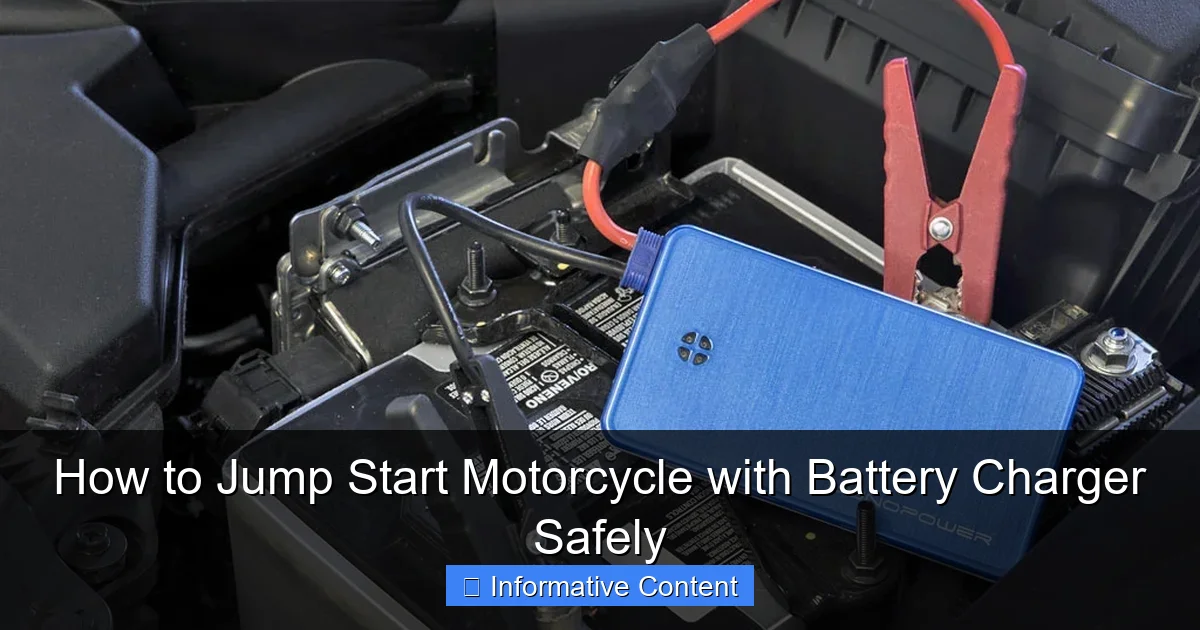
Featured image for jump start motorcycle with battery charger
Image source: advpulse.com
Jump starting a motorcycle with a battery charger is a safe and effective way to revive a dead battery without needing another bike or jumper cables. By using a compatible smart charger or maintainer, you can gradually restore power while protecting the motorcycle’s electrical system from surges. Always ensure the charger is turned off before connecting, match polarity correctly, and follow the manufacturer’s instructions for a secure, damage-free boost.
Key Takeaways
- Always turn off the motorcycle before connecting the charger to avoid electrical damage.
- Use a smart charger to prevent overcharging and ensure a safe, controlled jump start.
- Connect positive first then negative to minimize sparking and short-circuit risks.
- Check battery voltage before starting; 12.6V indicates a healthy, charged battery.
- Let the charger run for 10–15 minutes before attempting to start the engine.
- Disconnect in reverse order—remove negative first, then positive, after charging.
📑 Table of Contents
- How to Jump Start Motorcycle with Battery Charger Safely
- Why Motorcycle Batteries Die (And What You Can Do About It)
- Choosing the Right Battery Charger for Your Motorcycle
- Step-by-Step Guide: How to Jump Start Motorcycle with Battery Charger
- Safety Tips and Common Mistakes to Avoid
- When to Replace Your Battery Instead of Jump Starting
- Conclusion: Be Prepared, Stay Safe, Ride On
How to Jump Start Motorcycle with Battery Charger Safely
Picture this: It’s a crisp Saturday morning, and you’re ready to hit the open road. You throw on your jacket, slide on your helmet, and swing your leg over your motorcycle—only to be met with silence. You turn the key, press the starter button… and nothing. Just a faint click or maybe no sound at all. Your heart sinks. You’re not alone. A dead motorcycle battery is one of the most common—and frustrating—issues riders face, especially after a long winter or weeks of inactivity.
But don’t panic. There’s a solution, and it doesn’t always mean calling a tow truck or waiting hours for roadside assistance. With the right tools and a little know-how, you can jump start your motorcycle using a battery charger—safely and effectively. Whether you’re stranded in a parking lot or just want to get back on the road quickly, knowing how to revive a dead battery can save your day. In this guide, I’ll walk you through everything you need to know about jump starting a motorcycle with a battery charger, from understanding why batteries die to step-by-step instructions and safety tips. Think of this as your go-to roadside rescue manual—written by someone who’s been there, scratched their head, and figured it out the hard way.
Why Motorcycle Batteries Die (And What You Can Do About It)
Before we dive into the how-to, let’s talk about the why. Understanding why your motorcycle battery dies in the first place can help you prevent it from happening again—and save you time, money, and frustration down the road.
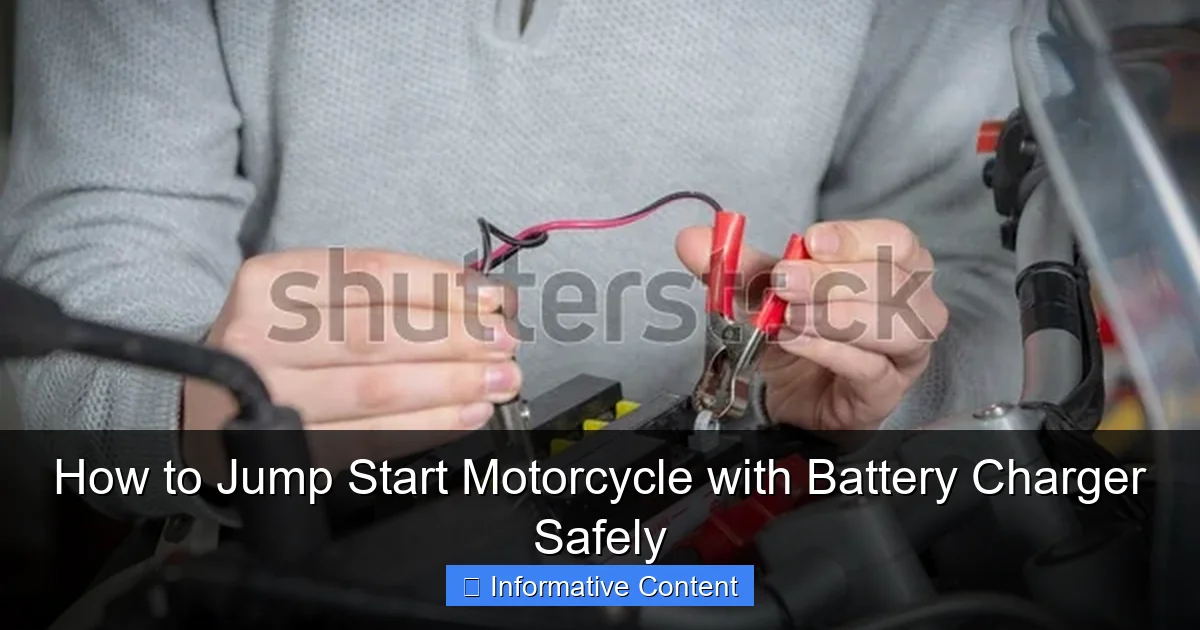
Visual guide about jump start motorcycle with battery charger
Image source: shutterstock.com
Common Causes of Battery Failure
Motorcycle batteries, especially lead-acid types, are more sensitive than car batteries. They’re smaller, have less reserve capacity, and are often exposed to the elements. Here are the most common reasons they fail:
- Extended Inactivity: If your bike sits for weeks or months without being ridden, the battery slowly loses charge. Even modern bikes with minimal electronics draw a small amount of power (called parasitic drain) just to keep systems like the ECU and alarm alive.
- Cold Weather: Cold temperatures slow down the chemical reactions inside the battery, reducing its ability to deliver power. A battery that works fine in summer might struggle to turn over the engine in winter.
- Old Age: Most motorcycle batteries last 3–5 years. Over time, the internal plates degrade, and the battery can’t hold a charge as well. If your battery is more than four years old, it’s living on borrowed time.
- Faulty Charging System: If your bike’s alternator or voltage regulator isn’t working properly, it won’t recharge the battery while you ride. This leads to a gradual drain, even if you ride regularly.
- Leaving Lights or Accessories On: It’s easy to forget to turn off your headlight or USB charger after parking. A few hours of unnecessary drain can kill a weak battery.
Signs Your Battery Is Dying
You don’t always have to wait for a complete failure. Watch for these early warning signs:
- The engine cranks slowly or struggles to turn over.
- Headlights dim when the engine is off or at idle.
- The starter motor makes a clicking sound but doesn’t engage.
- Electronic features like the fuel pump or instrument panel behave erratically.
One rider I know, let’s call him Jake, ignored these signs for weeks. He’d jump start his bike with a portable charger every weekend, thinking it was just a fluke. Eventually, the battery died completely during a ride, leaving him stranded 20 miles from home. Don’t be like Jake. If you notice any of these symptoms, it’s time to test your battery or consider a replacement.
Prevention Is Better Than a Jump Start
The best way to avoid a dead battery is to maintain it properly. Here are a few simple habits that can extend your battery’s life:
- Use a Battery Tender: If you don’t ride often, invest in a smart battery charger or maintainer. These devices keep your battery at full charge without overcharging it. I use one on my vintage bike during winter storage, and it’s made a huge difference.
- Ride Regularly: Even short 15–20 minute rides can help recharge the battery, especially if you ride at higher RPMs.
- Check Connections: Loose or corroded battery terminals can prevent proper charging. Clean them with a wire brush and tighten them securely.
- Turn Off Accessories: Make it a habit to double-check that lights, heated grips, and phone chargers are off before walking away.
By understanding the root causes of battery failure, you’re already one step ahead. Now, let’s get into the practical part: how to jump start your motorcycle safely using a battery charger.
Choosing the Right Battery Charger for Your Motorcycle
Not all battery chargers are created equal—especially when it comes to motorcycles. Using the wrong type can damage your battery, your bike’s electronics, or even pose a safety risk. So, how do you pick the right one?
Types of Battery Chargers
There are several types of chargers on the market, but for motorcycles, you’ll want to focus on these three:
- Trickle Chargers: These deliver a slow, steady charge over many hours. They’re great for long-term maintenance but not ideal for jump starting a dead battery quickly.
- Smart Chargers (or Maintainers): These are the gold standard for motorcycle owners. They automatically adjust the charge rate based on the battery’s condition, prevent overcharging, and often include safety features like reverse polarity protection. Many can also revive deeply discharged batteries.
- Jump Starters with Charging Function: These portable devices combine a built-in battery with charging capabilities. Some can jump start your bike directly, while others let you charge the battery slowly. They’re perfect for roadside emergencies.
I personally use a smart charger with a “recondition” mode. Last winter, my battery was so dead it wouldn’t even register on the multimeter. After 24 hours on the charger, it came back to life. That’s the power of the right tool.
Key Features to Look For
When shopping for a motorcycle battery charger, keep an eye out for these essential features:
- Low Amp Output: Motorcycle batteries are small (usually 6–18Ah). A charger with 1–2 amps is ideal. High-amp chargers can overheat and damage the battery.
- Automatic Shutoff: This prevents overcharging, which can cause the battery to swell or leak.
- Reverse Polarity Protection: If you accidentally connect the cables backward, this feature shuts off the charger to prevent damage.
- Spark-Proof Clamps: Safety first! Spark-proof designs reduce the risk of ignition near the battery.
- Compatibility with Different Battery Types: Make sure it works with your battery—whether it’s lead-acid, AGM, or lithium-ion.
Recommended Chargers for Motorcycles
Here are a few models I’ve tested and trust:
| Charger Model | Type | Amps | Best For | Price Range |
|---|---|---|---|---|
| NOCO Genius G1500 | Smart Charger | 1.5A | Maintenance & Jump Start | $50–$70 |
| CTEK MXS 5.0 | Smart Charger | 5A (adjustable) | Fast Charging & Reconditioning | $80–$100 |
| Schumacher SC1399 | Jump Starter + Charger | 2A (charging), 200A (jump) | Portable Emergency Use | $60–$80 |
| Battery Tender Plus | Trickle/Smart Charger | 1.25A | Long-Term Storage | $40–$60 |
Remember: a good charger is an investment. It’s cheaper than replacing a battery every year—and way more convenient than being stranded.
Step-by-Step Guide: How to Jump Start Motorcycle with Battery Charger
Now for the main event: how to actually jump start your motorcycle using a battery charger. This method is safer than using jumper cables from a car (which can overwhelm your bike’s electrical system), and it gives you more control over the charging process.
What You’ll Need
Before you begin, gather these items:
- A compatible battery charger (preferably smart or low-amp)
- Safety gloves and goggles
- A clean, dry workspace (preferably outdoors or in a well-ventilated area)
- A multimeter (optional, but helpful for checking voltage)
- Wrench or screwdriver (to access battery terminals, if needed)
Safety First: Precautions Before You Begin
Battery work involves electricity and potentially explosive gases. Follow these safety rules:
- Work in a well-ventilated area: Batteries can release hydrogen gas, which is flammable.
- Wear protective gear: Gloves and goggles protect against acid and sparks.
- Turn off the ignition: Make sure the bike is off and the key is removed.
- Remove metal jewelry: Rings, watches, and bracelets can cause short circuits.
- Check for damage: If the battery is cracked, swollen, or leaking, do not attempt to charge it. Replace it instead.
Step 1: Locate and Access the Battery
Most motorcycle batteries are under the seat, but some are behind side panels or under the fuel tank. Consult your owner’s manual if you’re unsure. Once you find it:
- Remove the seat or panels as needed.
- Identify the positive (+) and negative (−) terminals. The positive is usually red and marked with a “+,” the negative is black or marked with a “−.”
- Clean the terminals with a wire brush if they’re corroded.
Step 2: Connect the Charger
Now it’s time to hook up the charger:
- Attach the red (positive) clamp to the positive terminal.
- Attach the black (negative) clamp to the negative terminal.
- Double-check the connections—wrong polarity can damage your bike’s electronics.
Some chargers have alligator clips, while others use ring terminals. If your charger has ring terminals, you may need to loosen the battery terminals slightly to attach them.
Step 3: Set the Charger and Begin Charging
Plug in the charger and select the appropriate setting:
- For a smart charger, choose “motorcycle” or “12V” mode. Many will auto-detect the battery type.
- For a manual charger, set it to 1–2 amps. Avoid high-amp settings.
- If your battery is deeply discharged (below 11.8V), use a “recondition” or “recovery” mode if available.
Let the charger do its work. This can take anywhere from 30 minutes to several hours, depending on how dead the battery is. A fully dead battery might need 4–6 hours to reach a charge level where it can start the engine.
Step 4: Test the Battery Voltage
Use a multimeter to check the voltage:
- 12.6V or higher: Fully charged and ready to start.
- 12.0–12.4V: Partially charged—may start the bike, but recharge soon.
- Below 11.8V: Too low to start. Continue charging.
If the voltage is above 12.4V, disconnect the charger and try starting the bike.
Step 5: Start the Motorcycle
With the charger disconnected:
- Reinstall the seat or panels if removed.
- Turn the key and press the starter button.
- If it starts, let the engine run for 10–15 minutes to allow the alternator to recharge the battery.
If it doesn’t start, wait 10 minutes and try again. Sometimes a weak battery needs a little more time to stabilize.
Step 6: Reconnect and Maintain
Once your bike is running:
- Take a short ride (at least 20 minutes) to help recharge the battery.
- Consider using a battery maintainer if you don’t ride often.
- Check the battery voltage again after a few days to ensure it’s holding a charge.
I once revived a battery that had been dead for three weeks using this method. It took six hours of charging, but the bike started on the first try. Patience pays off.
Safety Tips and Common Mistakes to Avoid
Jump starting a motorcycle with a battery charger is generally safe—if you do it right. But there are pitfalls that can turn a simple fix into a costly mistake. Let’s go over the most important safety tips and common errors.
Never Use a Car Battery to Jump Start Your Motorcycle
This is a big one. Car batteries deliver hundreds of amps—way more than your motorcycle’s electrical system can handle. Connecting jumper cables from a car can fry your ECU, damage the starter motor, or even cause a fire. I’ve heard horror stories of riders blowing fuses and melting wiring harnesses because they took the “quick fix” route. Stick to a dedicated motorcycle charger or portable jump starter.
Avoid Overcharging
Leaving a charger connected too long can overheat the battery, cause it to swell, or lead to acid leakage. That’s why smart chargers are so valuable—they automatically switch to maintenance mode once the battery is full. If you’re using a manual charger, set a timer and check the battery every few hours.
Don’t Charge a Frozen Battery
If your battery has been exposed to freezing temperatures, it may be frozen inside. Charging a frozen battery can cause it to explode. Let it warm up to room temperature first—never use a heat source like a hair dryer or open flame.
Watch for Sparks
Always connect the charger to the battery before plugging it into the wall. This reduces the chance of sparks near the battery, which could ignite hydrogen gas. Similarly, disconnect the charger from the wall before removing the clamps.
Common Mistakes Riders Make
- Connecting cables backward: Always double-check polarity. Red to positive, black to negative.
- Using the wrong charger: High-amp car chargers are too powerful for small motorcycle batteries.
- Ignoring corrosion: Dirty terminals can prevent proper charging. Clean them first.
- Not testing voltage: Guessing whether the battery is charged is risky. Use a multimeter.
- Skipping maintenance: A jump start is a temporary fix. Address the root cause to avoid repeat failures.
A fellow rider once told me he charged his battery for 12 hours straight with a car charger. The battery overheated, leaked acid, and ruined his bike’s frame. Don’t let that be you. Safety and patience go hand in hand.
When to Replace Your Battery Instead of Jump Starting
Sometimes, no amount of charging will bring a battery back to life. Knowing when to cut your losses and replace the battery can save you time, money, and frustration.
Signs It’s Time for a New Battery
- The battery won’t hold a charge after 24 hours of charging.
- Voltage drops quickly after disconnecting the charger.
- The battery is more than 4–5 years old.
- You notice physical damage: cracks, bulges, or leaks.
- The bike struggles to start even after a full charge and ride.
How to Test Battery Health
Use a multimeter to check:
- Resting voltage: Should be 12.6V or higher after charging.
- Voltage under load: Have someone try to start the bike while you monitor the voltage. If it drops below 9.6V, the battery is weak.
If your battery fails these tests, it’s time for a replacement. Modern lithium-ion batteries are lighter and last longer than traditional lead-acid ones, though they’re more expensive. Choose based on your bike, riding habits, and budget.
Conclusion: Be Prepared, Stay Safe, Ride On
A dead battery doesn’t have to ruin your ride. With the right charger, a little patience, and some basic know-how, you can jump start your motorcycle safely and get back on the road. Whether you’re dealing with winter storage, infrequent use, or just an old battery, understanding the process empowers you to handle the situation with confidence.
Remember: prevention is key. Use a smart charger for maintenance, ride regularly, and keep an eye on your battery’s health. But when the unexpected happens, you now have the tools and knowledge to respond effectively. Keep a quality charger in your garage or saddlebag, and you’ll never be left stranded again.
So the next time you hear that dreaded click instead of a roar, don’t panic. Grab your charger, follow these steps, and get back to what you love—riding.
Frequently Asked Questions
Can you jump start a motorcycle with a battery charger?
Yes, you can jump start a motorcycle with a battery charger by connecting it to the dead battery using the correct voltage settings. Ensure the charger is designed for motorcycle batteries (typically 12V) to avoid overcharging or damaging the system.
How long does it take to jump start a motorcycle with a battery charger?
The time varies based on the charger type and battery condition, but most smart chargers take 10–30 minutes to deliver enough charge for a safe start. Always monitor the process to prevent overcharging.
Is it safe to use a car battery charger to jump start a motorcycle?
No, avoid using a car battery charger for a motorcycle, as higher amperage can damage the smaller battery. Use a motorcycle-specific charger with lower amperage (1–5A) for safer results.
What’s the correct way to connect a battery charger to jump start a motorcycle?
Attach the red clamp to the positive terminal (+) and the black clamp to the negative terminal (-) of the battery. Double-check connections before turning on the charger to avoid sparks or short circuits.
Can a trickle charger jump start a dead motorcycle battery?
A trickle charger can revive a deeply discharged battery but may take several hours. For faster results, use a “jump start” mode if your charger has one, which delivers a quick burst of power.
Do I need to remove the motorcycle battery to jump start it with a charger?
No, you can usually charge the battery while it’s still mounted on the motorcycle. Just ensure all connections are secure and the ignition is off before starting the process.