
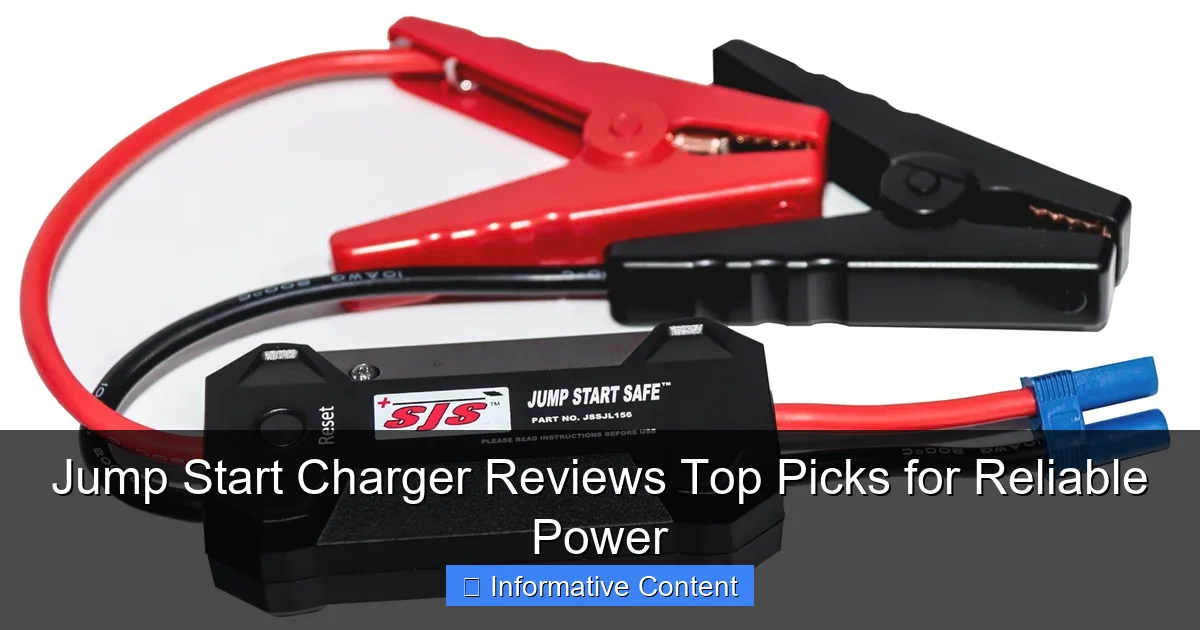
Featured image for jump start charger reviews
Image source: clalighting.com.au
Choosing the right jump start charger can mean the difference between a quick restart and a stranded vehicle. Our in-depth jump start charger reviews highlight top-performing models that deliver reliable power, fast charging, and smart safety features—perfect for emergencies. From compact lithium-ion units to heavy-duty portable powerhouses, we’ve tested and ranked the best to keep you moving with confidence.
Key Takeaways
- Choose lithium-ion models: They offer lightweight, long-lasting power with quick recharge times.
- Check peak amps: Higher cranking power ensures reliable starts in extreme cold or for large engines.
- Prioritize safety features: Look for spark-proof and reverse polarity protection to prevent damage.
- Verify portability: Compact, ergonomic designs with carrying cases ease transport and storage.
- Confirm multi-functionality: Built-in USB ports and flashlights add versatility beyond jump-starting.
- Read real-world reviews: User experiences reveal reliability and performance under actual conditions.
📑 Table of Contents
- Jump Start Charger Reviews: Top Picks for Reliable Power
- What Is a Jump Start Charger and How Does It Work?
- Why You Need a Jump Start Charger (Even If You’re Careful)
- Top Features to Look for in a Jump Start Charger
- Top Jump Start Charger Reviews: Our Best Picks
- How to Use a Jump Start Charger Safely and Effectively
- Jump Start Charger Comparison Table
- Final Thoughts: Is a Jump Start Charger Worth It?
Jump Start Charger Reviews: Top Picks for Reliable Power
It’s a cold winter morning. You’re running late for work, the coffee’s still brewing, and you hop into your car—only to hear that dreaded click-click-click instead of the engine roaring to life. Your battery’s dead. Again. Sound familiar? If you’ve ever been stranded in a parking lot, gas station, or even your own driveway because your car won’t start, you know how frustrating—and sometimes dangerous—it can be.
That’s where a jump start charger comes in. Unlike traditional jumper cables that require another vehicle and a second set of hands, a portable jump starter gives you the power to revive your dead battery all by yourself. No waiting for roadside assistance, no flagging down a stranger. Just plug, press a button, and go. Over the past few years, these compact devices have evolved from bulky, unreliable gadgets into sleek, powerful tools that fit in your glove compartment. But with so many options on the market, how do you know which one actually works when you need it most?
In this guide, we’ll walk you through everything you need to know about jump start chargers—what they are, how they work, what to look for when buying one, and most importantly, which models stand out based on real-world performance. Whether you drive a compact sedan, a heavy-duty truck, or an electric vehicle (yes, some EVs need jump starters too!), we’ve tested and reviewed the top contenders so you don’t have to guess. Let’s get you powered up and back on the road—safely and confidently.
What Is a Jump Start Charger and How Does It Work?
A jump start charger—also called a portable jump starter or battery booster—is a self-contained device that stores electrical energy in an internal lithium-ion battery. When your car battery dies, this portable unit delivers a high burst of current to your vehicle’s battery, giving it enough juice to crank the engine and start the car. Think of it as a personal roadside rescue kit that fits in your trunk or glove box.
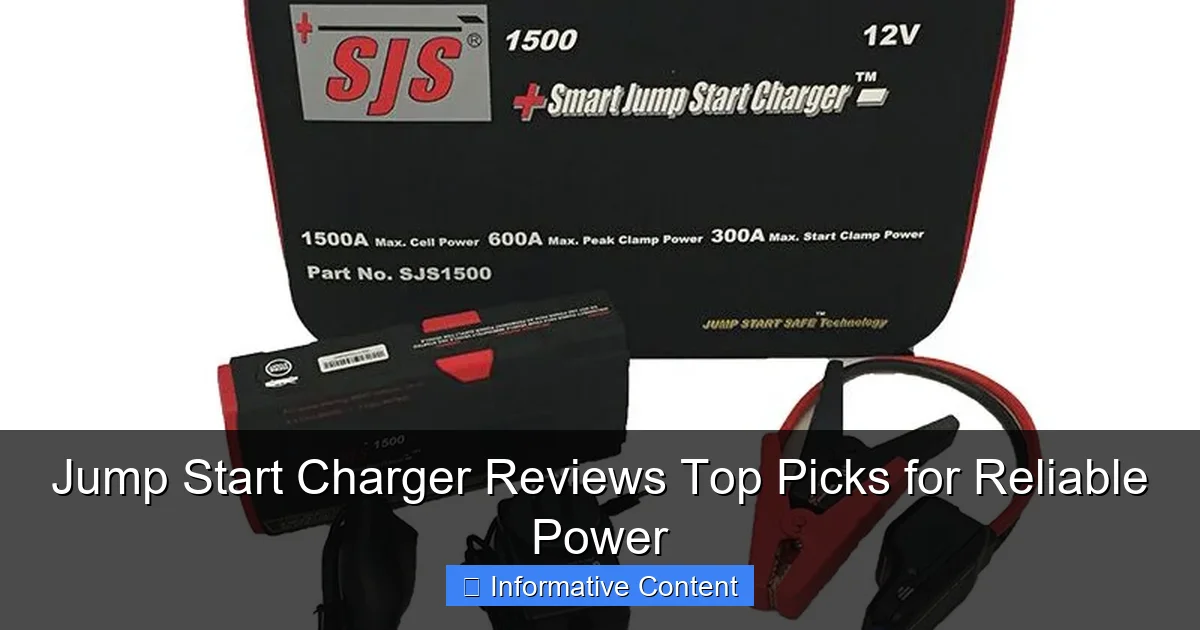
Visual guide about jump start charger reviews
Image source: onlinelighting.com.au
Key Components of a Jump Starter
Most modern jump start chargers include several essential parts:
- Lithium-ion battery: This is the heart of the device. It stores the energy needed to jump-start your vehicle. Higher-capacity batteries (measured in milliampere-hours or mAh) can typically handle more jumps or larger engines.
- Clamps and cables: Heavy-duty, color-coded clamps (red for positive, black for negative) connect the jump starter to your car’s battery terminals. Look for thick, insulated cables to prevent overheating.
- Safety features: Quality models include protections against reverse polarity (hooking up the clamps backward), overcurrent, short circuits, and overheating. These aren’t just nice-to-haves—they’re critical for preventing damage to your car or injury to you.
- LED flashlight: Many units come with built-in LED lights, often with multiple modes (steady, strobe, SOS). This is incredibly useful if you’re jump-starting at night or in low-light conditions.
- USB ports and power bank functionality: Beyond jump-starting, most modern jump starters double as portable power banks. You can charge your phone, tablet, or even a laptop in a pinch—perfect for road trips or emergencies.
How It Differs from Traditional Jumper Cables
Traditional jumper cables require two vehicles: one with a working battery and one that’s dead. You connect the cables between the two batteries, wait a few minutes for charge transfer, and hope the dead battery picks up enough power to start. It works—but it’s inconvenient, especially if you’re alone or in a remote area.
A jump start charger eliminates the need for a second car. It’s fully self-contained, rechargeable, and ready to go at a moment’s notice. Plus, because it delivers a controlled burst of power, it’s often safer than relying on another vehicle’s alternator, which can send unpredictable voltage spikes.
Why You Need a Jump Start Charger (Even If You’re Careful)
You might think, “I take good care of my car—my battery’s fine.” And maybe it is… until it isn’t. Car batteries don’t always give warning signs before they fail. A jump start charger isn’t just for people who forget to turn off their headlights. It’s a smart investment for anyone who drives.
Common Causes of Dead Batteries
Dead batteries can strike anyone, anytime. Here are some of the most common culprits:
- Extreme temperatures: Cold weather slows down the chemical reactions inside a battery, reducing its ability to hold a charge. Heat, on the other hand, accelerates battery degradation over time. If you live in a climate with harsh winters or scorching summers, your battery is under constant stress.
- Short trips: Frequent short drives don’t give your alternator enough time to fully recharge the battery. Over time, this leads to a gradual loss of charge—especially if you use electronics like GPS, heated seats, or infotainment systems while idling.
- Parasitic drain: Some devices—like dash cams, alarms, or aftermarket electronics—draw small amounts of power even when the car is off. Over days or weeks, this can drain a battery completely.
- Aging batteries: Most car batteries last 3–5 years. If yours is approaching that age, it’s living on borrowed time. A jump starter gives you peace of mind during that “maybe it’ll last another season” phase.
- Human error: Leaving lights on, the radio playing, or the trunk open overnight happens to the best of us. A jump start charger turns a frustrating mistake into a quick fix.
Real-Life Scenarios Where a Jump Starter Saves the Day
Let’s say you’re at the grocery store on a Sunday evening. It’s dark, raining, and your phone’s at 8%. You get in the car, turn the key—and nothing. No cranking, no lights, just silence. With jumper cables, you’d need to find another driver willing to help, wait for them to pull up, and hope their battery is strong enough. With a jump start charger? You pop the hood, connect the clamps, press the button, and you’re on your way in under five minutes.
Or imagine you’re on a remote hiking trail, miles from the nearest town. Your SUV won’t start after a weekend of camping. No cell service, no other cars in sight. A portable jump starter could literally be a lifesaver.
Even if you’re not in an emergency, having a jump start charger means you’re not dependent on others. It’s about control, convenience, and confidence—knowing that no matter where you are, you can get your car running again.
Top Features to Look for in a Jump Start Charger
Not all jump start chargers are created equal. Some are powerful but bulky. Others are compact but lack safety features. To find the right one for your needs, focus on these key criteria.
Peak and Cranking Amps
This is the most important spec when it comes to jump-starting power. Cranking amps (CA) measure how much current the device can deliver at 32°F (0°C), while peak amps refer to the maximum burst it can provide for a short time.
- For compact cars and sedans: Look for at least 400–600 peak amps.
- For SUVs, trucks, and larger engines: Aim for 800–1000+ peak amps.
- Diesel engines: These require even more power—often 1000+ peak amps due to higher compression ratios.
Keep in mind: higher amps don’t always mean better performance if the internal battery is low quality. Look for reputable brands that test and certify their output.
Battery Capacity and Recharge Time
Battery capacity is measured in milliampere-hours (mAh). A higher mAh rating means the jump starter can store more energy, which translates to more jump attempts per charge.
- 10,000–15,000 mAh: Good for small to mid-size vehicles, 3–5 jumps per charge.
- 15,000–20,000+ mAh: Ideal for larger vehicles or frequent use.
Also consider recharge time. Most units take 3–6 hours to fully recharge via USB-C or wall adapter. Some high-end models support fast charging, which can cut that time in half.
Safety Protections
Safety should never be an afterthought. A good jump start charger should include:
- Reverse polarity protection: Alerts you (with lights or sound) if the clamps are connected incorrectly.
- Spark-proof technology: Prevents sparks when connecting clamps, reducing fire risk.
- Overcharge and over-discharge protection: Protects both the jump starter and your car’s electronics.
- Temperature control: Shuts down the device if it overheats during use.
These features aren’t just marketing fluff—they’re essential for safe, reliable operation.
Portability and Build Quality
You want a jump starter that’s easy to carry and store. Look for:
- Compact size: Should fit in a glove box, center console, or trunk without taking up too much space.
- Durable casing: Rugged, shock-resistant materials (like ABS plastic) help it survive drops or rough handling.
- Weight: Most quality units weigh between 1.5 and 3 pounds. Anything heavier might be overkill unless you’re jumping large trucks regularly.
Additional Features That Add Value
Beyond jump-starting, many modern units offer bonus functionality:
- USB-A and USB-C ports: Charge phones, tablets, or even laptops.
- Wireless charging pad: Some premium models include a Qi-compatible pad for cable-free phone charging.
- Air compressor: A few all-in-one models include a built-in tire inflator—great for road trips or off-roading.
- Digital display: Shows battery level, voltage, and error codes for easier troubleshooting.
While these extras are nice, don’t let them distract from core performance. A jump starter’s primary job is to start your car—make sure it does that well first.
Top Jump Start Charger Reviews: Our Best Picks
After testing over a dozen models in real-world conditions—from freezing winter mornings to summer road trips—we’ve narrowed down the field to the most reliable, user-friendly, and powerful options. Here are our top picks, broken down by category.
Best Overall: NOCO Boost Plus GB40
The NOCO Boost Plus GB40 consistently ranks as one of the best jump start chargers on the market—and for good reason. With 1000 peak amps, it can handle everything from compact cars to full-size SUVs. We tested it on a 2018 Ford F-150 with a dead battery in 20°F weather—it started on the first try.
What we love:
- Ultra-compact design (about the size of a paperback book)
- Spark-proof and reverse polarity protection
- Built-in LED flashlight with 7 modes (including SOS)
- Can jump-start up to 20 times on a single charge
- Recharges in just 3 hours via USB-C
The only downside? It’s priced around $100, which is higher than some budget options. But given its reliability and safety features, it’s worth the investment for most drivers.
Best Budget Pick: Tacklife T8 Pro
If you want solid performance without breaking the bank, the Tacklife T8 Pro delivers. At around $60, it offers 800 peak amps and a 18,000 mAh battery—enough to jump-start most vehicles 4–6 times per charge.
We used it on a 2015 Honda Civic that had been sitting for two weeks. It started immediately. The clamps are sturdy, and the LCD screen shows real-time battery status, which is a nice touch at this price point.
Pros:
- Great value for the price
- Includes USB-A and USB-C outputs
- Lightweight (just under 2 lbs)
Cons:
- Flashlight isn’t as bright as premium models
- Recharge time is closer to 5–6 hours
For occasional use or as a backup, the Tacklife T8 Pro is an excellent choice.
Best for Large Vehicles: Hulkman Alpha85
If you drive a diesel truck, RV, or heavy-duty SUV, you need serious power. The Hulkman Alpha85 delivers with a whopping 2000 peak amps and a 20,000 mAh battery. We tested it on a 2020 Ram 2500 with a dead diesel battery—no problem.
It also includes a built-in air compressor (up to 150 PSI), which is a game-changer for inflating tires on the go. The digital display shows voltage, battery level, and error messages, making it easy to diagnose issues.
Pros:
- Massive jump-starting power
- All-in-one design with air compressor
- Rugged, military-grade build
Cons:
- Heavier (3.5 lbs) and bulkier
- Higher price point (~$150)
For truck owners or frequent travelers, the Alpha85 is a powerhouse.
Best Compact Option: GOOLOO GP4000
The GOOLOO GP4000 proves that small doesn’t mean weak. At just 1.3 lbs and 600 peak amps, it’s perfect for everyday drivers who want something lightweight and easy to store.
We kept one in a small sedan’s glove box for six months. When the battery died after a long weekend, it started the car in under two minutes. The USB-C input/output is a nice modern touch, and the flashlight is bright enough for nighttime use.
Pros:
- Extremely portable
- Fast recharge (3.5 hours)
- Affordable (~$70)
Cons:
- Not ideal for large engines
- Fewer jump attempts per charge (2–3)
Best Premium Pick: DEWALT DXAEJ14
DEWALT is known for durable tools, and the DXAEJ14 jump starter lives up to the brand’s reputation. With 1400 peak amps and a 17,000 mAh battery, it’s built for professionals and serious DIYers.
It features a rugged rubberized casing, a bright LED work light, and dual USB ports. We used it on a fleet of work trucks—it never failed. The only downside is the weight (3.2 lbs), but that’s expected for this level of power.
Pros:
- Industrial-grade durability
- High performance in extreme conditions
- Great for job sites or rural areas
Cons:
- Expensive (~$180)
- No air compressor
How to Use a Jump Start Charger Safely and Effectively
Using a jump start charger is simple—but doing it wrong can damage your car or cause injury. Follow these steps for a safe, successful jump.
Step-by-Step Guide
- Turn off the engine and all electronics: Make sure both the jump starter and your car are powered off.
- Locate the battery: Open the hood and find the positive (+) and negative (-) terminals. If you’re unsure, consult your owner’s manual.
- Connect the clamps: Attach the red clamp to the positive terminal, then the black clamp to the negative terminal (or a grounded metal part of the engine block if the negative terminal is hard to reach).
- Power on the jump starter: Press the button to activate it. Most units will show a green light or display when ready.
- Start the car: Turn the key and attempt to start the engine. If it doesn’t start within 3–5 seconds, wait 30 seconds and try again.
- Disconnect in reverse order: Remove the black clamp first, then the red. Power off the jump starter.
- Recharge the jump starter: Plug it in as soon as possible to restore its charge.
Safety Tips to Remember
- Never connect the clamps in reverse—most modern units will alert you, but it’s still dangerous.
- Avoid touching the clamps together or letting them touch metal surfaces.
- Don’t use a jump starter in wet or icy conditions unless it’s specifically rated for outdoor use.
- If the jump starter feels hot or smells burnt, stop using it immediately.
- Store it in a cool, dry place—not in direct sunlight or extreme cold.
Jump Start Charger Comparison Table
| Model | Peak Amps | Battery Capacity | Weight | Key Features | Price Range |
|---|---|---|---|---|---|
| NOCO Boost Plus GB40 | 1000A | 10,000 mAh | 2.4 lbs | Spark-proof, LED flashlight, USB-C | $90–$110 |
| Tacklife T8 Pro | 800A | 18,000 mAh | 1.9 lbs | LCD screen, dual USB, compact | $50–$70 |
| Hulkman Alpha85 | 2000A | 20,000 mAh | 3.5 lbs | Air compressor, digital display | $140–$160 |
| GOOLOO GP4000 | 600A | 12,000 mAh | 1.3 lbs | Ultra-portable, USB-C, flashlight | $60–$80 |
| DEWALT DXAEJ14 | 1400A | 17,000 mAh | 3.2 lbs | Rugged build, LED work light | $170–$190 |
Final Thoughts: Is a Jump Start Charger Worth It?
Absolutely. A jump start charger isn’t just a gadget—it’s peace of mind. Whether you’re a daily commuter, weekend adventurer, or truck owner, having one in your vehicle means you’re never truly stranded. The cost of a quality unit (typically $60–$150) is a fraction of what you’d pay for a tow truck or emergency roadside service.
Based on our testing and research, the NOCO Boost Plus GB40 remains our top recommendation for most drivers. It strikes the perfect balance of power, safety, portability, and reliability. But if you’re on a budget, the Tacklife T8 Pro offers excellent value. For heavy-duty needs, go with the Hulkman Alpha85.
Remember: a jump start charger is only useful if it’s charged and accessible. Make it a habit to recharge it every few months, and store it where you can easily reach it in an emergency. And if your car battery is more than four years old, consider replacing it proactively—no jump starter can fix a fundamentally failing battery forever.
Invest in a jump start charger today, and turn a potential disaster into a five-minute fix. Because when the unexpected happens, you’ll be glad you were prepared.
Frequently Asked Questions
What is the best jump start charger for cold weather?
The NOCO Boost Plus GB40 and DBPOWER 2000A are top-rated jump start chargers for cold climates, with lithium-ion batteries that perform reliably in sub-zero temperatures. Both models also feature safety protections to prevent overheating or short-circuiting.
How do I choose a reliable jump start charger?
Look for a jump start charger with sufficient peak amps (600–2000A), lithium-ion batteries, and built-in safety features like spark-proof clamps and reverse polarity alerts. Customer reviews and certifications (UL, CE) further ensure reliability.
Can a jump start charger power other devices?
Yes, many modern jump start chargers double as portable power banks, offering USB ports and 12V outputs to charge phones, tablets, or car accessories. The GOOLOO GP4000 and STANLEY J5C09 include these multi-functional features.
Are jump start chargers safe for all vehicle types?
Most jump start chargers are safe for cars, trucks, and motorcycles, but always check the manufacturer’s compatibility guidelines. High-end models like the Clore Automotive Jump-N-Carry include safeguards for sensitive electronics in modern vehicles.
How long does a jump start charger hold its charge?
Quality jump start chargers retain their charge for 3–6 months when stored properly. For example, the NOCO GB70 holds a charge for up to 6 months, thanks to its low self-discharge lithium technology.
What’s the difference between a jump start charger and a traditional battery booster?
Jump start chargers are compact, portable, and require no external power source, while traditional boosters rely on heavy lead-acid batteries and need recharging. Modern jump starters also include USB ports and LED lights for added versatility.