
Featured image for is a jump starter the same as a battery charger
Image source: m.media-amazon.com
No, a jump starter is not the same as a battery charger—while both work with car batteries, a jump starter delivers a quick, high-power burst to revive a dead battery and start the engine, whereas a battery charger slowly replenishes a battery’s charge over time. Jump starters are portable and emergency-focused, while chargers are better for long-term maintenance and deeply discharged batteries.
Key Takeaways
- Jump starters deliver instant power to start dead batteries fast, unlike slow chargers.
- Battery chargers replenish power gradually, ideal for long-term maintenance and health.
- Jump starters are portable emergency tools; chargers are for stationary, regular use.
- Never use a charger to jump-start—it can damage both devices and battery.
- Choose jump starters for emergencies, chargers for routine battery care and upkeep.
- Smart chargers prevent overcharging, while jump starters prioritize quick voltage boosts.
📑 Table of Contents
- Is a Jump Starter the Same as a Battery Charger? Find Out Now
- What Is a Jump Starter? How It Works and When to Use It
- What Is a Battery Charger? The Slow, Steady Replenisher
- Key Differences Between Jump Starters and Battery Chargers
- Can You Use a Jump Starter to Charge a Battery?
- Which One Should You Buy? A Practical Guide
- Data Table: Jump Starter vs. Battery Charger at a Glance
- Final Thoughts: They’re Different—and That’s a Good Thing
Is a Jump Starter the Same as a Battery Charger? Find Out Now
Imagine this: you’re running late for an important meeting, you turn the key in your car’s ignition, and… nothing. The engine doesn’t crank, the dashboard lights flicker weakly, and you realize your car battery has died. You reach for your trusty jump starter or battery charger—but wait, which one do you have? And more importantly, which one do you actually need?
It’s a common confusion, especially since both devices deal with car batteries. You might think, “Well, if it connects to the battery and helps start the car, isn’t it all the same?” Not quite. While both a jump starter and a battery charger are tools designed to help when your car won’t start, they work in very different ways, serve different purposes, and are suited for different situations. In this post, we’ll break down exactly how they differ, when to use each, and why it matters—especially if you’re stuck on the side of the road or prepping for a long road trip. No fluff, no hype—just real, practical advice from someone who’s been there.
What Is a Jump Starter? How It Works and When to Use It
Jump Starters: The Portable Power Boost
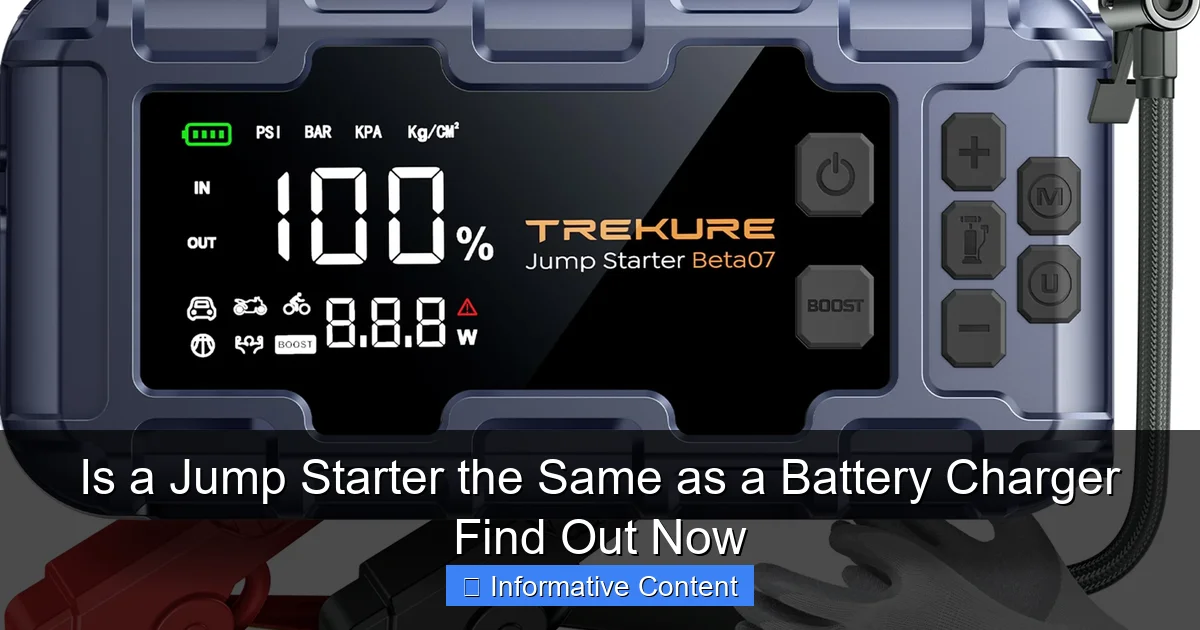
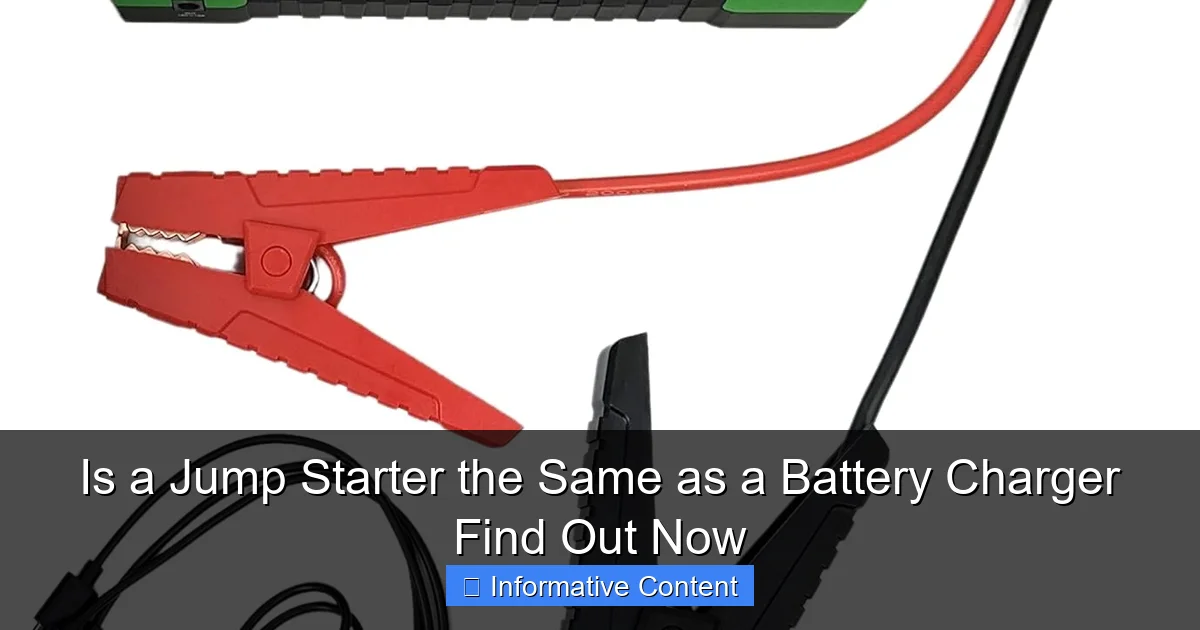
A jump starter, often called a portable jump pack or battery booster, is a compact, self-contained device that stores electrical energy in an internal battery (usually lithium-ion). Think of it like a giant power bank—but for your car. When your car battery is too weak to start the engine, the jump starter delivers a high burst of current directly to the battery terminals, giving your engine the jolt it needs to turn over and start.
Visual guide about is a jump starter the same as a battery charger
Image source: m.media-amazon.com
One of the biggest advantages? You don’t need another vehicle. Unlike traditional jumper cables, which require a second car with a working battery, a jump starter works solo. That’s a game-changer if you’re stranded in a parking lot, garage, or rural area with no help in sight.
How a Jump Starter Delivers Power
Jump starters are designed for short, high-current bursts—typically between 800 to 3,000 peak amps, depending on the model. This surge of power is enough to crank a dead or deeply discharged battery, even if it’s below 50% charge. The process is simple:
- Connect the jump starter’s clamps to your car battery (red to positive, black to negative).
- Wait a few seconds (some models require you to press a “boost” button).
- Try starting your car.
- Once the engine runs, disconnect the jump starter.
Many modern jump starters also come with safety features like reverse polarity protection, short-circuit prevention, and spark-proof technology. Some even include USB ports, LED flashlights, and air compressors—making them true multi-tools for roadside emergencies.
When You Should Use a Jump Starter
Jump starters are ideal for:
- Emergency situations where no other vehicle is available.
- Quick fixes when you’re in a hurry (e.g., before a commute, during a road trip).
- Older cars or vehicles with sensitive electronics—many jump starters have “smart” modes that prevent voltage spikes.
- Situations where you want to avoid the hassle of jumper cables and another car.
Real-life example: A friend of mine once got stranded at a gas station late at night. No one around, no cell signal. He used his NOCO Boost Plus GB40 jump starter—fully charged from his last use—and got the car running in under two minutes. No drama, no waiting. That’s the power of a good jump starter.
What Is a Battery Charger? The Slow, Steady Replenisher
Battery Chargers: The Long-Term Solution
A battery charger, on the other hand, is a device that recharges your car battery over time using a steady, controlled flow of electricity. Unlike a jump starter, which delivers a quick burst, a charger works slowly—often over several hours—to safely restore the battery’s charge. It’s like giving your battery a full meal instead of a quick energy drink.
Battery chargers plug into a standard wall outlet (110V or 220V) and connect to the battery terminals via clamps or ring terminals (for permanent mounting). They monitor voltage and current throughout the process, adjusting as needed to avoid overcharging.
How Charging Works: Stages of Battery Restoration
Most modern smart chargers use a multi-stage charging process:
- Bulk Stage: Delivers maximum current to recharge the battery quickly (up to 80% capacity).
- Absorption Stage: Slows down the charge rate to safely fill the remaining 20%.
- Float (or Maintenance) Stage: Maintains the battery at full charge with a low, constant trickle current.
This process ensures the battery is charged efficiently and safely, without damaging the internal plates or causing gassing (a common issue with older chargers).
When You Should Use a Battery Charger
Use a battery charger when:
- Your battery is weak but not completely dead—chargers can often revive batteries with 20–50% charge.
- You’re storing a vehicle for weeks or months (e.g., winter storage, vacation).
- You want to maintain your battery’s health over time (great for classic cars or infrequently used vehicles).
- You’re troubleshooting battery issues and want to see if the battery can be restored.
- You’re dealing with a battery that’s been deeply discharged (e.g., left lights on overnight).
Practical tip: If your car won’t start but the headlights come on dimly and the radio works, your battery might just need a charge. A charger can often bring it back to life in 4–12 hours, depending on the charger’s amperage (e.g., 2A, 4A, 10A).
One caveat: chargers won’t help if the battery is completely dead (below 8–9 volts) or has a dead cell. In those cases, the battery may need to be replaced—even after charging.
Key Differences Between Jump Starters and Battery Chargers
Power Delivery: Burst vs. Flow
This is the core difference. A jump starter delivers a high-current burst (hundreds to thousands of amps) for a few seconds to start the engine. A battery charger delivers a low-current, steady flow (typically 2–10 amps) over hours to replenish the battery’s charge.
Think of it like this: a jump starter is an adrenaline shot; a battery charger is a full-course meal. The jump starter gets you moving now. The charger helps you stay healthy later.
Portability and Power Source
- Jump starters: Portable, battery-powered, no outlet needed. Can be used anywhere, anytime.
- Battery chargers: Usually larger, require a power outlet. Best used at home, in a garage, or near a wall socket.
This makes jump starters far more convenient for roadside emergencies. But if you’re at home and have time, a charger is often the smarter long-term choice.
Speed of Use
- Jump starter: Ready in seconds. Connect, press boost, start the car.
- Battery charger: Takes hours. Even a “fast” 10A charger needs 4–6 hours for a typical car battery.
If you’re in a rush—say, late for work or stranded—speed is everything. A jump starter wins every time.
Battery Health and Longevity
Repeatedly jump-starting a weak battery without recharging it can shorten its lifespan. Why? Because the alternator only partially recharges the battery while driving, and frequent deep discharges stress the battery plates.
A battery charger, especially a smart charger with desulfation and maintenance modes, helps restore the battery to full health. Over time, this can extend battery life by 1–2 years—saving you money and hassle.
Cost and Features
Jump starters range from $60 to $200+, depending on power, brand, and extras (USB ports, lights, compressors). Battery chargers start around $30 for basic models and go up to $150+ for advanced smart chargers.
While jump starters cost more upfront, their versatility (especially with built-in tools) often justifies the price. Chargers are cheaper but less useful in emergencies.
Can You Use a Jump Starter to Charge a Battery?
The Short Answer: Not Really
You might be tempted to think, “If a jump starter has a battery, can’t I just leave it connected to slowly charge my car battery?” Technically, yes—but it’s not efficient, safe, or recommended.
Most jump starters are designed for short, high-power bursts. They’re not built for sustained charging. If you leave one connected for hours, you risk:
- Overheating the jump starter’s internal battery.
- Reducing the jump starter’s lifespan.
- Not delivering a proper, regulated charge to the car battery.
Some advanced jump starters (like the NOCO GB70 or DEWALT DCP024) have a “battery charging” mode that lets you trickle charge a weak battery—but this is still much slower than a dedicated charger and uses up the jump starter’s own power.
When It Might Work (With Caution)
If you’re in a pinch and need to give your battery a little extra juice before a long drive, you can use a jump starter with a “boost and charge” feature—but only for 10–30 minutes. This gives the alternator a better chance to take over once the engine starts.
Example: Let’s say your battery is at 10V (too weak to start). You connect the jump starter, wait 20 minutes, then try starting. The jump starter helps, and the engine turns over. The alternator then takes over charging. But this is a temporary fix, not a solution.
The Better Approach: Use Both Tools
The smartest strategy? Own both. Use the jump starter to get you back on the road now, then plug in a battery charger at home to fully restore the battery. This combo gives you immediate relief and long-term battery health.
Which One Should You Buy? A Practical Guide
Assess Your Needs and Lifestyle
Before buying, ask yourself:
- Do you often drive in remote areas?
- Do you store your car for long periods?
- Are you forgetful about turning off lights?
- Do you live in a cold climate (which drains batteries faster)?
- Do you want a tool for emergencies or long-term maintenance?
Jump Starter: Best for Emergency Preparedness
Buy a jump starter if:
- You want peace of mind for roadside breakdowns.
- You don’t have a garage or reliable power source nearby.
- You travel frequently or live in a rural area.
- You value portability and speed.
Top picks: NOCO Boost Plus GB40 (1,000 peak amps), DBPOWER 2000A (great value), Clore Automotive Jump-N-Carry (for heavy-duty use).
Battery Charger: Best for Battery Maintenance
Buy a battery charger if:
- You keep classic cars, RVs, or motorcycles in storage.
- You want to extend your battery’s lifespan.
- You’re on a budget and don’t need emergency power.
- You have access to a power outlet at home.
Top picks: Battery Tender Plus (1.25A, smart charging), NOCO Genius 1 (1A, ultra-compact), Schumacher SC1281 (10A, fast charging).
Best of Both Worlds: Combo Units
Some devices combine both functions. For example:
- NOCO Genius Boost Pro GB150: 3,000 peak amps for jumping, plus a 2A trickle charger.
- DEWALT DCP024: 2,000 peak amps, 2A charge rate, built-in compressor.
These are more expensive ($150–$250) but offer unmatched versatility. If you want one tool that does it all, go this route.
Data Table: Jump Starter vs. Battery Charger at a Glance
| Feature | Jump Starter | Battery Charger |
|---|---|---|
| Primary Purpose | Start a dead battery immediately | Recharge and maintain a battery |
| Power Source | Internal battery (rechargeable) | Wall outlet (110V/220V) |
| Power Output | 500–3,000 peak amps (short burst) | 2–10 amps (steady flow) |
| Time to Use | Seconds | Hours |
| Portability | High (fits in glovebox) | Low (needs power outlet) |
| Best For | Roadside emergencies, no help available | Home use, battery maintenance, long-term storage |
| Cost | $60–$200+ | $30–$150+ |
| Lifespan Impact | Neutral (if used occasionally) | Positive (extends battery life) |
| Extra Features | USB ports, flashlight, air compressor | Smart charging, desulfation, float mode |
Final Thoughts: They’re Different—and That’s a Good Thing
So, is a jump starter the same as a battery charger? No—and that’s exactly why you need to understand the difference. They’re not competitors. They’re complementary tools, each solving a unique problem.
A jump starter is your emergency lifeline. It gets you back on the road when time is critical and help is nowhere to be found. It’s the tool you hope you never need—but are so glad you have when you do.
A battery charger is your battery’s best friend. It keeps your battery healthy, prevents deep discharges, and can save you from needing a jump start in the first place. It’s the quiet, consistent hero of vehicle maintenance.
The bottom line? If you own a car, you should own both. Keep the jump starter in your trunk or glovebox for emergencies. Use the battery charger at home to maintain your battery, especially during long storage periods or cold winters.
And here’s a final tip: charge your jump starter regularly. A dead jump starter is about as useful as a dead battery. Most models need a recharge every 3–6 months, even if you don’t use them. Treat it like a smoke detector—set a reminder, check it, and keep it ready.
Now that you know the difference, you’re not just better prepared—you’re smarter. Whether you’re facing a dead battery at dawn or prepping for a winter layup, you’ve got the right tool for the job. And that’s peace of mind you can’t buy at any price.
Frequently Asked Questions
Is a jump starter the same as a battery charger?
No, a jump starter and a battery charger serve different purposes. A jump starter delivers a quick, high-current burst to start a dead battery, while a battery charger slowly replenishes the battery’s charge over time.
Can I use a jump starter to charge my car battery?
Jump starters are designed for emergency starts, not long-term charging. While they can temporarily power a vehicle, they lack the sustained output needed to fully recharge a depleted battery like a dedicated battery charger does.
What’s the key difference between a jump starter and a battery charger?
The key difference lies in functionality: jump starters prioritize instant high-power delivery for starting engines, whereas battery chargers focus on gradual, controlled charging to restore battery capacity safely.
Do I need both a jump starter and a battery charger?
It depends on your needs. A jump starter is ideal for emergencies, while a battery charger is better for maintenance. Many drivers keep both for versatility, especially if they frequently face battery issues.
Can a portable jump starter replace my battery charger?
Portable jump starters aren’t designed to replace battery chargers. They’re great for on-the-go emergencies but won’t maintain or fully recharge a battery like a traditional charger can.
Are battery chargers safer to use than jump starters?
Battery chargers are generally safer for prolonged use since they regulate voltage and current. Jump starters, while safe when used correctly, deliver high power quickly, requiring caution to avoid sparks or overheating.