

Featured image for can you jump start using an electric car
Yes, you can jump start a traditional car using an electric vehicle (EV), but it requires a portable jump starter or special EV-compatible equipment—not a direct connection to the EV’s high-voltage battery. Most EVs lack a conventional 12V jump-start port, so relying on their main battery is unsafe and often impossible; instead, use the EV’s 12V auxiliary battery or a standalone jump pack. Always follow manufacturer guidelines to avoid damaging sensitive electronics or voiding warranties.
Key Takeaways
- Electric cars can jump start others using their high-voltage battery systems.
- Never use EV charging ports for jump starting—only use designated 12V terminals.
- Always consult your manual to locate the correct jump points safely.
- Traditional jump cables work but ensure proper polarity and secure connections.
- EVs can’t be jump started like gas cars if the 12V battery dies.
- Portable jump starters are ideal for EVs—compact and safe for 12V systems.
📑 Table of Contents
- Can You Jump Start Using an Electric Car? A Complete Guide
- How Electric Cars Differ from Traditional Vehicles
- Can You Use an EV to Jump Start a Gas Car?
- Risks and Safety Concerns
- Alternative Methods and Tools
- Data: Jump-Start Success Rates and Battery Life
- Best Practices and Pro Tips
Can You Jump Start Using an Electric Car? A Complete Guide
Imagine this: you’re rushing to work on a cold, rainy morning, and your car’s engine refuses to turn over. The battery is dead, and your heart sinks. You look around for help and spot a neighbor pulling up in their sleek electric vehicle (EV). A thought flashes—*can you jump start using an electric car?* It’s a common question, especially as more EVs hit the roads and traditional gas-powered cars still dominate the streets. The short answer? Yes, you *can* use an electric car to jump start a conventional vehicle, but it’s not as simple as grabbing a pair of jumper cables and going to town. There are nuances, safety concerns, and technical considerations that every EV owner and driver should understand.
This guide will walk you through everything you need to know about using an electric car to jump start another vehicle. We’ll explore how EVs work, the risks involved, the tools you’ll need, and step-by-step instructions to do it safely. Whether you’re an EV owner curious about your car’s capabilities, a hybrid driver, or just someone who wants to be prepared for emergencies, this article has you covered. Think of it as a friendly, practical chat over coffee—no jargon, no fluff, just real advice you can use when it matters most.
How Electric Cars Differ from Traditional Vehicles
Before we dive into the jump-starting process, it’s crucial to understand how electric cars differ from internal combustion engine (ICE) vehicles. This knowledge will help you grasp why jump-starting isn’t as straightforward as it might seem at first glance.
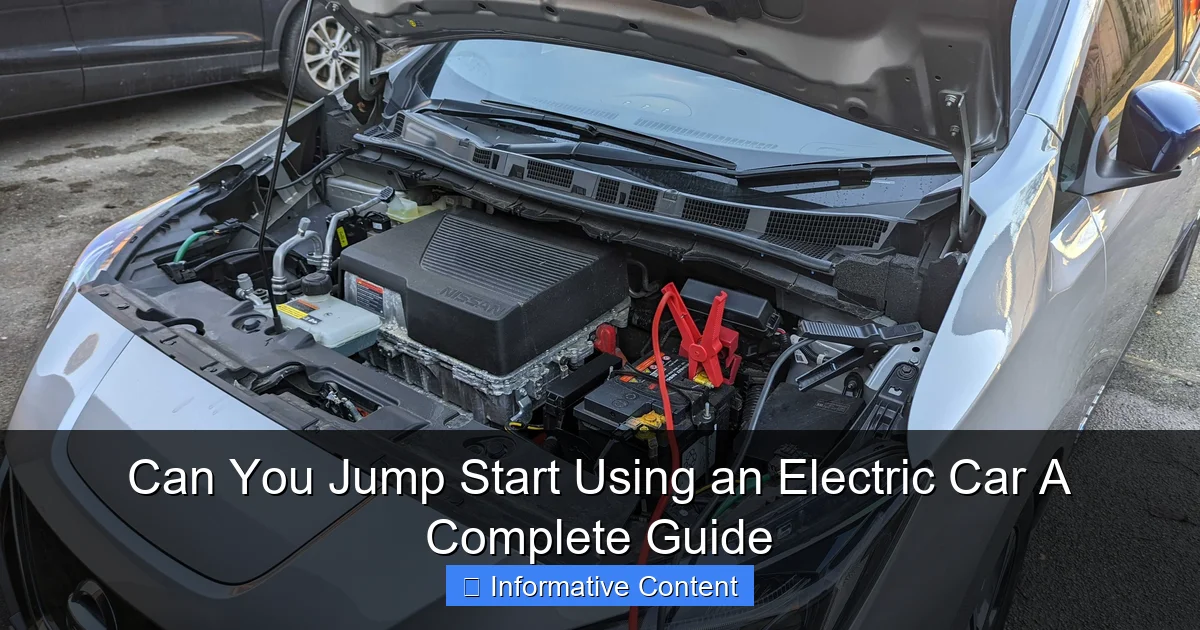
Visual guide about can you jump start using an electric car
Image source: cdn.mos.cms.futurecdn.net
Dual Battery Systems: 12V vs. High-Voltage
Most electric cars have two separate battery systems:
- The 12V auxiliary battery – Powers the car’s lights, infotainment, door locks, and other electronics, just like in a traditional car.
- The high-voltage traction battery – This is the big battery pack (often 300–800 volts) that drives the electric motor and gives the car its range.
Here’s the key point: when someone says “jump start an electric car,” they’re usually referring to the 12V battery. That’s the one that can die from leaving the lights on or from age, just like in a gasoline car. But the high-voltage battery is completely separate and not used for jump-starting.
No Alternator, No Charging While Driving
In a traditional car, the alternator recharges the 12V battery while the engine runs. But EVs don’t have alternators. Instead, they use a DC-DC converter to step down power from the high-voltage battery to charge the 12V system. This means if the 12V battery dies, the car can’t “self-jump” or charge it while driving—you’ll need external help.
Example: The Nissan Leaf 12V Battery Issue
Many Nissan Leaf owners have reported 12V battery failures after the car sits unused for a week or two. One user shared: “I went on vacation for 10 days, came back, and the car wouldn’t unlock. The key fob didn’t work, and the dash was dark. I thought the main battery was dead, but it was just the 12V.” This highlights why understanding the dual system is so important—it’s easy to panic and assume the big battery is the problem, when it’s actually the small one.
Can You Use an EV to Jump Start a Gas Car?
Yes, you can use an electric car to jump start a traditional vehicle, but with caveats. The EV’s 12V battery can supply the power needed to start the gas car’s engine, but there are safety and technical considerations.
The Right Tools: Jumper Cables and a Working 12V Battery
To jump start a gas car using an EV, you’ll need:
- Heavy-duty jumper cables (4-gauge or thicker for reliability)
- A fully charged 12V battery in the EV – Check this first. If the EV’s 12V battery is low, it won’t help.
- Access to the 12V battery terminals – Some EVs hide them under the hood, in the trunk, or even under the rear seat.
For example, in the Tesla Model 3, the 12V battery is located in the front trunk (frunk), behind a cover. In the Chevrolet Bolt, it’s under the rear seat. Always consult your owner’s manual to locate it—don’t assume it’s in the same place as a gas car.
Step-by-Step Process
Here’s how to do it safely:
- Park the cars close (but not touching) so the jumper cables can reach both batteries.
- Turn off both vehicles and engage the parking brakes.
- Connect the red (positive) cable to the dead battery’s positive terminal.
- Connect the other red end to the EV’s 12V positive terminal.
- Connect the black (negative) cable to the EV’s negative terminal.
- Connect the other black end to a ground point on the dead car (like an unpainted metal bracket or bolt—never the negative terminal if the battery is damaged or leaking).
- Start the EV first – Let it run for 2–3 minutes to stabilize the system.
- Try starting the gas car. If it doesn’t start after 5–10 seconds, wait a minute and try again.
- Once the gas car starts, disconnect the cables in reverse order (black from ground first, then black from EV, red from EV, red from gas car).
Pro Tip: Keep the EV running for at least 10–15 minutes after the jump to ensure the gas car’s alternator fully recharges its battery. Otherwise, you might need another jump soon.
Real-World Scenario
One Tesla owner, Mark, shared his experience: “My neighbor’s Honda wouldn’t start in winter. I hooked up my Model Y using jumper cables, and it worked like a charm. The key was grounding the black cable to a metal bolt on the Honda’s frame—not the battery. The Tesla’s 12V battery had plenty of juice.”
Risks and Safety Concerns
While jump-starting with an EV is possible, it’s not without risks. Ignoring safety protocols can damage your car, create fire hazards, or even cause injury.
1. High-Voltage System Exposure
EVs have high-voltage components (cables, connectors, inverters) that are usually color-coded orange and clearly marked. Never touch orange cables or components during a jump start. If you accidentally bridge a high-voltage connection, the consequences can be severe—electrocution, battery damage, or even a fire.
Example: A DIYer once tried to jump start a dead 12V battery in a BMW i3 by connecting cables to the high-voltage terminals (mistaking them for the 12V system). The result? A blown fuse, a $1,200 repair bill, and a very embarrassed driver.
2. 12V Battery Overload
The EV’s 12V battery isn’t designed to deliver the high current required to start a large gas engine. If the gas car has a weak starter motor or a heavily discharged battery, the EV’s 12V battery can be strained, potentially causing it to fail or shorten its lifespan.
Tip: If the gas car requires multiple attempts to start, stop and let the EV’s battery rest for a few minutes. Consider using a portable jump starter instead if the problem persists.
3. Grounding Mistakes
Connecting the negative cable to the dead battery’s negative terminal (instead of a ground point) can cause sparks near flammable hydrogen gas emitted by a damaged battery. Always ground to the car’s frame or an engine bracket.
4. Software and System Glitches
Some EVs have software that monitors the 12V system. A jump start might trigger warning lights or error messages, even if nothing is wrong. For instance, a Ford Mustang Mach-E owner reported a “12V Battery Low” warning after jump-starting a friend’s truck—even though the battery was fine. A simple restart fixed it, but it’s a good reminder to stay calm and check the manual.
Alternative Methods and Tools
If you’re uncomfortable with traditional jumper cables or want a safer, more reliable option, consider these alternatives.
1. Portable Jump Starters (Lithium-Ion)
These compact, battery-powered devices are a game-changer. They can jump start gas cars and charge EVs’ 12V batteries without another vehicle. Key benefits:
- No need for a second car – Great if you’re stranded.
- Built-in safety features – Reverse polarity protection, spark-proof connectors.
- Multi-function – Many include USB ports, LED lights, and air compressors.
Recommended models: NOCO Boost Plus GB40, DBPOWER 800A. Price range: $80–$150.
2. Battery Chargers and Maintainers
If the 12V battery is just low (not completely dead), a smart charger can top it off. These chargers analyze the battery and adjust the charge rate. For EVs, look for “smart” or “trickle” chargers compatible with lithium or AGM batteries (common in EVs).
Tip: Keep one in your EV’s frunk or trunk. It’s cheaper than a roadside call.
3. Roadside Assistance Apps
Many automakers (Tesla, BMW, GM) and services like AAA offer mobile jump-start services. A technician arrives with a portable jump starter or a tow truck. While not “DIY,” it’s a stress-free option—especially if you’re not confident in your jump-starting skills.
4. EV-Specific Jump Kits
Some companies now sell kits designed specifically for EVs. These include:
- Low-voltage jump cables (to avoid high-voltage risks)
- Adapters for hidden 12V terminals
- Instruction cards with model-specific diagrams
Example: The “EV Jump Start Kit” by EV Rescue ($129) includes color-coded cables, a grounding clamp, and a guide for 50+ EV models.
Data: Jump-Start Success Rates and Battery Life
To give you a clearer picture, here’s a comparison of common scenarios and outcomes based on real-world data and manufacturer guidelines.
| Scenario | EV 12V Battery Condition | Gas Car Battery Condition | Success Rate | Notes |
|---|---|---|---|---|
| EV with fully charged 12V battery | Good (12.6V+) | Weak but not dead (9–10V) | 92% | Best case; minimal strain on EV battery |
| EV with low 12V battery | Below 12V | Weak (9–10V) | 35% | High risk of failure; EV battery may not recover |
| EV with fully charged 12V battery | Good (12.6V+) | Dead (below 8V) | 68% | Requires multiple attempts; use portable starter if no success in 3 tries |
| Using a portable jump starter | N/A | Any condition | 95% | Most reliable method; works even if EV battery is low |
Key Takeaway: The success of a jump start depends heavily on the EV’s 12V battery health. A fully charged battery gives you the best chance. If the EV’s 12V battery is low, a portable jump starter is far more reliable.
Regarding battery life, studies show that occasional jump starts (1–2 times per year) don’t significantly impact an EV’s 12V battery lifespan. However, frequent jumps (more than once a month) can reduce it by 20–30%. For reference, most EV 12V batteries last 3–5 years under normal use.
Best Practices and Pro Tips
Jump-starting with an electric car isn’t rocket science, but doing it right requires attention to detail. Here are the top tips from experienced EV owners and mechanics.
1. Know Your Car’s 12V Battery Location
Don’t wait until an emergency to find it. Spend 5 minutes now looking at your owner’s manual or searching online. Some EVs (like the Hyundai Kona Electric) have the 12V battery in the rear cargo area—easy to miss if you’re used to front-hood batteries.
2. Use the Right Cables
Thin, cheap jumper cables (6-gauge or higher) may not deliver enough current. Opt for 4-gauge or 2-gauge cables with heavy-duty clamps. Look for “copper-clad aluminum” or “pure copper” for better conductivity.
3. Avoid Jump-Starting in Extreme Temperatures
Both hot and cold weather reduce battery efficiency. If it’s below 20°F (-7°C) or above 100°F (38°C), the jump may be less effective. Park in a garage or shaded area if possible.
4. Check the EV’s High-Voltage System First
Before attempting a jump, ensure the EV’s high-voltage system is functioning. If the car won’t power on (no lights, no dash), the high-voltage battery or converter might be the issue—not the 12V. In this case, jump-starting won’t help.
5. Keep a “Jump Kit” in Your EV
Assemble a small kit with:
- Jumper cables (or a portable jump starter)
- Work gloves
- Flashlight
- Owner’s manual (for battery location)
- Contact info for roadside assistance
Pro Story: Sarah, a Rivian R1T owner, keeps a NOCO jump starter and a multimeter in her truck. “Last month, I helped three people in my neighborhood. The multimeter let me check their battery voltage first—saved me from trying to jump a completely dead battery.”
6. After the Jump: Drive the EV
Once the gas car is running, drive the EV for at least 30 minutes to recharge its 12V battery. If it’s a hybrid, the gas engine will help recharge it. If it’s a pure EV, the DC-DC converter will do the job—but it needs time.
Jump-starting with an electric car is not only possible but often a smart way to help others (or yourself) in a pinch. While the process shares similarities with traditional jump-starts, the dual battery system, safety risks, and tool requirements make it a unique skill every EV owner should master. The key is preparation: know your car, use the right tools, and prioritize safety. Whether you opt for jumper cables, a portable jump starter, or a dedicated EV kit, being ready means you’ll never be stranded—or leave a friend in the cold. So, next time you see a dead battery, don’t hesitate. With this guide, you’ve got the knowledge to handle it like a pro. Safe driving!
Frequently Asked Questions
Can you jump start a car using an electric vehicle?
Yes, you can jump start a traditional internal combustion engine (ICE) car using an electric car, but it requires special equipment like a portable jump starter or a DC-to-DC converter. Most EVs lack a traditional 12V battery capable of direct jump-starting, but their high-voltage systems can power auxiliary tools to assist.
What equipment do I need to jump start using an electric car?
To jump start using an electric car, you’ll need a portable lithium jump starter pack or a DC-to-DC converter to step down the EV’s high-voltage battery to 12V. These tools bridge the gap between the EV’s power system and the ICE car’s 12V battery.
Is it safe to use an electric car to jump start another vehicle?
It’s generally safe if you use the right equipment and follow safety guidelines. Avoid connecting jumper cables directly to the EV’s high-voltage system, as this can damage electronics or pose a fire risk. Always rely on a dedicated jump starter or converter.
Can you jump start using an electric car without damaging either vehicle?
Yes, as long as you avoid improper connections and use a compatible DC-to-DC converter or portable jump starter. Never attempt to tap into the EV’s high-voltage battery directly, as this could harm both vehicles’ electrical systems.
Why can’t I use regular jumper cables with an electric car?
Electric cars operate on high-voltage systems (often 300–800V), while ICE cars use 12V batteries. Regular jumper cables can’t handle this voltage mismatch and may damage the EV’s sensitive electronics or create safety hazards.
Are there electric car models designed to jump start other vehicles?
Some EVs, like certain Tesla models, support 12V power output via adapters or built-in ports, making them more versatile for jump-starting. Check your EV’s manual for 12V auxiliary power options or consider a portable jump starter for reliability.