
Featured image for how long to charge car after jump start
Charging your car battery for at least 30 minutes to an hour after a jump start is crucial to restore sufficient power and prevent stalling. Driving for 15–30 minutes at highway speeds allows the alternator to fully recharge the battery, but a longer charge (2+ hours) is ideal for deeply drained batteries to ensure long-term reliability.
Key Takeaways
- Drive immediately after jump start: Run the engine 15–30 mins to begin recharging.
- Avoid short trips: Extended driving ensures full battery recharge and system stability.
- Use a battery charger: For deep discharges, charge at 2–10 amps for 4–24 hours.
- Test battery health: Confirm voltage (12.6V+) and charge status with a multimeter.
- Inspect charging system: Ensure alternator output is 13.8–14.4V to prevent future issues.
- Prevent recurrence: Address underlying causes like old batteries or parasitic drains.
📑 Table of Contents
- How Long to Charge Car After Jump Start: A Complete Guide
- Understanding Your Car’s Charging System
- How Long to Charge Car After Jump Start: Timelines and Scenarios
- Factors That Affect Charging Time
- Best Practices for Charging After a Jump Start
- Data: Charging Time vs. Battery State of Charge
- Final Thoughts: Don’t Just Jump and Go
How Long to Charge Car After Jump Start: A Complete Guide
It’s a chilly Monday morning. You’re running late for work, and the moment you turn the key, nothing happens—your car won’t start. After a quick inspection, you realize the battery is dead. A kind neighbor offers a jump start, and within minutes, your engine roars back to life. You breathe a sigh of relief. But now comes the real question: how long to charge car after jump start? You don’t want to be stranded again tomorrow, but you also don’t want to risk damaging your battery or alternator.
You’re not alone. Thousands of drivers face this dilemma every week. A jump start is a temporary fix, not a long-term solution. The real work begins after the engine starts. Charging the battery properly ensures your car stays reliable, prevents future breakdowns, and extends the life of your electrical system. But the answer isn’t always straightforward. The time needed to recharge depends on your battery’s condition, your alternator’s performance, driving habits, and even the weather. In this guide, I’ll walk you through everything you need to know—from how the charging process works to real-world timelines, safety tips, and common mistakes to avoid. Think of this as a friendly chat between car enthusiasts who’ve been there, done that, and learned the hard way.
Understanding Your Car’s Charging System
How the Alternator Works
After a jump start, your car’s alternator takes over the job of powering the electrical system and recharging the battery. Think of it as a mini power plant under the hood. When the engine runs, the alternator generates electricity by converting mechanical energy from the engine. This electricity powers everything from your headlights to your radio and, crucially, recharges the battery.
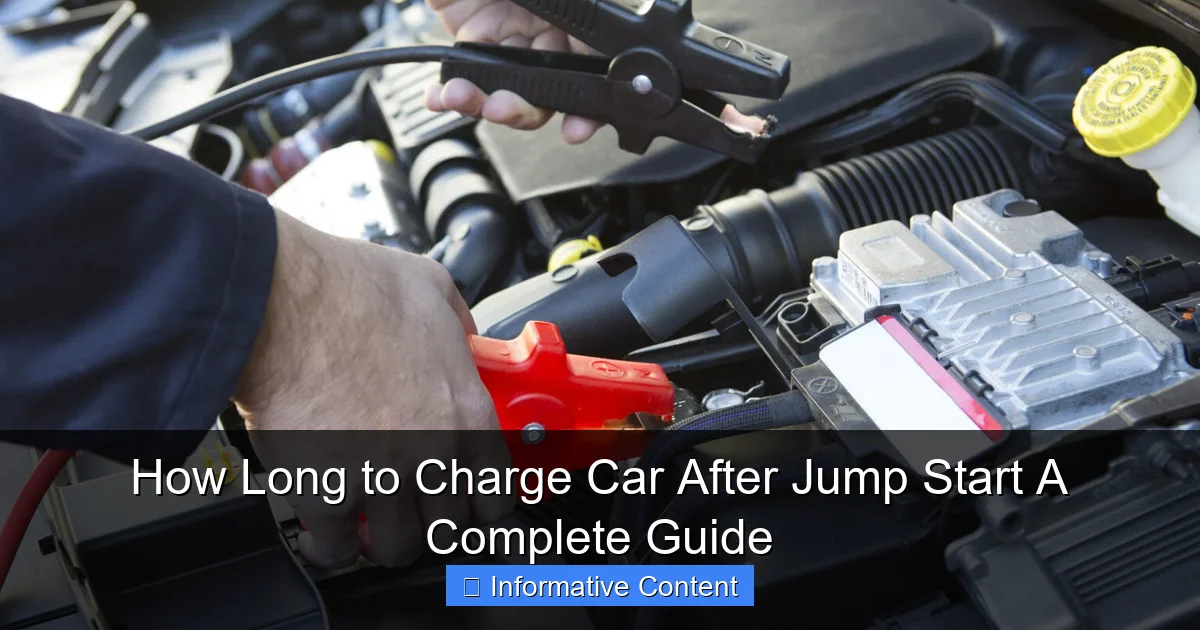
Visual guide about how long to charge car after jump start
Image source: mycarmakesnoise.com
But here’s the catch: the alternator doesn’t charge the battery instantly. It works gradually, replenishing the energy lost during the jump start. The speed depends on:
- Engine RPM: Higher speeds (like highway driving) produce more power.
- Battery state of charge: A completely dead battery takes longer to charge than one that’s only partially drained.
- Alternator output: Most alternators produce 13.5–14.5 volts, which is ideal for charging lead-acid batteries.
For example, if your battery was at 20% charge after a jump, the alternator might take 30–60 minutes of steady driving to bring it back to 80–90%. But if it’s a deeply discharged battery (below 10%), it could take several hours.
Battery Chemistry and Charging Speed
Most cars use lead-acid batteries, which have specific charging needs. They don’t like rapid, high-current charging (which can overheat and damage them). Instead, they prefer a two-phase process:
- Bulk charging: The alternator delivers high current to quickly restore 70–80% of the charge.
- Absorption charging: The current tapers off as the battery reaches full charge, preventing overcharging.
Modern smart alternators (common in newer vehicles) adjust voltage based on battery temperature and charge level. Older models may not be as precise, which is why driving habits matter.
Real-life tip: I once had a 10-year-old alternator in my 2005 sedan. After a jump start, the battery light flickered for the first 10 minutes of driving. That’s a sign the alternator is struggling. I learned to drive at higher RPMs (above 2,500) for the first 20 minutes to help it catch up.
How Long to Charge Car After Jump Start: Timelines and Scenarios
Short Drives (15–30 Minutes)
If you’re only driving 15–30 minutes after a jump start, don’t expect a full recharge. At best, you’ll restore 20–30% of the battery’s capacity. This is risky if:
- You have a weak or old battery.
- Your next drive is short (e.g., running errands).
- It’s cold outside (cold weather reduces battery efficiency).
Example: Sarah jumped her 2010 SUV and drove 20 minutes to work. She turned off the engine, but when she tried to leave at lunch, the car wouldn’t start. Why? The alternator didn’t have enough time to compensate for the deep discharge. She ended up needing another jump.
Tip: If you must drive short distances, avoid turning off the engine. Let the car idle for 10–15 minutes after driving to give the alternator extra time to charge.
Moderate Drives (30–60 Minutes)
For most drivers, 30–60 minutes of steady driving (especially at highway speeds) is the sweet spot. This duration typically restores 50–70% of the battery’s charge. You’ll likely avoid immediate breakdowns, but:
- A weak alternator may still struggle to keep up.
- If the battery is old (3+ years), it may not hold a full charge.
Real-world scenario: Mark jump-started his truck after leaving the lights on overnight. He drove 45 minutes to a client meeting. The car started fine the next day, but the battery warning light came on during a long highway trip two days later. The alternator was fine, but the battery was nearing the end of its lifespan.
Pro tip: Use this time to monitor your dashboard. If the battery light flickers or your lights dim, pull over and check the alternator belt or voltage output.
Long Drives (1+ Hours)
For deep discharges, aim for at least 1–2 hours of continuous driving. This allows the alternator to fully recharge the battery (90–100%) and stabilize the system. It’s the safest bet for:
- Older batteries (4+ years).
- Cars with high electrical loads (e.g., aftermarket stereos, heated seats).
- Cold climates where batteries lose capacity.
Example: In winter, my friend jumped his 2012 sedan after the battery died from extreme cold. He drove 90 minutes on the highway. The battery held a charge for the next week, but when he tried a short 10-minute drive, it died again. The battery was too degraded for cold-weather performance.
Takeaway: Long drives are ideal, but if your battery is old, consider replacing it before winter hits.
Special Cases: Hybrid and Electric Vehicles
Hybrids and EVs have complex charging systems. After a jump start (which usually only powers the 12V auxiliary battery), the main high-voltage battery may need additional attention:
- Hybrids: The gasoline engine runs more frequently to recharge the 12V battery. Drive for at least 30 minutes.
- Plug-in EVs: A jump start won’t recharge the main battery. Plug in as soon as possible.
Note: Never assume a jump start “fixes” an EV’s main battery. Always consult the manual.
Factors That Affect Charging Time
Battery Age and Health
A battery’s ability to hold a charge diminishes over time. Here’s a rough guideline:
- 0–2 years: Holds charge well. 30 minutes of driving may suffice.
- 3–4 years: Starts to weaken. Requires 60+ minutes.
- 5+ years: Likely needs replacement. Even long drives may not fully restore it.
Test your battery: Use a multimeter or visit an auto shop. A healthy battery should read 12.6V (engine off) and 13.8–14.4V (engine running).
Alternator Performance
A failing alternator can’t charge the battery effectively. Signs include:
- Battery warning light on the dashboard.
- Dimming headlights or flickering electronics.
- Strange noises (grinding or whining).
Tip: If you notice these, stop driving and have the alternator checked. A bad alternator can drain a new battery in hours.
Electrical Load and Accessories
Using high-power accessories after a jump start (e.g., AC, stereo, phone chargers) slows down charging. The alternator must power these devices and recharge the battery.
Example: After a jump, I cranked the AC to max and played loud music. The battery took twice as long to charge. Lesson learned: turn off non-essential electronics during the recharge phase.
Weather and Temperature
Cold weather is a battery killer. At 32°F (0°C), a battery loses about 35% of its power. At 0°F (-18°C), it loses up to 60%. This means:
- In winter, you’ll need longer drives to recharge.
- Parking in a garage helps retain heat.
Pro tip: Use a battery warmer in extreme cold. It reduces the load on the alternator.
Best Practices for Charging After a Jump Start
Drive Smart: Speed and Duration
Not all driving is equal. For optimal charging:
- Drive at steady speeds: Highway driving (55–65 mph) generates more alternator power than stop-and-go traffic.
- Rev the engine occasionally: Briefly accelerate to 2,500–3,000 RPM every 10 minutes to boost charging.
- Avoid short trips: If you must stop, keep the engine running.
Example: I jump-started my car and drove 20 minutes on city streets. The battery died again the next day. When I drove 40 minutes on the highway, it held a charge for weeks.
Monitor Your System
Keep an eye on these warning signs:
- Battery light: Indicates charging system failure.
- Voltage drops: Lights dim or electronics flicker.
- Slow cranking: Engine turns over slowly when starting.
Tip: Use a voltage meter (available for $10–20) to check your battery’s health at home.
Use a Battery Charger (When Possible)
If you have access to a battery charger, it’s often faster and safer than relying on the alternator. Here’s why:
- Smart chargers adjust voltage and current to prevent overcharging.
- Trickle chargers restore deeply discharged batteries over 12–24 hours.
Recommended method: After a jump start, drive for 30 minutes, then connect a charger overnight. This ensures a full charge without overworking the alternator.
Note: Never leave a charger unattended. Overcharging can damage the battery.
When to Replace the Battery
Sometimes, no amount of charging will help. Replace your battery if:
- It’s over 4 years old.
- It dies repeatedly after short drives.
- It fails a voltage test.
- It’s swollen or leaking.
Example: My coworker jumped his car three times in a week. The battery was 5 years old. We replaced it, and the problem stopped.
Data: Charging Time vs. Battery State of Charge
The table below shows estimated charging times based on battery condition and driving style. All times assume a healthy alternator and no high-power accessories.
| Battery State of Charge (After Jump) | City Driving (30 min) | Highway Driving (30 min) | Highway Driving (60 min) | Highway Driving (120 min) |
|---|---|---|---|---|
| 10–20% | 30–40% | 40–50% | 60–70% | 85–95% |
| 20–40% | 40–50% | 50–60% | 70–80% | 90–100% |
| 40–60% | 50–60% | 60–70% | 80–90% | 100% |
| 60–80% | 60–70% | 70–80% | 90–100% | 100% |
Note: These are estimates. Actual times vary based on battery age, alternator health, and temperature.
Final Thoughts: Don’t Just Jump and Go
Jump-starting a car is like giving it CPR—it brings it back to life, but recovery takes time. The key takeaway? How long to charge car after jump start isn’t a one-size-fits-all answer. It depends on your battery, alternator, driving habits, and environment. As a rule of thumb:
- 30 minutes for minor discharges (e.g., lights left on).
- 60 minutes for moderate discharges.
- 2+ hours for deep discharges or cold weather.
But don’t stop there. Use the post-jump period to assess your car’s health. Check the voltage, listen for strange noises, and avoid overloading the system. If the battery is old, replace it before it leaves you stranded again.
Finally, remember that prevention is better than cure. Keep your battery terminals clean, test your system regularly, and avoid leaving electronics on when the engine is off. A little attention goes a long way in keeping your car reliable.
So the next time you jump-start your car, don’t just rush off. Take the time to recharge properly. Your car—and your peace of mind—will thank you.
Frequently Asked Questions
How long to charge car after jump start to ensure the battery is fully restored?
To fully recharge a car battery after a jump start, drive for at least 30 minutes to 1 hour, as the alternator typically restores charge during this time. For a complete recharge, especially if the battery is deeply discharged, use a battery charger for 4–12 hours.
Can I just drive my car after a jump start, or do I need to charge the battery?
Driving your car for 30+ minutes after a jump start allows the alternator to replenish some charge, but it won’t fully recharge a severely drained battery. For optimal results, use a dedicated battery charger to avoid future starting issues.
How long to charge a car battery after jump start if it’s an older battery?
Older batteries (3+ years) may require longer charging—up to 12–24 hours with a slow charger—as they lose capacity over time. Monitor voltage with a multimeter to confirm a full charge (12.6V+).
Is it safe to leave my car running after a jump start to charge the battery?
Leaving the engine running for 30–60 minutes after a jump start is safe and helps recharge the battery, but avoid extended idling. For faster results, drive the car to let the alternator work efficiently.
What’s the best way to charge a car battery after a jump start?
The best method combines driving (30+ minutes) for immediate charge and a battery charger for a full, deep-cycle recharge. Avoid relying solely on the alternator if the battery was deeply discharged.
How long should I wait after a jump start before turning on accessories like AC or radio?
Wait 5–10 minutes after the engine starts to let the alternator stabilize voltage before using accessories. This prevents strain on the battery and ensures efficient charging.