
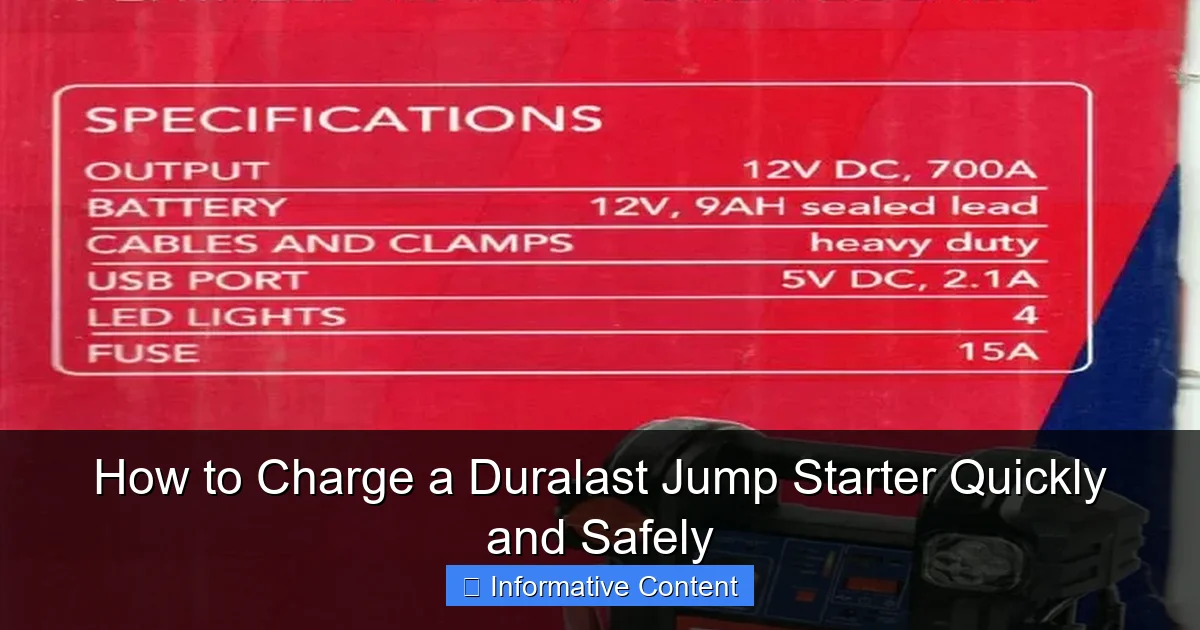
Featured image for how to charge a duralast jump starter
Image source: imgv2-1-f.scribdassets.com
Always use the original Duralast charger and a stable power source to charge your jump starter safely and efficiently. Plug the charger into the jump starter’s input port, connect it to a wall outlet, and monitor the LED indicators to confirm charging progress—avoid overcharging by unplugging once fully charged. Never leave the unit unattended for extended periods to prevent overheating and prolong battery life.
Key Takeaways
- Use the correct charger: Always use the manufacturer-recommended charger for optimal performance.
- Check battery level: Verify charge status via indicator lights before starting.
- Charge fully before first use: Ensure 100% charge for maximum jump-starting power.
- Avoid overcharging: Unplug once charged to prolong battery lifespan.
- Store properly: Keep in a cool, dry place to maintain battery health.
- Monitor charging time: Follow manual guidelines to prevent under/overcharging.
📑 Table of Contents
- How to Charge a Duralast Jump Starter Quickly and Safely
- Understanding Your Duralast Jump Starter
- Step-by-Step Guide to Charging Your Duralast Jump Starter
- Best Practices for Fast and Safe Charging
- Common Charging Mistakes and How to Avoid Them
- Maintenance Tips to Extend Battery Life
- Charging Time Comparison Table
- Conclusion
How to Charge a Duralast Jump Starter Quickly and Safely
Picture this: It’s a cold winter morning, you’re running late for work, and your car won’t start. You reach for your trusty Duralast jump starter—only to realize it’s completely dead. Frustrating, right? I’ve been there. That moment of panic when you realize your backup plan has no backup. But here’s the good news: with the right knowledge, you can avoid that situation entirely. Charging your Duralast jump starter properly isn’t just about convenience—it’s about safety, performance, and peace of mind.
Whether you’re a weekend warrior who loves road trips or just someone who wants to be prepared for the unexpected, knowing how to charge a Duralast jump starter quickly and safely is essential. These portable power packs are lifesavers when your car battery gives out, but they’re only as good as their charge. In this guide, I’ll walk you through everything you need to know—from understanding your device to step-by-step charging instructions, maintenance tips, and common mistakes to avoid. No fluff, no jargon—just practical advice based on real experience.
Understanding Your Duralast Jump Starter
Before you plug in your Duralast jump starter, it’s important to understand what you’re working with. These devices aren’t just glorified batteries—they’re compact power stations designed to deliver a high burst of energy to start a dead car engine. But like any piece of tech, they come with specific requirements and limitations.
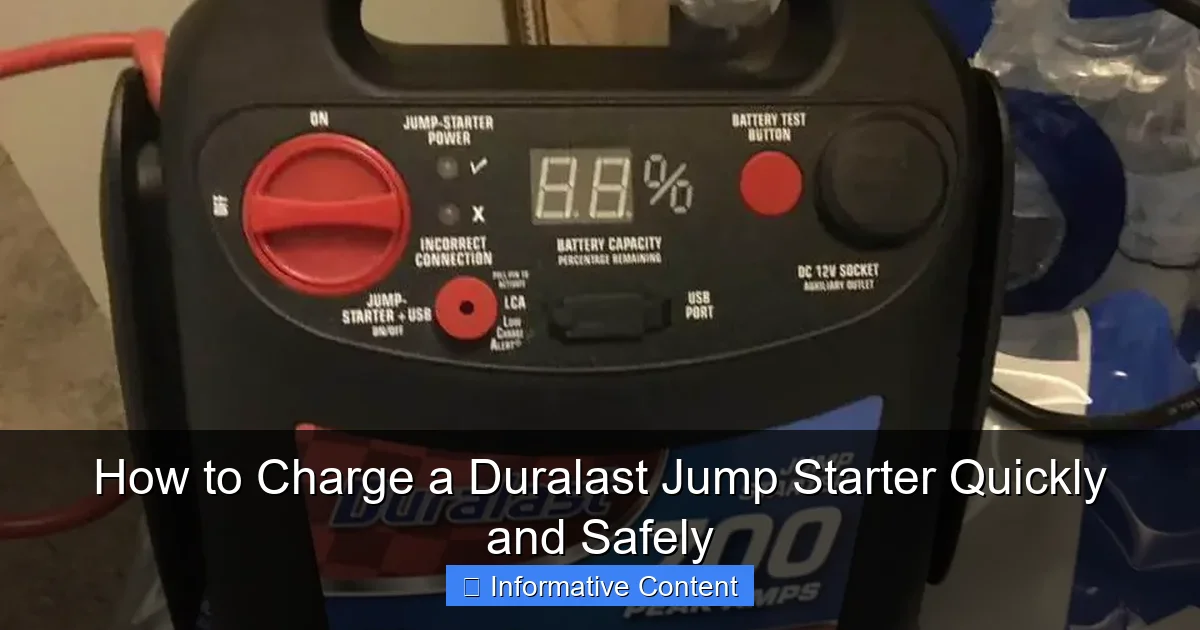
Visual guide about how to charge a duralast jump starter
Image source: electrotalks.com
What Is a Duralast Jump Starter?
A Duralast jump starter is a portable battery pack equipped with jumper cables and safety features to help restart a vehicle with a dead battery. Unlike traditional jumper cables that rely on another car, these units store their own power, making them ideal for emergencies when no help is nearby. Most models also include USB ports for charging phones, LED flashlights, and even air compressors in some advanced versions.
They’re built for durability and ease of use, often featuring rugged casings, built-in surge protection, and clear indicator lights. But despite their simplicity, many users overlook one critical step: proper charging. Just like your phone or laptop, your jump starter needs regular charging to stay ready when you need it most.
Key Features to Know Before Charging
Not all Duralast jump starters are the same. Depending on the model, you might have different charging ports, battery types, and power capacities. Here are a few features to look for:
- Battery Type: Most Duralast jump starters use lithium-ion (Li-ion) or lithium polymer (LiPo) batteries. These are lightweight, rechargeable, and hold a charge well over time.
- Capacity (mAh): This tells you how much power the unit can store. A higher mAh means more jump starts per charge. For example, a 10,000mAh model can typically jump a car 3–5 times before needing a recharge.
- Charging Port: Common options include USB-C, micro-USB, or proprietary DC ports. Newer models often support fast charging via USB-C.
- Indicator Lights: These show charging status—usually red for charging, green for fully charged. Some models have digital displays for more precise readings.
Knowing these details helps you choose the right charging method and avoid compatibility issues. For instance, using a low-power USB port to charge a high-capacity jump starter can take hours—or worse, damage the battery over time.
Why Proper Charging Matters
Charging your Duralast jump starter correctly isn’t just about convenience—it’s about safety and longevity. Lithium-based batteries are sensitive to overcharging, undercharging, and extreme temperatures. Improper charging can reduce battery life, cause overheating, or even lead to failure when you need it most.
Think of it like watering a plant. Too little, and it withers. Too much, and the roots rot. Your jump starter needs the right balance of charge to stay healthy. Plus, a fully charged unit ensures maximum power output when jump-starting a vehicle. A weak charge might not deliver enough current to turn over a cold engine, leaving you stranded anyway.
Step-by-Step Guide to Charging Your Duralast Jump Starter
Now that you understand the basics, let’s get into the nitty-gritty: how to charge your Duralast jump starter quickly and safely. The process is straightforward, but skipping steps or using the wrong equipment can lead to problems. Follow these steps to keep your unit in top shape.
Step 1: Check the Current Charge Level
Before plugging in, always check the current charge level. Most Duralast jump starters have indicator lights or a digital display. If the lights are blinking red or the display shows low battery, it’s time to charge. If it’s already green or fully lit, you might not need to charge it yet—especially if you’ve used it recently.
Pro tip: Make it a habit to check your jump starter every month, even if you haven’t used it. Batteries naturally lose charge over time, even when not in use. A monthly check ensures it’s ready when needed.
Step 2: Choose the Right Charging Cable and Adapter
Using the correct charging cable and power source is crucial. Most Duralast jump starters come with a USB charging cable—either USB-A to micro-USB or USB-C. Always use the cable provided or a high-quality replacement with the same specifications.
Avoid using cheap, off-brand cables. They may not deliver consistent power and can cause slow charging or overheating. For faster charging, use a wall adapter with at least 2.4A output. A standard phone charger (1A) will work, but it’ll take significantly longer.
Example: If your jump starter supports USB-C fast charging, pair it with a 30W USB-C wall adapter. This can cut charging time in half compared to a basic 5W adapter.
Step 3: Plug In and Monitor the Charging Process
Connect the cable to the jump starter and plug the adapter into a wall outlet. Avoid charging in extreme temperatures—don’t leave it in a hot car or outside in freezing weather. Ideal charging temperature is between 50°F and 86°F (10°C to 30°C).
Once connected, the indicator light should turn red (or show a charging animation). Leave it plugged in until the light turns green or the display shows 100%. This usually takes 3 to 6 hours, depending on the model and charger used.
Never leave your jump starter charging unattended for long periods. While most units have built-in protection against overcharging, it’s still smart to unplug once fully charged. Overcharging can degrade the battery over time.
Step 4: Unplug and Store Properly
Once charged, unplug the cable and store your jump starter in a cool, dry place. Avoid leaving it plugged in overnight or for days at a time. If you’re not using it regularly, charge it to about 50–70% for long-term storage. This helps preserve battery health.
Store it in your car’s glove compartment, trunk, or a dedicated emergency kit. Just make sure it’s protected from moisture and direct sunlight. A simple zip-top bag or storage case can go a long way in preventing damage.
Best Practices for Fast and Safe Charging
Charging your Duralast jump starter doesn’t have to be a slow, tedious process. With a few smart habits, you can speed up charging time and extend the life of your device. Here’s how to do it right.
Use a High-Quality Power Source
The quality of your charger matters more than you think. A high-output wall adapter (2.4A or higher) delivers more power, reducing charging time. For USB-C models, a 30W or 45W adapter can significantly cut down wait times.
Avoid charging from low-power sources like laptop USB ports, car USB adapters (unless rated for high output), or public charging stations. These often provide less than 1A, which can take 8–12 hours to fully charge a large jump starter.
Real-world example: I once tried charging my 12,000mAh Duralast jump starter using my laptop’s USB port. It took over 10 hours and only reached 80%. Switching to a 30W wall adapter got it to 100% in under 4 hours.
Avoid Extreme Temperatures
Heat and cold are enemies of lithium batteries. Charging in a hot car (above 95°F/35°C) can cause the battery to overheat and degrade faster. Similarly, charging in freezing temperatures (below 32°F/0°C) can reduce efficiency and damage internal components.
If your jump starter has been in a cold car, let it warm up to room temperature before charging. The same goes for hot environments—give it time to cool down. This simple step can prevent long-term damage and ensure safe charging.
Don’t Overcharge or Deep Discharge
While most modern jump starters have built-in protection circuits, it’s still best to avoid overcharging. Unplug once the light turns green. Leaving it plugged in for days can stress the battery, even if it’s not actively charging.
Similarly, don’t let the battery drain completely before recharging. Lithium batteries prefer partial discharges. Try to recharge when the level drops to 20–30%. This helps maintain battery health and extends overall lifespan.
Charge Regularly, Even If Not Used
Batteries self-discharge over time. A jump starter left unused for months can lose its charge, even if it was fully charged when stored. To prevent this, charge your unit every 1–2 months, even if you haven’t used it.
This is especially important if you live in a climate with extreme temperatures. Heat accelerates self-discharge, so summer months may require more frequent checks.
Common Charging Mistakes and How to Avoid Them
Even experienced users make mistakes when charging their jump starters. These errors can lead to slow charging, reduced performance, or even safety hazards. Let’s look at the most common pitfalls and how to avoid them.
Using the Wrong Charging Cable
One of the biggest mistakes is using a low-quality or incompatible cable. A thin, damaged, or off-brand cable may not deliver enough power, leading to slow charging or no charging at all.
Solution: Always use the original cable or a certified replacement. Look for cables rated for 2.4A or higher. Check for fraying or loose connections before each use.
Charging in a Hot or Cold Environment
As mentioned earlier, temperature plays a huge role in charging safety. I once left my jump starter charging in my car on a 90°F day. When I returned, it was warm to the touch and the charging light was flickering. That’s a red flag.
Solution: Charge indoors or in a shaded, temperature-controlled area. If you must charge in a vehicle, use a portable power bank or wait until the car has cooled down.
Ignoring the Indicator Lights
Many people plug in their jump starter and walk away, assuming it’s charging properly. But if the light isn’t on or is blinking erratically, there might be an issue—like a faulty cable or low power source.
Solution: Always check the indicator lights. If the light doesn’t turn on, try a different outlet or cable. If it blinks red repeatedly, the battery may be too low to accept a charge—try a slower charge first.
Leaving It Plugged In Too Long
While overcharging is less of a risk with modern devices, it’s still not ideal. Leaving your jump starter plugged in for days can stress the battery and reduce its lifespan.
Solution: Set a timer or alarm to remind yourself to unplug once charged. If you’re forgetful, consider using a smart plug that automatically cuts power after a set time.
Maintenance Tips to Extend Battery Life
Charging is just one part of the equation. To get the most out of your Duralast jump starter, you need to maintain it properly. A little care goes a long way in ensuring it’s ready when you need it.
Clean the Ports and Cables Regularly
Dust, dirt, and moisture can build up in the charging port, causing poor connections and slow charging. Use a dry toothbrush or compressed air to gently clean the port every few months.
Also, wipe down the cables and connectors with a dry cloth. Avoid using water or cleaning solutions, as they can cause corrosion.
Store at the Right Charge Level
If you’re storing your jump starter for more than a month, charge it to about 50–70%. This is the sweet spot for long-term battery health. Fully charged or fully drained batteries degrade faster when stored.
Label the date on the unit or keep a log so you know when it was last charged. This helps you stay on top of maintenance.
Test It Periodically
Every 3–6 months, test your jump starter by turning it on and checking the charge level. If it powers on and shows a good charge, you’re good to go. If it’s slow to respond or the lights are dim, it may be time for a recharge or replacement.
You can also test its jump-starting capability on a friend’s car (with permission, of course). This ensures it’s still delivering full power.
Charging Time Comparison Table
| Jump Starter Capacity | Charger Type | Estimated Charging Time | Notes |
|---|---|---|---|
| 5,000mAh | 5W (1A) USB | 5–6 hours | Slow but safe for basic use |
| 5,000mAh | 18W USB-C | 2–3 hours | Fast charging, ideal for quick top-ups |
| 10,000mAh | 5W (1A) USB | 10–12 hours | Not recommended—too slow |
| 10,000mAh | 30W USB-C | 3–4 hours | Best balance of speed and safety |
| 18,000mAh | 45W USB-C | 4–5 hours | Fastest option for high-capacity models |
This table shows how charger power affects charging time. As you can see, using a higher-wattage charger significantly reduces wait time—especially for larger units. Always match your charger to your jump starter’s capabilities for the best results.
Conclusion
Charging your Duralast jump starter quickly and safely doesn’t have to be complicated. With the right tools, habits, and a little attention to detail, you can keep your device ready for any emergency. Remember: a dead jump starter is just as useless as a dead car battery. But with regular charging, proper storage, and smart maintenance, your Duralast unit will be there when you need it most.
From choosing the right charger to avoiding common mistakes, every step counts. Don’t wait until your car won’t start to think about your jump starter. Make charging a routine part of your vehicle care. Whether you’re preparing for a road trip or just want peace of mind, a well-maintained jump starter is one of the smartest investments you can make. Stay charged, stay safe, and never get stranded again.
Frequently Asked Questions
How do I charge a Duralast jump starter for the first time?
For the first charge, connect the Duralast jump starter to a wall outlet using the included AC adapter. Allow it to charge fully (indicated by a solid LED light), which typically takes 8–12 hours, to maximize battery lifespan.
How long does it take to charge a Duralast jump starter?
The charging time varies by model but usually takes 4–12 hours. Check the manual or LED indicators—most models show a full charge when all lights turn green or solid.
Can I use a car charger to charge my Duralast jump starter?
Yes, many Duralast models support 12V car charging via the included DC adapter. Plug it into your vehicle’s cigarette lighter and ensure the car is running to avoid draining its battery.
Why isn’t my Duralast jump starter holding a charge?
If the jump starter loses charge quickly, ensure all connections are secure and the outlet is functional. If issues persist, the battery may be degraded and require replacement or professional servicing.
How often should I recharge my Duralast jump starter?
Recharge every 3–6 months during storage to maintain battery health, even if unused. Regular charging prevents deep discharge, which can damage lithium-ion cells over time.
Is it safe to leave my Duralast jump starter plugged in overnight?
Yes, most modern Duralast models have overcharge protection. Once fully charged, the device automatically stops charging, making overnight charging safe and convenient.