
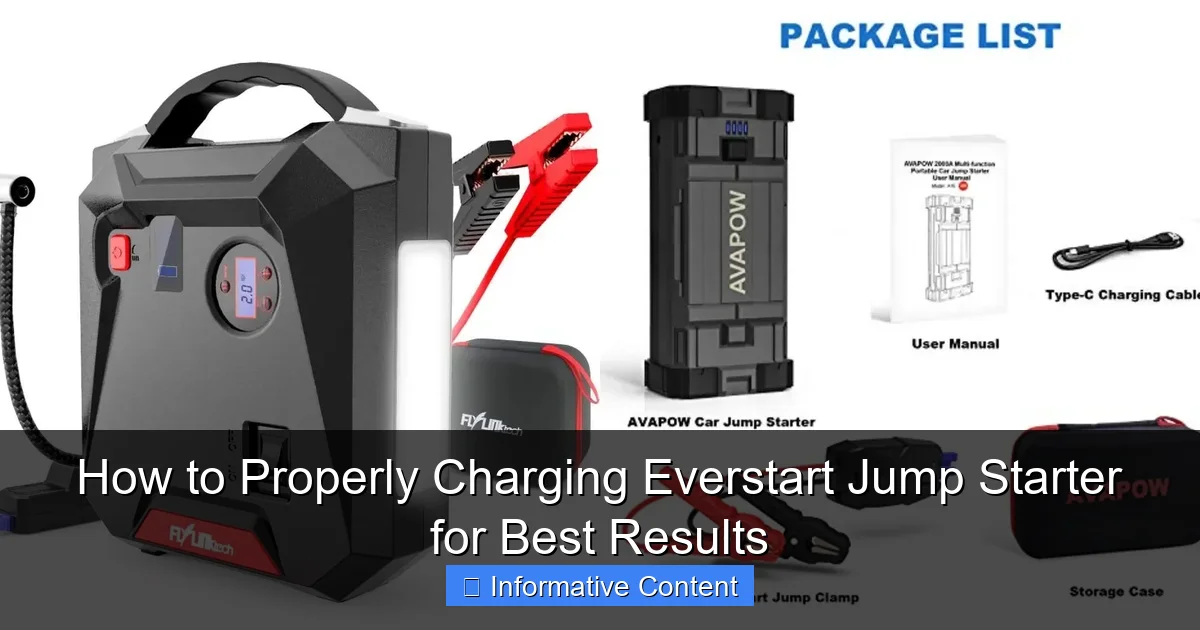
Featured image for charging everstart jump starter
Image source: docerp.s3.amazonaws.com
Always use the original Everstart charger and a stable power source to ensure safe, efficient charging and maximize battery lifespan. For best results, charge the jump starter fully before first use and maintain it with regular top-ups every 3–6 months, even when not in use. Following the manufacturer’s charging guidelines prevents damage and ensures peak performance when you need it most.
Key Takeaways
- Charge fully before first use: Ensures peak performance and battery longevity.
- Use manufacturer-recommended charger: Prevents damage and maintains warranty validity.
- Store at 50% charge: Ideal for long-term storage to avoid battery degradation.
- Recharge every 3 months: Maintains battery health during infrequent use.
- Avoid extreme temperatures: Charging in moderate temps ensures safety and efficiency.
- Check LED indicators: Monitor charging status to prevent overcharging or undercharging.
📑 Table of Contents
- Why Charging Your Everstart Jump Starter Matters
- Understanding Your Everstart Jump Starter Battery Type
- Step-by-Step Guide to Charging Your Everstart Jump Starter
- Common Charging Mistakes (And How to Avoid Them)
- How Long Does It Take to Charge? A Data Breakdown
- Maintaining Your Everstart for Long-Term Reliability
- Final Thoughts: Charge Right, Stay Prepared
Why Charging Your Everstart Jump Starter Matters
Let me tell you a story. It was a cold winter morning, and my car wouldn’t start. The engine made that dreaded clicking sound—you know the one. I reached for my Everstart jump starter, pressed the power button, and… nothing. The battery was dead. Not the car’s battery—the jump starter’s. I had left it in the garage for months, unused, uncharged. That day taught me a hard lesson: proper charging is just as important as owning the tool.
If you’ve ever been stranded with a dead jump starter, you know how frustrating it feels. These compact powerhouses are lifesavers, but they’re only useful when they’re ready to go. Whether you own a small 12V model or a heavy-duty 1200-amp beast, how you charge your Everstart jump starter determines its reliability, lifespan, and performance. And the truth? Most people don’t charge them the right way. They plug it in, forget it, or charge it once and stash it for months. That’s a recipe for failure.
Understanding Your Everstart Jump Starter Battery Type
Lead-Acid vs. Lithium-Ion: What’s Inside?
Before you plug in your Everstart jump starter, it’s crucial to know what kind of battery it uses. Everstart offers models with two main battery types: lead-acid and lithium-ion. Each has different charging needs, and using the wrong method can shorten battery life or even damage the unit.
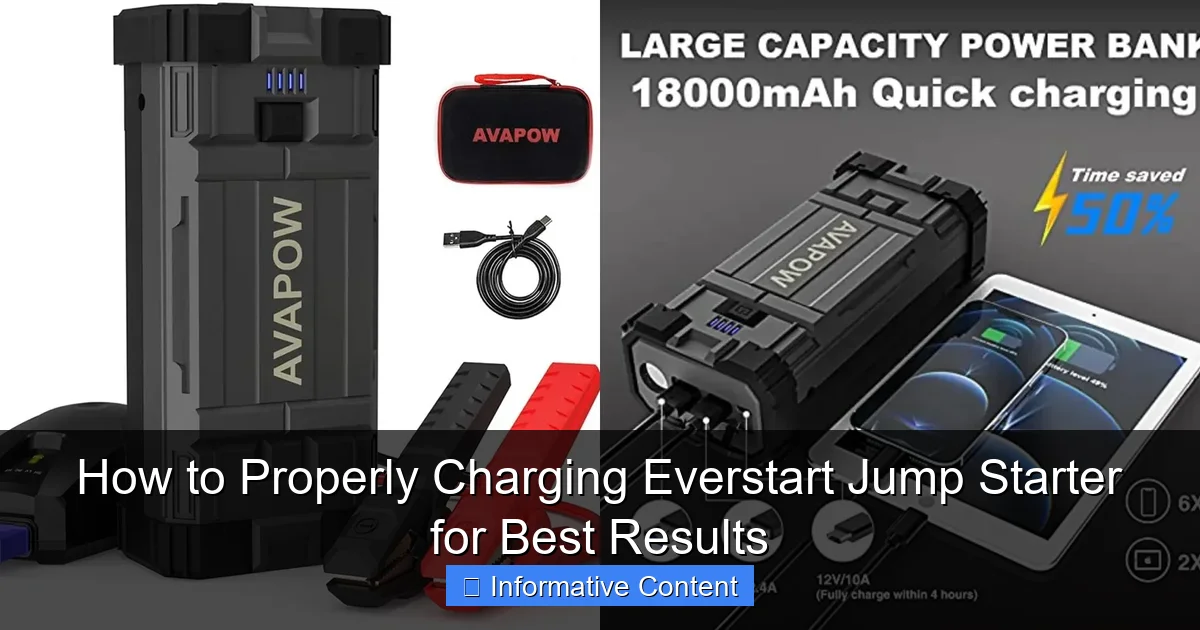
Visual guide about charging everstart jump starter
Image source: docerp.s3.amazonaws.com
- Lead-Acid Batteries: Found in older or budget-friendly Everstart models. These are heavier, require regular maintenance, and are sensitive to overcharging. Think of them like a finicky houseplant—they need consistent care.
- Lithium-Ion Batteries: Used in newer, portable models. These are lighter, charge faster, and don’t suffer from the “memory effect.” They’re more forgiving but still need proper charging habits to last.
For example, the Everstart 1200 Peak Amp model uses a lithium-ion battery. It’s compact, powerful, and holds a charge well. But if you leave it plugged in for weeks, the internal battery management system (BMS) might shut down to protect the cells—leaving you with a “dead” unit that just needs a reset.
Check the Manual or Label
Always check the label on the back or bottom of your jump starter. It will clearly state the battery type, input voltage (usually 12V DC or 5V USB), and charging current (e.g., 2A). If you’ve lost the manual, visit the manufacturer’s website or search for your model number online. For instance, “Everstart JS-1200 battery type” pulls up detailed specs instantly.
Pro tip: Take a photo of the label and save it in your phone’s notes. That way, you’ll never be stuck wondering how to charge it during an emergency.
Step-by-Step Guide to Charging Your Everstart Jump Starter
Step 1: Choose the Right Charging Method
Everstart jump starters can be charged in multiple ways, but not all methods are equal. Here’s what works best for each battery type:
- Lithium-Ion Models:
- Use the included AC wall charger (most reliable).
- Use a 12V car charger (good for on-the-go charging).
- Use a USB-C cable (if your model supports it—check the manual).
- Lead-Acid Models:
- Always use the manufacturer-supplied charger. Generic chargers can overcharge and damage the battery.
- Never use a fast charger unless specified. Slow charging (1-2A) is safer and extends battery life.
For example, I use my Everstart 800A model with a 12V car charger when camping. It takes about 4 hours to charge fully, but it’s convenient. At home, I prefer the wall charger—it’s faster and more consistent.
Step 2: Prepare the Charging Area
Charging isn’t just about plugging in. Where and how you charge matters:
- Ventilation: Charge in a well-ventilated area. Lithium batteries can heat up, and poor airflow increases fire risk (rare, but possible).
- Temperature: Avoid charging in extreme heat or cold. Ideal range: 50°F–86°F (10°C–30°C). Charging in a freezing garage? Let the unit warm up first.
- Surface: Place the jump starter on a non-flammable surface—no beds, couches, or flammable materials nearby.
I once left my jump starter charging on a wooden shelf near a curtain. Not a fire, but the unit got warm, and I learned my lesson. Now, I use a metal tray or a dedicated charging mat.
Step 3: Connect and Monitor
Now, plug it in. But don’t walk away just yet. Here’s how to do it right:
- Connect the charger to the jump starter first, then to the power source. This prevents sparking.
- Check the LED indicators. Most Everstart models have a 3- or 4-light system showing charge level (25%, 50%, 75%, 100%).
- Monitor for 15–30 minutes. If the lights blink erratically or the unit gets hot, unplug it immediately. This could indicate a faulty charger or internal issue.
Real-world tip: I set a timer on my phone for the first 20 minutes. That way, I’m nearby if something goes wrong.
Common Charging Mistakes (And How to Avoid Them)
Mistake #1: Overcharging
“It’s better to charge it fully, right?” Not always. While lithium-ion batteries have built-in protection, overcharging for days can stress the cells. Lead-acid batteries are even more sensitive—overcharging leads to sulfation, which permanently reduces capacity.
Solution: Unplug once fully charged. Most Everstart models show a steady green light when done. If you’re using a car charger, unplug after 3–4 hours (even if not fully charged). A partial charge is better than overcharging.
Mistake #2: Storing Without a Charge
Lithium batteries lose charge over time—about 3–5% per month. If you store your jump starter for 6 months, it could be at 70% or lower. That’s not enough for a strong jump start.
Solution: Charge to 50–80% before storage. For long-term storage (e.g., winter), recharge every 3 months. I keep a calendar reminder: “Recharge Everstart – March 1, June 1, September 1, December 1.”
Mistake #3: Using Damaged Cables or Chargers
Frayed wires, bent pins, or loose connections are silent killers. They cause intermittent charging, which confuses the battery management system.
Solution: Inspect cables monthly. Look for cracks, exposed wires, or corrosion. If the wall charger feels hot or makes a buzzing sound, replace it. Everstart sells replacement chargers, or you can find compatible third-party ones (check reviews).
Mistake #4: Charging in Extreme Temperatures
Charging a lithium battery below 32°F (0°C) can cause lithium plating, which damages the cells. Above 104°F (40°C), the battery degrades faster.
Solution: Charge indoors or in a climate-controlled space. If you must charge in a cold car, let the unit sit in the cabin for 30 minutes first. For hot environments, use a cooling pad or fan.
How Long Does It Take to Charge? A Data Breakdown
Charging time depends on battery capacity, charger output, and starting charge level. Here’s a realistic breakdown for common Everstart models:
| Everstart Model | Battery Type | Capacity (Ah) | Charger Output | Charge Time (0% → 100%) | Partial Charge (10% → 80%) |
|---|---|---|---|---|---|
| Everstart JS-400 | Lithium-Ion | 12 Ah | 2A (Wall) | 6 hours | 3.5 hours |
| Everstart JS-800 | Lithium-Ion | 18 Ah | 2A (Wall) | 9 hours | 5 hours |
| Everstart JS-1200 | Lithium-Ion | 22 Ah | 2.5A (Wall) | 8.5 hours | 4.5 hours |
| Everstart Lead-Acid 12V | Lead-Acid | 18 Ah | 1.5A (Wall) | 12 hours | 6 hours |
Key takeaways:
- Lithium models charge faster due to higher efficiency.
- Partial charges (80%) are safer and take less time. Perfect for quick top-ups.
- Lead-acid models need longer charging but are more tolerant of slow, steady input.
Real-world example: I charge my JS-800 overnight (8 hours). By morning, it’s fully charged and ready for weekend adventures. For a quick top-up, I plug it in for 2 hours while making coffee—gets me to 60%.
Maintaining Your Everstart for Long-Term Reliability
Monthly Check-Ups: The 5-Minute Routine
Think of your jump starter like a fire extinguisher: you hope you never need it, but when you do, it better work. Here’s a simple monthly check:
- Inspect the Cables: Look for cracks, fraying, or bent clamps.
- Check the Battery Level: Power it on. If it shows less than 50%, charge it.
- Test the LED Lights: Ensure all indicators work. A dead LED might mean internal issues.
- Clean the Contacts: Use a dry cloth or cotton swab to wipe the clamps and ports.
- Store Properly: Keep it in a cool, dry place—not in direct sunlight or near moisture.
I do this every first Sunday of the month. It takes 5 minutes and gives me peace of mind.
When to Replace (and How to Recycle)
Even with perfect care, batteries degrade. Here’s when to consider a replacement:
- Lithium-Ion: After 3–5 years or 500 charge cycles. If it holds less than 60% of original capacity, it’s time.
- Lead-Acid: After 2–3 years. If it takes longer to charge or fails to start a car, replace it.
Recycling tip: Never throw batteries in the trash. Take them to a recycling center (e.g., AutoZone, Home Depot) or use a mail-in program. Everstart often offers trade-in discounts for old units.
Prolonging Battery Life: Advanced Tips
- Avoid Deep Discharges: Don’t drain the battery to 0%. Recharge at 20–30%.
- Use Smart Chargers: Some third-party chargers have “maintenance mode” that keeps the battery at optimal charge.
- Keep It Dry: Moisture causes corrosion. Store in a sealed plastic bag with silica gel packs in humid areas.
I use a smart charger for my JS-1200. It automatically switches to maintenance mode after full charge, keeping the battery at 80% until I need it. Game-changer for longevity.
Final Thoughts: Charge Right, Stay Prepared
Your Everstart jump starter is more than a gadget—it’s a lifeline. I’ve used mine to help stranded drivers, jump-start my own car in freezing rain, and even power a portable fridge during a road trip. But it only works when I take the time to charge it properly.
Remember: charging your Everstart jump starter isn’t a one-time thing. It’s an ongoing habit. Treat it like you would a fire extinguisher, a first-aid kit, or a spare tire. Check it regularly, charge it correctly, and store it with care. That way, when that cold morning comes and your car won’t start, you’ll press the button and hear the engine roar to life—no stress, no panic.
So, here’s my challenge to you: set a monthly reminder. Spend 5 minutes checking your jump starter. Charge it if needed. Inspect the cables. And if you’re storing it for months, charge it to 50% first. It’s a small effort that pays off in big ways.
Because the best jump starter isn’t the most expensive one. It’s the one that’s ready when you need it. And that starts with how you charge it.
Frequently Asked Questions
How do I properly charge an Everstart jump starter for the first time?
For the first charge, plug the Everstart jump starter into a wall outlet using the included AC adapter and charge it for 12–24 hours. This ensures the internal battery reaches full capacity and optimizes long-term performance.
Can I use a car charger to charge my Everstart jump starter?
Yes, most Everstart jump starters come with a 12V car charger. Simply connect it to your vehicle’s cigarette lighter socket and let it charge while the engine is running for best results.
How long does it take to fully charge an Everstart jump starter?
The charging time varies by model but typically takes 3–6 hours via AC adapter. Refer to your manual—larger-capacity models may require up to 12 hours to fully charge.
Is it safe to leave my Everstart jump starter charging overnight?
Yes, Everstart jump starters have built-in overcharge protection. Once fully charged, the unit automatically stops charging, making overnight charging safe and convenient.
What should I do if my Everstart jump starter isn’t holding a charge?
First, try recharging it fully and test again. If the issue persists, the battery may be degraded—contact Everstart support or replace the unit if it’s out of warranty.
Does charging the Everstart jump starter in cold weather affect performance?
Extreme cold can slow charging speed and reduce battery efficiency. Charge your Everstart jump starter in a temperature-controlled environment (ideally 50–80°F) for optimal results.