
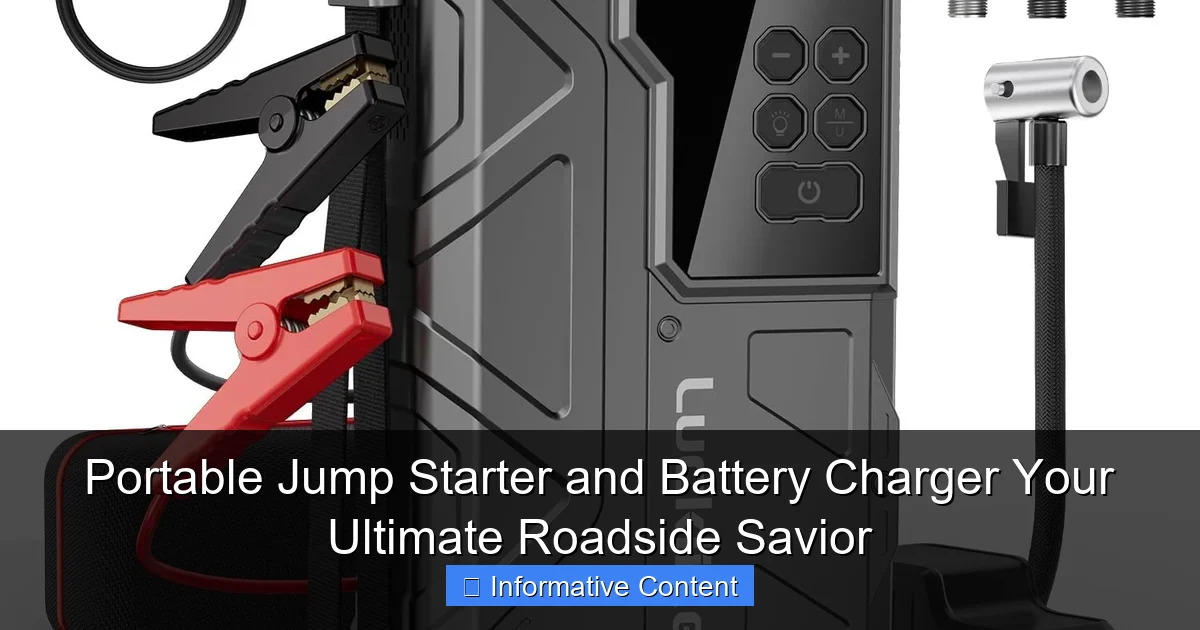
Featured image for portable jump starter and battery charger
Image source: m.media-amazon.com
Never get stranded with a dead battery again—a portable jump starter and battery charger delivers reliable, on-the-go power to jump-start vehicles and charge devices in seconds. Compact yet powerful, it’s the ultimate roadside companion for emergencies, road trips, and daily peace of mind.
Key Takeaways
- Always carry a portable jump starter to avoid being stranded with a dead battery.
- Choose a model with high peak amps for reliable jumps in extreme weather.
- Multi-function units save space by combining jump-starting, charging, and emergency lighting.
- Regularly recharge your device to ensure it’s ready when emergencies strike.
- Check USB and 12V ports to keep phones and gadgets powered on the go.
- Prioritize safety features like reverse polarity and spark-proof technology for worry-free use.
📑 Table of Contents
- Portable Jump Starter and Battery Charger Your Ultimate Roadside Savior
- What Is a Portable Jump Starter and Battery Charger?
- Key Features to Look For in a Portable Jump Starter
- Top Use Cases: When You’ll Be Glad You Have One
- How to Choose the Right Portable Jump Starter for Your Vehicle
- Maintenance and Safety Tips for Long-Term Use
- Comparing Popular Models: A Quick Reference
- Final Thoughts: Why Every Driver Should Own One
Portable Jump Starter and Battery Charger Your Ultimate Roadside Savior
Picture this: It’s a cold winter morning, you’re running late for work, and you hop into your car—only to hear that dreaded click… click… click when you turn the key. Your battery’s dead. Again. You’re stranded, frustrated, and wondering if you should’ve just taken the bus. Sound familiar?
We’ve all been there. A dead car battery doesn’t care if it’s raining, snowing, or if you’re in the middle of nowhere with no cell service. But what if you had a compact, reliable device that could jump-start your car, charge your phone, and even power small electronics—all from the trunk of your vehicle? That’s where a portable jump starter and battery charger comes in. It’s not just a gadget; it’s peace of mind on wheels.
These devices have evolved from bulky, unreliable tools into sleek, powerful lifesavers. Whether you drive a compact sedan, a heavy-duty truck, or even a motorcycle, there’s a portable jump starter designed for your needs. And the best part? You don’t need to be a mechanic to use one. With the right knowledge, you can turn a potential disaster into a five-minute fix.
What Is a Portable Jump Starter and Battery Charger?
A portable jump starter and battery charger is a compact, battery-powered device that can restart a vehicle with a dead battery without needing another car or jumper cables. Unlike traditional jump starters that rely on a second vehicle, these units store electrical energy in built-in lithium-ion or lithium-polymer batteries, allowing you to jump-start your car anytime, anywhere.
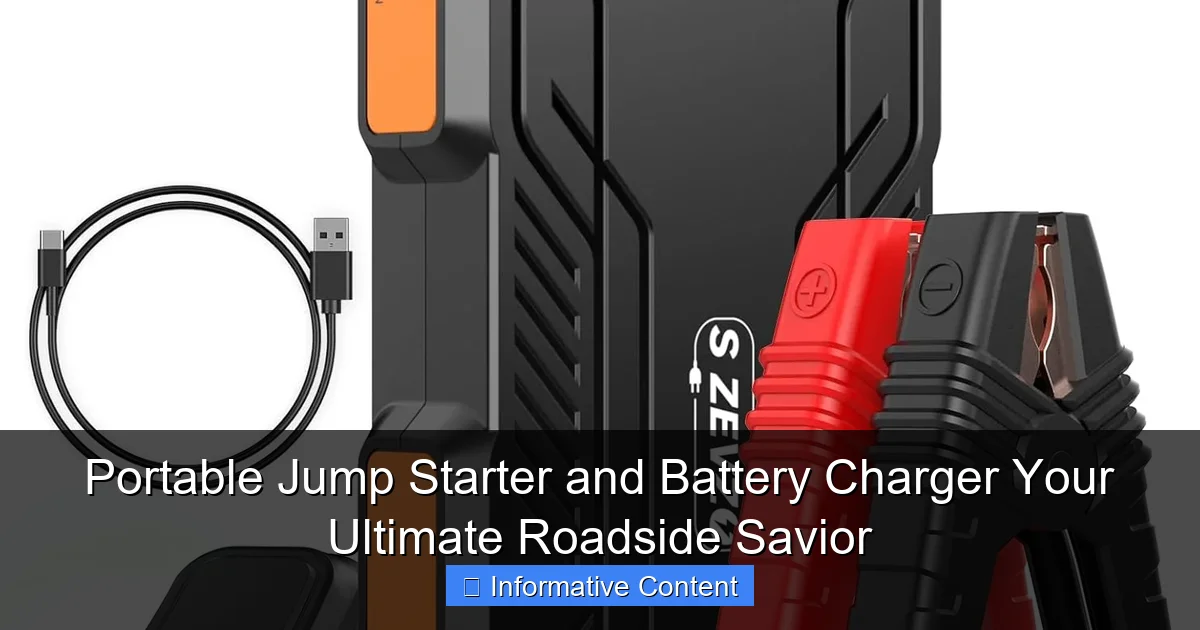
Visual guide about portable jump starter and battery charger
Image source: m.media-amazon.com
But it’s not just about jump-starting. Most modern models double as portable battery chargers, equipped with USB ports, 12V outputs, and even AC inverters. This means you can charge your smartphone, tablet, laptop, or even run a small cooler during a camping trip. Some advanced models even include built-in flashlights, air compressors, and safety features like reverse polarity protection and spark-proof technology.
How It Works
When your car battery dies, it lacks the power to turn the engine over. A portable jump starter steps in by delivering a high burst of current directly to your vehicle’s battery terminals. Here’s how it typically works:
- You connect the jump starter’s clamps to your car battery (red to positive, black to negative).
- The device detects the connection and ensures safe polarity.
- Once confirmed, it sends a surge of power to the battery, giving your engine the kickstart it needs.
- You turn the key, and—voilà—your car starts.
Unlike older jump starters, modern versions are smart. They often include LED indicators that show battery level, charging status, and error alerts. Some even have Bluetooth connectivity so you can monitor performance via a smartphone app.
Why It’s More Than Just a Jump Starter
The real magic of a portable jump starter and battery charger lies in its versatility. Think of it as a Swiss Army knife for your car. Need to charge your phone during a long road trip? Plug it in. Camping and forgot to pack a power bank? No problem. Stuck in a parking garage with a dead battery and no help in sight? You’re covered.
For example, imagine you’re on a weekend hiking trip. Your phone dies, your GPS is offline, and your car won’t start because you left the lights on overnight. With a portable jump starter, you can charge your phone to call for help and jump-start your car—all from one device. That’s the kind of reliability that makes these tools indispensable.
Key Features to Look For in a Portable Jump Starter
Not all portable jump starters are created equal. With so many options on the market, it’s important to know what features matter most. Here’s a breakdown of the key specs and functions to consider before making a purchase.
Peak and Cranking Amps
The most critical spec for any jump starter is its power output, measured in peak amps and cranking amps (CA) or cold cranking amps (CCA).
- Peak amps refer to the maximum current the device can deliver in a short burst—usually when starting the engine.
- Cranking amps (CA) measure the current a battery can deliver at 32°F (0°C) for 30 seconds while maintaining at least 7.2 volts.
- Cold cranking amps (CCA) are similar but tested at 0°F (-18°C), making them a better indicator of performance in winter conditions.
For most cars, a jump starter with 400–600 peak amps is sufficient. Trucks, SUVs, and diesel engines may require 1000+ peak amps. Always check your vehicle’s manual or consult the manufacturer’s recommendations.
Battery Capacity and Type
The internal battery capacity, measured in milliampere-hours (mAh), determines how many jump starts you can get from a single charge. A 10,000mAh unit might give you 3–5 jumps on a standard car, while a 20,000mAh model could handle larger vehicles or multiple uses.
Most modern jump starters use lithium-ion (Li-ion) or lithium polymer (LiPo) batteries. These are lightweight, charge quickly, and hold their charge longer than older lead-acid types. They’re also safer and more compact, making them ideal for portability.
Safety Features
Safety should never be an afterthought. Look for these essential protections:
- Reverse polarity protection: Prevents damage if you accidentally connect the clamps wrong.
- Spark-proof technology: Reduces the risk of sparks when connecting or disconnecting.
- Overcharge and over-discharge protection: Safeguards the internal battery from damage.
- Short-circuit protection: Automatically shuts off power if a fault is detected.
- Temperature control: Prevents overheating during use or charging.
These features not only protect your vehicle but also extend the lifespan of the jump starter itself.
Additional Functions
Beyond jump-starting, many units offer extra features that enhance their usefulness:
- USB ports (5V/2.1A, 5V/3A, USB-C): Charge phones, tablets, and other USB devices.
- 12V DC output: Powers car accessories like air compressors or coolers.
- Built-in LED flashlight: Often with SOS and strobe modes for emergencies.
- Air compressor: Some models include a mini pump for inflating tires.
- Digital display: Shows battery level, voltage, and error codes.
For instance, the NOCO Boost Plus GB40 offers 1000 peak amps, USB-C charging, and a bright LED flashlight—all in a compact design. It’s a favorite among road trippers and daily commuters alike.
Top Use Cases: When You’ll Be Glad You Have One
A portable jump starter and battery charger isn’t just for emergencies. It’s a versatile tool that can make your life easier in everyday situations. Here are some real-world scenarios where having one pays off big time.
Daily Commuting and Urban Driving
Even in the city, dead batteries happen. Maybe you left your lights on overnight, or the cold snap drained your battery faster than usual. With a jump starter in your glove box, you can get back on the road in minutes—no need to flag down a stranger or wait for roadside assistance.
For example, Sarah, a nurse who works night shifts, often parks her car in a dimly lit garage. One morning, she realized her headlights had been on all night. Instead of calling a tow truck, she used her portable jump starter, started her car, and made it to her shift on time. “It saved me $100 in towing fees and a lot of stress,” she says.
Road Trips and Long-Distance Travel
When you’re hundreds of miles from home, the last thing you want is a dead battery in the middle of nowhere. A portable jump starter gives you independence and confidence. Plus, with USB charging, you can keep your GPS, phone, and camera powered up during long drives.
Consider a family road trip through national parks. You’re camping, your phone is your lifeline for navigation and emergencies, and your car battery dies after using the 12V outlet to charge devices overnight. With a jump starter, you’re back on the road without missing a beat.
Outdoor Adventures and Off-Grid Living
For campers, hikers, and overlanders, a portable jump starter is a game-changer. It’s not just for your vehicle—it can power small appliances, charge gadgets, and even run a portable fridge. Some models are ruggedized and water-resistant, making them ideal for outdoor use.
Take Jake, an avid camper who drives a Jeep Wrangler. He uses his jump starter to power a 12V cooler during weekend trips. “It keeps my drinks cold and my phone charged,” he says. “And if my Jeep won’t start, I know I’m covered.”
Winter Weather and Cold Climates
Cold weather is the enemy of car batteries. Temperatures below freezing can reduce a battery’s capacity by up to 50%. A portable jump starter with high CCA ratings is essential for drivers in snowy regions.
In Minnesota, where winter temperatures regularly drop below zero, many drivers keep a jump starter in their car year-round. “Last January, my battery died at 6 a.m. in -10°F weather,” says Mark, a teacher. “My portable jump starter worked perfectly. I was at school by 7.”
Emergency Preparedness
Natural disasters, power outages, and unexpected events can leave you stranded. A portable jump starter ensures you’re not helpless when the unexpected happens. It’s a smart addition to any emergency kit.
During a recent ice storm that knocked out power for days, Lisa used her jump starter to keep her phone charged and her car running so she could check on elderly neighbors. “It wasn’t just about convenience,” she says. “It was about safety.”
How to Choose the Right Portable Jump Starter for Your Vehicle
With so many models available, choosing the right portable jump starter can feel overwhelming. But by matching the device to your vehicle type and usage needs, you can find the perfect fit.
Match the Power to Your Engine
The size and type of your engine determine how much power you need. Here’s a quick guide:
- Compact cars (4-cylinder): 400–600 peak amps
- Mid-size sedans and SUVs (V6): 600–1000 peak amps
- Trucks and large SUVs (V8): 1000–2000 peak amps
- Diesel engines: 1500+ peak amps (due to higher compression)
For example, a Honda Civic might start with a 500-amp jump starter, while a Ford F-150 with a V8 engine may need 1500 amps or more.
Consider Your Usage Frequency
If you only drive occasionally or live in a warm climate, a basic model with 600 peak amps and 10,000mAh capacity may suffice. But if you’re frequently on the road, travel in cold areas, or drive a large vehicle, invest in a higher-capacity unit with advanced safety features.
Portability and Storage
Size and weight matter, especially if you’re storing the device in a small car or backpack. Most portable jump starters weigh between 1 and 5 pounds. Look for compact designs with carrying cases or built-in handles for easy transport.
For instance, the DBPower 1500A weighs just 2.2 pounds and comes with a durable carrying case. It’s small enough to fit in a glove box but powerful enough to start most trucks.
Battery Life and Charging Time
Check how long the internal battery holds its charge. Most lithium-ion jump starters retain 70–80% of their charge after 3–6 months. Also, consider how long it takes to recharge—some models charge fully in 2–3 hours via USB-C, while others may take 6+ hours.
Tip: Keep your jump starter charged, especially before long trips or winter months. A dead jump starter is no help at all.
Budget and Brand Reputation
Prices range from $50 for basic models to $200+ for high-end units with multiple features. While it’s tempting to go cheap, investing in a reputable brand like NOCO, DBPower, or Tacklife ensures reliability and safety.
Look for warranties (typically 1–2 years), customer reviews, and certifications like CE, FCC, or RoHS. These indicate quality and compliance with safety standards.
Maintenance and Safety Tips for Long-Term Use
Like any electronic device, your portable jump starter needs care to perform reliably. A little maintenance goes a long way in ensuring it’s ready when you need it most.
Regular Charging
Even when not in use, recharge your jump starter every 3–6 months. Lithium batteries degrade over time, and a fully depleted unit may not hold a charge. Most models have an LED indicator to show battery level—green means charged, red means recharge.
Proper Storage
Store your jump starter in a cool, dry place away from direct sunlight or extreme temperatures. Avoid leaving it in your car during summer heat or winter cold, as this can damage the internal battery.
Tip: Keep it in the original case or a protective pouch to prevent scratches and dust buildup.
Safe Usage Practices
Always follow the manufacturer’s instructions. Here are some universal safety tips:
- Turn off the engine and all electronics before connecting the jump starter.
- Connect red to positive (+), black to negative (-)—double-check polarity.
- Never connect the clamps to each other (short circuit).
- Do not use the jump starter near flammable materials or in wet conditions.
- Disconnect the clamps in reverse order: black first, then red.
If the jump starter fails to start your car, wait 3–5 minutes before trying again. Repeated attempts can overheat the device or damage your vehicle’s electrical system.
When to Replace
Even the best jump starters have a lifespan. Most last 3–5 years with proper care. Signs it’s time to replace yours include:
- Longer charging times
- Reduced jump-start performance
- Swollen or damaged casing
- Frequent error messages or shutdowns
Don’t wait until it fails during an emergency. Replace it proactively.
Comparing Popular Models: A Quick Reference
To help you make an informed decision, here’s a comparison of five top-rated portable jump starters based on key features, power, and user feedback.
| Model | Peak Amps | Battery Capacity | USB Ports | Special Features | Weight | Price Range |
|---|---|---|---|---|---|---|
| NOCO Boost Plus GB40 | 1000A | 12,000mAh | 2 (USB-A), 1 (USB-C) | LED flashlight, spark-proof, reverse polarity protection | 2.4 lbs | $90–$110 |
| DBPower 1500A | 1500A | 18,000mAh | 2 (USB-A), 1 (USB-C) | Digital display, air compressor, 4-mode flashlight | 2.2 lbs | $120–$140 |
| Tacklife T8 Pro | 800A | 16,000mAh | 2 (USB-A), 1 (USB-C) | LCD screen, 450 PSI air pump, SOS light | 2.6 lbs | $100–$120 |
| GOOLOO GP4000 | 4000A | 20,000mAh | 3 (USB-A), 1 (USB-C) | Ultra-high power, 4K flashlight, 12V output | 3.1 lbs | $150–$180 |
| Schumacher DSR120 | 1200A | 15,000mAh | 2 (USB-A) | Rugged design, built-in air compressor | 4.5 lbs | $130–$150 |
This table highlights the range of options available. The NOCO GB40 is ideal for everyday drivers, while the GOOLOO GP4000 suits those with large vehicles or frequent needs. The DBPower and Tacklife models offer great value with added features like air compressors.
Final Thoughts: Why Every Driver Should Own One
A portable jump starter and battery charger is more than a convenience—it’s a necessity. In a world where we rely on our vehicles for work, family, and safety, being stranded with a dead battery is not just annoying; it can be dangerous.
These devices offer unmatched peace of mind. They’re affordable, easy to use, and packed with features that go far beyond jump-starting. Whether you’re a daily commuter, a weekend adventurer, or someone who just wants to be prepared, a portable jump starter is a smart investment.
Think of it as your personal roadside rescue team—compact, reliable, and always ready. You’ll never know when you’ll need it, but when you do, you’ll be glad it’s in your trunk.
So, the next time you hear that dreaded click, don’t panic. Grab your portable jump starter, follow the simple steps, and get back on the road. Because with the right tool, no dead battery can stop you.
Frequently Asked Questions
What is a portable jump starter and battery charger?
A portable jump starter and battery charger is a compact, battery-powered device that jump-starts vehicles (cars, trucks, boats) with dead batteries and doubles as a power bank to charge electronics like phones and tablets. It’s an essential emergency tool for roadside safety.
How does a portable jump starter work?
The device connects to your car’s battery via heavy-duty clamps, delivering a high-current burst to crank the engine. Most models include safety features like reverse polarity and spark-proof technology to prevent damage.
Can I use a portable jump starter in cold weather?
Yes, many portable jump starters are designed to operate in extreme temperatures, including sub-zero conditions. Look for models with lithium-ion batteries, which perform better in cold weather than traditional lead-acid units.
Is the portable jump starter compatible with all vehicle types?
Most portable jump starters work with 12V systems, covering cars, motorcycles, SUVs, and small boats. Check the device’s peak amps rating to ensure it meets your engine’s requirements (e.g., 1000+ amps for larger trucks).
How long does the battery in a portable jump starter last?
On a full charge, most units hold power for 3–6 months. Recharge every few months to maintain peak performance, and expect 10–30 jump starts per charge depending on the model and vehicle size.
Can I charge my phone while using the jump starter?
Yes! Most portable jump starters include USB ports and 12V outputs, letting you charge phones, GPS units, or other devices simultaneously while jump-starting. Just ensure the total power draw doesn’t exceed the unit’s limits.